"All together an idyll"

A week spent with a Jan Mankes painting

One of the things I use Instagram for is looking at art. It always makes me feel good when I find new seams of art running through the deep, black pits of social media—as though there are people still out there trying to use it to share things they really care about. You can’t really monetise the work of dead artists, especially the famous ones. It’s not content. All you can do it post it and say, “Look at this. I like it. It says something to me,” and wait for someone with the copyright to request that it gets taken down. There’s nothing in it for you other than the joy of sharing. I respect that.

Last week I stumbled across a painting that I ended up coming back to over and over again. 
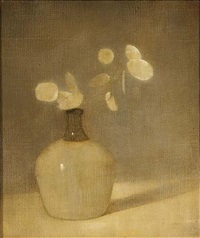
Honesty in a Japanese Vase by Jan Mankes

The way the light is captured by the artist in the top right pennies of honesty now lives in the front of my brain forever; so real, softly glowing with reflected light. Moonlike. The stone-earth colours of the painting feels clean, but not warm, like an old but well-scrubbed farmhouse sitting room. It must have been painted in his home—that’s what I think, anyway. I can feel the familiarity, so second-nature that no details are included. No marks on the wall, no pattern on the table. His mind fills in the gaps, just as mine do.

Jan Mankes was a young painter from Meppel in the Netherlands. As a Dutch painter in the late 19th century, he would normally have been expected to move to a more sociable city after completing his studies, but he seemed to prefer the quiet of the countryside. And anyway, he communicated just fine with his contemporaries by post, and had plenty of artistic, creative and philosophical stimulation at home. He and his wife were progressives, and she, Anne Zernike, a theologian interested in Taoism, Christian Socialism, pacifism and vegetarianism, became the first female minister (with a doctorate too, no less) in Holland. 

He died in 1920 aged 30 from TB. I learned that his paintings stir a debate among fans of Dutch Realism, of which school he considered to belong, due to their often imaginary aspects. Mankes preferred to sketch and re-sketch his subjects multiple times to commit them to memory, and then complete his works separately. This, to many, is not true realism. 

Looking at Honesty in a Japanese Vase, or his self portraits which I find eerie and fascinating, I would argue that by painting this way shows exactly how he saw the world—painting with feeling as well as with accuracy and skill. By painting from memory, and with his glazing technique to create a dreamlike luminescence-effect, he was painting his reality. And this week, I have enjoyed living there.
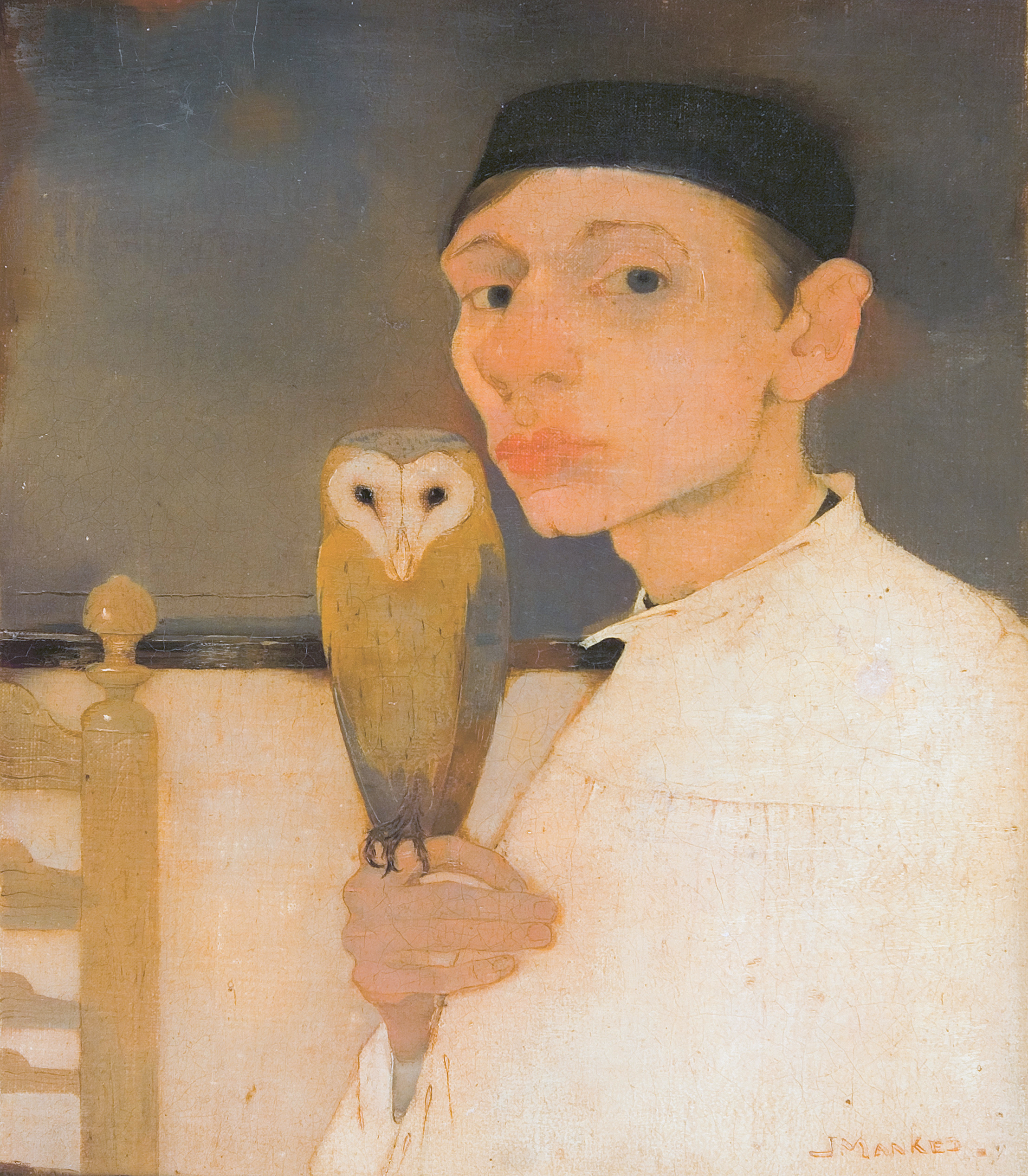
“A truly miraculous animal, in shape, hues and character; all together an idyll.” — Jan Mankes on his owl, a gift from his patron Pauwels, a merchant.

Other Stuff

My Stuff

Katie Mather’s The Gulp is a reader-supported publication. To receive new posts and support my work, consider becoming a free or paid subscriber.

Wellness Hikes, Mindful Shopping, Endless Bollocks

When hobbies become columns.

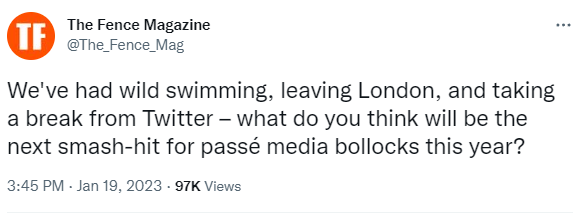
This tweet came along at exactly the right time, because I was about to write a twee and heartfelt letter about my own hobbies, extolling the joy and satisfaction of finding something to fill the winding hours with. But like the very best Tweets out there, of which there are a dwindling few, this sharp observation-framed-as-question made me look inwards and take a well-needed breath. No, I thought. The world does not need to hear every vague wandering of my mind. So what if I’ve found something that makes me feel like life is worth living? It’s not relevant to everyone. It’s actually quite boring. And what’s more, everyone knows they’re supposed to have a hobby—you’re not saying anything new. For once, critical inner-voice, you’re right. I can do better than this.

The thing is, right, that I’ve never been great at hobbies. I’m a workaholic, and it’s taken time and therapy to figure out how to not-work without feeling like I’m wasting my short time on earth. I actually wrote in a CV once that my hobbies and interests were working, because I couldn’t think of anything else to put. I did get the job, yes.

Katie Mather’s The Gulp is a reader-supported publication. To receive new posts and support my work, consider becoming a free or paid subscriber.

I find it hard not to monetise the things I enjoy, so it’s been pretty useful to rediscover a few of my passions that I couldn’t possibly make any money out of. In fact, they are expensive to enjoy. I can’t write a recipe book about motorcycle racing. I can’t produce a zine full of my diary entries—everyone would die. Instead I have to enjoy these activities, learn about them, spend my precious time doing them, in the full knowledge that I will never receive anything in return but my own enjoyment. What the fuck is that about?

*Katie’s cookbook “Butties To Take To Creg-ny-Baa” is out on May 32nd 2023*

Other Stuff

  • Strangers In The Night: Drinking in Parliament by Jimmy McIntosh for The Fence. I like to read every The Fence piece as though it’s a short story. It doesn’t matter to me if they’re real—even though they mostly are.

  • A note about subscribing to newspapers and national mags—my friend Ian informed me that by getting the PressReader app and putting in your library card number, you can subscribe to many publications for free, but they still receive a license fee and you are also helping your local library by using it.

  • James Pinder took some emotional photos Cyclocross National Championships in Milnthorpe last weekend you should all see.

  • Rachel Hendry on Champagne and its influence on brewing, beer visuals and our perception of what both of these drinks actually mean to us.

My Stuff

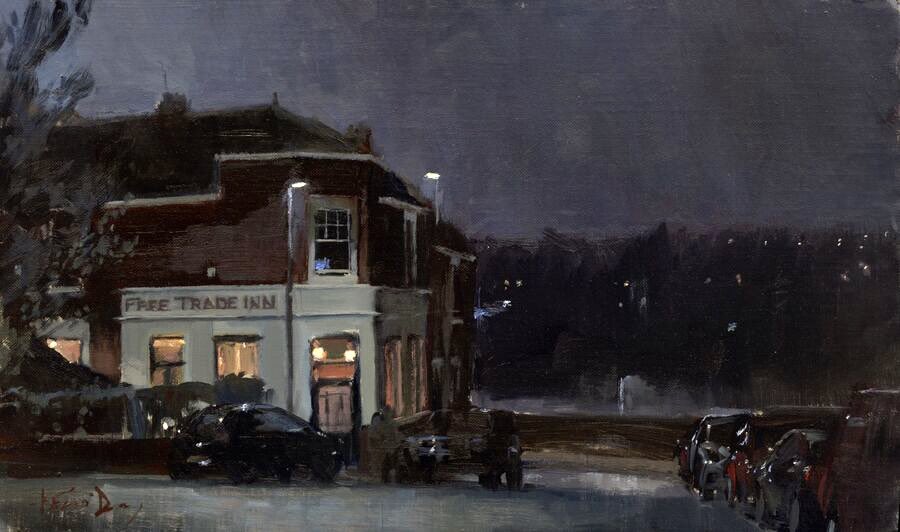
Free Trade Inn Night by Kevin Day

Katie Mather’s The Gulp is a reader-supported publication. To receive new posts and support my work, consider becoming a free or paid subscriber.

Closing Down An Industry

What will we do when there’s nowhere left?

It’s the middle of January 2023 and what I thought might happen is happening—hospitality businesses are counting up their Christmas and New Year takings, falling short of their targets, and closing up shop. This week I’ve seen a few surprising closures locally and more further afield—perhaps most shocking to me, Yakumama in Todmorden, a place that seemed to be thriving in the atmosphere of Tod’s excellent local bar and food culture. This morning I saw that iconic shop Oklahoma—once a café that showed me Manchester maybe wasn’t quite as bleak as I thought it was when I first moved there—is closing too, to focus on its online offering. A Burnley café that opened during lockdown and was loved by its regulars is closing. That one came up on my newsfeed. Breweries are closing too, and restaurants. This week is The Moorcock’s final week of trading. My favourite restaurant, and one of the most creative, inspirational, down-to-earth and welcoming places I’ve ever eaten, will be closing the door of its pub on the hill and its people will move on to pastures new. I am truly gutted.

It’s not just the indies who can’t cope. Chains of casual dining restaurants, funded mostly by investors with zero interest in food and ballooning in visibility (but curiously, never with that much popularity) around the 2010s, are flailing in the riptide. Byron Burger, perhaps best known for detaining workers they’d already trained and hired and staging an immigration raid, is closing locations all over the country. Same for Zizzis, ASK Italian, Cafe Rouge and Las Iguanas. These are not businesses set up by well-meaning and naïve folk with passion projects. They are huge, multi-million-pound companies, collapsing all around us.

Katie Mather’s The Gulp is a reader-supported publication. To receive new posts and support my work, consider becoming a free or paid subscriber.

For the longest time, we’ve looked at the struggling hospitality sector as a frivolous extra—part of British industry in only as much as those with real jobs use the businesses within it to wind down after a hard day’s graft. But I’ve been wondering, as the owner of a struggling hospitality business, what’s going to happen to the hundreds of thousands of people employed within the industry? How is the economy going to cope when workers cannot access the country’s largest unofficial financial safety net because it no longer exists? And while we watch our favourite places close around us, how will we encourage the good people who make our bars, pubs and restaurants what they are not to retrain out of the hospo world for good?

I am way past worrying about whether my business will survive the year now. I’m worried about the industry at large.

Other Stuff

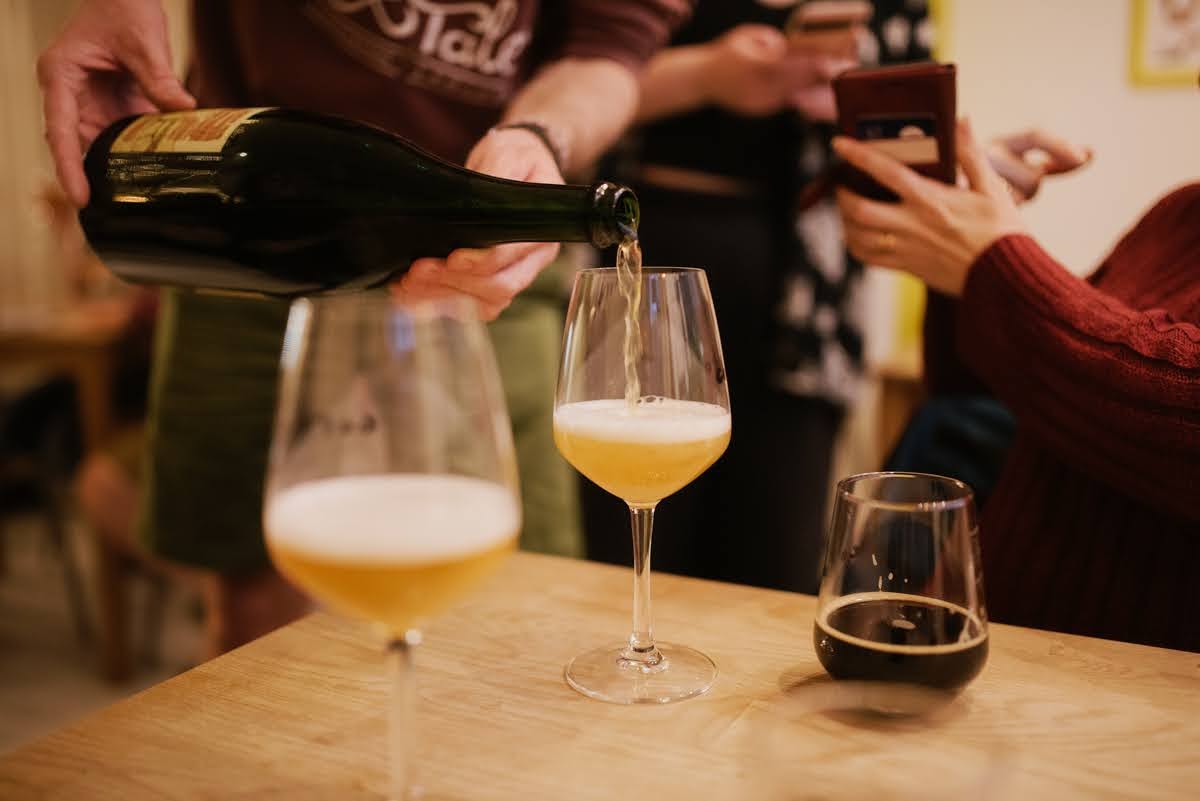
People sharing a Burning Sky at Corto — Photo by James Pinder

Katie Mather’s The Gulp is a reader-supported publication. To receive new posts and support my work, consider becoming a free or paid subscriber.

Winter Solstice, Bring My Sun Back

The freedom of an open window.

My glittering Christmas feelings get weaker every year, but rather than being sad, I’ve started to notice something else taking its place. I still hink about how much I miss strong sunshine, but I’ve also realised how many fleeting, delicate things there are to enjoy about Winter. The short days are barley enough to give me the UV rays I crave, but recently they’ve been crisp and clear, and I’ve loved being outside in them. The cold reminds me that I would rather be basking in the sun, but the feathery high-atmosphere clouds that come with frosty mornings touch me with a milder sort of joy.

The Winter Solstice is here, and it’s—for me, at least—a time to think about everything that’s happened over the past year. It’s not a time for making plans or striving for a goal. It’s a time for reflection—an important tool when it comes to setting new aspirations later. For me, this year has been one of deep, difficult inner work and plenty of career movement. I’ve learned so much about myself, and I’m proud of how far I’ve come.

Katie Mather’s The Gulp is a reader-supported publication. To receive new posts and support my work, consider becoming a free or paid subscriber.

Some of the most valuable life lessons I’ve learned have come to me this year. I’ve learned that if you try something and it doesn’t work, it’s not because you’ve failed. I’ve learned that the way I feel is often a choice I’ve made. And I’ve learned that I can run. I am in direct control of my surroundings. I can do the things I want to do, however seemingly out of character. I am not as restrained as I have always thought.

I’ve been trying out lüften, the German obsession with airing out rooms regularly no matter the weather. It feels incredibly wrong, to open a window while the heating is on. Rebellious. Wasteful. But as well as a well-ventilated home in times of bronchitis, It’s brought something else to me—hearing street noise from my desk grounds me, and reminds me I’m not holed up in my office alone. I can get totally lost in my work, which sounds ideal, but it can sometimes feel totally alienating and surreal. A breeze against my cheek tells me I am not trapped here. I am not being told to do this. I am just sat at a computer. I can leave whenever I want.

That realisation, that feeling of freedom. I wish I could carry it everywhere.


ClaudeMonet — Winter Landscape with an Evening Sky

Katie Mather’s The Gulp is a reader-supported publication. To receive new posts and support my work, consider becoming a free or paid subscriber.

Sodium Streetlamp Aesthetic

“They’re tearing up the streetlamps on my road.”

The first off-piste thing I ever wrote for a publication other than my own now-defunct blog was about Burial, and the changing shape of my world as his music lay glowing in the centre of it. That line, the one about the streetlamps, was the first sentence.

At the time of writing that first piece, in 2011, sodium lights were being replaced with LED, and I was lamenting the extinguishing of that distinct yellow haze that captures drizzle in the dark so perfectly. It was my private space to listen to Burial in, I said, and walking the wet, black streets, or on the top deck of a bus, lit up by glowing amber, I felt closer to the sounds, the musician. Back then I lived in a tiny cottage in Leeds, one of those really old houses that’s been built around over time, until it seems odd that it exists alongside pebbledash and concrete bollards. Like the stone and cobbles are the anomaly in the picture. I live in one again, years later — a cottage that had terraces built around it on both sides more than 100 years ago, a stranger on its own street. I don’t do it on purpose. I guess I just find them, these relics.

Katie Mather’s The Gulp is a reader-supported publication. To receive new posts and support my work, consider becoming a free or paid subscriber.

Burial likes relics too. In his new EP, which I’m finally absorbing now, he has placed sounds from the past in amongst new shapes and textures, to be spotted and collected as you move forward into the night. Exokind is my favourite track on the whole release. It’s full of insects and desolation, and 80s gothy synths — sound effects from the past evoking nostalgia in the unfamiliar. It makes me think of the after effects of a glacier, the massive shifting of time and place, so slow and imperceptible at the time, but unstoppable, powerful. Somehow those sonic touchpoints are comforting in the vastness of the space he’s created.

The website I wrote the piece for doesn’t exist anymore, and when it closed I chose not to republish it. Things change. It’s not so bad. I can still remember that colour, that feeling, even if I can’t see it anymore.

Other Stuff

  • A virtual tour of Stonehenge.

  • Tom and I have been listening to this tune a lot recently. Here is a great write-up about the artist, For Those I Love, and a different artist (Fred again..) doing similar but different things. I liked the juxtaposition.

  • I’m really interested in slacker generation x stuff, and about how it culminated in the years 2000-2002 being basically just people hurting themselves on TV. This piece on Jackass in Rolling Stone is pretty good if you’re also bafflingly into this stuff. Did you know Jackass was only on air for 3 seasons over a year and a half? It feels like it took up my whole life for decades.

  • A lovely piece on foraging for wimberries by Steph Shuttleworth for Pellicle.

  • Reaper’s Melody by Shambhavi – a sculpture about farming, society and power.

  • I’m eating a lot of soup at the moment. Here’s a story from 1989 about one of the all time greatest soup guys.

Katie Mather’s The Gulp is a reader-supported publication. To receive new posts and support my work, consider becoming a free or paid subscriber.

The Hidden Depths of a Cheese Single

Wrapped in plastic, forever in my heart.

There are few snacks that satisfy my cravings for savouriness, butter and bread like a cheese single between two thickly-spread slices of seeded. It has to be soft seeded — I’m partial to Warbie’s Toasty for most other applications, but when I make butties, I’m a stickler for quality. Despite the cheese I choose for them.

Cheese singles have no integrity, and neither do I. Put them in a sandwich and they become one with the rest of the combination almost immediately, no heat required. A solid version of cheese sauce. They are my secret weapon in a homemade grilled cheese — put all your gruyere and your raclette you want into a toastie, but if you don’t place a single or two on top of the grated cheese, you’re missing a trick. It oozes instantly. It shows the rest of the cheese how to do it. Instant lasagne sauce.

Katie Mather’s The Gulp is a reader-supported publication. To receive new posts and support my work, consider becoming a free or paid subscriber.

I already eat TKG for breakfast most days — imagine my joy when I found out you can avoid the egg and lay a square of fake cheese on your hot sushi rice and mix it in like a gooey condiment. When I learned that a lot of Korean snack foods often have an element of processed cheese involved, that was it for me. Gilgeori toast became a staple food in my house. It quickly became bastardised to suit my usual fridge contents: sometimes adding leftover roasted veg, sometimes adding kimchi or chillies, sometimes making it as plain as possible to suit the days when I can only face butter, cheese and bread. It’s always good. I recommend it.

Cheese singles were always in my fridge growing up, even if my mum would never admit it. I’m not sure what they were for, perhaps impromptu barbecues or burger nights, but I know we weren’t really supposed to eat them. They weren’t really food. That’s not too far from the truth actually — when Kraft invented the cheese single in 1950, their marketing centred around the high levels of processed milk protein rather than the origin of the foodstuff. In 2002, the Food and Drug Administration gave a decided that singles could not be legally labelled as “Pasteurized Processed Cheese Food.“ In order for a food product to be a true “cheese,” it has to be more than half cheese, which is technically pressed curds of milk. Being that each Kraft American single contains less than 51% curds, they do not meet the standard. They are technically a “Pasteurized Prepared Cheese Product.” In America (I don’t know what the UK regulations are currently given we’re not in the EU anymore, ffs, but I’m assuming we’re similar) the ingredients include preservatives including antimicrobial agents that inhibit the growth of bacteria and mould. Delicious! In a world that’s becoming more and more concerned with natural, back to the earth foods, I kindof respect its grim refusal to get anywhere near the real thing. Fuck it. You’re number 1. Why try harder?

Just This One Thing

I know I normally put a list of links here and that’s usually the best part of this newsletter, but today I have something else to say instead.

I’ve made a book.

Glug, the wine magazine by Wine52 which I am commissioning editor for (send me your pitches: katie@wine52.com) have published a book filled with essays and stories about wine, curated and partially written by me.

It’s called the Glug Wine Almanac, because I wanted to take a look at wine throughout the seasons, from the barren, frozen ground of the winter months, right through the buzz and burst of spring, the sunny days of summer until the vendange of autumn.

There are pieces by myself, Claire Bullen, Susan Boyle, Rachel Hendry, Jemma Beedie, Laura Hadland and a host of others included, all taking seasonal looks at wine, wine culture, and the technical aspects of tasting, drinking, storing, ageing and making wine. It’s also filled with the sort of beautiful illustrations I could only have dreamed of having in something I made.

I’m extremely proud of this project, and of everyone who put their heart into working so hard to make it the book I wanted it to be.

You’ll be able to buy it later on this year, release date TBC. More info on the book will be going up on my Instagram soon.

I hope you enjoy it when you get a chance to read it.

Katie Mather’s The Gulp is a reader-supported publication. To receive new posts and support my work, consider becoming a free or paid subscriber.

Scottish Strawberries

A smell I didn’t know was nostalgic, a place in time I didn’t know I was nostalgic for.

Tom came back from the market with a punnet of strawberries and like always, I peered at the top to see where they’d come from. Small, shiny beauties from Scotland.

In the village where I grew up (okay, one of the villages where I grew up), there was an unofficial strawberry fortnight. During the summer holidays, or just before them, I can’t quite remember, the paper shop where I ended up working for a little while would put out pallets full of local strawberries on the produce table outside—and they would go within the hour. They smelled like the end of school and the sweet syrup of melted ice poles—like strawberry-flavoured things, like laces and milkshakes and jam and campinos—not like the fruits I knew. Those promised sweetness and tasted sour. These strawberries were joyful, and folks carried four punnets at a time, away home to make meringues, or jams, or to sit on the front garden popping one after another into their mouths. When I worked at the shop, I’d write down orders for them on the corner of a paper bag.

Today when I saw the tartan-printed label on our market-bought strawbs, my heart did a little flip. I opened the punnet, knowing that I expected some sort of fanfare. The smell took me away almost instantly to a patchwork of summer memories: beach swimming at St Cyrus, house parties in the middle of nowhere, tracing Edwardian schoolboy carvings at Edzell Castle, cycling too fast over gravel tracks, walking out, out, out into the woods and fields of the Howe o the Mearns. The white river behind the blue door. The end of High School.

The shop used to smell like this, I said. It felt good to have warm memories of time I almost forgot.

That’s nice, said Tom. That’s a nice memory.

Other Stuff

  • Meet Me In Brixton McD’s — so good when people are given space to write about food that means something to them, whatever its provenance. Yvonne Maxwell paints a picture of her childhood and how McDonald’s was a part of it. Burgers are important, you know.

  • I am once again begging you to follow Caffs Not Cafés on Instagram. While the name might suggest a certain anti-snobbery towards posher establishments, Isaac Rangaswami truly adores the caffs he visits, and records them faithfully and thoughtfully with every post. I learn more about London’s food culture from him than from anyone else, I think.

  • On Pellicle this week, a fantastic piece by AJ Cox on the link between musicians and the beer industry. There’s a lot of crossover. It’s a super intriguing idea for a story.

  • As someone who literally just decided to get into film photography (nothing special, point and click, I found the camera in our attic) and who might be the last person remaining on this earth who actually enjoys putting filters and stupid shit on their pictures, I have become super fascinated by the idea of “film soup”.

  • The BierCult festival in Brussels is approaching and I am thrilled to be a part of it. It’s going to be a long weekend of beer talks, tastings and other beer-related fun, and I’ll be hosting something on natural wine as part of Sunday’s Compound Drinking session. If you’re going to be in the area, or you fancy popping across the channel to join in, you can get a ticket here.

My Stuff

Not much to report this week from me. A big project is about to finally go live so I’ll keep you updated on that in the coming weeks, and I’m currently spending all my free time writing copy for a famous travel website, which is keeping me busy but not exactly sane.

Keeping away from Twitter continues to do me a lot of good, and I’m urging you as a friend to scroll less. I know, it’s rich coming from someone like me. But it’s summer, and reading in the park with a bubbly water is what you deserve. Go enjoy yourself.

If you enjoy this newsletter, please consider sliding a tip over the counter. I am currently saving up to get some films developed, and to travel to Ulverston for a project of my own for once.

Film Soup – Stephanie Bryan

Eating and Drinking on the Isle of Mann

You use two “n”s if you’ve visited more than once and want people to know that.

I came back from the Isle of Man two weeks ago and it feels like an eternity spent away. Away from its craggy shores and manic seagulls, away from its strangeness. My memories of the island are stronger than ever.

I’ve visited the Isle of Man throughout my life since I was little, heading over for the TT Races. This dangerous motorsport is something I love with all my heart, and I can’t explain why. I’ve been thinking it over more than ever this year. A tragic year for the race, the casualties were many and it shocked me. It’s hard to balance that passion with the guilt and sadness. But as my friend points out, who races in the Superstock and Supersport races, he chooses to do it. It’s his whole life. He spends his year thinking about it, training for it, and he wants to do it for himself, and for no other reason. You could call this selfish, I suppose. Delusion. I call it commitment. Passion. I praise him for it. Perhaps I’m deluded too.

The island itself is a mysterious rock in the middle of the Irish sea, named after the Irish Celtic god Manannán mac Lir, the ruler of the sea and the Otherworld. In both Irish and Manx Celtic mythology, Manannán survived the advent of human occupation in Ireland. He took his faerie and godly peoples of the Tuatha Dé Danann to reside in an isle cloaked in feth fíada, a magical mist, obscuring them from the human race, keeping them safe. There they stay, and there are places in the Isle of Man where even the automated voice on the bus will ask you to greet Themselves (the faeries) out of respect. The idea that this island is a place to protect yourself from the human race is enough to make me want to stay forever.

I didn’t have chance to visit the ancient and Neolithic sites of the Isle of Man, but I did have the opportunity to eat and drink there. To eat and drink on the Island is to learn about the fierce locality of the produce here. Borne out of pride and necessity, the vast majority of fresh produce you’ll find here has been grown or made on the Island. The Isle of Man is itself a brand, and it sells well. The produce is good. Isle of Man butter? Fantastic. Milk? Delicious. Seafood? Good enough for the god of the sea. Isle of Man-made vegan burgers covered in Isle of Man-made kimchi and Isle of Man hot sauce? Divine. (Shoutout to Junkbox for making the best burger I have ever tasted. I am not kidding around.)

It’s difficult to find some very common British products here, despite technically being part of the United Kingdom, and the alcohol taxes and legislations are different and confusing. But who needs British booze when you’ve got local breweries making really decent beer with local ingredients? Or imported cider when there’s a wealth of local orchards to farm fruit, and bountiful rewilded areas to forage in?

We took a bus to Port Erin on the southern tip of the island and walked along the seafront, graphite clouds racing to shower us then passing on to the east, leaving us, eventually, with mild sunshine that turned the water into glimmering copper oxide.

On the end of the sea wall above centuries-old fishermen’s shacks, is Foraging Vintners, a winery with a bar and outdoor seating where the sea wind can blow in your hair. Foraging Vintners make wine from local fruit and foraged ingredients, and spirits too.

The elderflower fizz and rhubarb fizz were both excellent quality fruit wines, with a soft mousse that gave us the idea some apple had been used in the making of it. We found out that these fizzes were used in place of Champagne on the TT podium. Manx pride. I love it. The elderflower fizz was delicate and bouncy, chucking handfuls of blossom into the air like a tipsy wedding guest. I loved it. The rhubarb was a blushing shade of sun-caught pink, and I was super happy they’d aimed to keep hold of the beautiful rose water flavours and aromas I get from really fresh rhubarb stalks. I had a Pomme-Rita to finish, made with tequila and their own apple fizz. It was hearty enough to keep me going when the rain started again, and kept me fuzzy on the steam train ride back to Douglas, waving at cars on the level crossings and playing music through the window with tinny drinking locals at Castletown station, on a steam train heading the other way.

Other Stuff

My Stuff

  • A v short piece I did for Glug about popping a spoon in a bottle of wine to keep the fizz in. It was unexpectedly charming to write!

  • I would like to use this space to ask that you please take a look at the Pellicle website. I am so extremely proud of everything this magazine is doing right now, and excited about the future. I’d love for us to gain more readers every month—our writers deserve it, to be quite honest. If you feel you can afford to contribute to the Pellicle Patreon, please consider this a personal request. We can’t hire great artists, illustrators and writers without the support of a passionate, engaged readership. Thank you very much.

On Money and Wine Lists

Selling wine at the end of the world.

In the bar, I get that a lot of people are wary of ordering the wrong thing. They’re worried they won’t enjoy the wine they’ve chosen, or that they’ve chosen a wine I secretly think is bad, or stupid, or basic. Mostly these days, they are suspicious that I am simply fleecing them, recommending something costly for my own benefit.

The cost of living crisis is seeing to it that for many of us, treats are becoming more scarce and harder to justify to ourselves. Real household disposable income per will fall by 1.75% in 2022. Wages are not falling in line with inflation. This “stagflation” means, quite simply, that we have less and we are being asked to pay more.

It’s spiralling, causing more people to demand better wages—so at least one good thing might come from this. Perhaps people will be emboldened, more able to stand up and demand the money their employers owe them for their labour, demand their government do more to support them.

As much as I have tried to build a bar where the real world is safely sequestered outside, I cannot stop the economy from seeping into the walls. I am, more than ever, embarrassed and anxious to recommend a more expensive wine from the list in case I am being insensitive to a person’s individual circumstances. We have begun to cut down the number of “premium” wines on our orders in favour of value bottles we know people are more likely to choose and to afford. I have accepted that fewer people are buying whole bottles to share. We ourselves are buckling up for yet another tight period—perhaps the fifth since we opened our doors 51 weeks ago.

Bars, wine: a luxury. It’s true. But the togetherness I feel in our little haven of unreality on a weekend is something I am intensely proud of. I have taken more and more to asking people if they would like a water once they have finished their drink, just to have them stay a little longer, enjoying the escape. I do not and cannot run a charity, and our funds are stretched to breaking point, but I feel like spaces like ours are valuable in times like these. And I am grateful for every glass of wine we sell that enables us to keep opening the door.

Other Stuff

  • This week, Rachel Hendry’s J’adore Le Plonk newsletter turned two. Happy birthday J’adore Le Plonk! Read about her thoughts on service v experience, and sign up because she is a shining light in the drinks industry and deserves your gentle attention.

  • As we reach Pride month, I haven’t been able to get a certain artwork out of my head. “Untitled” (Portrait of Ross in L.A.) by Felix Gonzalez-Torres tugs at my heart every time I think of it. It is an 175lb pile of sweets, which you are encouraged to take from, reducing the pile and enjoying its sweetness in return. It is an allegory of his partner Ross Laycock’s life, who passed away from AIDS, and to me all these years on, a statement of society’s consumption of everything LGBTQIA+ culture affords it while giving little to nothing back to support, aid and sustain it.

  • The Copa Del Sol is a sculpture on Costa Corayes, Mexico, a concrete bowl 88ft in diameter, designed to collect the sun, sea and horizon in one atmospheric place. “La Copa del Sol is a place to meditate, transmute energy or simply forget about the world for a moment.”

  • Alicia Kennedy on “oyster culture,” their history, their beauty and why we are drawn to them.

“Untitled” (Portrait of Ross in L.A.) by Felix Gonzalez-Torres

Recipe Reels Might Turn Me Vegan

If anyone can make a total lifestyle change look easy, it’s a shiny happy influencer in an 8 second clip.

I can’t get enough of food insta. I watch food programmes when I need to relax, and so it follows that rapidfire food content full of shiny sauces being stirred and salt sprinkling from up high in luxury AirBnB kitchens would capture my attention. I am captured. Here’s a sort-of poem about them.

I like the happy ones. The pretty ones. The ones who take a bite of broccoli,

awestruck.

Oh my god, you guys, this is so good.

You have to try this.

Three ingredients.

So easy. So cheap. No waste.

Plants, sunshine, clear skin, youth

No magic

Just a 15 minute meal, prepared in a spotless kitchen

Pasta, domesticity, mukbang: happiness

Other Stuff

  • The Rough Stuff Fellowship began in the 1950s as a cycling group dedicated to shunning tarmac and climbing hills. It, of course began in a pub. It’s still accepting members as this piece by Tom Vanderbilt proves. Excellent photos too.

  • I very much enjoyed this Instagram post by St. John about the pleasure of serving a table of one. “A table-for-one is the greatest compliment a restaurant can receive.”

  • The boggy peatlands of Scotland are being restored in the name of carbon capture—they’re some of the most effective environments in the world at collecting and storing carbon from the atmosphere. It has taken no time at all for the value to be seen in saving and protecting the environment now that money can be made from doing so, and large areas of the Highlands are being bought to be registered, restored and then sold to companies who can use it to offset their emissions (like Brewdog, for example.) This piece in the New York Times asked the question: who should profit from these formerly worthless bogs?

  • A film by Accessfund about climbing respectfully: Bears Ears National Monument: Respect the People, Respect the Resources

  • A simply lovely piece by Lily Waite about The Salutation Inn in Ham, Gloucestershire for Pellicle.