Does my experience need to be shared? Or am I ruining someone’s day?
I’ll let you in on a little secret today—my favourite café was a total dud the last time I visited.
I’m not saying that it’s ruined my month, but I’m still feeling a sinking feeling in my chest about it. It’s like losing a friend. Am I being dramatic?
Ordinarily, the coffee at this spot is fantastic, and the atmosphere is stunning. I like to come here to feel like I upgraded my life—on a rainy afternoon it truly feels like an aspirational place to sit and exist, among thoughtful design and architecture.
I was so annoyed by the bad service and uncharacteristically poor coffee (cold, under-extracted) that I left in a mood. That mood didn’t lift for a while. I sat in the van and deliberated on whether to leave a negative review. I decided against it.
But the feeling lingered. I opened the Google reviews page again later that night. I closed it. What would it achieve?
The negative Google review I imagined became a thought experiment. If I posted my exact thoughts, what would that be for? Who was my audience? Why did I want to share my dissatisfaction in this way? Did I believe it would make me feel better? Was I really warning other people not to visit, or did I want to express that personal sense of annoyance? If so, why? Now, say I did post it, along with my two stars—no, two and a half stars. Would it resolve the niggling disappointment I still felt? Would I stop thinking about how a café I loved was succumbing to money issues and corner cutting just like everywhere else? If I didn’t post it, could I just forget about the whole thing, and get on with my life like anyone else would have done by now?
The world is such a hard place to be, and we look at our small treats as reasons to exist. I think about this piece by Imogen West-Knights for the Financial Times all the time: Treat Brain: how the Pandemic is rewiring our brains. In it, Imogen speaks to scientists and behaviour experts about the human need for distraction and consumption. She posits that what was once an indulgence has now become a necessity.
The tomorrow I imagined in which I would “be good” again has never come, and I don’t want it to. I want to enjoy myself. The truth is life was always like this: a series of good times and bad times, and I deserved to eat what I wanted in all of them.
I started to think about how the disappointing coffee experience had been a representation of everything going to shit. In my calming place of beauty and perfection, I had been reminded of grim reality. My treat brain had been short-changed. But why was that anyone else’s problem?
Reviews were so important to me when I had a bar, they showed me what people liked about us, and what we could improve. It was always interesting to see, however, that positive reviews were always about the things people enjoyed, and negative reviews were about how a person felt. Negative reviews are charged with emotion, positive reviews tend to be more factual: I had a lovely drink, the cheese toastie was nice.
I also noticed how negative reviews often showed an attempt to showcase a person’s elite sense of taste or superior knowledge—something I’ve learned is called the “Cynical Genius Illusion.” Picking holes makes you seem like you know what you’re talking about, so you keep finding ways to appraise the world around you, never satisfied with what you’re given, always looking for what could be improved, never appreciating what actually exists. The life of a critic. What a depressing way to live. Please don’t let that happen to me (again.)
I’ve just gotten off the phone with Will Harris and James Horrocks of Balance Brewing and Blending. What started as a professional call—an interview for a piece I’m writing for Glug magazine—ended as a vibrant discussion about the state of beer lists in restaurants. Why, James asks, can’t they put as much care and attention into their beer selections as they do their food, ingredients, presentation, their wine lists? I don’t know, I reply. But it really pisses me off.
Years ago, I visited a deservedly well-respected restaurant. The food was astonishingly good, in particular I remember there being venison smoked on spruce, the smoke still wafting lazily from the covered dishes brought to our table like the trail from a woodsman’s cabin’s chimney. At pudding time, I didn’t really fancy anything—I usually stuff myself with side dishes and bread rather than wait for the sweet menu—but I could have been persuaded to share a cheese board with a nice bottle of something Belgian. We asked for the beer menu. There wasn’t one. It was a memorised list of forgettable beers, some of which had run out, and there were definitely no bottled beers except for gluten free Peroni (v. nice to see them taking care of the GF crowd though, well done to them!)
It left a bit of a scar, if I’m honest. Everything that night had been perfect up until this point, and the rest of my group had a totally wonderful time. And I’m glad! But for me, a place that prides itself on being a pub should have a good selection of beer to choose from, and a place that is famous for its service and fine dining should really be offering beers that match the high mark they set for themselves. Beers like this exist! It’s not hard to find them either!
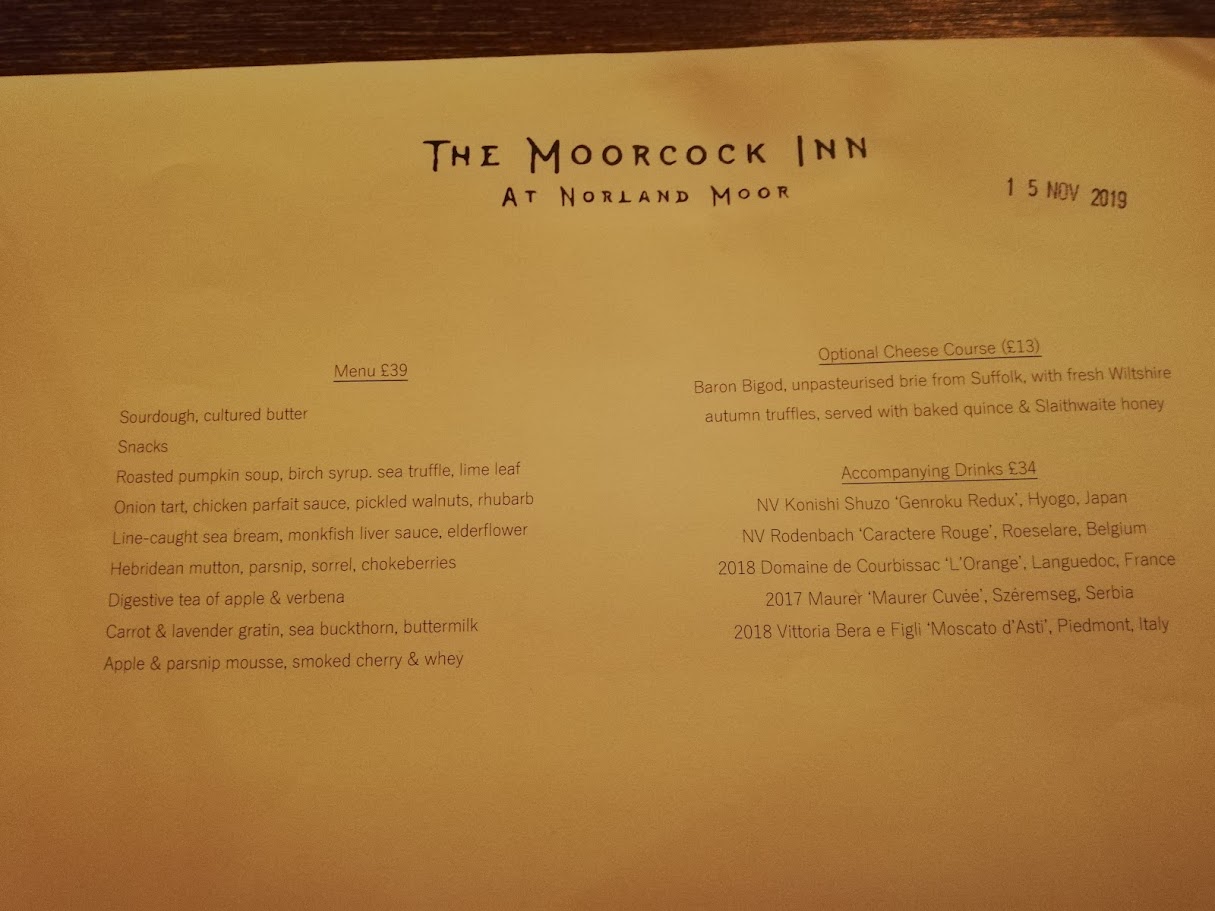
This restaurant is not alone in their abandonment of beer. In so many people’s experiences, beer is simply a perfunctory beverage. This is such a huge shame. Being poured an Rodenbach Caractere Rouge at The Moorcock (RIP) to pair with a supremely delicious cut of mutton belly is one of the best food memories I have. So why don’t more restaurants experiment with beer on their drinks menus? It seems such a shame to me. They could be opening up their diners to new characters and flavours, and offering something unique in a world saturated with expectations and pretentions. Why deny yourself some excitement? Why cut yourself off from a world of pleasure?
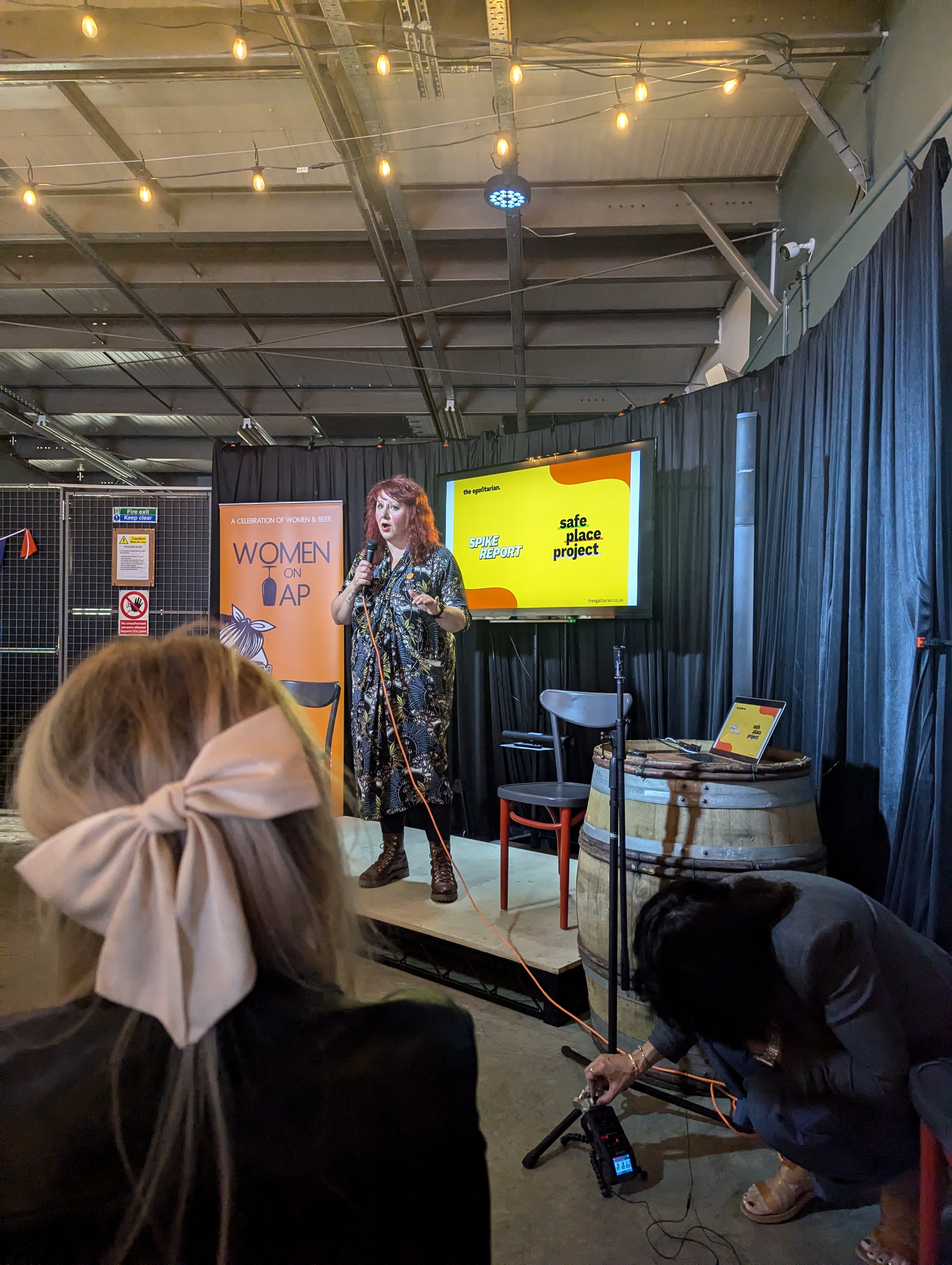
A slight pause in publications as I attend Women On Tap’s Summer Hop conference.
Today I’m at Rooster’s brewery and tap room in Harrogate for the Women On Tap Summer Hop conference.
So far the talks have included research from the Dea Latis Women In Beer paper, and from a PhD candidate researching inequality in the craft beer industry.
I’ll write more about some of the issues, conclusions, and possible solutions raised at a later date—it’s been a really interesting morning. For now, however, I’ll just leave you with some questions to ponder while I scoff some triangle butties and head to the afternoon’s seminars.
After 5 years of access to data that shows women are not engaging with beer either as drinkers or employees in any great number—does the beer industry actually want to change?
Why don’t groups of women visit tap rooms together without men?
How can beer education be promoted and made widely accessible while being mindful of issues around health, alcohol, and the law?
Are women worried about ordering beer because they feel like they will be ridiculed? Why?
Why do men order default drinks for their female partners without asking them what they’d like?
Katie Mather’s The Gulp is a reader-supported publication. To receive new posts and support my work, consider becoming a free or paid subscriber.
A cutting from the editorial floor to get you pumped for my full story, published on Wednesday 3 July.
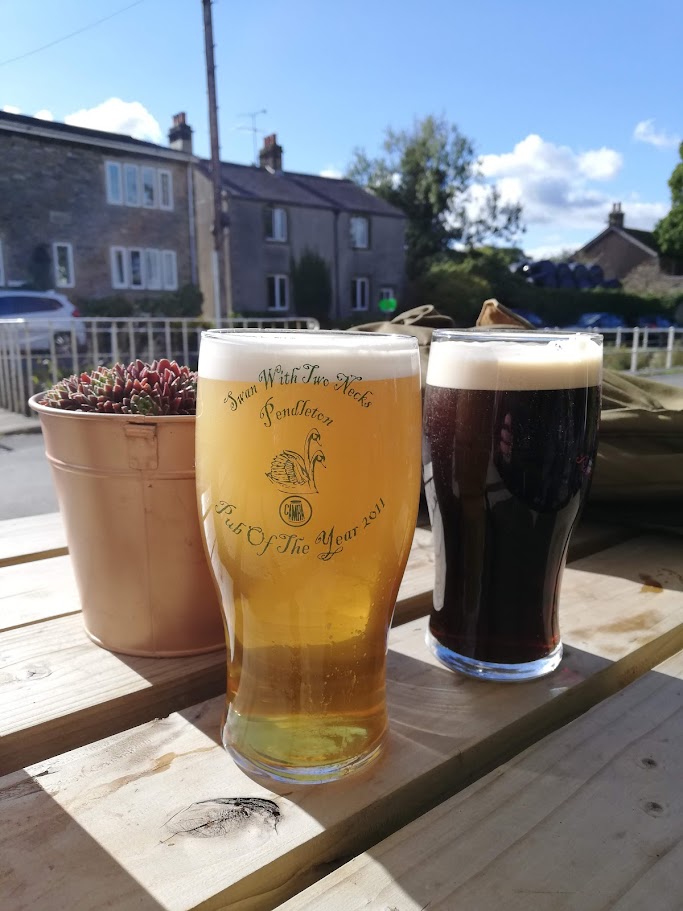
This story will be published in full on Wednesday 3 July by Pellicle. The Swan With Two Necks is a local institution here in the Ribble valley, and I’m thrilled to be singing its praises on such a large platform, to readers all over the world.
In 1990, The Swan With Two Necks also became a Post Office branch.
“Basically there was nowhere else, so the Post Office rang us and asked us if we could do it,” says Christine Dilworth, the Swan’s landlady. “We were one of the first pubs to do this.”
The Post Office work, which Christine used to do two mornings a week, put them in touch with locals who they’d never normally see, who began to come in for their lunch and stay for a chat. Then, they started to have issues with the combined businesses.
“The Horizon computer just wouldn’t balance,” explains Christine.
“Then a local Post Office was robbed, and I decided I couldn’t do it on my own anymore. It was a shame really, because the week we decided to close our Post Office branch, the one in Barrow closed too.”
Barrow is a small village around five miles away from Pendleton, and despite the obvious stress of running an extra business on top of a very busy local pub, and their near miss with the Horizon IT scandal, it’s still clear to see that Christine still feels that her duty is with the local community.
Read the full piece on Pellicle from Wednesday 3 July!
When we think about pubs and the difficulties they face, our experiences are often clouded by the extremities of the Covid 19 pandemic and its long-reaching problems for the hospitality industry. The truth is, and this was underlined many times by both Christine and her husband Stephen when I spoke to them, that running a pub has never been an idyllic way of life. As well as its positives, it has always been fraught with outside interference and hardships.
The Dilworth’s close call with what later became the Horizon computer scandal is just one story of many that shows how precarious a pub owner’s livelihood can be. It is never a simple case of owning the pub, choosing the beers, serving the customers. There will always, unfortunately, be businesses to please, contracts to honour, and outside interests to fight off. That Christine wanted to double her workload to become the village’s only post office desk whilst running a very busy pub is testament to her dedication to her role in the centre of her community—but it also shows how people with the best intentions are taken advantage of. Had things turned out differently, The Swan With Two Necks could have been yet another Horizon scandal victim, or worse, and it doesn’t escape my mind that this would have meant almost certain closure.
That we still have The Swan With Two Necks with Christine and Stephen at the helm is a minor miracle—you’ll read all about it tomorrow—and one I don’t take for granted. They are part of the generation of publicans that truly live and breath their craft, and I’m grateful to learn from them, and call them my friends. When they finally retire, I’m not sure how the local pub scene will look. But then, it’s not their job to uphold standards for everybody. They simply love running their pub, and they do it well. I can only hope there are still people out there who want to do the same. I certainly don’t think I have the mettle for it anymore.
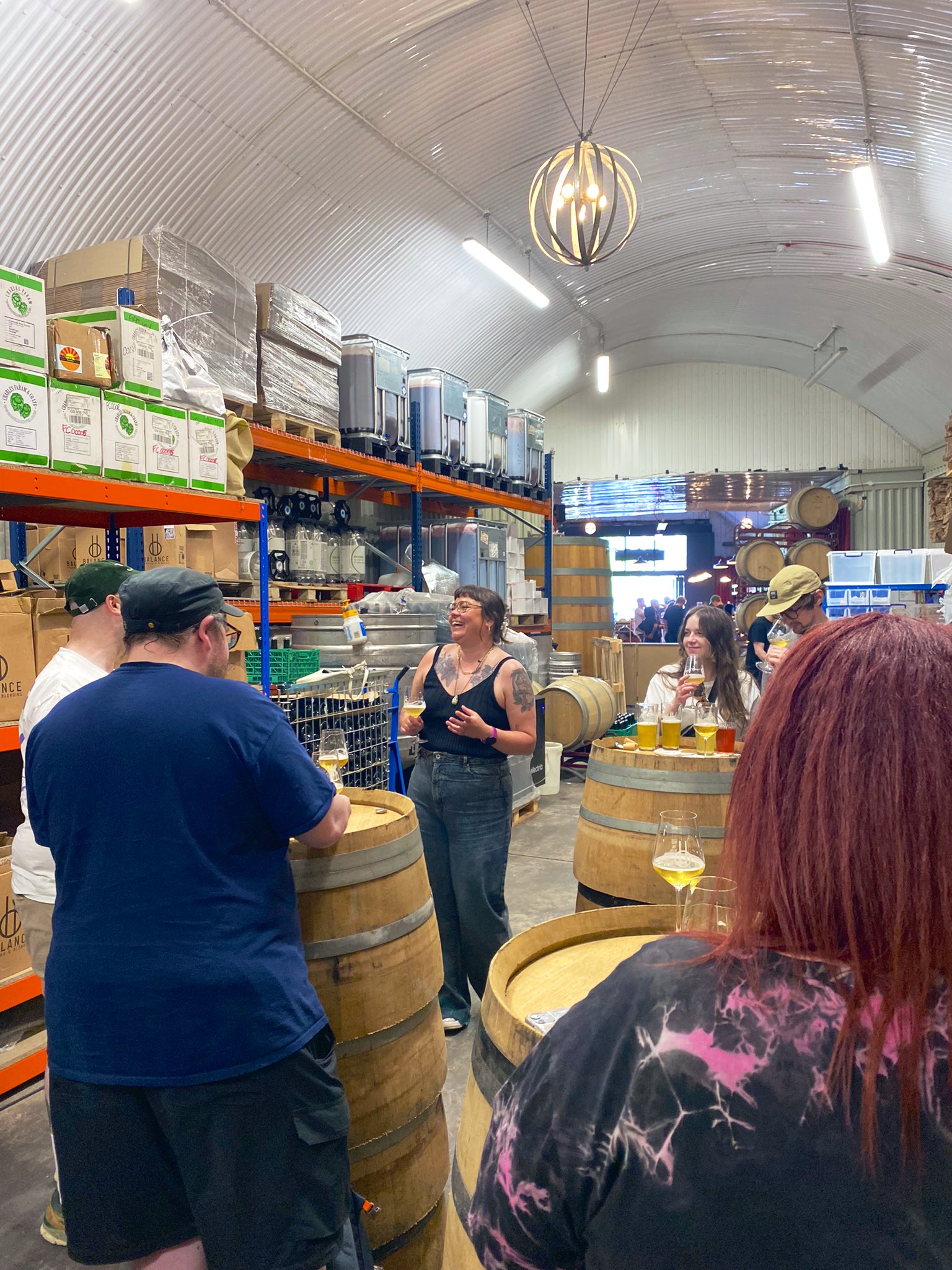
I love leading tasting sessions, but do people actually want to know about cryo hops and malt varieties?
At school, the very act of standing in front of the class to give a talk was enough to make me faint. I wasn’t a shy child as such, I just didn’t like that much undivided attention on me—it turned out that despite playing multiple instruments and being a bit of a show off, I had, and still get, major stage fright. I remember standing on the school stage with some of my closest friends to play bass in our joke band and being so utterly overwhelmed by the crowd of literally tens of fellow pupils, the guitarist just turned my amp right down mid song and walked me to the side of the stage slightly behind the curtain. So much for my career as a nu-metal postergirl.
I was always told that preparation was the difference between giving a great talk and absolutely chumping it, but in my experience the only thing that has helped me to overcome the violent shakes and excessive sweating is having years of nerdy research behind me that just so happens to be on the topic I’m talking about. Confidence in my abilities and knowledge is the only thing left when I’m talking in front of people, the rest of my soul seems to leave my body for the entire duration, and that confidence has taken years to build.
Unlikely as it is, I really enjoy running beer tasting sessions. I love the playfulness of getting attendees to try something new and to describe what they taste and smell and understand what it is that they are tasting, and why. Being able to let my nerdy side loose appeals to the side of me that might have been a teacher, using pages and pages of book learning to build a picture of what exactly makes a beer taste the way it does, and enjoying the looks of understanding when my cohort realise there is more to beer than their usual two options on the bar—lager or Guinness.
I worry sometimes I go too far. Does the average drinker care about cryo hops? Are my enthusiastic sermons about malt turning people off? I think about what I want from a beer tasting—to learn about who made it, and how, and why—and I hope that other people want to know the same thing. But honestly, am I mostly talking gibberish to a room full of people who would rather just drink and enjoy?
It’s my opinion that all things are more enjoyable if you know a little about them. For example, I’ve gotten really into the Euros these past couple of weeks because I’ve bothered this time around to listen to the commentators and learn about the rules and idiosyncrasies of the game. I did the same for cycling, and the same with wine. I love to learn, it’s my favourite hobby besides thinking about things (honestly, sitting and thinking about something knotty really is one of my favourite activities ever) and I guess I hope that in my tasting sessions I transfer a bit of that passion for knowledge. I know that beer is, at it’s soul, a simple drink for everyone to enjoy. But when it comes to the details, that’s when it all lights up for me, and I wonder how many people really are interested in the processes and ingredients but were just too afraid to ask—because it’s “just beer”. I truly think there’s a wall between the beer world and the average drinker, built by lack of info but conversely, by a vast, impenetrable-seeming pile of details. That’s why I like running tasting sessions. It feels in that moment like I’m knocking that wall down.
My story about The Swan With Two Necks is being published in two weeks
I’ve re-joined the Guild of Beer Writers
I’m working on a print zine for Pellicle
If you’re a Substack user, make sure you download the app, the notes section on it is actually great
Please consider signing up to be a Pellicle Patreon supporter! I’m working really hard on a lot of projects for the magazine right now and your support means I can keep devoting time to what I think is a vital outlet for food and drink journalism.
A summery treat for people who almost like tomatoes.
Yesterday I overcame a severe problem. I ate raw tomatoes without gagging. They say that a person’s tastebuds change every seven years, and all my life I’ve hoped that in the next septennial I’d become a lover of tomatoes.
They are just so beautiful, a perfect vision of summer. They look juicy and fun. Big berries the vibrant colour of poison. I’ve always wanted to eat a caprese salad, but to me, tomatoes tasted of bile and puddle water. Disappointingly bland and sour.
I learned that this is because I live in England and buy my veg from the supermarket. Out of season tomatoes in Britain aren’t worth shit. In Spain, I ate them cut in slices on soft, crusty bread, and wondered why their fresh, gorgeous fragrance isn’t used in every perfume and Glade plug in. I realised that I do, finally, like tomatoes. I’m just picky. They have to taste like pure sunshine, or I’m not interested.
I will never eat the cherry tomato on the side of my pub meal plate. I will probably always take the anaemic slice of beef tom out of my burger. But if it’s hot outside—and it’s hot right now—I at least know that I can treat myself to some deeply ripened tomatoes with stylish pretentions and colourful blotches and that I will enjoy them. What a breakthrough. How brave!
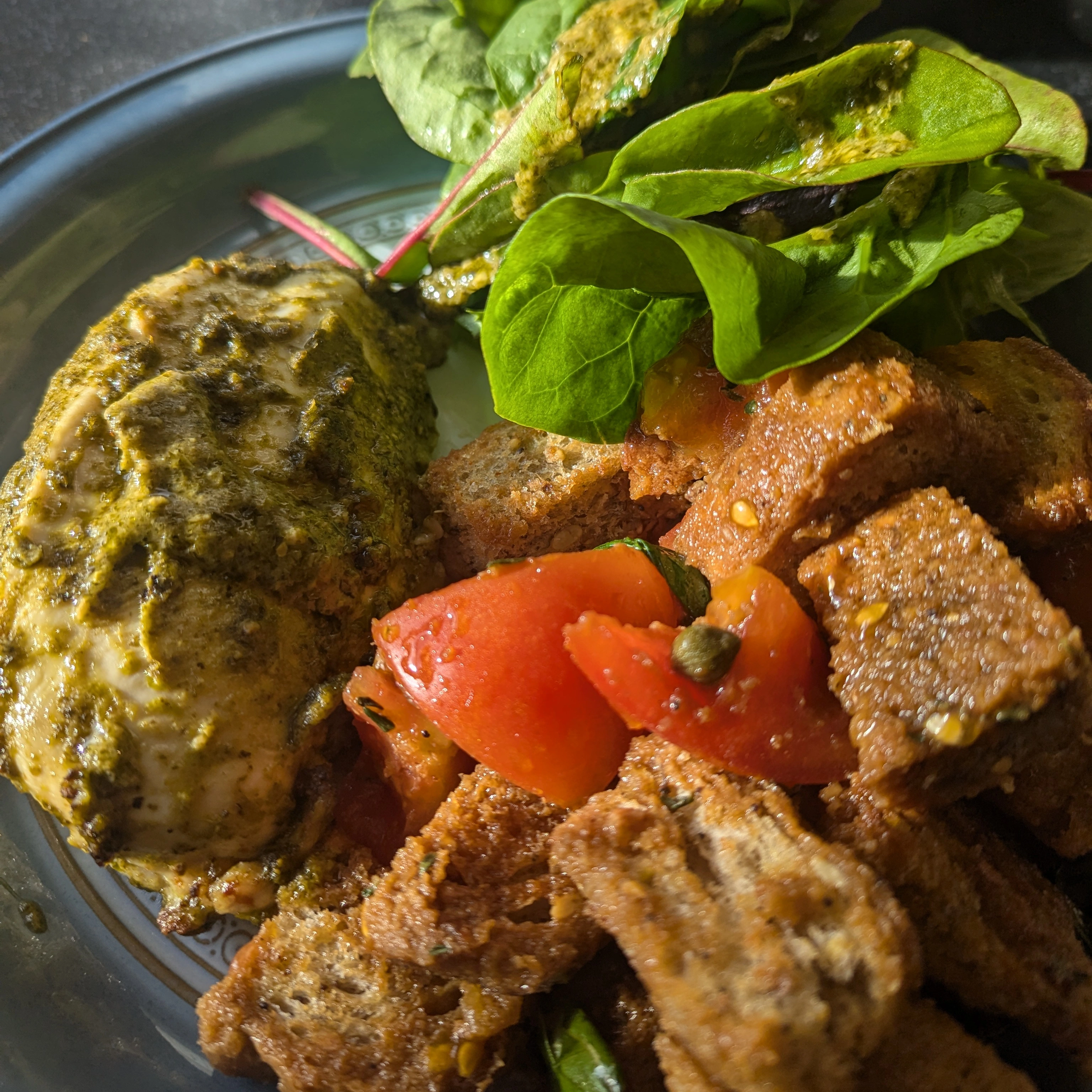
Last night I made panzanella for tea, another dish I’ve always wanted to eat but have never been able to stomach. Until now.
It was the perfect side dish for pesto chicken, and it used up all the leftover rye and wheat loaf I hadn’t made sandwiches with over the weekend (best laid plans etc.) Here’s how I made it. As always, no real measurements were taken or remembered. Just taste as you go. It’s bread and oil and tomatoes. You can’t go far wrong.
Panzanella
Bread, torn or cut into chunks
Olive oil
2 cloves garlic
Juicy, ripe tomatoes
Balsamic vinegar
Smoked salt
Black pepper
Capers
Fresh basil
Dijon mustard
Put the bread chunks into a mixing bowl and toss them well with a glug of olive oil. Add a pinch of salt, and put in the oven at 200°C fan for about 15 mins, or until the bread starts to brown and harden but still has a chew.
Roughly chop your tomatoes into big chunks that would fill your mouth and place them into a colander over the bowl you tossed the bread in. Shake smoked salt over them and let the juice drip into the bowl until the bread is done.
Take the bread out of the oven once it’s done and let it cool a little.
Move the tomato-filled colander to a plate and to the tomato juice add a generous amount of olive oil, a half tsp of Dijon mustard, a glug of balsic vinegar, grated garlic cloves, freshly ground black pepper, capers, and a big pinch of the smoked salt. Mix with a whisk or fork until it becomes a dressing.
Add the baked bread chunks to the bowl with a bunch of torn up basil, and toss until totally combined.
Leave for around 10 mins to get real juicy.
Eat as much of it as you can—you can’t save it for later.
When nothing springs to mind, a good sandwich is better than a mediocre meal.
I was paid a little money today so I bought a roast chicken from the butchers down the road. I was going to maybe make something tofu-ish for tea, probably another curry, but I wasn’t sure, and nothing else in my freezer was really doing it for me. Normally there’s nothing left after four in the afternoon, but today there was a row of bronzed rotisserie babes visible through the window, and I knew. Today is a roast chicken salad sandwich kind of day. The type where the seeded bread is soft and the butter is thickly spread, the chicken is generously torn into chunks and salt is sprinkled with abandon. The salad: anything I have in the fridge, probably romaine and spinach, with cornichons chopped up, and a little mayonnaise between the chicken and the greens.
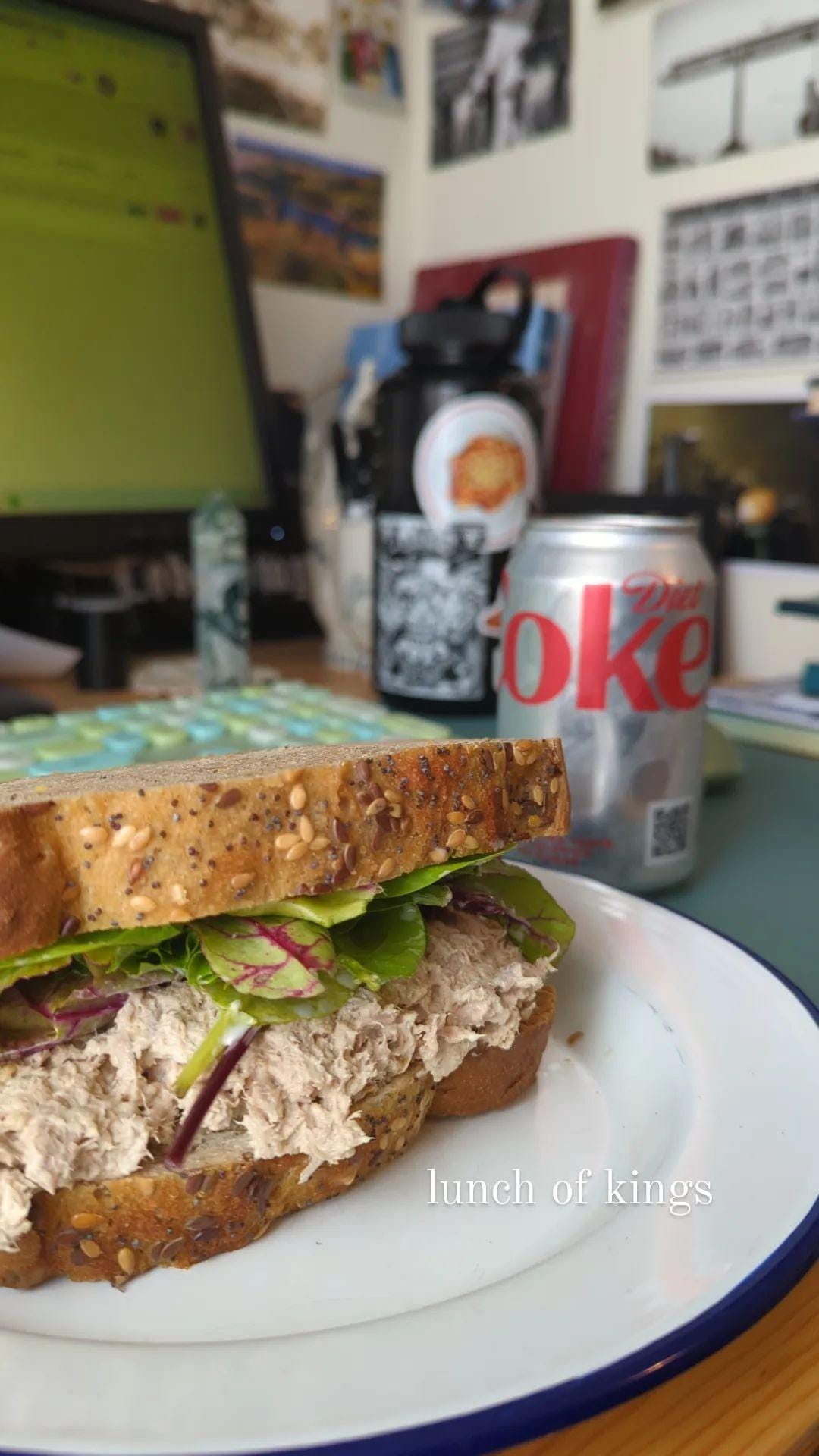
While roast chicken sandwiches are one of my favourite things to eat, they aren’t my favourite sandwich. The best sandwich you can make me is tuna mayo. You can add cheese if you want, and toast it if you feel like it, but just a plain tuna mayo sandwich, when it’s done right, is a song.
Katie Mather’s The Gulp is a reader-supported publication. To receive new posts and support my work, consider becoming a free or paid subscriber.
I put vinegar in my tuna mayo mixture. I can’t remember when I started doing this, but instead of using lemon juice, which I think is too acrid for the sweet blandness of tinned tuna fish, adding a dash of malt or cider vinegar adds a piquancy that lifts the whole dish. I also add freshly ground pepper to the mix, and a sprinkle of salt—but then I always buy cans of tuna in spring water, not brine.
I will eat a plain tuna sandwich, especially if it’s on buttered Warburton’s Toastie bread, but my absolute favourite type of tuna sandwich is one with mixed salad leaves on it. Even just baby spinach will do. I need that little addition of freshness to really elevate the butty. Cucumber? Sure, if you’ve made it on a white baguette. But on a sandwich? Kindof sloppy, not very tasty—I’m not that into it. A controversial opinion I’m sure, but cucumber shines in so many other applications, it just doesn’t need to be included here. Put it with the chicken instead, in chunky coins, or in quick-pickled ribbons.
It’s never been able to separate sexiness from actual sexism. How can we change that?
Throughout this piece I refer to women—this includes and always will include Trans Women. It is also a piece of personal insight and opinion. Please take from it what you will and be respectful in your responses.
I’m a woman, and I like sexy things. Things that are delicious and decadent, things that are a bit risqué—things that remind me that I’m not a grey blob in a hoodie, that I am alive.
There has always been a difficulty between treading the line between sensuality and straight-up sexism in advertising. Internalised misogyny throughout society objectifies women, and using their bodies to sell, well, anything you can think of, underlines the perceived cheapness of women, and their usefulness only as a commodity. The flip side of this is a whole demographic of men who openly despise women, believing that we want this objectification, that we desire the male gaze—of which they are responsible—and will do anything to get it. Either way, women come out right at the bottom.
As I write this, a Chicago house tune by FISHER is playing through my speakers. The femme voice over the top says: “take it off/slow/steady/undress/impress.” Even music uses women to feel sexier. FISHER is a 37 year old man. It’s not his voice. Yet I still like the song—it’s cheeky, it’s fun. I’m not offended by it, in fact I feel slightly energised. It makes me want to dance in a club wearing a sparkly dress. Have I been brainwashed by the patriarchy to want to dance in the club in a sparkly dress to songs that talk about getting naked? Or is this what I want? It’s so hard to tell anymore. Let me call a taxi and we can talk about it on our way over there.
I wanted to have a go at untangling some of these ideas because I sometimes find the sexism in beer arguments difficult to engage with. Let me begin by saying I completely agree that women are just as valuable within the industry as men, that beer is for everyone, and that as a woman who drinks beer and promotes it too, I have a responsibility to advocate for women within the industry.
The way women have been treated in the beer industry is disgusting. Inequality and harassment has been more common than anyone thought (although, you know, people do talk about it if you listen), and women are still treated with condescension in beer spheres. We still feel unsafe at festivals, and places where high levels of alcohol consumption mean we feel as though we need to be on the alert around our fellow drinkers. I’m making allusions. You all know what I mean.
To promote women within the beer industry is commendable. I want to help in any way I can. But I also, parallel to this, want to protect women, and I want bigger issues relating to women in beer to be addressed and worked on before I encourage more women to choose a career within it. I want women working in breweries to be treated equally and paid the same as men. I want women in the beer world to be commended for their achievements and their skills and talent and chosen to be mentors and leaders within industry—not just added to roundtables and speakers’ lists to talk about “being a woman in the beer world”. I want people who abuse, harass and demean women within the beer industry to be held accountable for their actions, to lose their jobs and status, to understand that this is not an acceptable way for anyone to act, anywhere. I never again want to find a woman a job in a hospitality setting only for them to leave that job because a manager, or a colleague of any kind, was bullying or harassing them because they are a woman. I want women to feel safe and valued within our industry, and I want the same for me.
Katie Mather’s The Gulp is a reader-supported publication. To receive new posts and support my work, consider becoming a free or paid subscriber.
Customers don’t see this side of the industry, and so while it is incredibly important to me, I’m not convinced that the treatment of women within beer is the reason more women aren’t drinking beer. Perhaps that “laddish” image doesn’t work in beer’s favour for many people, not just women. But in a conversation with drinks writer Rachel Hendry, we both agreed on something: women who don’t drink beer want something that matches their mood. A drink that accentuates their style and punctuates their sentences. A drink that makes them feel how they want to feel. When I go out and choose not to drink beer—and I’m reminding you here, I’m a woman—it’s because I want something chic like a martini, or sexy and flirty like a spicy margarita. Easy-breezy like a vodka tonic.
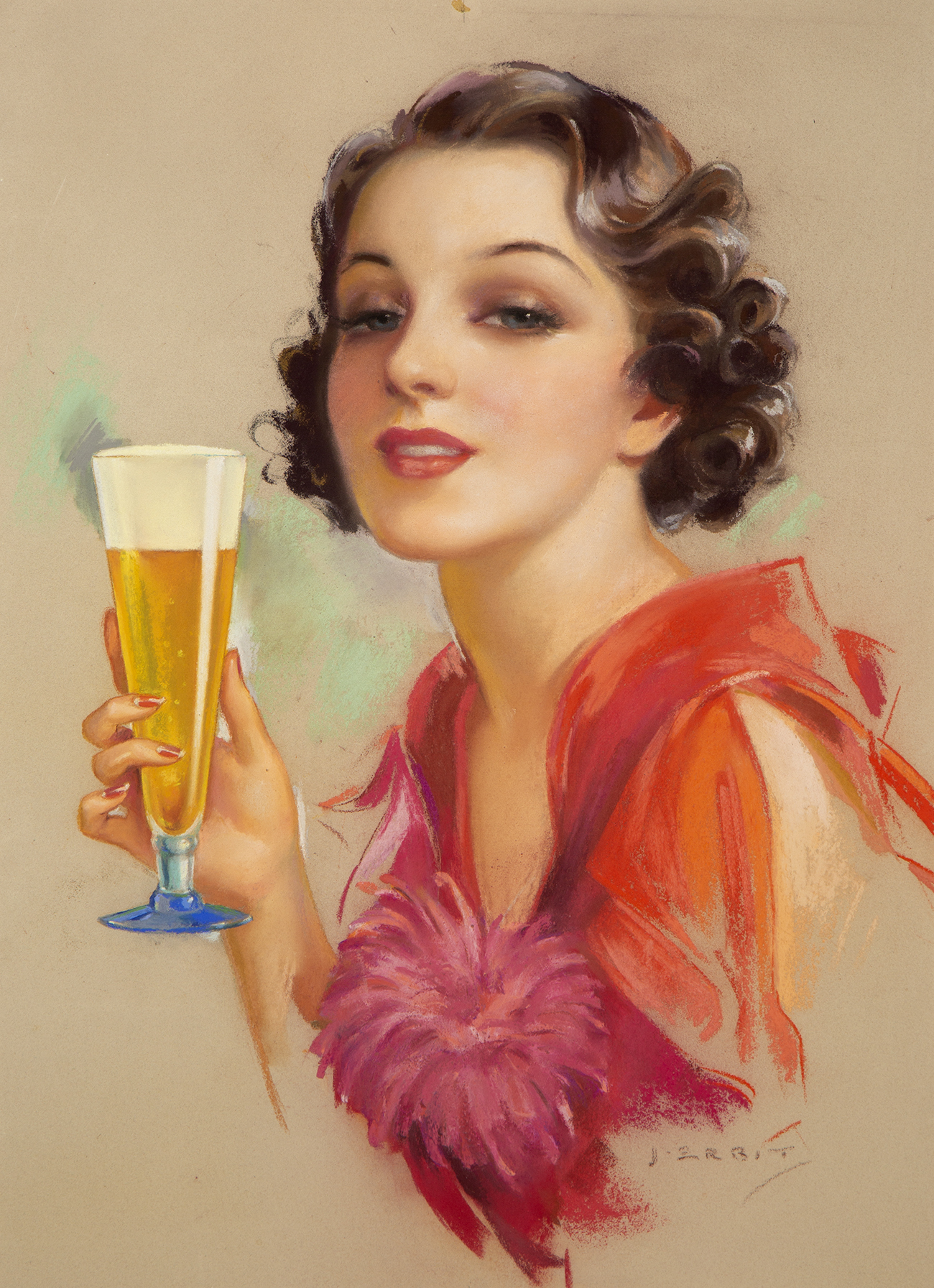
Beer is seriously unsexy. Is that why women who don’t love beer for all its flavours and styles and aromas don’t drink it? I don’t know. Has anyone asked them? What do women want? As Rachel says: “To feel sexy! And strong! And smart! And sensual! Give me a champagne coupe!”
Yes, there is a lot more to women than these simple, carnal desires, and to judge all women as one entity is futile. You know it is. We can’t understand why women aren’t drinking beer because we are guessing at what non-beer-drinking women want instead of asking them. In a study by Dea Latis, who actually have been asking women what they think, women were asked why they didn’t drink beer they said three things: advertising, presentation, and health/calorific concerns. Are the first two not what I’ve been saying?
I can only say how I feel. I am a bisexual woman in my mid (shut it) thirties, and I’ve seen a lot of shitty beer advertising that takes advantage of women for the male gaze, and it has always confused me. Yes, it’s crap, but it also finds a way to other me in a new, unimproved direction. I fancy women, so am I supposed to find this appealing too? Is that what people who love women are like? I know that more than once I’ve been offended, not by the pump clip or label art itself even, but because the beer was appalling. Boobs are too good to be used to sell badly made beer. I’ve also seen misguided attempts at bringing women into the fold by appealing to our “sweet tooth”. Absolutely get fucked. Am I angry about the assumption here, that women don’t like the taste of beer, or is it the lack of imagination? Maybe it’s both.
I’ve been taken in by women-centric marketing too—especially in the wine and spirits categories. Rachel said she agreed, and that, “Wine and spirits are sexier and aesthetically pleasing, and evocative of desire.”
Beer has never successfully managed this balance, and I have a strong suspicion that if anyone tried, women who like beer are so absolutely sick of being othered that these attempts would be shot down, no matter how chic and stylish and tasteful the design was. It’s an understandable reaction to years of putting up with this shit—keep women’s bodies off beer labels, keep gender away from beer marketing. But if we truly want more women to enjoy beer, to choose it in pubs and restaurants over the alternatives, we need to think about it beyond the drink and its social mores. I saw a t-shirt made by a Manchester bar depicting a woman relaxing in a huge glass of Delirium Red, eyes closed with pleasure, boobs out with abandon. I loved it, and wanted one of my own, and then I saw the comments underneath their Instagram post. “Disgusting!” I felt confused and guilty. This wasn’t a bad picture of a pin-up girl advertising a beer called “Daft Bitch,” this was a cute illustration on a t-shirt (designed by a woman, apparently, although I don’t have confirmation on this) advertising a bar I always have a great time in. I am still confused. Women who I respect have openly deemed it a disgrace. It’s a sexy image, but I don’t think it’s degrading—that’s just my opinion. I didn’t feel degraded, I felt like—hell yeah! Bathing in pink Belgian beer with my tiddies out! It’s pink beer summer, bitches! To delete sexiness from beer entirely and in every instance in the name of appealing to women and assuring our valued place within the industry assumes that women and their male allies aren’t interested in sexy things, only bad men are. And yes, if the male gaze is always the standard inspiration for this, then it would certainly seem that way. So, how can we include women? How can we make beer sexy, without being sexist?
“I think one of the only sensual pints being marketed at the moment is Guinness,” says Rachel. “The tension and the anticipation and the slow shimmer of the liquid.”
Yes, Rachel. Yes. Guinness seem to market to very separate demographics with incredible ease, but this is actually an unbelievable feat of engineering requiring hours of research, data collection and analysis, and many thousands of pounds in R&D, creative direction, and the actual making of the branding, the adverts, the posters, the bar towels. There are women in their adverts, drinking Guinness by the pint in the sun. There are luxurious close-ups of black-velvet beer glistening in perfect lighting. They know how to look classy, even aspirational when it’s warranted, and they can be fun too, and irreverent. Working with Co. Waterford-born artist Fatti Burke to create “The Snug”, an artistic interpretation of the traditional Irish Pub, was a combination of bright, joyful imagination and an abandonment of how beer is usually presented to people who aren’t already beer fans. Perhaps this sort of creativity is why 24% more women are drinking Guinness, even if they are shunning other types of beer. Meanwhile Guinness also manages to sponsor the Premier League, the Six Nations, and the Women’s Six Nations, appealing to people who don’t care much for olives in their drinks or Sabrina Carpenter. It’s not one or the other. Beer doesn’t need to pick men or women, and nor should it. But it needs to work on its image overall before any non-beer-drinking women would ever start choosing a pint over an Aperol Spritz, and it most certainly needs to stop asking “what do women want?” and actually start asking them.
Thank you for reading Katie Mather’s The Gulp. This post is public so feel free to share it.
Accents and local dialect, when used sensitively, add more dimension and context to text than any number of descriptive passages. In my opinion.
This piece was originally written for the journal Off Assignment, who were very lovely throughout the process but in the end, it wasn’t quite right for them. I hope you enjoy it.
Where I come from in the north of England, we have words for things that don’t exist elsewhere, and accents that bypass words altogether, making sentences clipped, personal, and efficient all at once. When I was younger, I loved cutting “the” down into “t’”, feeling older and wiser, speaking like a grownup. I was told over and over again to speak properly. This parrying of proper speech versus local dialect in my country has lived with me ever since.
Katie Mather’s The Gulp is a reader-supported publication. To receive new posts and support my work, consider becoming a free or paid subscriber.
Because—why should local accents be massaged out? Detoxed through homespun speech therapy applied at home, the knots of its history and sense of place smoothed into the beige insincerity of the “proper” English accent. I knew that “gan yam” means “to go home” in the Cumbrian dialect, that dish is another word for face, and that “how’s tha’ diddlin’?” was a much warmer, funnier way to say “how’s things?” The words I came across in my muddled area of the north west were from Cumbria, North Yorkshire, and deepest Lancashire, and I repeated them as much as I could. Knowing there were other ways to speak, besides the given language I was taught in school, felt rebellious and free. It made the country I lived in seem big and wild.
During the 90s it was rare to hear northern accents on the radio or on the telly without them being used as part of a character’s personality and a marker of their socio-economic standing. Coronation Street was a steadfastly working class soap made from a patchwork of northern stereotypes—the heavy drinking odd-jobber, the gossiping old ladies in their press-studded aprons and shampoo and set hairstyles, the thickly-accented butcher, the simple nephew being groomed to take over the family business, the mill owner (okay, he actually ran an underwear and lingerie factory.) We didn’t watch it in our house. The newsreaders on every channel had fascinatingly smart accents from another world. Any comedy show was populated by southern voices. Northern accents were shorthand for poverty, crime, luddites (well, we did invent the movement) and ripe for patronisation.
In Frances Hodgeson Burnett’s book The Secret Garden, dialect and slang are used to separate the lower classes from the higher members of society, but rather than place prominence on the well-spoken characters, Burnett ensures her use of dialect is sympathetic and characteristic—it is never used as a tool with which to mock or belittle. Of course, it’s the servants and outliers of society who speak this way, but I can forgive her. It’s representative of its time. Mr. Archibald Craven, the master of Mistlethwaite Manor, might have a North Yorkshire surname, but he didn’t seem to pick up many colloquialisms on the aristocratic circuit. Nor did the actor who played him in the 1993 film adaptation, which I have watched many hundreds of times. He was not the focus of my attention, though. The resonance of a word I learned from this book has carried through, long into my adult life: the word “wick”. A word from Yorkshire, derived from Old English, its closest definition is “alive”. That one word doesn’t do the trick, though. Wick was taken from its use as a description of a candlewick to be used to share something the word “alive” can’t portray—a potential for life. A living energy. It is a bigger word than any of its closest synonyms. In The Secret Garden, the character Dickon—a child, a gardener, a wanderer—uses it to show life hidden within the most hidden places. The glow of green in a winter-blackened rose stem felt like it was so much more than merely alive. And it was. It was wick.
This book has travelled with me as my favourite story since I first read it as a child. The gothic nature of the stately home enthralled me, and the spookiness of being lonely was captivatingly familiar. I felt close to the main character, Mary Lennox, even though we had very little in common—she was high-born in India to wealthy parents, then orphaned by cholera, then sent to live in a grand mansion in the Yorkshire Dales. I was, during my first few readings of the book, a normal working class schoolgirl in Lancashire, who lived in a semi-detached house with no secrets to speak of.
It was only when Mary left the confines of the great house to explore the cold earth of its gardens that we began to get along. I too spent hours at a time alone in the garden, picking at the mud and lichen on unusual rocks, collecting dead twigs for birds’ nests, and looking closely enough at the grass that I could see the individual spears rising up from the ground, ants and woodlice crawling among it as though it were a bamboo forest. The smell of damp earth was comforting to me, and in the pages of The Secret Garden I could smell it, and I understood what the book meant when Mary became stronger and brighter because of it.
The garden wasn’t Mary’s only saviour, though. Her chambermaid Martha breezed through her sour personality and RP accent like a stiff westerly wind on wash day, feeding her good, nourishing food and treating her with kindness she had never received before, all with the straightforward, no-nonsense attitude and thoughtful vocabulary of a local Yorkshirewoman. There were lessons for Mary, and for me, in these scenes where the two were together—the young woman and the child at odds, a gulf of class between them. Instead of retreating, Martha bridges the gap, teaching Mary words from her dialect that helped her understand her surroundings that little bit more, introducing her to a world less opulent but more alive than she had ever known. To Mary, the only appropriate way to describe the moors is in Martha’s voice, and with the words that Dickon teaches her. There are some things that can’t be translated.
“I told thee tha’d like th’ moor after a bit. Just you wait till you see th’ gold-colored gorse blossoms an’ th’ blossoms o’ th’ broom, an’ th’ heather flowerin’, all purple bells, an’ hundreds o’ butterflies flutterin’ an’ bees hummin’ an’ skylarks soarin’ up an’ singin’. You’ll want to get out on it at sunrise an’ live out on it all day like Dickon does.”
Wick is the lesson that Dickon gave us all. To care even while all looks desolate and dead, knowing that life will spring up again is hope in its most pure form. Teaching such a vibrant, beautiful word to me, a girl who was lonely and insular, was a powerful magic. Within all things there is life that can be nurtured and can once again bloom. Wick is not just a gardening term—it’s not easily translated. Wick holds within it the power of nature. It is a word that means resurrection and joy and summer sunshine, and the smell of gorse and fresh, green leaves. It sounds like the wind rushing through the long grasses of marshy hilltops, and wet footsteps in the mud, and it looks like cold, spring sunshine so bright it can shine through closed eyelids. And to Mary, it means connection too, the use of a local word binding her more closely to a place she’s beginning to call home. The core of the rose stem that glows green is wick, and that core remains one of the most important and enduring images in literature to me. Amongst the abandoned and the dead there is life. Under every pile of rotten leaves there are new shoots. Winter never lasts forever. We can begin again.
Katie Mather’s The Gulp is a reader-supported publication. To receive new posts and support my work, consider becoming a free or paid subscriber.
Kerroo finally have a taproom and they’re making beer in it!
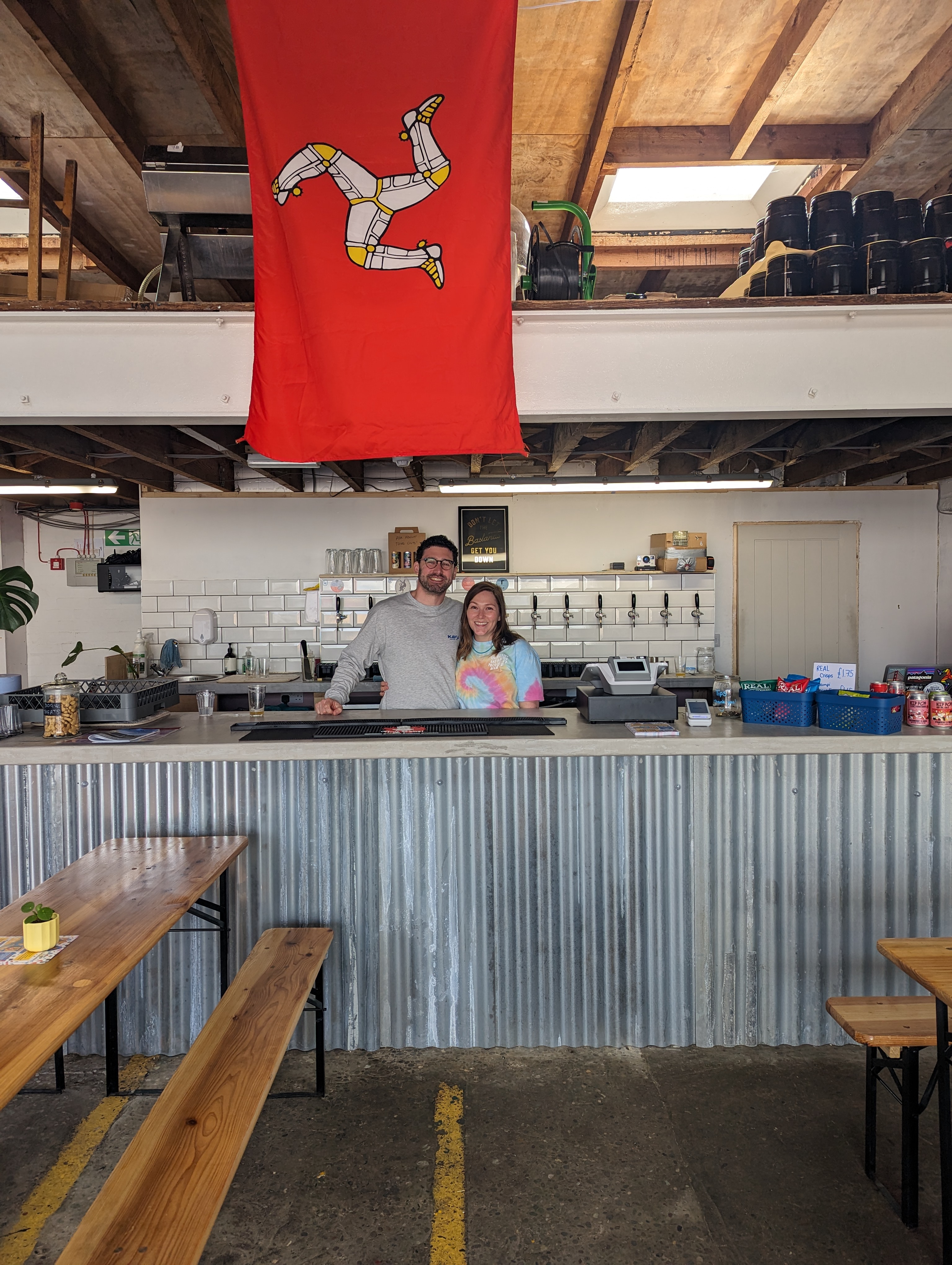
Kerroo Brewing, run by Nick Scarffe and Elizabeth Townsend, has been a brewery on the Isle of Man for more than two years now, but it’s only just got its own space. Despite there being quite a few unused workshops and warehouses on the island, it’s not easy to get permission to revitalise them.
“We started off looking at the former Manx Kippers place in Peel,” says Elizabeth, “but it wasn’t fit for purpose at all and the changes we’d have to make would have been out of our budget.”
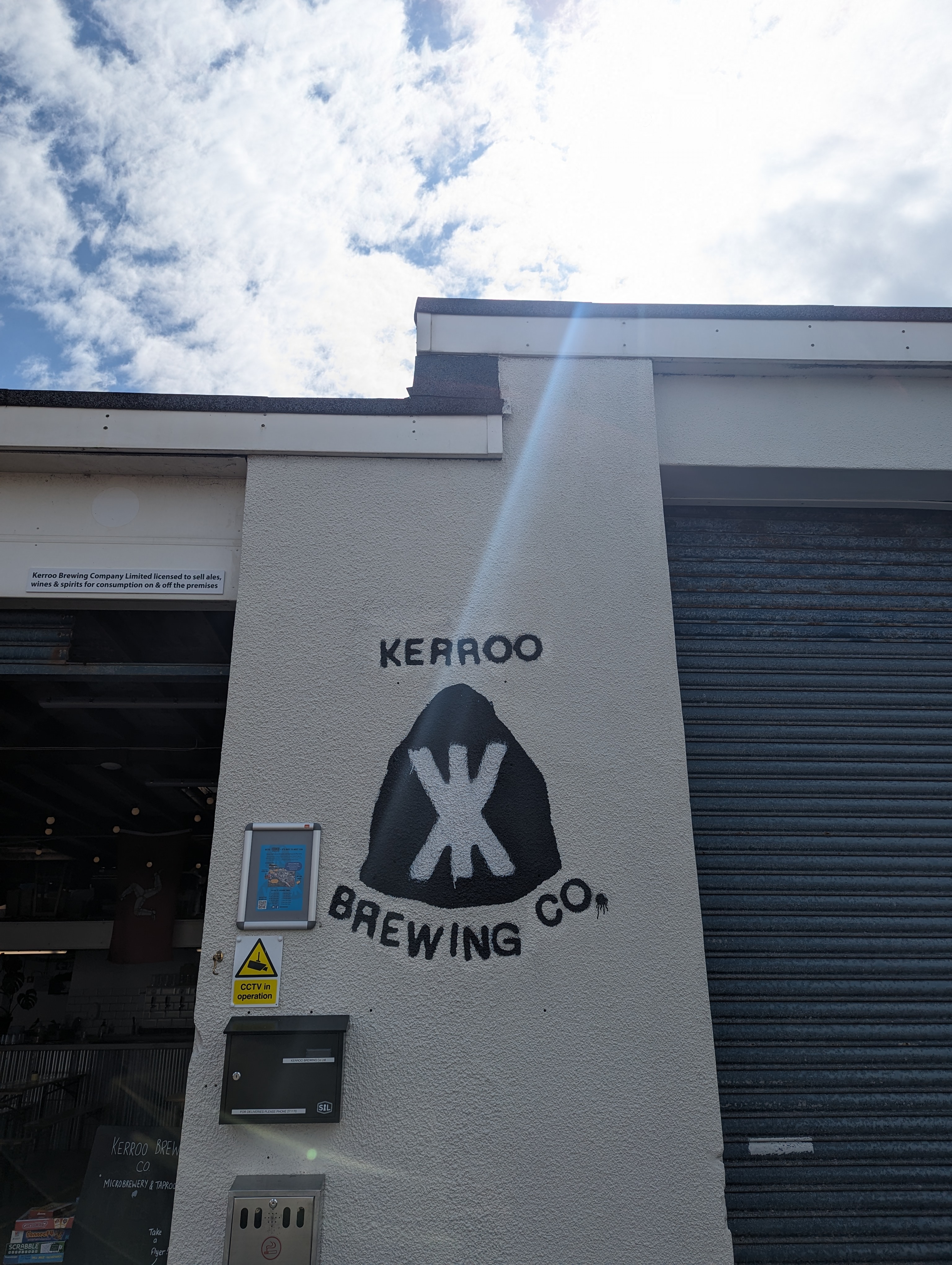
Fortuitously for the beautiful seaside town of Port Erin, Kerroo finally found a home at the former Commissioner’s Depot on Droghadfayle Road—just around the corner from the steam train station. What used to be a garage storage facility and even a bin lorry garage is now adorned with the Kerroo Brewing sigil and furnished with a lovely concrete bar.
“We hate the floor but we’re going to be sorting it soon,” says Nick, to which I point out that I quite like the remnants of parking area paint. “It’s lucky though, we’re on a natural slope, so we just installed a big drain and away we went.” I had never thought about how crucial floor types were to a functional brewery.
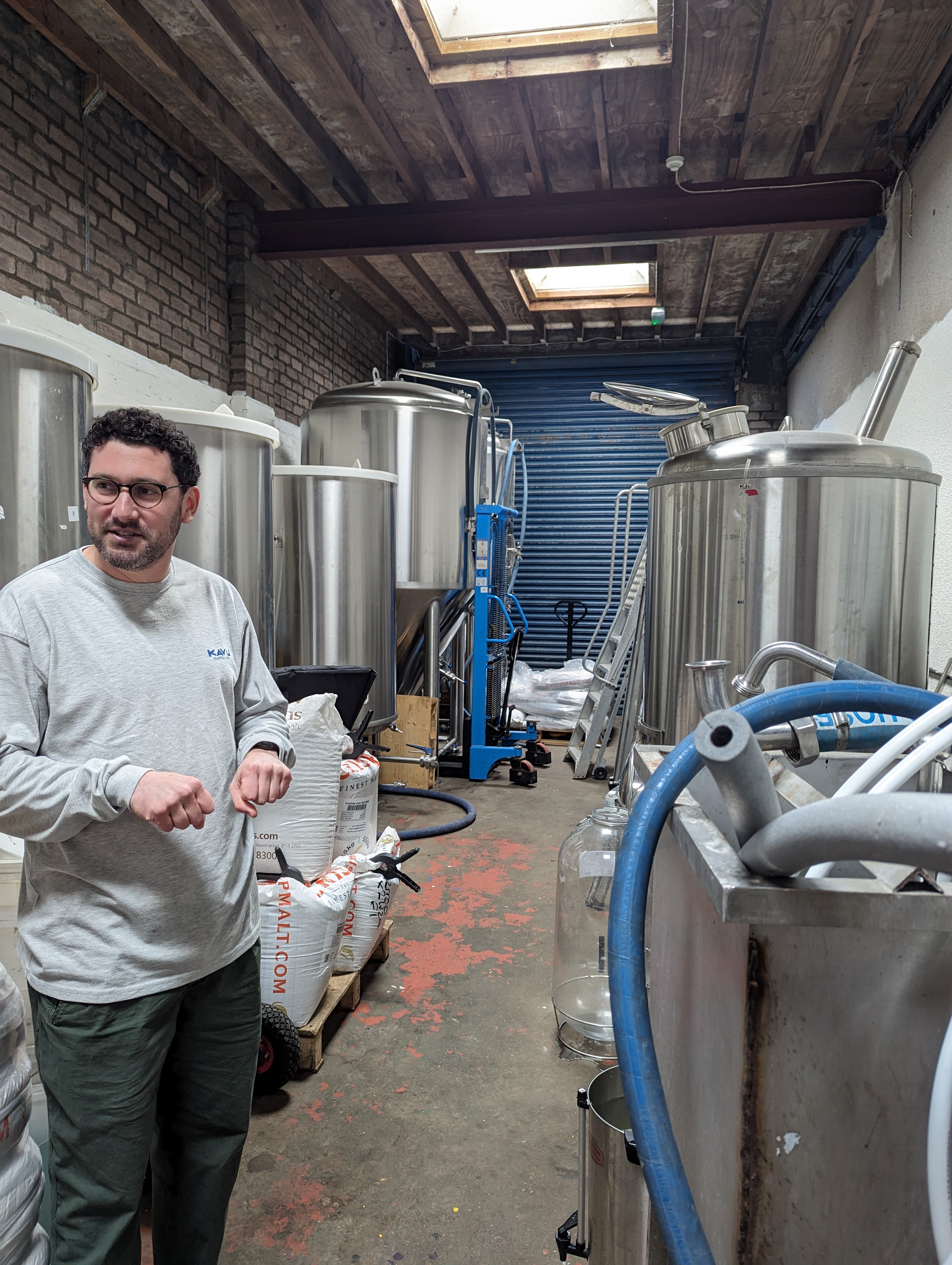
Inside the brewery is Kerroo’s kit, a 1000L stainless steel beauty from Leicester with two 16hl conical fermenters bought from Attic Brewery in Birmingham, all shipped over the Irish Sea way before the brewery even had a premises.
“We just knew they were the right pieces,” says Elizabeth. “We had faith it was going to happen!”
While they waited, and waited, and waited, Elizabeth networked her arse off. Becoming a member of the Women In Beer group, she met with other women from the beer industry across the UK, and travelled all over Scotland and England to visit maltsters and breweries to gather as much useful information as she could. Both she and Nick visited Lakes Brew Co. in Kendal, Gan Yam Brew, also in Kendal, Chainhouse Brew Co. in Preston, and Rivington Brewing Co. in Rivington, Lancashire to chat about the intricacies of setting up a brewery and tap room. The fact that the brewing world is so open to collaboration and community support even during such difficult times for the industry is incredibly inspiring to me. That people still find the time to lift others up is wonderful.
Visiting the Kerroo Brewing tap room during TT practice week meant we caught them just before the mad rush of Port Erin Day (a day festival of food, drink, and tie-ins with motorbike-riding visitors to the TT races) and race week. Their hazy pale ale was a delicious burst of grapefruit and passionfruit, reminding me of Rivington’s Never Known Fog Like It, but a more sessionable, calmer cousin—one with a bite of refreshing bitterness and a little prickle of lemon zest left on your tongue.
Brewing hazy IPAs is a big step for an Isle of Man-based brewery. The Island’s beer purity laws, much like the Reinheitsgebot, were brought into effect by the island’s first commercial brewery, Okells, to prevent beer being made with inferior or unsuitable ingredients. Nick is making a fruit sour in his second fermenter, and pulls back a thermal blanket to show us its thick, bubbling, pinkness. He looks very excited about it.
“We asked if it was actually illegal to make a beer like this,” says Elizabeth. “Technically…it’s a grey area. I don’t think so. I don’t think anyone is going to prison.” All jokes aside, it’s extremely Isle of Man for there to still be an archaic pseudo-law hanging around that nobody really knows what to do with. There’s no way Kerroo’s beer is really illegal—but Dr. Okell back in 1874 wouldn’t have approved. Good job he’s not still around.
I was impressed by Elizabeth and Nick, not just for their brewing skills but for their tenacity. To keep the dream alive over all these years without a space to call their own must have been incredibly hard, and I hope that when they look around their airy, perfectly Isle of Man-quirky tap room, they are filled with immense pride. They should be proud. The more beer they make, the more full it’ll become, and I can’t wait to come back to the island to try some deeply criminal sours.
Follow Kerroo Brewing on Instagram to keep up with their story.