
When process meets pleasure
Ever since I first saw an advert for Galaxy chocolate in the mid-90s, it has seemed as special to me as Ferrero Rocher. A beautiful woman in a latte-coloured silk slip dress floats down the stairs at night to sneak a delicious bite of smooth milk chocolate. That’s the dream, I used to think. A bar of chocolate of my own whenever I want it. That’s what being an adult will be like.
And so it is. I don’t crave chocolate as much as I used to—I’m more of a bread and half a block of butter gal—but every so often I’ll have a few weeks where it’s all that I desire. When the desire strikes, I want Galaxy. I have a little padded book sleeve on the top shelf in my office where I keep one big bar at a time. I don’t need to hide it, but it’s the principle. I’m making my own dreams come true.
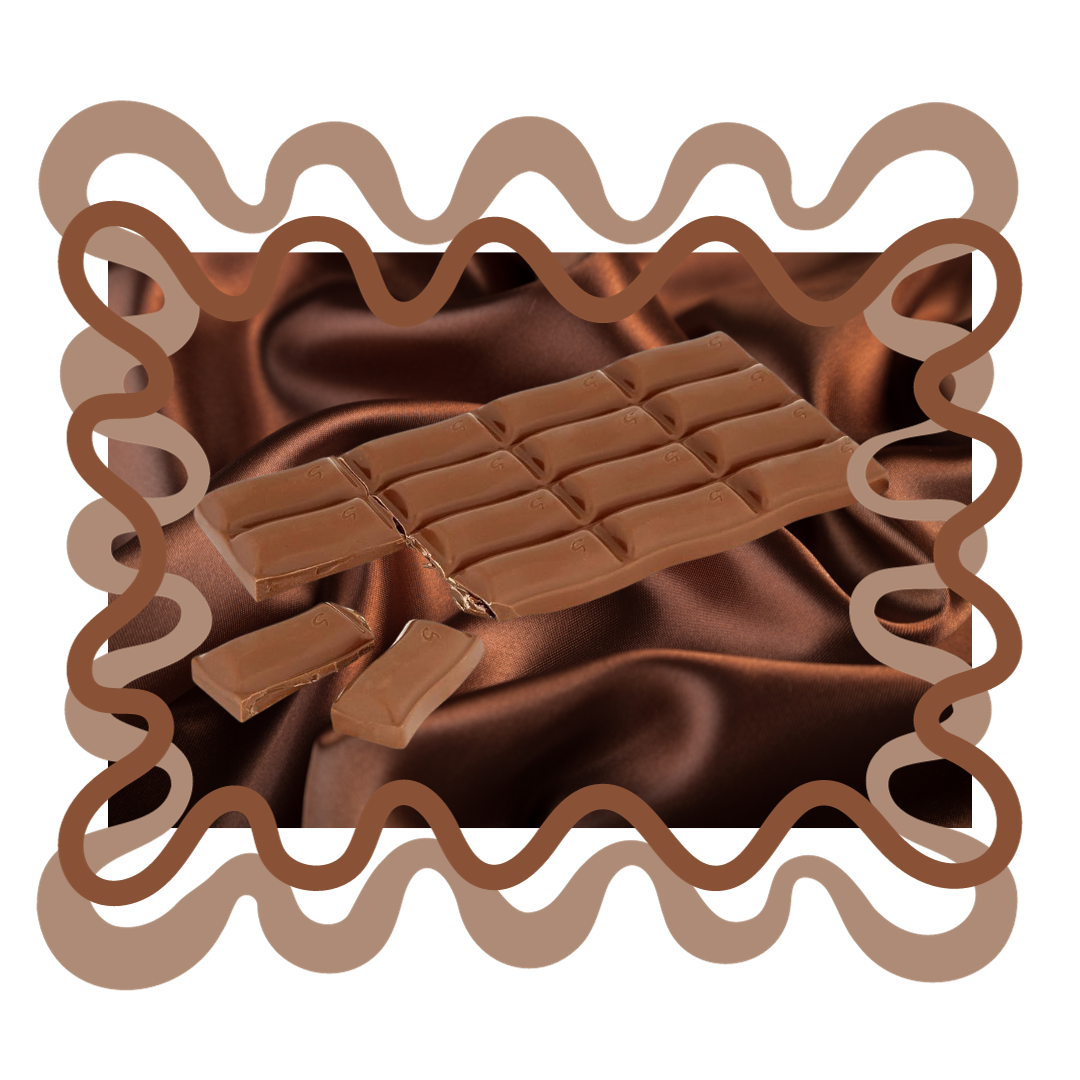
It doesn’t taste anything like chocolate, let’s be honest. My whole life I’ve sucked on squares of Galaxy and enjoyed the cosy, chocolate-adjacent sweetness of it, but I know, like Dairy Milk, it doesn’t taste much like real, decent chocolate. I decided to make some tasting notes the last time I ate some:
Milky cocoa with golden sugar
Honey
Golden syrup
Vanilla essence and butter, like a sticky homemade fairy cake
Condensed milk
Scottish tablet
All of these things, I have to say, are some of my favourite flavours. What I found most interesting was how strongly I felt I could taste vanilla—this is a flavour I also taste in Dairy Milk, and I wonder if this is how chocolate makers try to give the impression they’re using thick cream in their formulations rather than milk powder. As you can see from the list, chocolate is not mentioned. When I use chocolate in a tasting note for beer or wine, I mean the crack of a dark, cocoa-rich chocolate, deep and tempestuous, and often with a slight bitterness that lingers. It melts slowly. Your cravings are satisfied quickly.
Not so with Galaxy. It’s made to be devoured, and melts almost instantly. There is no bitter note, no complexity—just soft, smooth milky, sugary flavours that combine to produce hot chocolate in your mouth. It’s comfort food, but it isn’t real. Since when has that ever bothered me.
Another thing I noticed about the texture of Galaxy chocolate is that it’s not as powdery as other milk chocolates when it melts down. Surely that’s down to the refining process, I thought. It has to have been a purposeful result of years of research. Little did I know that it was also down to some pretty fascinating uses of traditional chocolate making and mechanical engineering.
First, cocoa nibs are winnowed to remove their shells, and then roasted in a process called “Dutching”. This process was invented by 19th century chemist Coenraad Johannes van Houten, the son of the inventor of cocoa powder. Galaxy chocolate is made from Dutched cocoa nibs, which means they have undergone a process of alkalisation, taking away its bitterness and giving it a darker colour. This is also how hot chocolate powder is made.
The nibs are then ground into cocoa powder, then “roll refined” to mill it down to micron-level particles, which is how Galaxy chocolate manages to have such a smooth texture (or mouthfeel if you’re nasty.)
I promise I’m not being paid by Galaxy here, I’m just really interested in how processed food is manufactured. It’s no different to any other manufactured product.
After the roll refining/milling process, the super-fine Galaxy cocoa powder is then freeze-dried with sugar and milk, as well as vanilla (yes! I was right!) and passed through an industrial oven and then into moulds.
What’s interesting about the moulds is that even the shape of each square of chocolate has been researched, designed, and tested to try and produce the most pleasant sensation of eating and melting in your mouth. You’ll notice that Galaxy chocolate squares aren’t really squares—they haven’t been since 2007. Instead, they are rounded and curved, with indentations meant to form around your tongue with as much area touching the inside of your mouth as possible. Wow. I just find it incredible to think about, that even the shape of a square of chocolate has been processed in such a detailed way. Science. Engineering. Chocolate.
Perhaps one day I will simply be able to enjoy something without having to research its every molecular detail. Somehow, knowing all this about Galaxy makes me enjoy it more. Perhaps it shouldn’t—perhaps something more natural should make me more excited. And I do get excited about natural products! How amazing is small-batch, artisanal chocolate? But Galaxy isn’t in their league. It’s barely even the same food. It’s a highly-processed, super-thought-out product that has been designed for ultimate pleasure. How can I say no to that?