Fig Tree Cafe, Highbury & Islington

Finding secret gardens wherever I go.
It looked like it was going to rain, which was annoying, because I’d left my umbrella at my friend’s house. I found my way to where I was supposed to be joining my American Cider Association class, but I was 45 minutes early—it either takes half an hour longer to get somewhere in London, or considerably less time than you expect—so I did what any sane person does at 8am on a Wednesday, and I went looking for a decent cup of coffee.

My version of decent is different to yours. My husband Tom loves third-wave coffee, all acid and balance, that to me always tastes like peaches and apples left to rot in the fruit bowl. I like dark coffee, coffee that smells like full-roasted Italian breakfast beans, that pours the colour of liquorice, and tastes somewhere between dark chocolate and burnt toast. After breakfast I like it black, but early in the day I want milk in there, a touch of creamy, almost vanilla froth to set me up for the morning ahead.

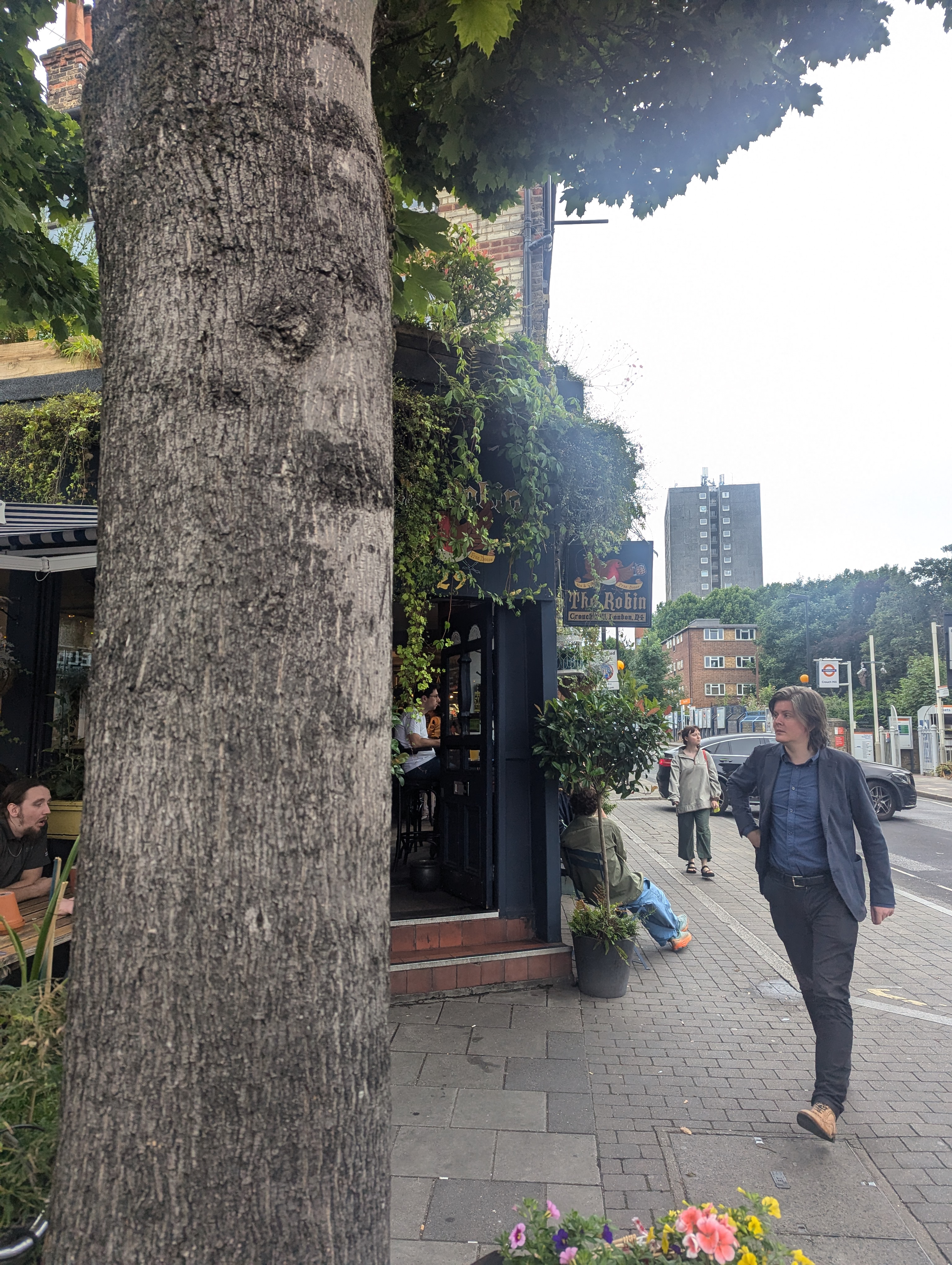
The clouds held, and I walked down the arterial road that leads east from Highbury & Islington to Dalston looking for a café that looked good enough to stop for. I like to think I can tell if the croissants in the windows were frozen. I don’t tend to visit places with strong branding aimed at future franchising. At the corner of St. Paul’s Road I saw it: Fig Tree Cafe. Wooden, strewn with Mediterranean bric-a-brac, and dark enough inside to illicit a deep sense of curiosity, I crossed the road and entered through the open door.

It’s Greek in spirit, you can tell from the profusion of fresh vegetables and produce in the butty shop display counter that takes up most of the first room. It smells of fresh baking and house plants. I feel like I’m in a grandparent’s home, visiting someone who wants me to sit down and eat. I’m not wrong.

“A coffee for you?” the owner asks, adding, “You look like you’re in a rush. Only coffee is fast.”

I asked about the breakfasts he makes, and he says no. “I don’t make it quickly.”

That’s okay, I say. I’ve got time. He shrugs, and leads me to the rear of the tiny cafe into a second dining area, and then a conservatory, and then an outdoor terrace bursting with verdant green only a passionate vegetable gardener can achieve. On a blackboard were some of the most ideal-sounding brunches I’d ever seen. Before I can choose, he picks the avocado on toast for me, and tells me to sit. Again, he asks if I’d like coffee. I must look tired, because I am. Yes, please. Definitely.

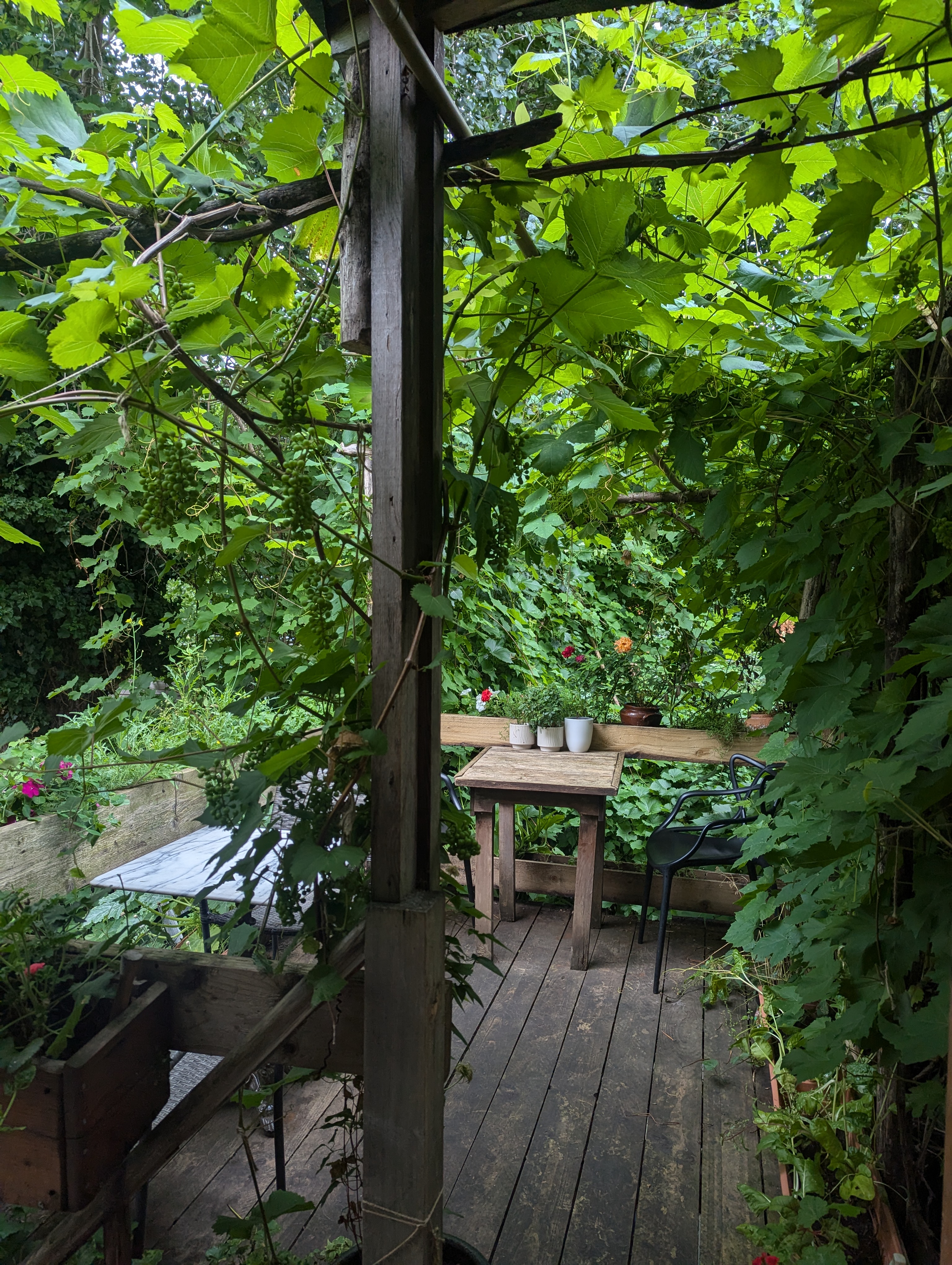
He leaves me to explore the paintings and pottery and furniture, and I wander, carefully looking at everything as though I’m in a museum. The wooden decking of the outdoor space is not as creaky as I imagined (I have a fear of falling through, I’ve seen too many Instagram reels), so I take a seat under the heavy pergola of grape vines, sheltered from any passing showers that might come over. My coffee is brought to me—dark and frothy, a perfect cup—and I dunk a homemade almond biscuit into it while admiring the courgettes growing vigorously in a little window box balanced precariously on the edge of the platform. There is life everywhere. A magpie is chattering in the trees above. I can hear two restaurant workers further down the street panicking about a lack of mayonnaise. A train goes past totally hidden from view at the end of the lot. In my little garden, I feel like I’m spying on the rest of the city, secret and invisible in a cocoon of leaves.

Pellicle: A Drinks Magazine With Purpose

I want to tell you about this mag I work for.

This week, I was officially promoted to Deputy Editor of Pellicle. I’m extremely pleased about it—I love this magazine and I love editing.

Pellicle was started by Jonny Hamilton and Matthew Curtis with the shared ethos of showcasing beer, wine, and cider at its very best, and telling captivating stories about drinks culture that weaves in-between the drinks themselves.

Over the years, writing for Pellicle and being edited by both Matthew and Jonny sharpened my writing and taught me so much about telling stories. There is more to a tale than my own perspective, even in a personal essay—this is the main lesson I’ve learned from Pellicle. There is so much to share. Show, don’t tell.

I’ve been editing for Pellicle under the title of Associate Editor for a couple of years now, and it’s not an exaggeration to say I’ve loved it. In editing I feel like I’ve found a calling—something I thought I’d already found in writing. It’s true that I still love writing with all my heart and brain and body, but editing is just different. It’s a collaboration, but it’s more than that to me—almost an osmosis with the writer’s mind with whom you’re working with. You’re helping someone, but to do that you have to understand where they’re coming from: their point of view, their turns of phrase, their personality, their accent. Editing can be done successfully in a number of different ways, but for me, the process is most gratifying when both I and the writer are working together, learning something. I am not a red pen editor. I’m not a doormat either, but I like to see past what’s there and encourage confidence so that sentences can sparkle with the writers’ own wit, perspective, and talent.

Editing is not a chance for me to flex. Editing is an opportunity to sharpen my skills and help others to do the same.

Anyway. I wanted to use my Thursday newsletter this week to thank Matthew and Jonny for creating Pellicle, the first publication to commission, publish, and pay for my wine writing, and to say this: I am so proud to be a part of the team. I know we are going to do huge things. I’m excited.

Please be a part of it too by subscribing to our Patreon. Every penny we spend commissioning writers and artists comes from our supporters and main sponsors Loughran Brewers Select. We literally could not make this magazine—now one of only three of its kind in the UK—without you.


Apologies, but I am on le road and writing this on my janky phone using the janky Substack mobile web editor, so reading/art/music links will not happen this week. Stay tuned for links on Tuesday instead, plus a July round-up for paid subscribers to The Gulp before the month is out. Love ya!

Underconsumption Core

Picky teas and slabs of beer. Is this it forever?

When I packed my van up for a weekend at a music festival, I didn’t realise what I was doing was highly trendy.

In years gone by I might have expected to spend upwards of £100 on beers at the festival bars over the weekend, and more on festival burritos, festival Diet Cokes, and festival burgers. You know I love a burger van.

Get more from Katie Mather in the Substack app
Available for iOS and Android

This time, however, I’ve finally learned how to superbudget, which is what I call living on the absolute bare minimum. It’s something I’ve been in training for my whole life, and I’m really good at it. We ate sandwiches and Pepperamis, a jar of gherkins (essential vegetable component) and multiple big bags of crisps. These sorts of “picky teas” are well-known in the North as somehow both an immense treat and the answer to being too skint and tired to cook a proper dinner. This peasant’s charcuterie served us well all weekend, and I am smug about it.

Underconsumption core exists because even the most exuberant of haulfluencers are starting to feel the constrictions of what is basically a national money shortage. When Broccoli is £1.20 a head in Lidl (one pound twenty pence!! for broccoli!!), there are many other things that have to get cut from our monthly budgets. Nights out become more infrequent. Takeaways become frozen pizzas. Beer turns into slabs of whatever tinnies are on offer at Tesco. We do what we can to keep ourselves afloat when the weekly shop increases by more than 20% over a year.

There are two reactions to a recession. One is to cut back to the bare bones of your budget, and enact control over your life this way—aka. the Picky Tea scenario. The other is to surrender to the cosmos and treat yourself, in a phenomenon well-known as “The Lipstick Effect”. (Of course this term was invented by a lipstick manufacturer for marketing purposes and picked up by journalists as an actual scientific theory—Leonard Lauder of Estée Lauder, in fact.) We buy small luxuries to make our lives worth living. We treat ourselves so that the daily drudgery of taking your own shitty coffee on the train and not having a pint after work feels less like penury. I bought a red lipstick this morning, because I decided I deserved it. As it happens, it was highly underwhelming and underpigmented. Don’t buy the Pixi +HYDRA LipTreat in Poppy, it is rubbish.

This brings me back to Underconsumption Core. Some darling young people have decided that being poor and acting like it is a core—a style to follow, a statement to make. Rather than take the indignant stance I’ve seen elsewhere that this is cosplaying as poor people, I’m happy for them, because it seems like a really cheap hobby, and it’s teaching others some good habits. They are sharing their minimal make-up bags featuring just foundation, mascara, eyeliner, and lipstick (so, my high school make-up bag,) and their worn-in trainers to show that it’s possible to live on less. The main tenet of Underconsumption Core, however, is to use something up until it is gone. You can make fun of this all you like, but to some this really is a radical notion. That a shower only needs one bottle of shampoo, one conditioner, one shower gel—revolutionary. That a skincare regime can be effective in only three steps rather than 9—unbelievable. The aim is to buy less, with the outcome of being more mindful in your daily life rather than wandering around with your big basking shark mouth open consuming everything in sight.

There’s one drawback to this fad, however, and it’s guilt. The idea of supporting local and independent businesses is engraved on the inside of my skull in florid Copperplate. Every time I avoid going out for drinks, I feel that hot little flush of shame. Every time I buy beer from the supermarket, I know that I shouldn’t be doing it. I should be supporting the good people who make better quality beer who I actually know and love. It’s tough out there for businesses—god knows I know that—but it’s also tough for customers too. Underconsumption Core only exists because people are struggling, no matter their outward optics. So what is going to happen to us all? Is this how we’re all going to live from now on? Surely not. There has to be something better on the horizon. There has to be a time in my future where heading out for a pint doesn’t require forethought. When will I never have to hear the soul-crushing phrase “Cost of Living” again? I honestly don’t expect answers, I just want to say these things out loud. When will things get easier? How much longer?

Katie Mather’s The Gulp is a reader-supported publication. To receive new posts and support my work, consider becoming a free or paid subscriber.

Put fruit in your wine

Don’t think, just do it.

This piece was originally written for Glug magazine last summer. I have four monthly columns in Glug, and you can sign up for their wine club here.


I’m telling you this for your own good—put fruit in your wine.

A friend of mine from northern Italy met me in the park one day and while I had a can of something sparkling in my bag, she had brought a jam jar filled with Gavi and sliced peaches. The elegance! The rusticity! I was in awe of her resourcefulness, and of her attention to the simple, finer things in life. I had felt the day required bubbles for celebration. Her version of celebration was a true indication of the season—ripe stone fruits, cold white wine. Even the jam jar, now I come to overthink it, seems a sly remark against the preserves and penury of winter. Jam gone, the jar was now a receptacle for summer sunshine.

So, we’ve established that Gavi and peaches are an excellent pairing. There are many more wines to choose from, and fruits to pick.

Slice lemons and freeze them. Add the frozen slices, like circles of stained glass, into glasses of white rioja. Do the same, but with lime, in a Gruner Veltliner. Select the tiniest, sweetest strawberries and drop them into creamy Blanc de Noir champagne, or into the leesy, vanilla-rich folds of an oaked Chardonnay. Muscadet likes pears and green apple slices. Pale salmon-pink rosés love raspberries, and deep, sugary rosés enjoy cherries or frozen blackberries. Blueberries, even.

All of these combinations are suitable for jam jar park walks, but if you’re in the garden, I’d be tempted to bring out the big jug and stir up a sangria. The beauty of a sangria in your own home—you can do whatever you like. Taste the wine. What does it want? What do you want? Add sliced fruits, juice (if you like—I always like orange juice in my sangria), sprigs of aromatic herbs, ice, and a dash of liquor. Smile.


This week I’ve been suffering from a lingering chest infection, so my cooking hasn’t exactly been on-point. However I did make a riff of this pork chops and creamy mustard gnocchi dish on Tuesday—the weather has been wintery, so why not eat like it too?

Get more from Katie Mather in the Substack app
Available for iOS and Android

Other Stuff

My Stuff

Overthinking a Bad Review

Does my experience need to be shared? Or am I ruining someone’s day?

I’ll let you in on a little secret today—my favourite café was a total dud the last time I visited.

I’m not saying that it’s ruined my month, but I’m still feeling a sinking feeling in my chest about it. It’s like losing a friend. Am I being dramatic?

Ordinarily, the coffee at this spot is fantastic, and the atmosphere is stunning. I like to come here to feel like I upgraded my life—on a rainy afternoon it truly feels like an aspirational place to sit and exist, among thoughtful design and architecture.

I was so annoyed by the bad service and uncharacteristically poor coffee (cold, under-extracted) that I left in a mood. That mood didn’t lift for a while. I sat in the van and deliberated on whether to leave a negative review. I decided against it.

But the feeling lingered. I opened the Google reviews page again later that night. I closed it. What would it achieve?

The negative Google review I imagined became a thought experiment. If I posted my exact thoughts, what would that be for? Who was my audience? Why did I want to share my dissatisfaction in this way? Did I believe it would make me feel better? Was I really warning other people not to visit, or did I want to express that personal sense of annoyance? If so, why? Now, say I did post it, along with my two stars—no, two and a half stars. Would it resolve the niggling disappointment I still felt? Would I stop thinking about how a café I loved was succumbing to money issues and corner cutting just like everywhere else? If I didn’t post it, could I just forget about the whole thing, and get on with my life like anyone else would have done by now?

The world is such a hard place to be, and we look at our small treats as reasons to exist. I think about this piece by Imogen West-Knights for the Financial Times all the time: Treat Brain: how the Pandemic is rewiring our brains. In it, Imogen speaks to scientists and behaviour experts about the human need for distraction and consumption. She posits that what was once an indulgence has now become a necessity.

The tomorrow I imagined in which I would “be good” again has never come, and I don’t want it to. I want to enjoy myself. The truth is life was always like this: a series of good times and bad times, and I deserved to eat what I wanted in all of them.

Imogen West-Knights, for the FT

I started to think about how the disappointing coffee experience had been a representation of everything going to shit. In my calming place of beauty and perfection, I had been reminded of grim reality. My treat brain had been short-changed. But why was that anyone else’s problem?

Reviews were so important to me when I had a bar, they showed me what people liked about us, and what we could improve. It was always interesting to see, however, that positive reviews were always about the things people enjoyed, and negative reviews were about how a person felt. Negative reviews are charged with emotion, positive reviews tend to be more factual: I had a lovely drink, the cheese toastie was nice.

I also noticed how negative reviews often showed an attempt to showcase a person’s elite sense of taste or superior knowledge—something I’ve learned is called the “Cynical Genius Illusion.” Picking holes makes you seem like you know what you’re talking about, so you keep finding ways to appraise the world around you, never satisfied with what you’re given, always looking for what could be improved, never appreciating what actually exists. The life of a critic. What a depressing way to live. Please don’t let that happen to me (again.)

Get more from Katie Mather in the Substack app
Available for iOS and Android

Why don't restaurants serve better beer?

A rant.

I’ve just gotten off the phone with Will Harris and James Horrocks of Balance Brewing and Blending. What started as a professional call—an interview for a piece I’m writing for Glug magazine—ended as a vibrant discussion about the state of beer lists in restaurants. Why, James asks, can’t they put as much care and attention into their beer selections as they do their food, ingredients, presentation, their wine lists? I don’t know, I reply. But it really pisses me off.

Years ago, I visited a deservedly well-respected restaurant. The food was astonishingly good, in particular I remember there being venison smoked on spruce, the smoke still wafting lazily from the covered dishes brought to our table like the trail from a woodsman’s cabin’s chimney. At pudding time, I didn’t really fancy anything—I usually stuff myself with side dishes and bread rather than wait for the sweet menu—but I could have been persuaded to share a cheese board with a nice bottle of something Belgian. We asked for the beer menu. There wasn’t one. It was a memorised list of forgettable beers, some of which had run out, and there were definitely no bottled beers except for gluten free Peroni (v. nice to see them taking care of the GF crowd though, well done to them!)

It left a bit of a scar, if I’m honest. Everything that night had been perfect up until this point, and the rest of my group had a totally wonderful time. And I’m glad! But for me, a place that prides itself on being a pub should have a good selection of beer to choose from, and a place that is famous for its service and fine dining should really be offering beers that match the high mark they set for themselves. Beers like this exist! It’s not hard to find them either!

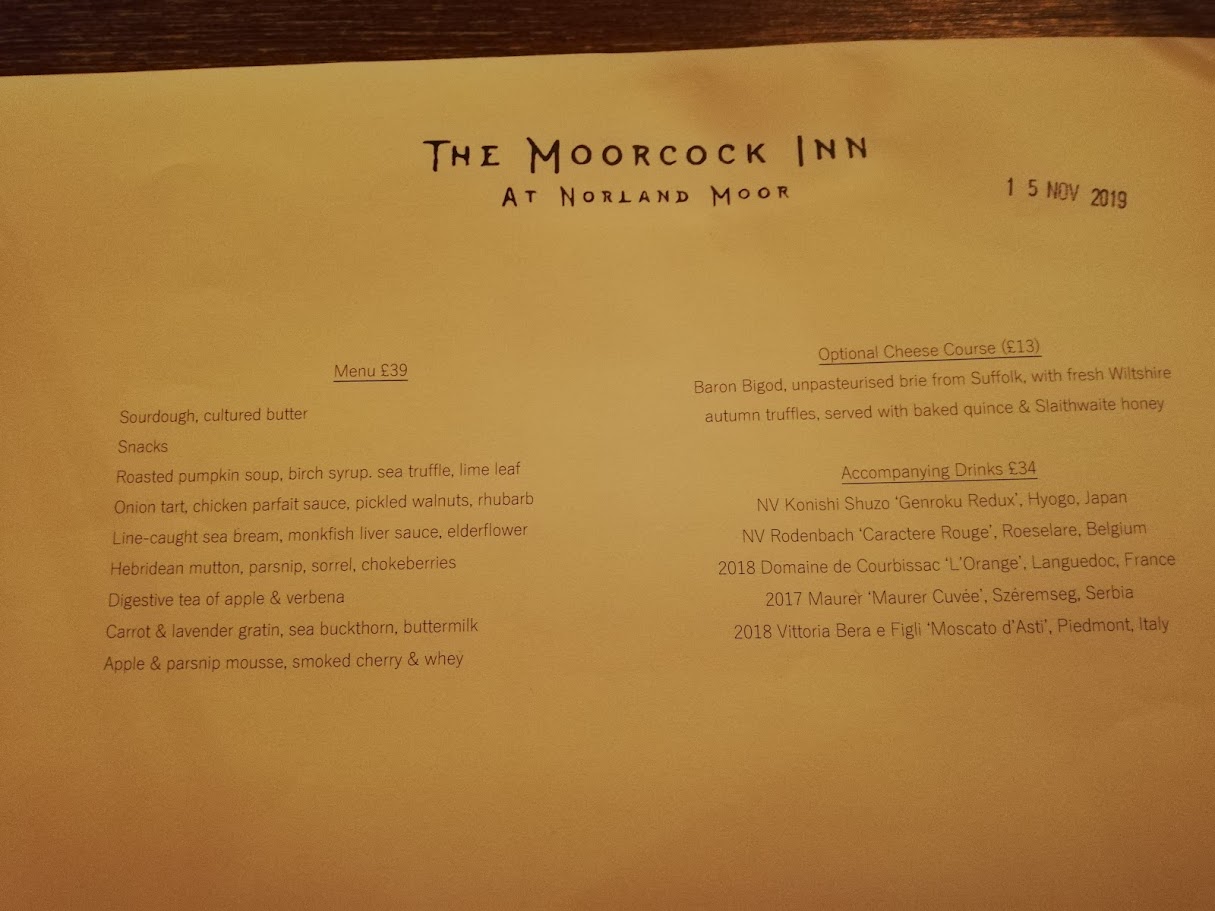
This restaurant is not alone in their abandonment of beer. In so many people’s experiences, beer is simply a perfunctory beverage. This is such a huge shame. Being poured an Rodenbach Caractere Rouge at The Moorcock (RIP) to pair with a supremely delicious cut of mutton belly is one of the best food memories I have. So why don’t more restaurants experiment with beer on their drinks menus? It seems such a shame to me. They could be opening up their diners to new characters and flavours, and offering something unique in a world saturated with expectations and pretentions. Why deny yourself some excitement? Why cut yourself off from a world of pleasure?

Summer Hop

A slight pause in publications as I attend Women On Tap’s Summer Hop conference.

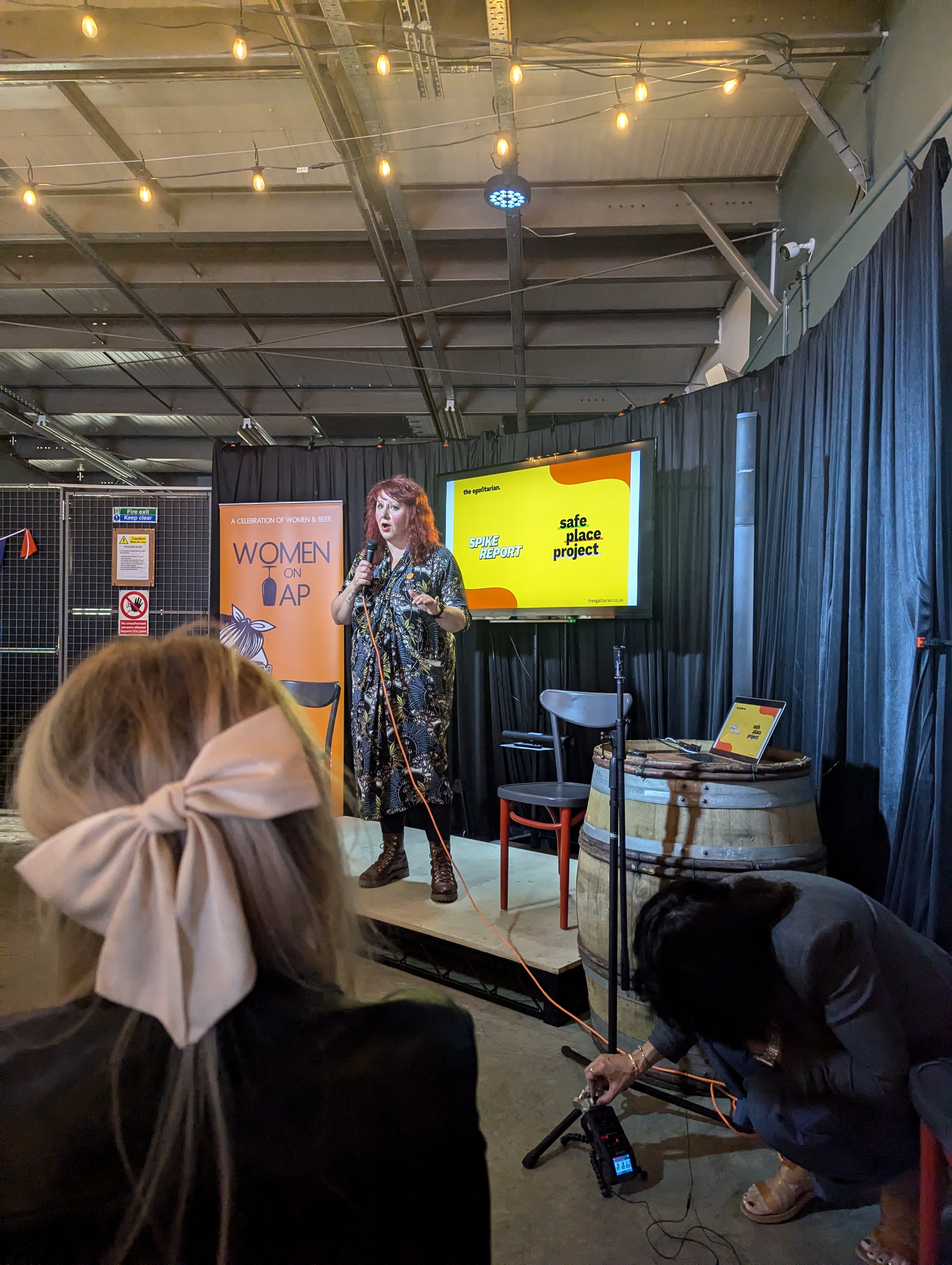
Today I’m at Rooster’s brewery and tap room in Harrogate for the Women On Tap Summer Hop conference.

So far the talks have included research from the Dea Latis Women In Beer paper, and from a PhD candidate researching inequality in the craft beer industry.

I’ll write more about some of the issues, conclusions, and possible solutions raised at a later date—it’s been a really interesting morning. For now, however, I’ll just leave you with some questions to ponder while I scoff some triangle butties and head to the afternoon’s seminars.

After 5 years of access to data that shows women are not engaging with beer either as drinkers or employees in any great number—does the beer industry actually want to change?

Why don’t groups of women visit tap rooms together without men?

How can beer education be promoted and made widely accessible while being mindful of issues around health, alcohol, and the law?

Are women worried about ordering beer because they feel like they will be ridiculed? Why?

Why do men order default drinks for their female partners without asking them what they’d like?

Katie Mather’s The Gulp is a reader-supported publication. To receive new posts and support my work, consider becoming a free or paid subscriber.

Tasting Sessions

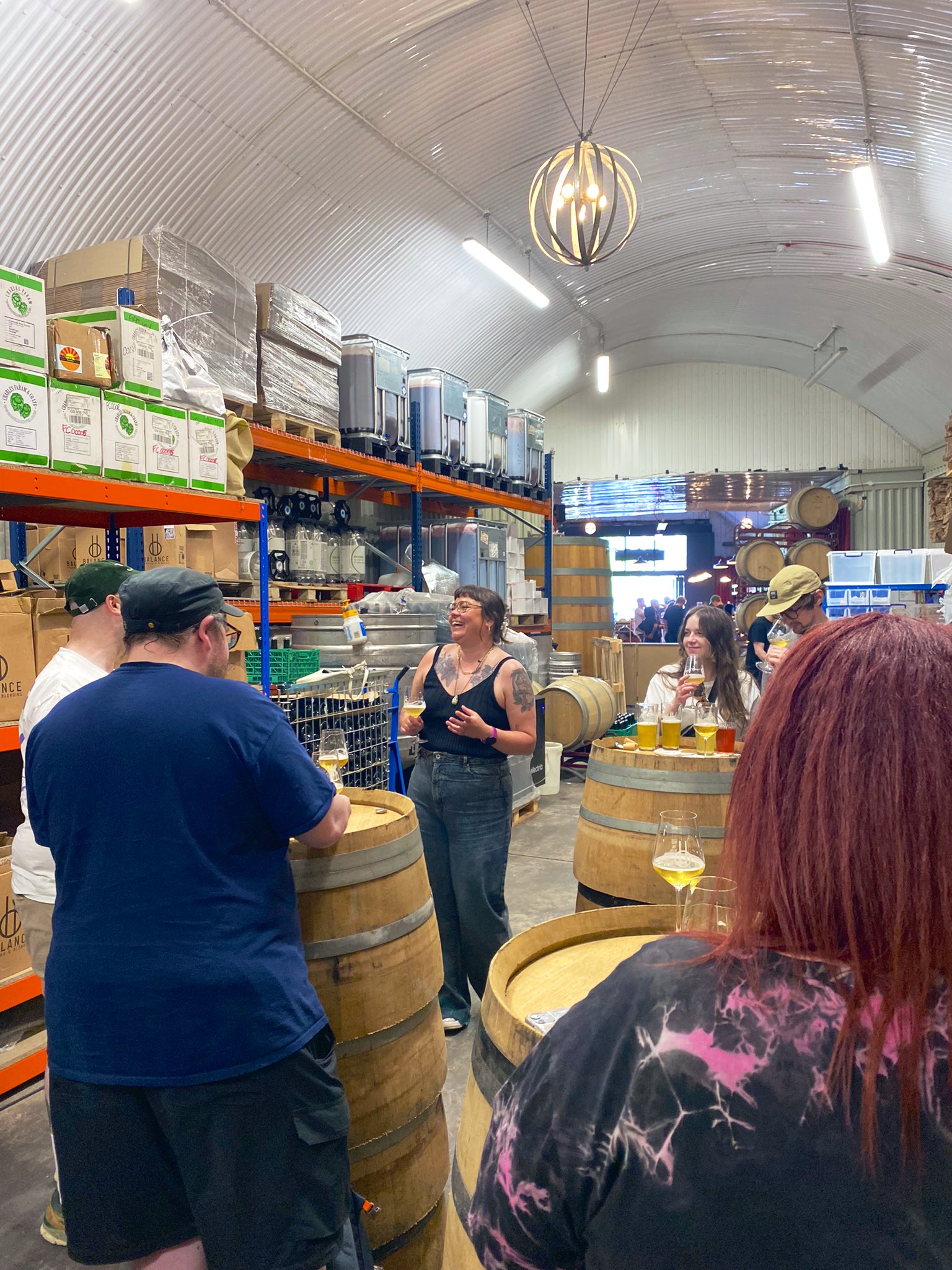
I love leading tasting sessions, but do people actually want to know about cryo hops and malt varieties?

At school, the very act of standing in front of the class to give a talk was enough to make me faint. I wasn’t a shy child as such, I just didn’t like that much undivided attention on me—it turned out that despite playing multiple instruments and being a bit of a show off, I had, and still get, major stage fright. I remember standing on the school stage with some of my closest friends to play bass in our joke band and being so utterly overwhelmed by the crowd of literally tens of fellow pupils, the guitarist just turned my amp right down mid song and walked me to the side of the stage slightly behind the curtain. So much for my career as a nu-metal postergirl.

I was always told that preparation was the difference between giving a great talk and absolutely chumping it, but in my experience the only thing that has helped me to overcome the violent shakes and excessive sweating is having years of nerdy research behind me that just so happens to be on the topic I’m talking about. Confidence in my abilities and knowledge is the only thing left when I’m talking in front of people, the rest of my soul seems to leave my body for the entire duration, and that confidence has taken years to build.

Unlikely as it is, I really enjoy running beer tasting sessions. I love the playfulness of getting attendees to try something new and to describe what they taste and smell and understand what it is that they are tasting, and why. Being able to let my nerdy side loose appeals to the side of me that might have been a teacher, using pages and pages of book learning to build a picture of what exactly makes a beer taste the way it does, and enjoying the looks of understanding when my cohort realise there is more to beer than their usual two options on the bar—lager or Guinness.

I worry sometimes I go too far. Does the average drinker care about cryo hops? Are my enthusiastic sermons about malt turning people off? I think about what I want from a beer tasting—to learn about who made it, and how, and why—and I hope that other people want to know the same thing. But honestly, am I mostly talking gibberish to a room full of people who would rather just drink and enjoy?

It’s my opinion that all things are more enjoyable if you know a little about them. For example, I’ve gotten really into the Euros these past couple of weeks because I’ve bothered this time around to listen to the commentators and learn about the rules and idiosyncrasies of the game. I did the same for cycling, and the same with wine. I love to learn, it’s my favourite hobby besides thinking about things (honestly, sitting and thinking about something knotty really is one of my favourite activities ever) and I guess I hope that in my tasting sessions I transfer a bit of that passion for knowledge. I know that beer is, at it’s soul, a simple drink for everyone to enjoy. But when it comes to the details, that’s when it all lights up for me, and I wonder how many people really are interested in the processes and ingredients but were just too afraid to ask—because it’s “just beer”. I truly think there’s a wall between the beer world and the average drinker, built by lack of info but conversely, by a vast, impenetrable-seeming pile of details. That’s why I like running tasting sessions. It feels in that moment like I’m knocking that wall down.

Other Stuff

My Stuff

  • I wrote about tomatoes earlier in the week

  • My story about The Swan With Two Necks is being published in two weeks

  • I’ve re-joined the Guild of Beer Writers

  • I’m working on a print zine for Pellicle

  • If you’re a Substack user, make sure you download the app, the notes section on it is actually great

  • Please consider signing up to be a Pellicle Patreon supporter! I’m working really hard on a lot of projects for the magazine right now and your support means I can keep devoting time to what I think is a vital outlet for food and drink journalism.

Panzanella

A summery treat for people who almost like tomatoes.

Yesterday I overcame a severe problem. I ate raw tomatoes without gagging. They say that a person’s tastebuds change every seven years, and all my life I’ve hoped that in the next septennial I’d become a lover of tomatoes.

They are just so beautiful, a perfect vision of summer. They look juicy and fun. Big berries the vibrant colour of poison. I’ve always wanted to eat a caprese salad, but to me, tomatoes tasted of bile and puddle water. Disappointingly bland and sour.

I learned that this is because I live in England and buy my veg from the supermarket. Out of season tomatoes in Britain aren’t worth shit. In Spain, I ate them cut in slices on soft, crusty bread, and wondered why their fresh, gorgeous fragrance isn’t used in every perfume and Glade plug in. I realised that I do, finally, like tomatoes. I’m just picky. They have to taste like pure sunshine, or I’m not interested.

I will never eat the cherry tomato on the side of my pub meal plate. I will probably always take the anaemic slice of beef tom out of my burger. But if it’s hot outside—and it’s hot right now—I at least know that I can treat myself to some deeply ripened tomatoes with stylish pretentions and colourful blotches and that I will enjoy them. What a breakthrough. How brave!


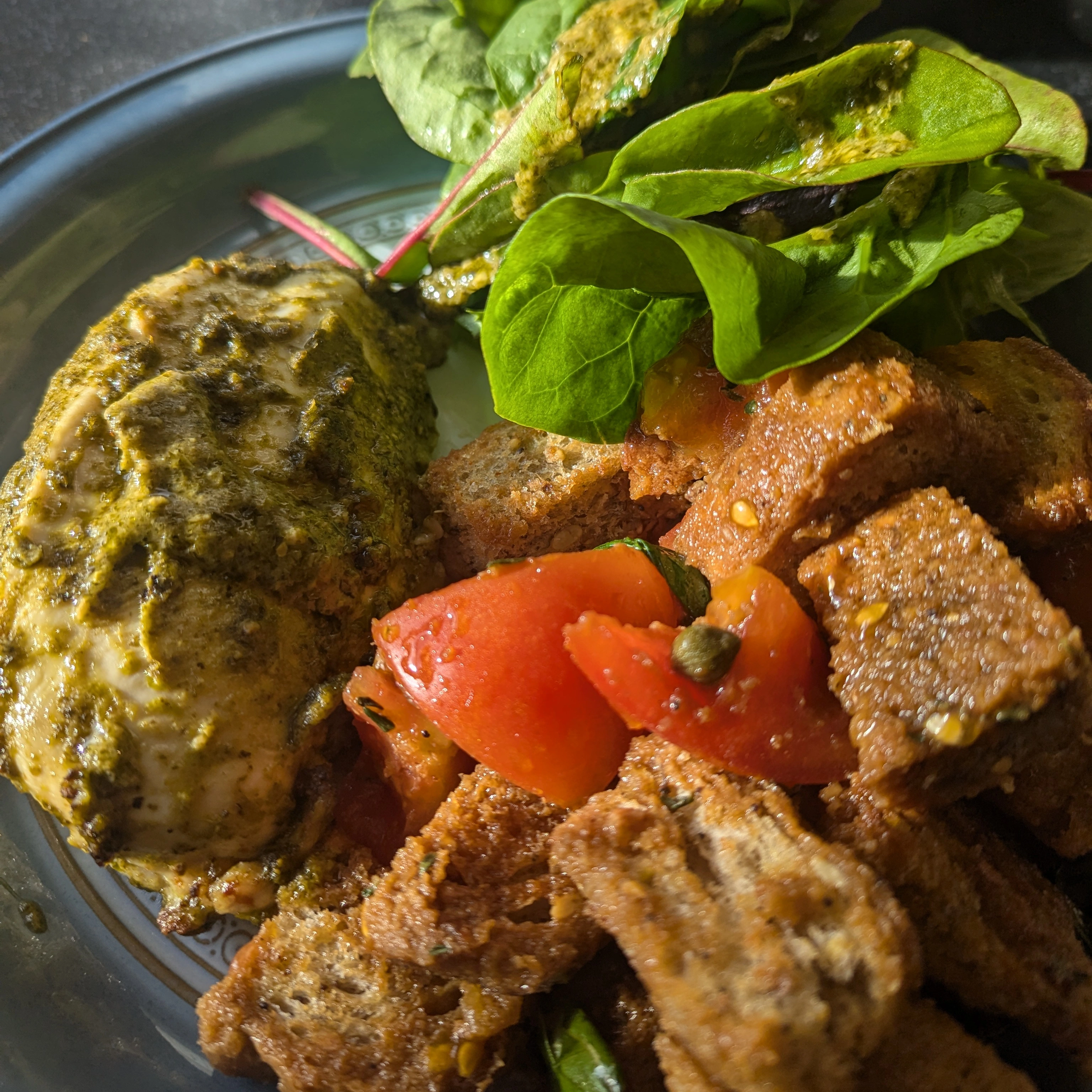
Last night I made panzanella for tea, another dish I’ve always wanted to eat but have never been able to stomach. Until now.

It was the perfect side dish for pesto chicken, and it used up all the leftover rye and wheat loaf I hadn’t made sandwiches with over the weekend (best laid plans etc.) Here’s how I made it. As always, no real measurements were taken or remembered. Just taste as you go. It’s bread and oil and tomatoes. You can’t go far wrong.

Panzanella

  • Bread, torn or cut into chunks

  • Olive oil

  • 2 cloves garlic

  • Juicy, ripe tomatoes

  • Balsamic vinegar

  • Smoked salt

  • Black pepper

  • Capers

  • Fresh basil

  • Dijon mustard

  1. Put the bread chunks into a mixing bowl and toss them well with a glug of olive oil. Add a pinch of salt, and put in the oven at 200°C fan for about 15 mins, or until the bread starts to brown and harden but still has a chew.

  2. Roughly chop your tomatoes into big chunks that would fill your mouth and place them into a colander over the bowl you tossed the bread in. Shake smoked salt over them and let the juice drip into the bowl until the bread is done.

  3. Take the bread out of the oven once it’s done and let it cool a little.

  4. Move the tomato-filled colander to a plate and to the tomato juice add a generous amount of olive oil, a half tsp of Dijon mustard, a glug of balsic vinegar, grated garlic cloves, freshly ground black pepper, capers, and a big pinch of the smoked salt. Mix with a whisk or fork until it becomes a dressing.

  5. Add the baked bread chunks to the bowl with a bunch of torn up basil, and toss until totally combined.

  6. Leave for around 10 mins to get real juicy.

  7. Eat as much of it as you can—you can’t save it for later.

Sandwiches for Tea

When nothing springs to mind, a good sandwich is better than a mediocre meal.

I was paid a little money today so I bought a roast chicken from the butchers down the road. I was going to maybe make something tofu-ish for tea, probably another curry, but I wasn’t sure, and nothing else in my freezer was really doing it for me. Normally there’s nothing left after four in the afternoon, but today there was a row of bronzed rotisserie babes visible through the window, and I knew. Today is a roast chicken salad sandwich kind of day. The type where the seeded bread is soft and the butter is thickly spread, the chicken is generously torn into chunks and salt is sprinkled with abandon. The salad: anything I have in the fridge, probably romaine and spinach, with cornichons chopped up, and a little mayonnaise between the chicken and the greens.

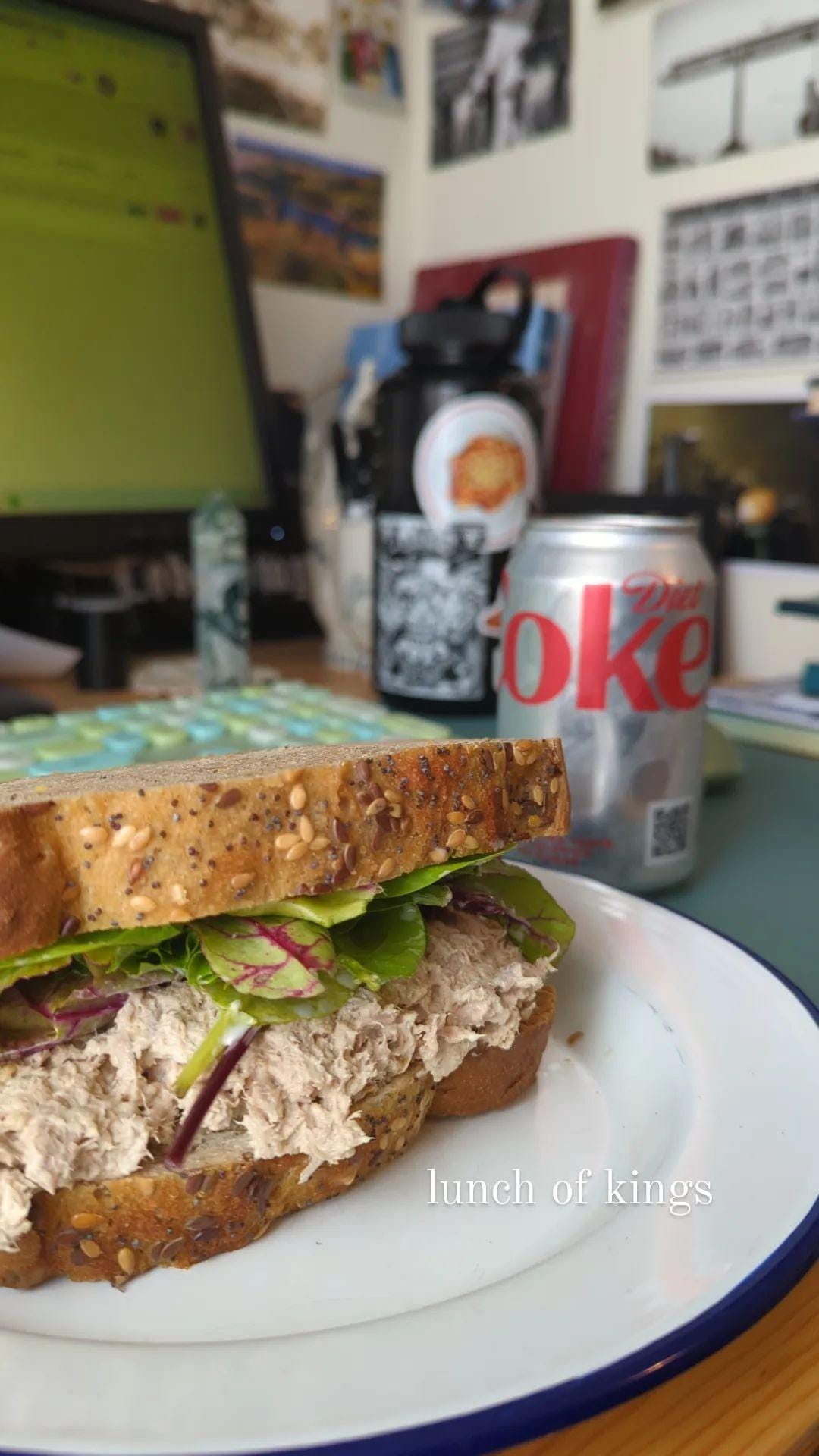
While roast chicken sandwiches are one of my favourite things to eat, they aren’t my favourite sandwich. The best sandwich you can make me is tuna mayo. You can add cheese if you want, and toast it if you feel like it, but just a plain tuna mayo sandwich, when it’s done right, is a song.

Katie Mather’s The Gulp is a reader-supported publication. To receive new posts and support my work, consider becoming a free or paid subscriber.

I put vinegar in my tuna mayo mixture. I can’t remember when I started doing this, but instead of using lemon juice, which I think is too acrid for the sweet blandness of tinned tuna fish, adding a dash of malt or cider vinegar adds a piquancy that lifts the whole dish. I also add freshly ground pepper to the mix, and a sprinkle of salt—but then I always buy cans of tuna in spring water, not brine.

I will eat a plain tuna sandwich, especially if it’s on buttered Warburton’s Toastie bread, but my absolute favourite type of tuna sandwich is one with mixed salad leaves on it. Even just baby spinach will do. I need that little addition of freshness to really elevate the butty. Cucumber? Sure, if you’ve made it on a white baguette. But on a sandwich? Kindof sloppy, not very tasty—I’m not that into it. A controversial opinion I’m sure, but cucumber shines in so many other applications, it just doesn’t need to be included here. Put it with the chicken instead, in chunky coins, or in quick-pickled ribbons.

Other Stuff

My stuff