Festive Belgian Bakes + Beers

Belgian chocolatier Sarah Frison shares her favourite treats for Christmas and beyond to celebrate the release of her book The Festive Belgian Bakery.

I’m really happy to share with you this special collaborative newsletter between Sarah and I, because it’s undoubtedly made me feel more Christmassy than anything else has yet this year! I hope you enjoy it xox


When Sarah Frison reached out with her new book The Festive Belgian Bakery, I saw her confections in my minds-eye and my first thought was, of course, “ooh, what beers would go with those?”

Luckily, Sarah wanted to know too, so we started working on some pairing ideas.

There are more than 400 breweries in Belgium, giving Belgians the choice between more than 1600 different beers. Narrowing the choice down is tough, but looking at some of the traditional festive treats baked in the region all winter long, obvious pairings start to jump out.

A beer for Saint Nick

Our first beer pairing is just as much a personal gift as it is an occasion. What sort of beer would be perfect to serve to St Nicholas himself? Giver of gifts to all children and famously, a lover of speculaas biscuits, chocolate figures, mandarin oranges and marzipan, he needs a great beer to go with all these wonderful goodies. Quite obviously, St. Nicholas has a sweet tooth, so we need to look for something that’ll satisfy his sugary cravings. The spiciness of the speculaas biscuits, the rich Belgian chocolate, the almonds in the marzipan and the fragrant mandarins all together make for a complex flavour profile, but thankfully there are Belgian beers that can stand up to the festive assault.
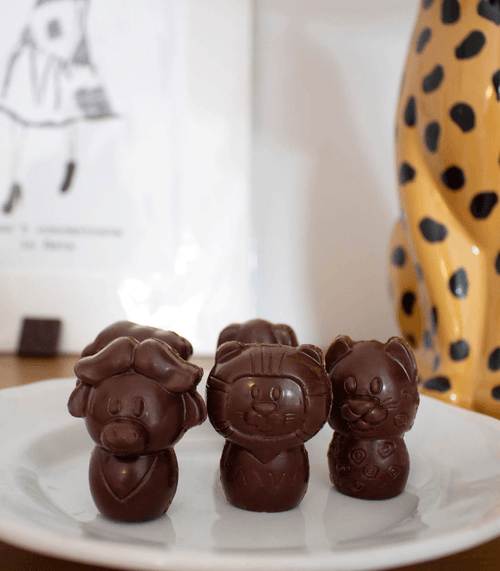
Chocolate figurines of cartoon animals, a cow, a cat, and a leopard.
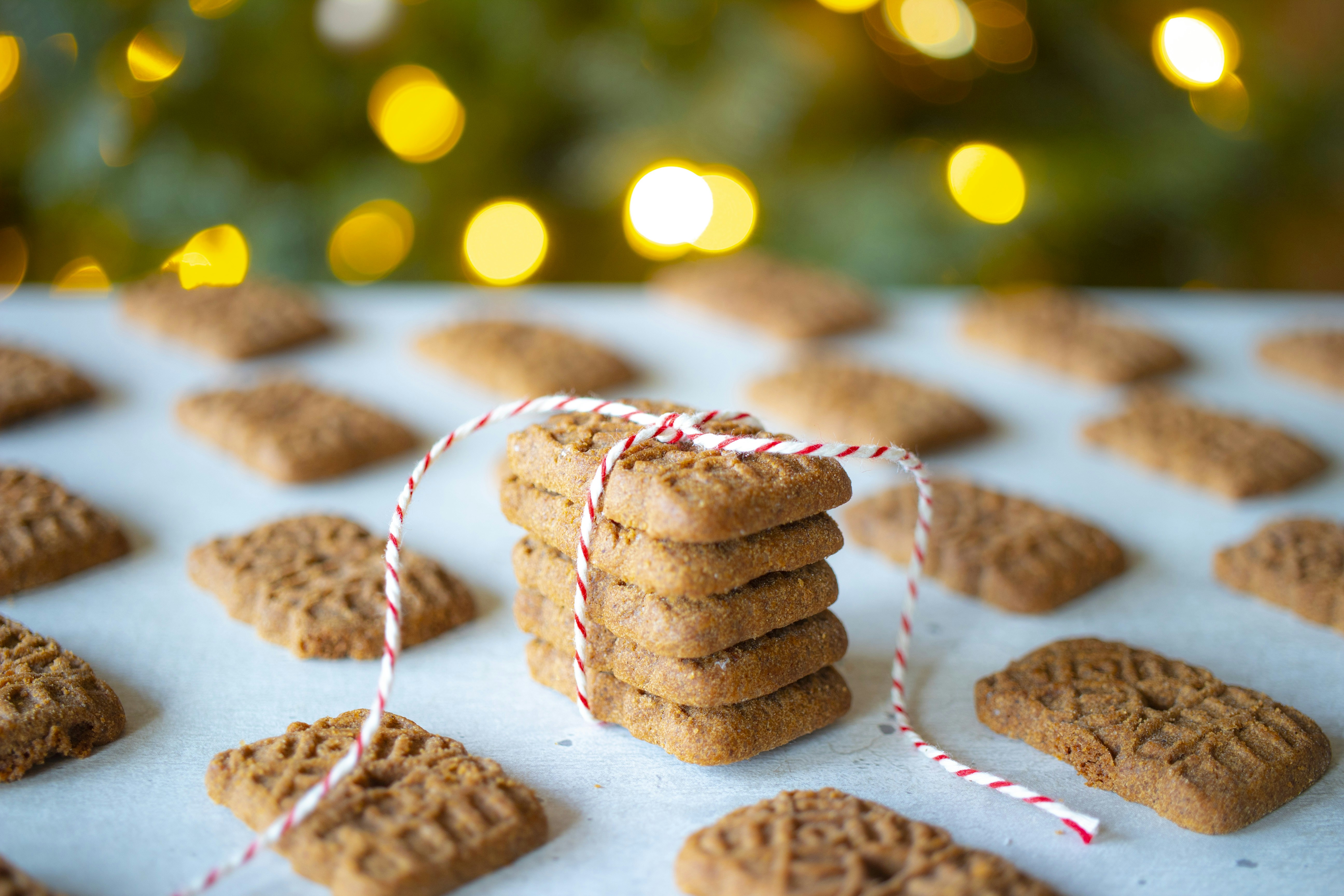
Patterned, rectangular golden biscuits are placed on a white table, with some balanced in a tower and ties with red and white festive bakers' twine. Behind are bokeh fairy lights.

If our patron saint of the season wants to treat himself, he should look for a Chimay Red. Easy to track down and great value for money, this beer was almost made for him—its toffee and caramel notes blending seamlessly with seasonal citrus fruits and nougat.

Best served: beside a shoe put in front of the fire. This is the signal for St. Nicholas to come by your house and see if you’ve left a wish list or drawing for him. Don’t forget — he loves those and cherishes them. On December 6th you’ll wake up and find all of his favourite treats by that shoe, maybe you’ll even get a note saying thank you for drawing and a Chimay Red of your own!

Stollen

It’s tradition to cut yourself a slice of stollen bread as a treat on an afternoon in the run up to December the 25th. This rich, sweet bread with a heart of marzipan is stuffed with raisins and confit orange, and served with a good slice of butter.
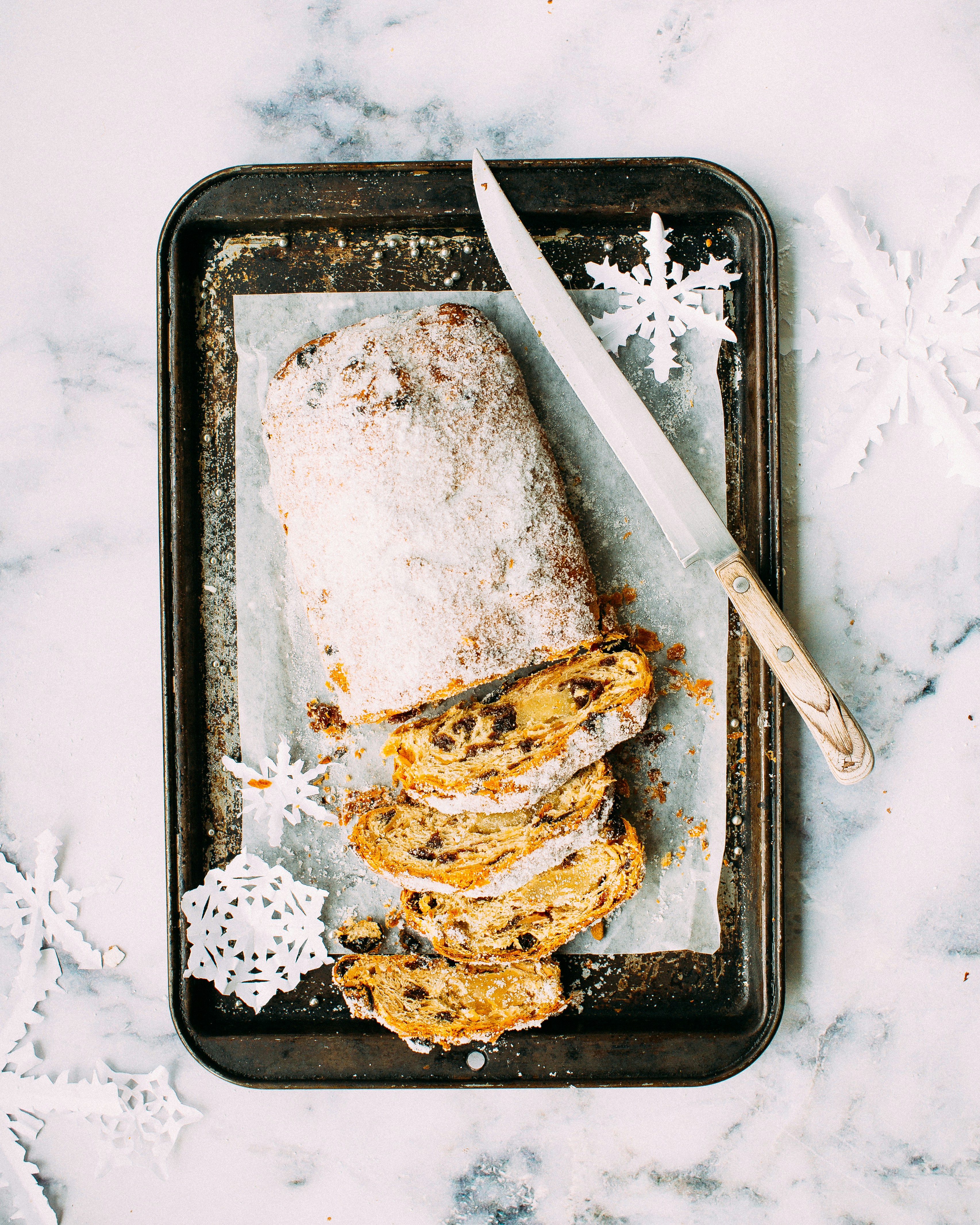
A stollen loaf sits on a well-used baking tray and a sheet of baking parchment, surrounded by paper cut-out snowflakes. The stollen has been cut, and four slices are laid on their sides to show the dried fruit and marzipan inside. A vintage knife sits beside the stollen.

It’s hard to think of a beer that would pair better with stollen than a Belgian Stout like Gulden Draak Imperial Stout by Brouwerij Van Steenberge, a dark and luxurious combination of a strong Belgian ale and an Imperial Stout. Pairing a sweet and heavy cake with a beer full of dried fruit and chocolate flavours might seem cloying, but a more bitter beer would clash — sugar can make bitter flavours seem even more bitter.

Sometimes nothing tastes better than a good cup of coffee or hot chocolate with a slice of stollen, since a hot drink helps the marzipan and butter to melt in your mouth in the most delicious, decadent way. Perhaps you might want to try mulling a beer to drink alongside your cake? Glühkriek is a wintery favourite, made by warming up kriek (cherry beer) and adding mulling spices. Leifmans make their own beer ready for mulling — all you need to do is heat it up.

Mendients

On Christmas day, we’re having mendiants. These dark chocolate disks studded with walnuts, raisins and candied orange peel are a little like florentines, and originally come from the south of France, but are now an essential part of any Belgian’s Christmas day.

According to tradition, there are four toppings used on these little chocolate coins, each representing one of the Catholic orders created in the 13th Century: white almonds for the Dominicans, raisins to represent the grey of the Franciscans, brown hazelnuts for the Carmelites, and dried figs for purple of the Augustinians.

These flavours, the raisins, the sticky dried figs, the hazelnuts, are all a definitive shoe-in for pairing with the Trappist beer Rochefort 8. Of course, you could go one higher and opt for the dark richness of Rochefort 10, but with an 8 you’ll receive more fruit and spice, spicier top notes, and a touch of caramel. The 10 is all decadence with a hit of winter spice and alcohol warmth — not a bad thing, of course, but a little overwhelming for these little chocolate medallions, unless you’re planning on eating the whole box. In which case, crack open that 10 and pour us some too.

Sprits Biscuits

We’re probably going to be having a few visitors over the next few weeks. Sprits biscuits are the only biscuit to have on hand for those sorts of days with unexpected visitors and endless cups of afternoon coffee.
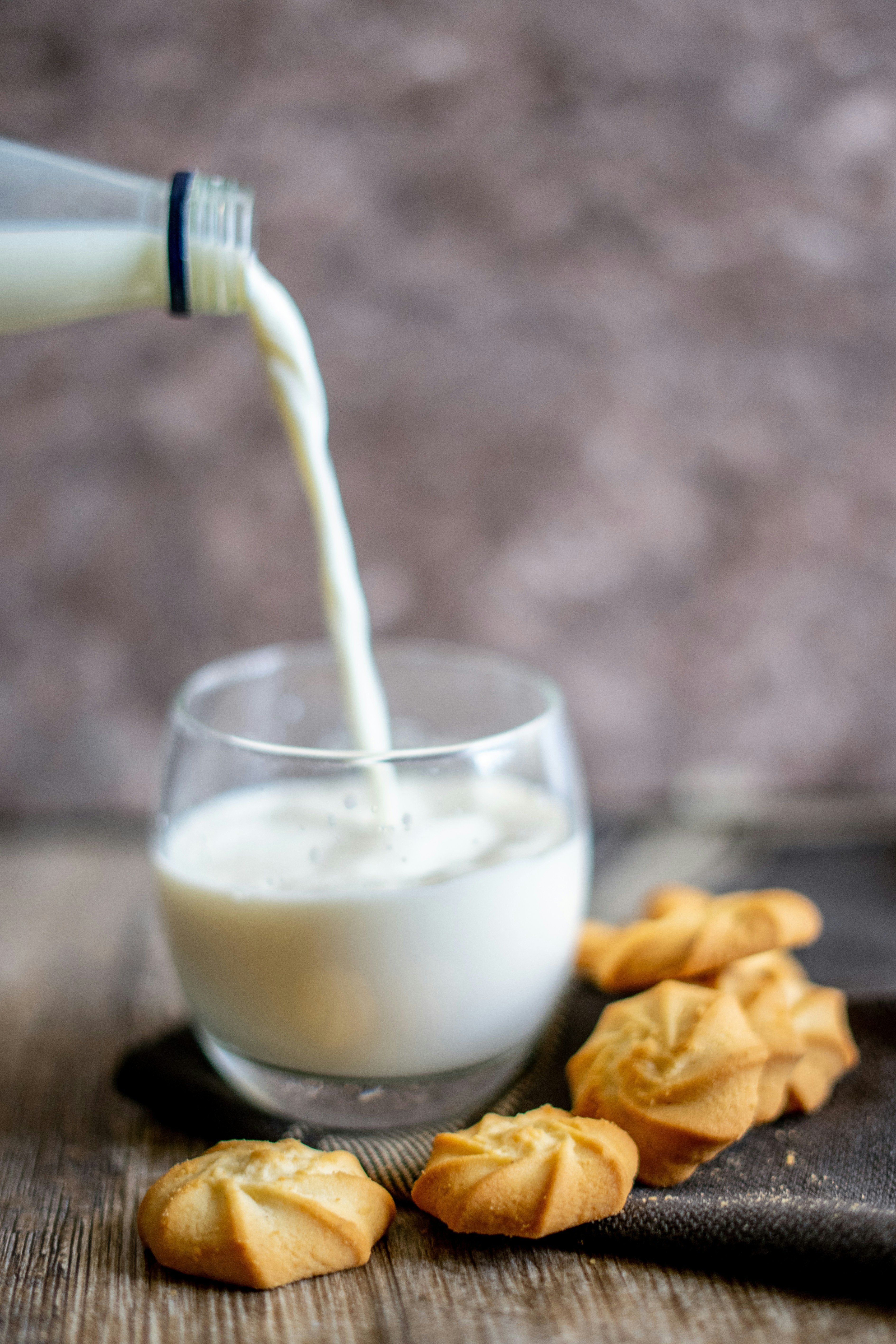
Milk is poured from a bottle into a round glass beaker. Next to the cup is a pile of little buttery cookie swirls.

Nobody said it has to be coffee though. Turn your festive catch-up into a celebration in its own right and grab a beer instead.

A great beer to go with that crisp but melt-in-your mouth almond and butter biscuit is Brasserie de la Senne’s Zinnebir. Cut through the butteriness with a crisp Belgian pale, and enjoy the fragrant, fruity hop aromas of stone fruits and marmalade as they waft from your glass. A deliciously light beer with a bit of a warming kick — it’s 5.8%.

Belgian Candlemas Pancakes

If you thought the festive season was over as soon as January the 1st rolled around, you’re not thinking like a Belgian. On the 2nd of February, the country celebrates Candlemas, the day when the manger scenes can be put away and the last feast day of Christmas.

Like all Belgian festivities, there is a typical food to make and enjoy. Today, on Candlemas, we’re lighting all the candles in the house and having pancakes. Not nearly as thick as American pancakes but not quite as thin as a French crepe, these symbolic treats have been eaten on Candlemas since the 5th century. It’s said to bring you good luck for the year if you make pancakes for the occasion, and it even matters how you flip them. What doesn’t matter is how and when you eat them: You can either have them for lunch or dinner, and serve them rolled up with jam, sugar, syrup, or even chocolate sauce and ice cream.
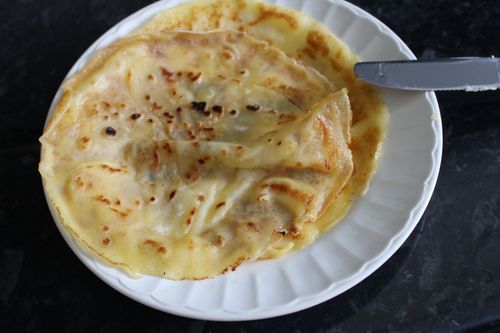
Thin, buttery pancakes piled on a white plate.

The right beer for the occasion needs to be light, to make sure these delicate crepes aren’t overpowered. The whole point of Candlemas pancakes is to celebrate the return of spring, the growing hours of daylight, and the use of early-sown wheat, so in the spirit of all things agricultural and rustic, let’s pull out a Saison. No funny business here, we’re opting for Saison DuPont, which hits all the right notes: Dry, fresh, earthy, and a touch of clove and spice. Delicious.


Sarah’s book is available to buy now, from Barnes and Noble and Amazon.
Katie Mather’s The Gulp is free to read. However, to support my work and keep me hydrated, please consider becoming a paid subscriber.

What your beer-loving loved ones really want

A gift guide.

The real ale selection boxes and Punk IPA six packs sold in Tesco are now memes. It’s not that we’re not grateful, it’s just that we don’t want them, and we don’t want you to waste your money on them.

Beer people are as fussy about their beer as wine people are about wine — we hoard our favourites and never drink them, and we complain about the less-good beers we end up drinking instead. We are as picky about the beer we drink as toddlers are about which piece of peanut butter toast they will actually eat (the one on the floor, only.)

It’s not always just about hipster hype. There are often genuine reasons why your beer-loving loved one doesn’t want a certain brewery in their house, and if you’re not a beer person, it’s understandable that you wouldn’t know why. Commendable, even. God, how my life would be if I didn’t have to know any of this stuff. Here are a few short and to-the-point examples of what I mean:

So what does this leave you with? It sounds like an impossible job, buying presents for ungrateful bastard beer people, and honestly, it’d be understandable if you didn’t bother. However, if you’re still dead-set on making your favourite beer lover happy, here are some bolt-from-the-blue ideas you’ve still got time to work on before Christmas comes.

This Bacon Fries Bag

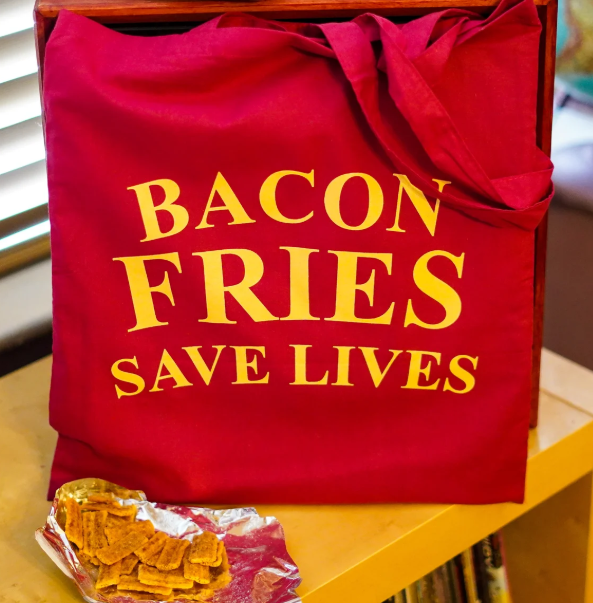
Every beer drinker loves pubs, and every pub-going beer drinker loves Bacon Fries. This Bacon Fries bag made by Ross at Pints of Cask will make your beloved beer nerd the belle of the boozer.

A red tote bag with "Bacon Fries Save Lives" in yellow printed on it

Orval

Literally everyone believes Orval is the pinnacle of beer. Make things easy for yourself and go to your nearest beer shop and buy six of them. Job done.

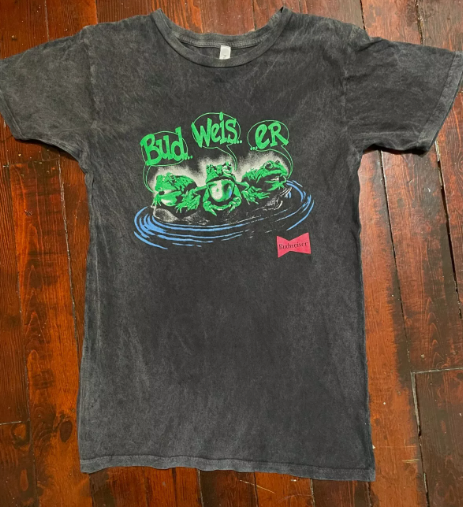
Classic 90s Bud Weis Er Tee

Shit beer but excellent frog-based advert. Sometimes the drip outweighs the morals.

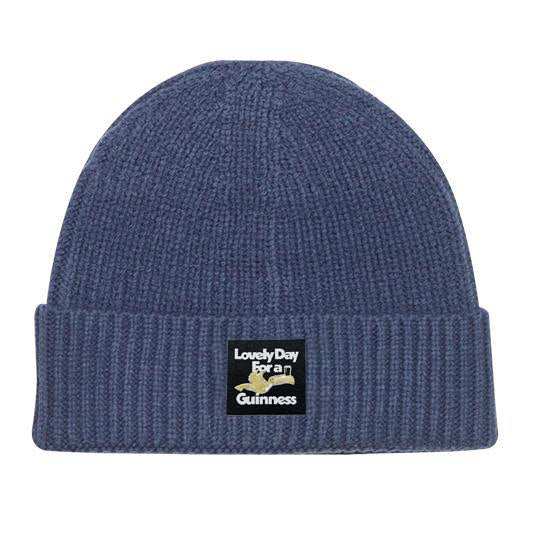
Guinness Merch that Doesn’t Suck

UN:IK and Guinness have a range of merch designed by the UN:IK team in Manchester and it’s all pretty good. Don’t buy anyone a Guinness glass gift set — they absolutely have at least one already thanks to drunk glassware theft.

Their hats in particular make a great present because they aren’t too pricey, and all beer people like wearing little fisherman hats.

Blue beanie hat with Lovely Day For A Guinness patch stitched on it.

Put Money Behind Their Favourite Bar

Genuinely, genuinely do this if you’re feeling generous. Instead of getting a gift card for an online beer company or buying them a crate of something they might not like, go to their favourite pub or bar and put some money on tick for them.

Not only will the bar absolutely love you for giving them a little cash boost at an important time of year, your mate will love you because they can go in and get pints whenever they want for free until the money runs out.

From personal experience as a bar owner, this also encourages people to try things they wouldn’t normally buy, which is also a brilliant thing.

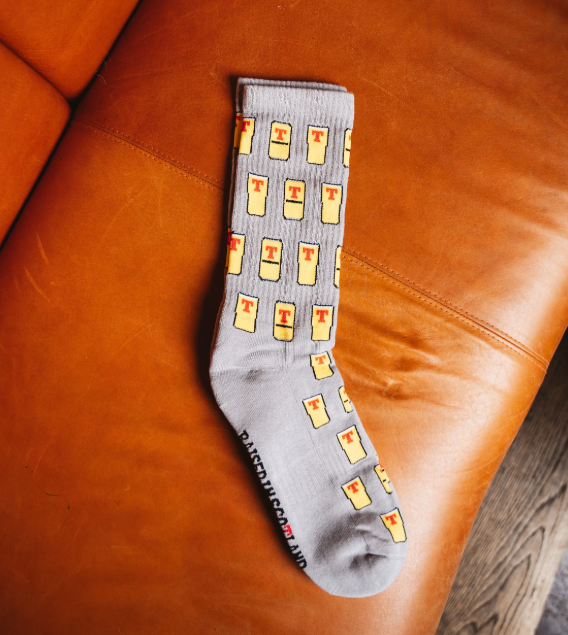
Tennent’s Socks

Yeah, beer people like Tennent’s. You can try to understand it if you want — I know you think it’s “just a lager” (whatever that means) but to us it’s a symbol of joy.

These socks are great and your friend will be chuffed with them.

Light grey socks with little yellow Tennents pints all over in a repeating pattern, all with little red Ts on them. On the sole it says "Raised in Scotland."

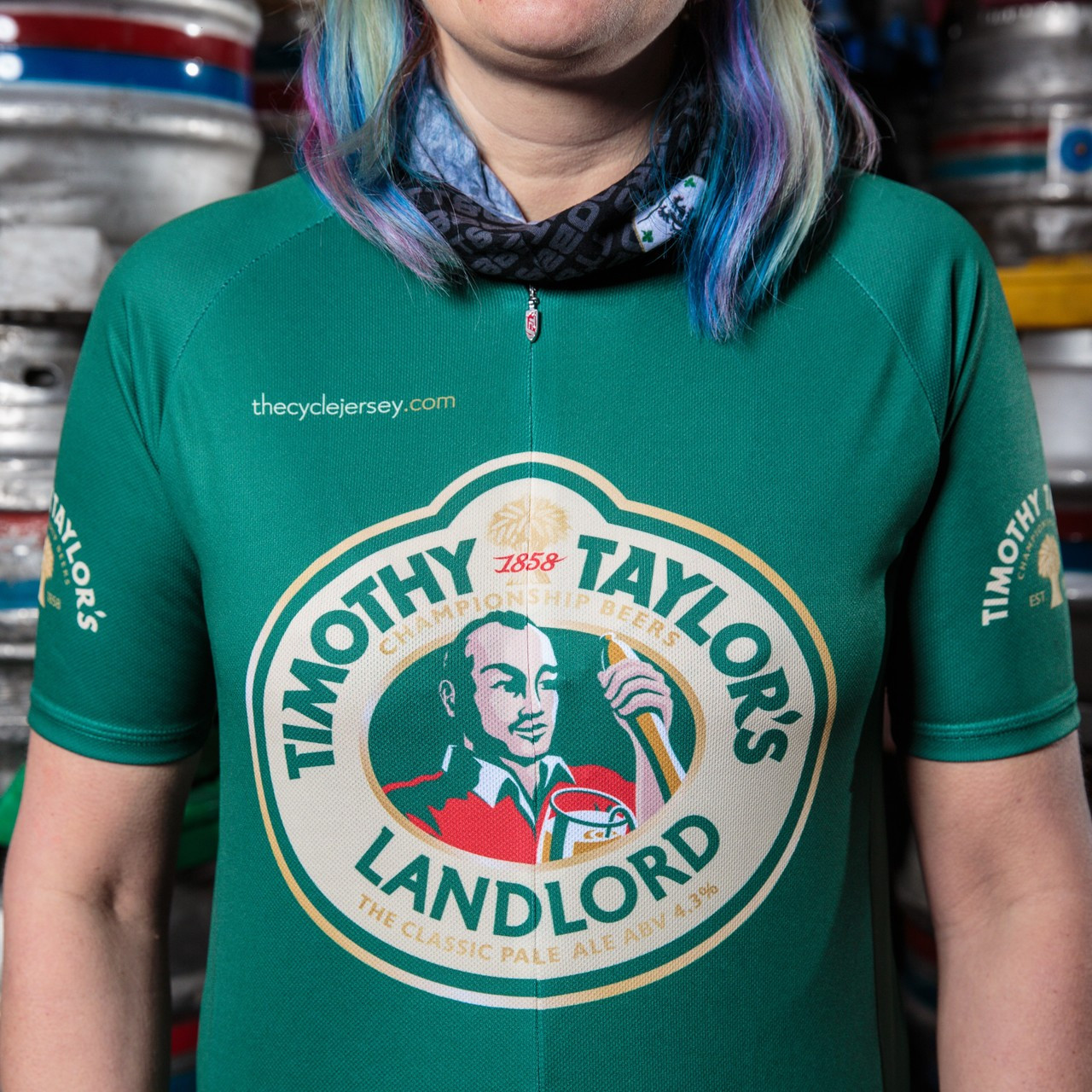
Timothy Taylor’s Cycling Jersey

If your loved one is a cask beer fan, they’re going to enjoy a pint of Timothy Taylor’s. There’s also a good chance they’ve got an expensive and time-consuming cycling addiction.

Help them look their best when they’re out at a local club ride with a Timmy T’s cycling jersey. It’ll even look good in the pub afterwards when they’re… rehydrating.

Model with purple, green and blue hair wears a green cycling jersey with a large Timothy Taylor's Landlord logo on the front, and small gold versions on each sleeve. It's a short sleeved jersey.

Brewery-Branded Running Gear

Speaking of expensive and time-consuming hobbies, there have been many, many recent instances of beer fans being overcome by the need to run — either in groups around industrial estates, at Parkrun, or up and down hills in the rain.

Because of this phenomenon, it’s likely that your favourites’ favourite local brewery has a running shirt or cap in their merch Ikea bag somewhere in the office. Your best bets are the trendy ones who run their own running clubs.

One of my favourites is this “Run Like Helles” shirt by Cornwall-based Firebrand Brewing.

Smoked Salt

I’m not kidding, whenever somebody gets me posh kitchen stuff like oil or salt I’m over the moon.

If you have a smoked beer lover in your life, it’s highly likely they’ve already got a cellar and under-the-stairs cupboard and various kitchen cabinets full of beer. They know what they like, and they collect it. They don’t need any more.

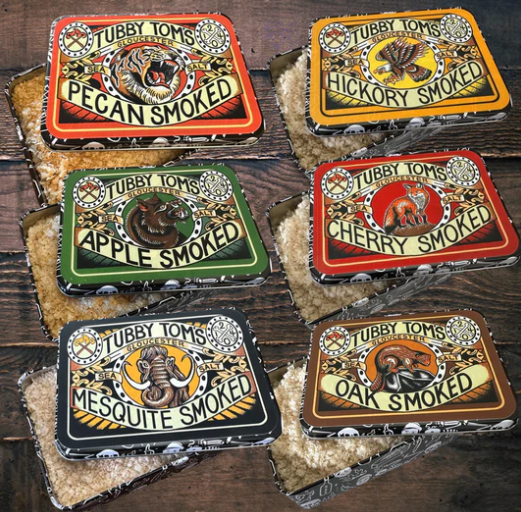
Enable them to make EVERYTHING taste like smoke with some super high quality smoked salt. Tubby Tom’s use smoking woods like mesquite and pecan to give their sea salt varying characters. Trust me, this is the right sort of nerdy.

Six tins that look like tobacco tins all in different colours: red, orange, black, green, brown and black, with tattoo-inspired artwork. Each tin reads "Tubby Tom's Gloucester" and the type of salt inside.

A Pellicle Subscription

Hell yeah, you know I’m gonna bring up my magazine in this roundup.

Patreon offers gift subscriptions now. Get your beer-loving friend a subscription to Pellicle and they’ll become a supporter of independent beer writing — and they’ll also have access to our supporters-only messageboard, be able to join the Pellicle fantasy football league, and gain other perks too (did somebody say a zine was coming in the new year?)

Sign them up here.


Katie Mather’s The Gulp is free to read. However, to support my work and keep me hydrated, please consider becoming a paid subscriber.

Home from the awards, listening to Modest Mouse

My brain’s the burger/my heart’s the coal

I’m on the train on my way home from London, where I attended the British Guild of Beer Writers Awards.

Pellicle, the magazine I’m deputy editor of, had 10 contributors win awards. This is unbelievable. This is fantastic. This is what we wanted from the magazine — not to win awards as such, but to publish work that resonated and felt worthwhile. Without being intimidating or worthy. We want to publish writing that sets the land around the drinks writing industry alight. I’m hugely thrilled that our writers have been given the accolades they deserve for being insightful, skillful, and entertaining.

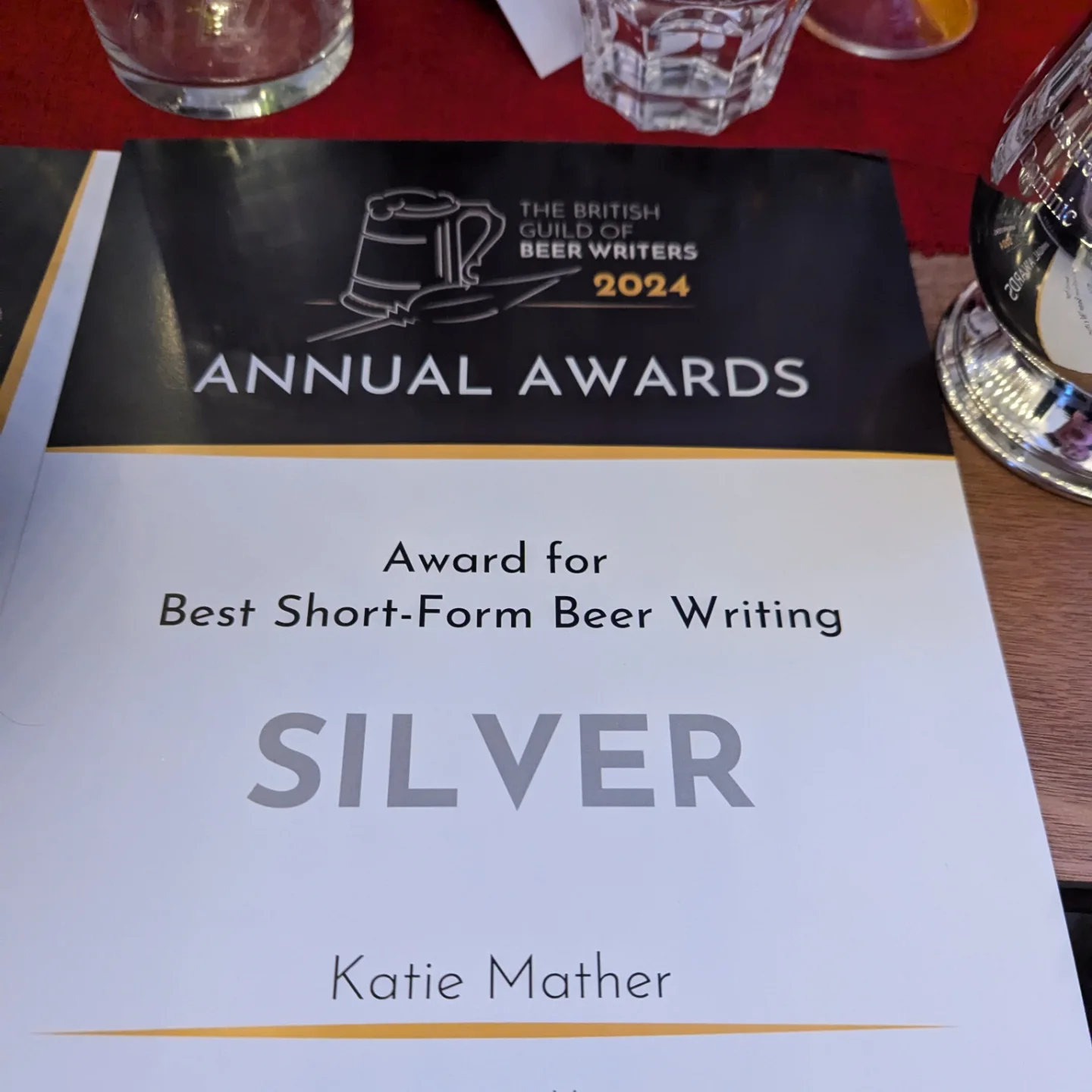
I also won an award of which I’m really proud. I was presented with the silver award for short form writing, which means this newsletter is now award-winning.

I use this newsletter as writing practice, and as a place to share ideas I’ve not fully formed yet. It’s a space where I can write without the restrictions of a house style, and with only the strictness of my own editorial eye. I have been writing this newsletter for around 6 years now, maybe more, first as a Tinylettrler and then as a Substack because I liked the CMS better. I enjoy having it. Unlike writing for magazines, it’s a platform where I have to have complete conviction in what I’m saying because nobody else is involved. It’s just me and the send button. There’s a thrill every week that exactly what I wrote will reach hundreds of people. That’s why I keep doing it.

Thank you for reading The Gulp, and for supporting my writing in all the many ways you do so. It’s rare for a person to love what they do, but I do. And I couldn’t write if people didn’t read.

xox

None-Glass Booze Carriers

Are you over the bagnum? Because I’m not.

During the pandemic, I joined in with a micro-craze that all my UK-based wine nerd friends were participating in—I bought a bagnum of orange wine.

A bagnum is a plastic pouch with a tap fixed to it. Basically, it’s a Bag-In-Box, or more literally, a bag-without-box, that for some reason captured imaginations like no other wine fad that year. Call us starved of things to do in 2020, but I really think Le Grappin, the originators of the fad, managed to grasp something exciting. Orange wine, which to many was an unfamiliar treat at the time, in a bag. It just felt fun and accessible. It had a little handle. It was simple. More importantly, the wine was pretty good too.

Le Grappin don’t appear to still sell their orange wine in bagnum format anymore, but their rosé, white and red wines are still going strong. Jancis Robinson is quoted on their website as saying “The finest wine I have encountered in a pouch are Le Grappin’s burgundies…” an incredibly specific compliement, given there are about three makers on the market using pouches or bagnums, but I’ll let them have it.

It confuses me why more winemakers don’t use pouches or bagnums—or why other drinks makers don’t use them either, come to think of it. I was happy to see Wishbone Brewery, a small independent brewery based in Keighley, West Yorkshire, trialling real ale pouches for Christmas rather than using cumbersome, expensive minikegs. They make sense. They’re light, easy to fill, easy to use, easy to fit in your fridge, less ridiculous-looking than a big glass magnum bottle, and have a lower carbon footprint than single-use glass… there is only one downside for me, and that’s their recyclability. They can’t, they won’t, so don’t try to recycle them.

Glass bottles make up around half of a winery’s carbon emissions, thanks to the effort it takes to ship the empties to the cellar, then to package up and ship the bottles out again once filled. They are heavy, breakable, and while they’re still industry standard because of their traditional use, they’re far from a perfect solution. I’ve been happy to see winemakers using kegs to sell wine in bars—why not? I used to sell Judith Beck’s Ink from a Lindr machine and it worked a treat. Beautiful wine sold efficiently, accessibly, and with less impact on the planet. I don’t see a problem with it at all.

I’m always keeping an eye out for glass bottle alternatives being used, and this news story from the San Francisco Chronicle on California Nouveau wines caught my eye. Family-owned and run winery Extradimensional Wine Co. Yeah! is releasing their take on Beaujolais Nouveau with their own Mourvedre-Primitivo rosé and a Chenin-Roussanne-Viognier blend, made to be enjoyed young. I want to drink them very much. These wines are being sold in refillable, reusable Kleen Kanteen bottles, which are themselves made from 90% recycled steel. You can’t age a wine in stainless steel, but it’s the perfect way to carry your nouveau around until you’ve drank it. They’re not meant to stick around anyway.

What I like about the Kleen Kanteen idea is that the bottles are engraved—no doubt stealing the idea from Tom and I when we did the same for a pair of wedding present Kanteens for our friends. (Obviously the Extradimensional Wine Co. Yeah! Kleen Kanteens were not engraved at the Timpson’s in Kendal like ours, because they don’t have mistakes on them.) They’re just like growlers—remember those? I’ve got at least two hidden in the kitchen somewhere, stainless steel and engraved, once filled at a tap room and then never refilled again. With beer, though, it’s fizzy. It’s not ideal for a refillable situation. Wine, on the other hand is perfect for a BYOB set-up—they manage perfectly well in mainland Europe to refill their own wine receptacles and have their beer bottles reused by the breweries too. Are fancy water bottles how we crack it? Can wine encourage a more habitual refill lifestyle than beer managed to achieve here in Britain if only they choose the right refillable bottles?

Other Stuff

A wine-lover's guide to blended and wild beer

There’s a world of fascinating wild, blended and farmhouse beers out there to drink. But I guess you need to know what they are, first.

This piece was originally written for Glug magazine earlier in 2024. To sign up for their excellent wine club, visit their website.


I’m sitting on the stony ground of a vineyard high above the Mosel river. In the warm evening sun, German winemaker Jas Swan hands me a bottle of Braueri Kemker mixed fermentation beer from the back of her van to pour my own generous measure into my mug. As the sun sets over the Mosel valley, and Simba the border collie runs riot around the vines, I sip and wonder. Why is a winemaker drinking beer?

Braueri Kemker are one of Germany’s new-wave farmhouse breweries, so-called because their beers and their recipes are based on the rusticity and tradition of farmhouse brewing, a technique that involves using naturally-occurring yeasts and bacteria to create unique flavours and aromas within the beer. If this sounds familiar, it’s because many wines are made this way. Some say it’s a major component of terroir—the yeasts providing localised character unavailable anywhere else. Many winemakers, Jas included, are fans of these types of beers because not only are they delicious, they share her winemaking values—they are complex and balanced, they are made with care and precision, and they have a definitive sense of place.

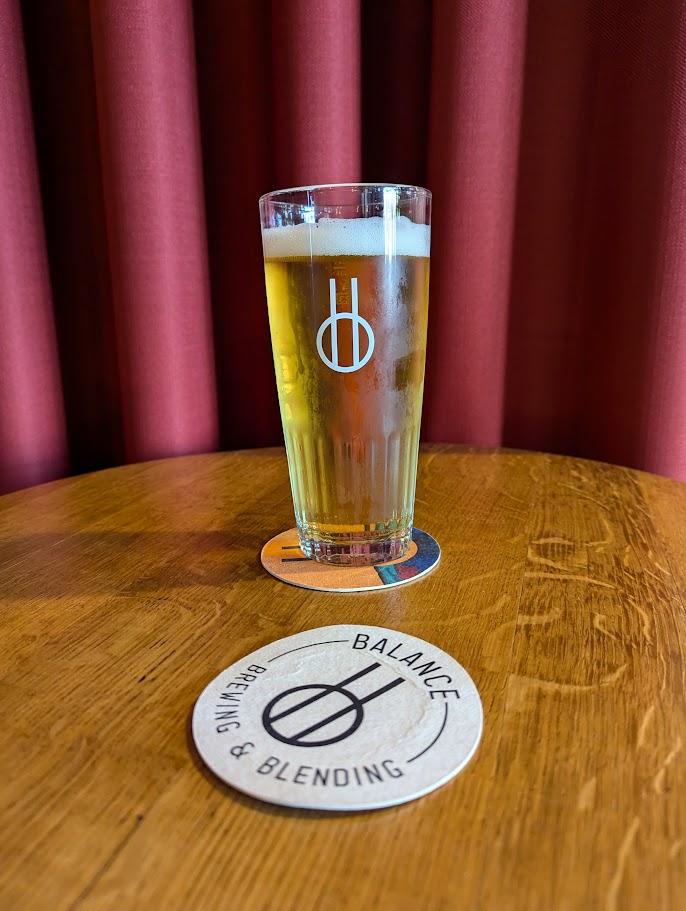
“It makes sense to me, because I think there are definitely comparisons between wine and blending beer,” says Will Harris, co-owner, brewer and blender at Balance Brewing and Blending in Manchester. “Particularly in our process—we use wine barrels to age our beer, so there’s a physical connection to wine too.”

A 2/3 glass in Belgian gueuze style is full of golden saison beer. It has the Balance Brewing logo printed on it in white, and it sat on top of a wooden barrel that has been turned into a table, along with Balance Brewing beermats. Behind, a thick maroon curtain makes the beer feel like it's on a stage.

Not every brewer uses wine barrels to make their beer. This extra step is how blended, farmhouse, and aged beers are left to rest, just like wine, in order for their flavours to mellow and the character of the wood to mingle with the beer. At Balance Brewing and Blending, their barrels come from a range of winemakers, using American oak for vanilla notes just as a winemaker would for their Chardonnay, and making use of the flavours left behind from the barrels’ previous occupants.

“One thing that runs through the whole process is the fact that our beer is made from moments,” says James Horrocks, who co-owns and runs Balance Brewing and Blending with Will. Unlike other beers, you have the fermentation in barrels, then the blending moment, then bottle conditioning or kegging that changes the evolution of the beer. It creates this idea of “you are having this beer right now, it will never be like this again.” There’s something really exciting about that.”

There’s romance in blended and wild or farmhouse beers that a wine lover could appreciate. Just as James feels each bottle of his beer is a once-in-a-lifetime, transient experience, you’ll hear the same story from top vignerons, their wines expressing a moment captured in time. What’s more, their attention to the agriculture of their produce has definite crossover—how is that moment in time created without the influence of the grapes, or the yeast, or barley, for that matter? Many mixed fermentation and blended beers are made with fruit, the most famous being kriek, which is a beer made with cherries. For brewers, the addition of fruit opens up another dimension of flavour profiles, and for the drinker, it once again offers an easy side-step into the world of wine. Balance Brewing and Blending create fruit beers using locally-sourced and waste fruit, and use winemaking techniques such as carbonic maceration to gather flavour and texture from the fruit they use, and breweries like Cantillon and 3 Fonteinens use seasonal fruit and even flowers to produce their beers. Cantillion’s elderflower beer “mamouche” is sought after every single year, the floral aroma mingling perfectly with the tart, acidic flavours of the lambic beer.

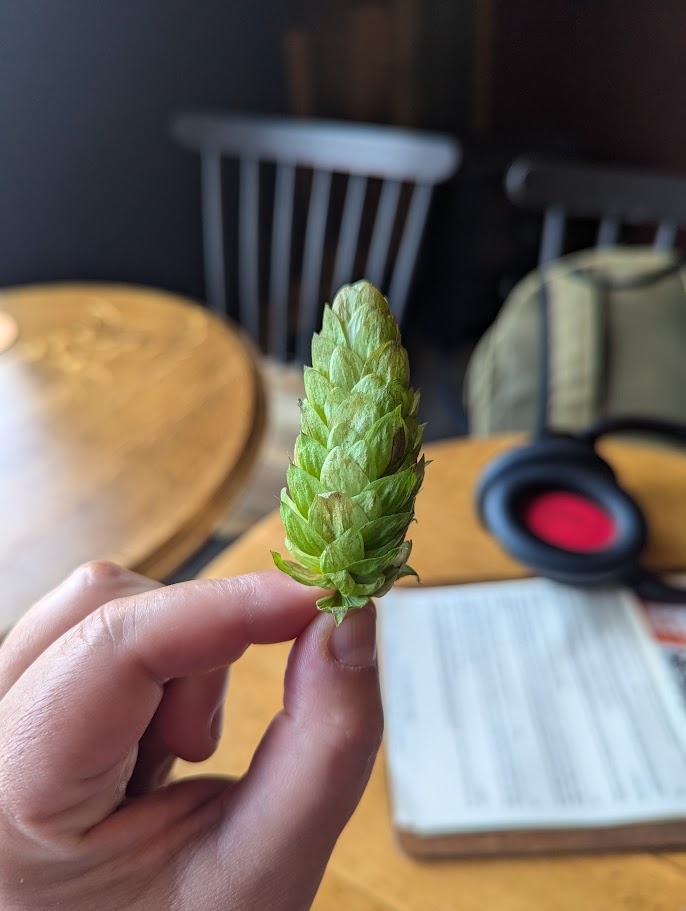
A beautiful fresh hop cone, tall and perfectly-formed, and a zingy shade of light green. I'm holding it in my left hand above some pub tables at the Balance Brewing tap room.

As a wine lover, these are the beers that could set your soul on fire. Yes, wine drinkers do occasionally enjoy a cold lager on a sunny day, or a pint of Guinness at the pub. But it’s these carefully crafted beers that pay homage to their provenance that elevate them from being simple thirst-quenchers. If you love wine because it gives you flavours to explore and lots to think about, give blended, wild, and mixed-fermentation beers a chance to shine for you. You might be surprised at how much crossover there is.

“We’re looking at similar kinds of flavours as in natural wines—funk, Brettanomyces, and acidity as creators of flavour,” says Will. “Some of the character that is actually conveyed from the barrel…and because of the nature of the barrels, you can grasp some of those oxidative notes and characters too. Fino sherry and our dry saisons have a really nice flavour crossover, some of that umami and minerality, and definitely some of the structure.”

For Will, and for me too, the way these beers progress in the glass is what makes them stand out. Unravelling the nuances within the beer, just as you might with wine, gives you the full picture of this beer’s making—from the grain to the glass. 

“Drinking it is an experience—evolving, mingling, and changing. It’s evocative, it’s thoughtful, it goes beyond just taste,” Will says.

Top restaurants are starting to see the fascination with blended beers, using their complex characters and unusual, unique flavours to complement and contrast with adventurous dishes on tasting menus. Chefs like Tom Barnes of Skoff in Manchester, and Mark Birchall at two Michelin star restaurant Moor Hall in Ormskirk, Lancashire are including blended and mixed-fermentation beers on their wine lists and tasting menus. You may be offered one at your next meal. I wholeheartedly hope you accept a glass, and enjoy it for what it is—not wine, but a beer that can be just as special.

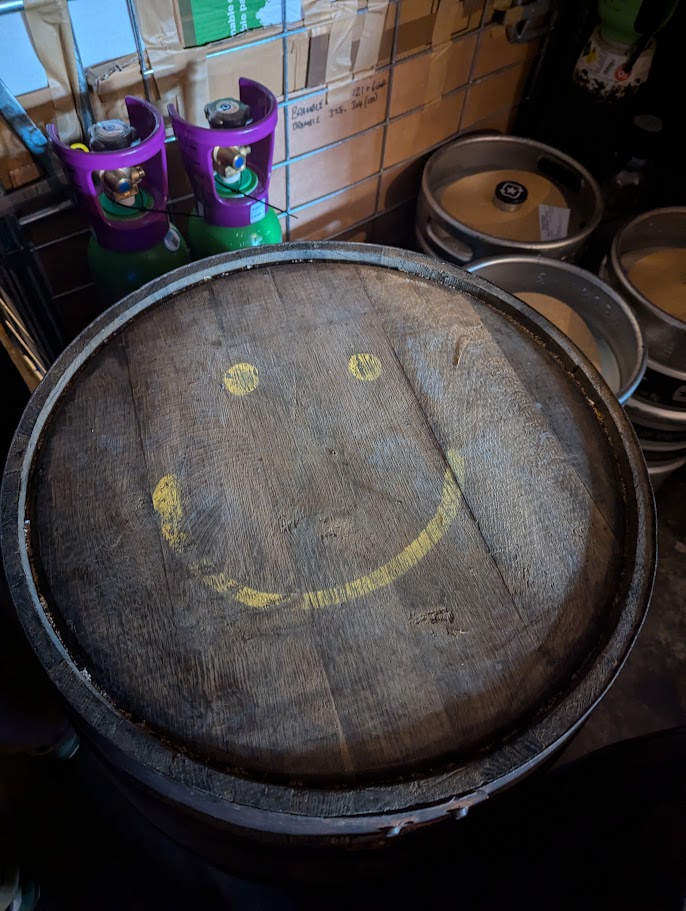
In the blendery part of the Balance brewery there are beige, municipal tiles on the wall and plenty of important notes and calculations taped to the tiles. There are two green gas canisters with purple tops fixed to the wall, ready for use. In the background there are metal Kegstar kegs, but the main focus of the photo is a big, old wooden barrel, made from French oak, with a yellow smiley face painted on the top.

Types of Mixed Ferm and Blended Beers

Saison: A light, dry, historic beer from Belgium that’s sometimes sour, and pretty hard to sum up in one sentence.

Lambic: A traditional Belgian style. Very tart.

Gueuze: A blend of lambic of different ages, which is then further aged. Complex and tart. The brewery’s approach to “Grand Cru”.

Kriek: Lambic aged on cherries.

Mixed-Fermentation: Sour beer made by mixing yeast and bacteria for specific end results. Fruit can be added. Almost a catch-all term for all of the above (but not always.)

Farms of the Rich and Famous

Is there something cynical about celebrity farming?

When I was first asked if I’d seen Clarkson’s Farm, I thought it was a Peter Serafinowicz miniseries I’d somehow overlooked, but no—Top Gear’s leading shirt-and-sheux belligerent had actually bought his own farm. With hilarious consequences, I’m told.

Watching the David Beckham documentary last year, David introduced us, the viewer, into his peaceful pocket of agriculture, where he raises chickens for eggs, keeps bees for their honey (or “DB’s Sticky Stuff”) and has begun growing organic vegetables with his daughter Harper. He says it’s calming, and I’m sure it is, being that it’s a retirement allotment on the grounds of his £12m estate in the Cotswolds.

Vinnie Jones, everyone’s favourite 90s hardman nutcase, has discovered Swedish hunting apparel brand Härkila and bought a “rundown” 400 year old farmhouse in West Sussex. I have a modicum more time for Vinnie’s farming exploits, simply because he seems to have a genuine passion for protecting the countryside—fervour for hunting aside. Still, his interest in farming comes from a place of escape, just as Clarkson and Beckham’s does.

Martin Clunes has a farm. JB from 00s pop group JLS has a farm. Calvin Harris has a farm.

What all of them have in common, apart from their fame, is their assertions that farming is the perfect way to unwind and relax, and to disappear from the responsibilities and hectic schedules of their normal life. I can’t say that any farmer I have ever known has agreed. It’s a gruelling job that takes up every single day of your life—as my old landlords would say, “Cow’s don’t celebrate Christmas!”

It’s not all bottle feeding lambs and driving shiny Massey Fergusons—there are supermarket prices to contend with, and taxes, and having all your generational wealth tied up in land that’s worth millions to developers but relatively fuck all as a muddy field full of sheep. If you’re at all interested in the current financial difficulties farmers face, this piece in The Guardian, and its comment section, lays out a lot of detail (it is an opinion piece though, so pinch of salt etc.)

Farming is hard, essential work that ensures food is grown and supplied to the population, and many farmers are finding it harder and harder to keep up with demand while also dealing with ever-more erratic weather that regularly destroys crops. It’s a job that most are in for life, training for their future in tandem with their school days—although this is getting rarer. The average age of a farmer in the UK is 59, because young people are less and less likely to choose a career in farming when they could do literally anything else.

There is a common stereotype of the rich farmer sitting on thousands of acres of land, and the reality TV shows that have become part and parcel of the celebrity-to-bumpkin pipeline reinforce it. To the average person buying food in a supermarket and seeing the prices rise and rise, there is no connection between the RRP and the cost of getting their produce out of the soil and into the shops. Farmers are not thought of outside of rural communities—in your 24 hour Tesco Express and Sainsbury’s Local, food is infinite. Without that connection, the people who produce, pick and process the food we eat aren’t seen, and their problems certainly aren’t understood. For the only reference point to then be David Beckham picking broad beans (or whatever) and smiling in the sun, it’s difficult to express how anti-idyllic farming life truly is. Even Jeremy Clarkson seems to hate his new job at times.

So why are famous people so keen on becoming agriculturalists? Well, farms, by design, have land. They also happen to make up the lion’s share of the UK’s countryside, and in recent years there has been a need to ensure farmers and landowners are keeping their portion of the country eco-friendly, even beautiful, if you’re a part of an Area Of Outstanding Natural Beauty or a National Park. It’s expensive and time consuming for already under-pressure farmers to take care of these additional tasks, so there are a number of incentives in place to make sure they get done.

The Sustainable Farming Incentive or SFI is a form of income support for farmers “for actions that support your business, food production and the environment.“ Countryside Stewardship or CS payments are financial incentives to get farmers to protect the environment. The Farming Investment Fund or FIF is a system of grants available to farmers, who can apply for funding for new farming equipment and technology, water management and slurry infrastructure, and more. The Adding Value grant is now closed for round one applications but will offer up to £300,000 to farmers who can prove they require the money to “improve productivity or the environment.” Much like the government’s SEISS payments during Covid-19, this grant process is now running for a second round of payments for eligible farms. The England Woodland Creation Grant (EWCG) offers up to £12,700 per hectare for newly planted woodlands on land larger than 1 hectare. If you’re a farmer in an Area of Outstanding Natural Beauty or a National Park, funding is available on application based on fulfilment of requirements such as: “providing opportunities for people to discover nature” and “protecting or improving the quality and character of the landscape.” The Cotswolds is an AONB, for example. I could go on. In Ibiza, where Calvin Harris has a sheep farm, a financial incentive is paid to citizens to encourage them to raise grazing animals and maintain the landscape of the island.

The existence of these grants and income support structures is a good thing. Farmers who need them are hopefully gaining what they need—although I’d like to see some evidence that all farmers are aware these options are available to them, and that there is support given for those who are not well-versed in writing bids. If you know more about this, please do let me know. I would like to think they’re doing some good, to both incentivise better practices in farming, and to support the people who need it most. What I am sure of is that each and every rich person who’s moved to their dream manor in the countryside is well aware of the tax breaks and funding opportunities available to them—or at least their accountants are—if only they buy a few rare breed heifers, or plant a couple of hectares of organic carrots outside the front door. Get some bees and say you’re contributing the the ecological repair of your local area. Plant some hedges. If you’re going to do that, you may as well get yourself a pair of Dubarrys and a flat cap and call yourself a farmer. Seems like the cheapest way to gain your own estate in the most sought-after land in the country to me.


Pellicle Stuff

Every week I write the Pellicle email on a Tuesday, to go out at 6am the following Wednesday. It’s the best way to find out about our latest stories and news, and I also sprinkle it with a bit of industry news too from our sponsors.

I’d really appreciate it if you could sign up—this week’s story is an absolute beauty and I want as many people to read it as possible.

Sign up here


Other Stuff

The biggest threat to pubs? Nobody has any money.

Upholding an entire economic sector is difficult when you’re skint.

Pubs are where you put the world to rights. I’ve decided to keep track of the bright ideas I have at the pub and occasionally share them on here, for better or worse.


There’s something truly joyless about the way our country views the hospitality industry. Unlike other job and service providing sectors, it seems that hospitality is viewed as a lesser economic contributor, simply because it exists to ensure people enjoy their leisure time. I have a problem with this.

As the price of food, energy and petrol rises, we have to scale back our other expenditures. When we’re financially squeezed, be it through banking collapses, pandemics, recessions, or inflation, of which we’ve all lived through in just over a 15 year period, the first thing to go from our budgets are leisurely activities. There are lots of resources out there to help guide you through creating new, more restrictive budgets—as though we don’t understand how spending versus debt works. In my banking app, it tells me what I could afford to spend less on in future, and this is always a list of pubs I’ve bought pints in. It’s never told me to cut down my spending on bills, by far my largest outgoings. Quite frankly this is bullshit.

I’m not advocating that we spend less on food or heating. I’m saying we don’t have enough money, and that is the thing that needs to change. Everyone needs to be given some money to spend on enjoying themselves, now more than ever.

I don’t know where that money will come from, I’m not an economist. Figure it out yourself. All I know is that pubs are still shutting down because people can’t afford to leave their homes to enjoy a little bit of leisure and all-important social time, and the official reaction is, “oh well.” Where else is the consumer expected to be the sole supporter of an entire industry?

We can tell the government we want all kinds of financial support for pubs and bars, but I think we need more than that. What’s the point of saving a pub if it stays empty on a Friday night? Everyone needs a weekly stipend to spend in their locals, on whatever they want. I’m only half joking. Imagine Eat Out To Help Out, but better, because it’s not half-arsed and people would get to spend their money (or… credits? Tokens? A ration book? People love that “we’ll meet again” WWII crap, don’t they? Would a school dinner swipe card-type system work? I don’t care) everywhere, and the venues don’t have to jump through hoops to claim their money back.

It might be a stupid idea, but have you got a better one?


We’re not far off reaching our 2024 subscribers target over at Pellicle magazine.

If you enjoy my writing/newsletter, there’s a good chance you’ll love Pellicle. It’s full of features on pubs, beer, wine, cider, food, and everything else we love to talk about.

Pellicle is completely independent, and therefore continues to be one of the only independent food and drink publications in the UK not distributed by supermarkets or owned by large media groups.

Please, if you have the means, head over to our Patreon and become a Patron.

Your support enables us to commission features and illustrations, and pay the artists and writers behind them fairly for their work. It helps us pay for the upkeep of our website, and it also enables us to operate as a (current) team of three editorial and marketing and PR staff—myself (Deputy Editor), Matthew Curtis (Editor-In-Chief) and Lily Waite (Editorial Assistant).

SUPPORT PELLICLE NOW!


Other Stuff

My Stuff

  • I’m a finalist for two British Guild of Beer Writers awards: Best Commissioned Beer Writing and Best Short-Form Beer Writing. I find out how I actually do on the 27th November at the annual Guild dinner.

  • From last week: “If Nobody Cares About Craft

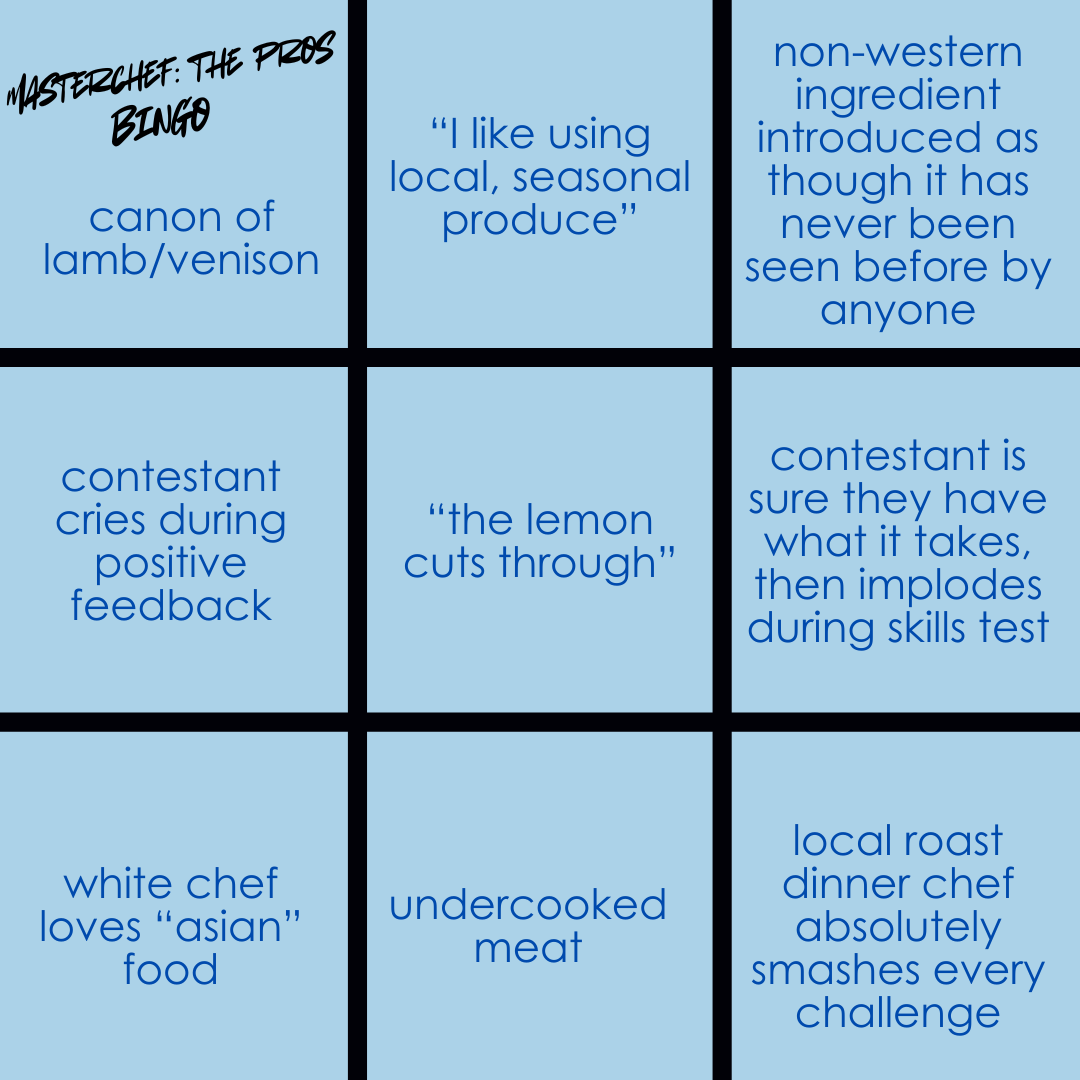
Masterchef: The Professionals Bingo

It’s back, and as usual, I’m heavily invested.

Every autumn, Masterchef: The Professionals takes up a great deal of my time. I don’t care about the other iterations of this franchise—who cares if some normal people are good at cooking? I want to see real chefs who understand and have experienced the trauma of working in commercial kitchens struggle to make dishes they’ve prepared for years simply because a floor manager is yelling “THIRTY SECONDS! TWENTY FIVE! TWENTY!” and Monica Galetti is breathing down their neck. I want to watch a seasoned pro make the worst gravy of all time. I want to see a young chef beat the odds and dedicate a beautifully pink lamb canon with redcurrant jus to their Grandad. I need the excitement of a forcibly dramatised reality show at this time of year, the contestants blinded by white-hot floodlights while they are told their clam bisque is grainy, their samphire relish too salty.

This is my Bake Off, complete with a problematic member of the jury who really shouldn’t be on telly anymore. I somehow couldn’t get into the cake and pastry version, perhaps it’s a bit too village fete-y, but even an old fashioned fete would have some bitching behind the tombola. I like the overblown sterility of the Masterchef: The Professionals kitchen. The fabricated urgency of it all. How harsh it is. Come on, you’re a chef! You said you could do this!!

Every year, I like to collect new clichés from the culinary world, which help me to understand what sort of a state the current climate is within the restaurant industry. When there are challenges set based on picking ingredients from a groaning table of harvest wealth, I like to draw conclusions on what are up and coming trends in food, noting when beetroot is chosen over carrot, or tonka is shunned for carob. It makes me laugh when a whole gleaming cod is set on a slab and a chef uses its cheeks and bones citing sustainability and “whole animal” cooking. What happens to the rest of it? You should have made big juicy goujons! Everybody likes goujons!

To aid my enjoyment of this year’s competition, and to help you too, I’ve created a bingo card. You can use this to create a drinking game if you want, it would be easy to include an alcoholic element if that’s your thing.

Masterchef bingo card: please contact me if you would like a fully written out version! There aren't enough characters here for it.

I would have added “Gregg goes absolutely fucking batshit gaga over a cheeseburger” as a joke, but that’s already happened this season.

Happy Mastercheffing!

Get more from Katie Mather in the Substack app
Available for iOS and Android

Working on Other People's Work

I’ve just finished editing a book—this is what it feels like.

In late summer, I was asked if I’d like to try something new—editing a long-form manuscripts. Until this point I’d only ever edited features, news stories, and the odd dissertation, but since I began working for Glug magazine and then Pellicle as an editor, I’ve developed a deep passion for editorial work. It’s something I didn’t know I’d enjoy until I was elbow deep in submissions for the first few issues of Glug when it was being launched, and as a writer prior to this, my only experience with editorial was with editing my own work and receiving feedback from editors.

I love getting to know a person through their writing—their style tells me a lot about what they want from their work, how they want it to be perceived and therefore how others will view them through it. It’s like being let into someone’s brain through an open window. Through reading their initial drafts I can learn about what they’re saying and beneath that, what they are trying to say, and it’s through picking apart the mortar of their sentences that I can figure out how to help them.

That’s what I’m here for, to help. I enjoy including empathy in my editorial work. Some people are red-ink editors, and having been edited by them, I know their techniques work, and my writing has improved through their tough guidance. Other editors prefer to do all the work, showing how things should be, and re-writing parts that need extra shade, texture, or flow. I’m a chatter. I like to talk about what’s going on when there seems to be an issue, and ask the writer to get in touch so we can figure it out together. Sometimes I can get into my head and believe that I know what the writer wants to say better than they do—this is never true. The best way for me to do my job is to get a writer to do everything themselves, with my guidance and help if they need it, and this means I need to keep my own ego in check throughout the process. So what if the writer has written something I wouldn’t necessarily enjoy reading? If it’s their style, if that’s what they are communicating, and it isn’t wrong and it reads well, then my personal preferences need to stay out of it.

If something isn’t working in a piece, say an idea isn’t linking easily with another, or there’s a jarring shift in tone or movement, I don’t believe I can fix that by jamming in a supporting sentence or two. It could get the story to a place where it could feasibly be published, but it wouldn’t make the writer happy to see their work propped up like this. That’s why I ask questions, request phone calls, and send email after email if needed, so that the finished work is as authentically theirs as possible. It’s more work this way, but I like my job.

That’s why I enjoyed working on the book so much. Cathy Huddleston has written a moving memoir about her life as a cowgirl, coming out in the Midwest, and becoming a horse therapist, all while dealing with the trauma of multiple sexual assaults and countless broken hearts. I was asked if I would like to work on this book and given the necessary trigger warnings. I said yes. I couldn’t wait to read this story.

Reading Cathy’s manuscript as an editor was difficult at first, because the content was so deeply affecting. Then I realised that I didn’t need to distance myself from Cathy in order to be an effective editor—in fact, it might benefit the book if we got to know each other better. Communicating with Cathy became the most important part of the process, ensuring my edits were sensitive to the topics at hand, and that her voice, above all, was what shone through. There were sticking places she’d struggled with, and the best way to tease out the meaning and emotions she had been grasping for was to talk. Writing a book is an emotional experience. Sometimes finding the right words can be more difficult than you anticipated. I’m so glad that together, we worked out what needed to be done, and that Cathy found her way forward.

The finished manuscript is full of Cathy’s unique voice and spirit. Often, writers are suspicious of editors, and feel that all we want to do is strip work back. I hope I do the opposite. Working with Cathy, I wanted to build up her confidence in her own voice, and develop her writing to incorporate her own style. In earlier manuscripts, she could write very matter-of-factly to get ideas over. I pushed her to be herself, because I knew that warmth and personality was there.

By the end of our time working together, I became immensely proud of Cathy and everything she’d accomplished in writing her book. On the day her final manuscript was sent on, I cried. I was proud of myself too, and so overcome with the sense that I’d truly helped someone tell their story the way they wanted to tell it. But what really made me cry was that Cathy had worked her ass off—during a job change and a house move—to make sure she understood my comments, to take them on board, and then use my suggestions and advice to improve the manuscript in her own way. She took constructive criticism like a champ, and she worked so hard to get it over the line.

I couldn’t have asked for a better first experience in book editing. Thanks Cathy.


Cathy Huddleston’s book Because Of My Horse is now being sent to publishers. More information when I have it.


Other Stuff

  • A deep inside-look at the shawarma hotspot that is Glasgow

  • Get yourself a Pellicle hat

  • Walking Phnom Pen by Chris Arnade—using his unique perspective as he long-distance walks around the world to discover the city, he notices it’s full of children. “Phnom Penh is a young city chock full of kids. They are everywhere, and they bring a positive energy, warmth, and joy that no amount of adult diversions — no amount of bars, casinos, exceptional cuisine, and museums — can replicate, because nothing warms the heart like a big smile from a tiny face.”

  • On Criticism in Beer Writing by Matthew Curtis

  • Working Inside Beer’s Sinking Ships—a look at Australia’s failing beer businesses via the people who work there, by Will Ziebell

    Subscribe now

My Stuff

If Nobody Cares about "Craft"

Then why does it seem to matter so much?

I wrote an article last week about “craft” beer—you can find it here if you missed it. I had a blast with it in all honesty, the feedback and comments were interesting and gave me different perspectives to consider, perspectives that aren’t often heard from within the sound-muffling walls of the beer industry bubble.

I saw time and time again that people were frustrated about the subject, because they, in their own words, didn’t care about it. In one instance, a reader commented four times to lament that time was being spent contemplating a subject “only manbuns care about”. Hate to state the obvious, but I wrote the piece, and I’m a woman with a bun.

There has always been a backlash opinion about “craft” beer (I continue to use these shit-eating air quotes around the word because it truly means nothing as a descriptor or as a branding tool) that it’s a niche product and therefore only nerds, hipsters, or losers care about it. I’ve always enjoyed the idea of this hypothetical group of people. Homebrew nerds hanging out with CAMRA vets, hanging out with hipsters, all brought together by their apparent shared obsession with hops. What an image. World peace.

The idea that it doesn’t really matter whether “craft” beer is called “craft” beer is something I hear a lot too, and I guess I can understand the frustration. It’s boring to hear the same arguments over and over again, and if you’re just out to drink a beer you enjoy, regardless of its provenance, you probably don’t want another lecture. But this is something I think we, as drinkers, have gotten wrong. It does matter. If it didn’t, why would big breweries be clinging to the term long after acquiring the branding rights? (Just for interest’s sake, this blog post titled “What is Craft Beer?” on the Beavertown site didn’t age well.

I bring to this little show-and-tell, the arch-nemesis of the independent beer world, Brewdog. Despite all they’ve put their workers through, regardless of how often they’ve dragged their own name through the mud, they remain technically independent. It seems that the only thing James Watt won’t do is sell Brewdog to a corporate brewery company like AB-InBev or Heineken. Why is that?

In 2018, Watt told The Grocer: “I’d rather shoot myself in the head than sell out and be a rich motherf***er”

22% of Brewdog’s equity belongs to US-based private equity firm TSG Consumer Partners, with shares also owned by CEO James Watt (24%) and Co-Founder Martin Dickie (20%) and, of course, the Equity Punks (18%). Where the remaining 12% is I’m not sure—there is some more detailed information on their IPO status here. The main reason for TSG Consumer Partner’s existence is as a capital investment firm, and to work with companies to invest in their brands in order to spread them as far and wide over the marketplace as possible, specialising in franchising, marketing performance, and product development. Rather than sell out to a big brewery, it would seem that Brewdog would rather become one—retaining the “independent” and “craft” terminology on their branding as they do so.

I have one thought on this: despite the number of people who regard these terms as superficial and unimportant, they must mean something to the people who matter. The people with deep pockets, the investors, it seems to matter to them. If it didn’t, companies like Brewdog would have binned it off long ago. For some reason, “craft” continues to be important to their product, which proves, to me, that somewhere along the line, sales depend on it. No matter how often we tell ourselves that “craft” means nothing, if it really didn’t, brewery owners wouldn’t bend over backwards to be able to use the word. If selling out really wasn’t a problem for the marketplace, Brewdog wouldn’t have made millions portraying itself as a subversive outsider to the corporate side of beer, and it wouldn’t still be trying to cling to that branding and the optics it sells.

We all got bored of defining craft a decade ago. But just because something is boring, doesn’t mean it isn’t important. Occasionally, things need repeating over and over again, just so that people really get it.

Katie Mather’s The Gulp is a reader-supported publication. To receive new posts and support my work, consider becoming a paid subscriber.