Why do we drink milk anyway?
I was 20 when I discovered Alpro. I was a fiend for milkshakes in my early 20s, especially those which tasted nothing like banana but were marketed as such, and Alpro’s perfectly fit the bill. Soon after that, I moved in with a bunch of vegetarians, one of whom often drank soy or rice milk instead of the semi-skimmed I was so used to seeing in the fridge.
My first thought was how exciting it was to have something unusual in the kitchen. Milk is unthought about. It is a thoughtless purchase. It is always needed. Milk, bread, toilet roll. I never stopped to think about how much of it I drank on a weekly basis, and only vaguely considered it strange that every single person I knew went though litres of it at a time whenever their recycling really needed taking out to the wheelie bin.
The content below was originally paywalled.
Milk is, of course, a useful and renewable way to consume calories and nutrients, and we as a race have been drinking the milk of cows, goats, sheep, yak, buffalo, reindeer, and donkeys since 9000 BCE, and cultivating dairy farms for around 6,000 years—about the same length of time that we’ve been making and drinking beer. Drinking your nutrition is super efficient, and since human breast milk is quite hard to come by (and not that fatty, really) and cows produce a lot and happen to be docile when domesticated, it supposedly makes sense that early humans decided to give their milk a go. If you had meagre supplies and you didn’t want to kill your animal for a week’s worth of food, milk might have been the difference between starvation and survival.
In the 21st century, we don’t need to rely on animals for nutrition. It’s entirely possible to live healthily without any animal products whatsoever. In terms of animal liberation, the commercial dairy industry is as detrimental to animal welfare as farming for meat—the animals are still kept, farmed, and taken from their mothers, they are slaughtered when they are no use as dairy cattle, and they live entirely at the mercy of human consumption. They exist in their current breeds for their utility to mankind. If you consume dairy in any form, as I do, I believe it’s important not to be blind to these facts. Just because there is no blood, doesn’t mean it is guilt-free. We are removed from the suffering only in as much as the products—cheese, cream, yoghurt, protein powders—are unrecognisable as animal in nature. In reality, they are as brutal as a carcass.
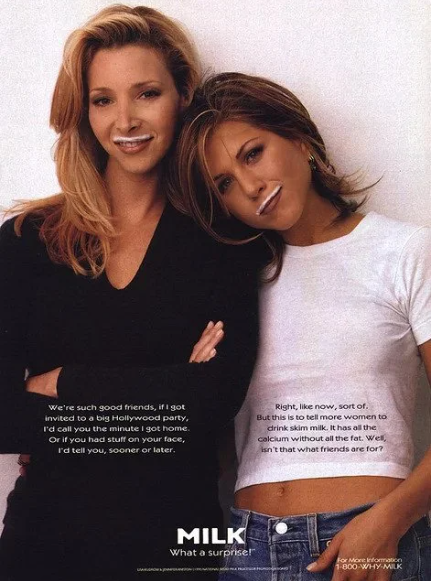
In the 20th century, milk drinking reached wild levels of obsessive consumption. In the 1950s, it was a vessel on which newly-developed breakfast cereals could sail towards total breakfast table domination (don’t worry, I’m coming for them soon.) It was seen as a cure-all for strong bones and healthy muscles, and became a marketing campaign all its own—a product that wasn’t branded, being promoted as if it was. I never cared about whether the milk I had at home was from Arla or Müller, just that it was there in a massive 6 pint carton and that I should drink more of it if I wanted to be a healthy, smiling child, or as beautiful as Phoebe and Rachel from Friends.
I always wondered why my tummy hurt when I drank a glass of milk. Turns out, most of us aren’t that good at digesting it. And that’s where the non-animal liberation-centric arguments in favour of Plant M*lk begin.
Approximately 65% of the population can’t properly digest dairy without some form of reaction. Until I started using plant milk in my brews I had no idea I was one of them. I’m only slightly intolerant, I can maybe have a cappuccino and forget to ask for oat milk, but I can’t eat normal yoghurt (for some reason I can eat Fage, someone tell me why) and I definitely can’t drink a glass of it. I don’t know why anyone would. Ming.
I started drinking soy milk because it lasted longer and nobody stole it out of the fridge at work, and now I have oat milk delivered to my door by my local milkwoman. I never need to drink dairy milk again. As I happily shake my glass bottles each morning to re-combine the totally separated oat milk solution and the slightly yellow rapeseed oil suspension before I make my breakfast, it occurs to me that I believe my beloved Oato is healthier for me than cow’s milk, but I can actually see the component parts of it. It is totally processed.
Oato is a British Oat milk company (from Lancashire, actually 💅) that uses British oats, water, British rapeseed oil, British salt, and various nutrients like B-vitamins and calcium to make a milk-like drink suitable for someone like me—someone who likes creamy coffees but who can’t stand the taste of dairy milk now they’ve not had it in years (isn’t that odd?) It’s creamy because of the rapeseed oil, which mimics the saturated fatty acids in dairy milk. Neither are great for you. My oat milk, just like all other plant milk, needs to have vitamins added to it, which is why I don’t make my own. Dairy milk has naturally-occurring D and A vitamins as well as calcium, but when the milk is processed to reduce the fat content, there is fewer nutrition. If you drink skimmed milk, I don’t know why you bother. There is nothing in it of value. Stop living in the 90s. Fat is not going to kill you on the spot. You are free.
The reason I prefer oat milk over every other option now available to me is down to how it impacts the environment. I can have a locally-made product delivered directly to my door. At this point, that’s even more environmentally sound than super-local independent dairy milk. I don’t choose soy milk because unless it’s organic and grown in the US or Canada, it might be contributing to rainforest deforestation, and I don’t choose almond milk because of immense water consumption in dry areas of the world. Coconut milk has a reputation for exploitation, although there are many sustainable enterprises growing in South East Asia hoping to curb this. Hazelnut milk is a pretty sustainable option, actually, but it’s also on the expensive side. There’s no getting around it though, whichever you choose, it’s all highly processed. So we come back around to that difficult question—is processed food inherently worse for you than natural food? And, if the natural food in question has been heat-treated, homogenised, filtered, and had vitamins added to it, at what stage does it stop being all-natural?
Perhaps that’s why there are farms near me making a killing selling unpasteurised raw milk. People are so scared of processed food they’ll run the gauntlet with literal E. Coli. Which, I suppose, is a truly natural pathogen.