The Romance In Everything

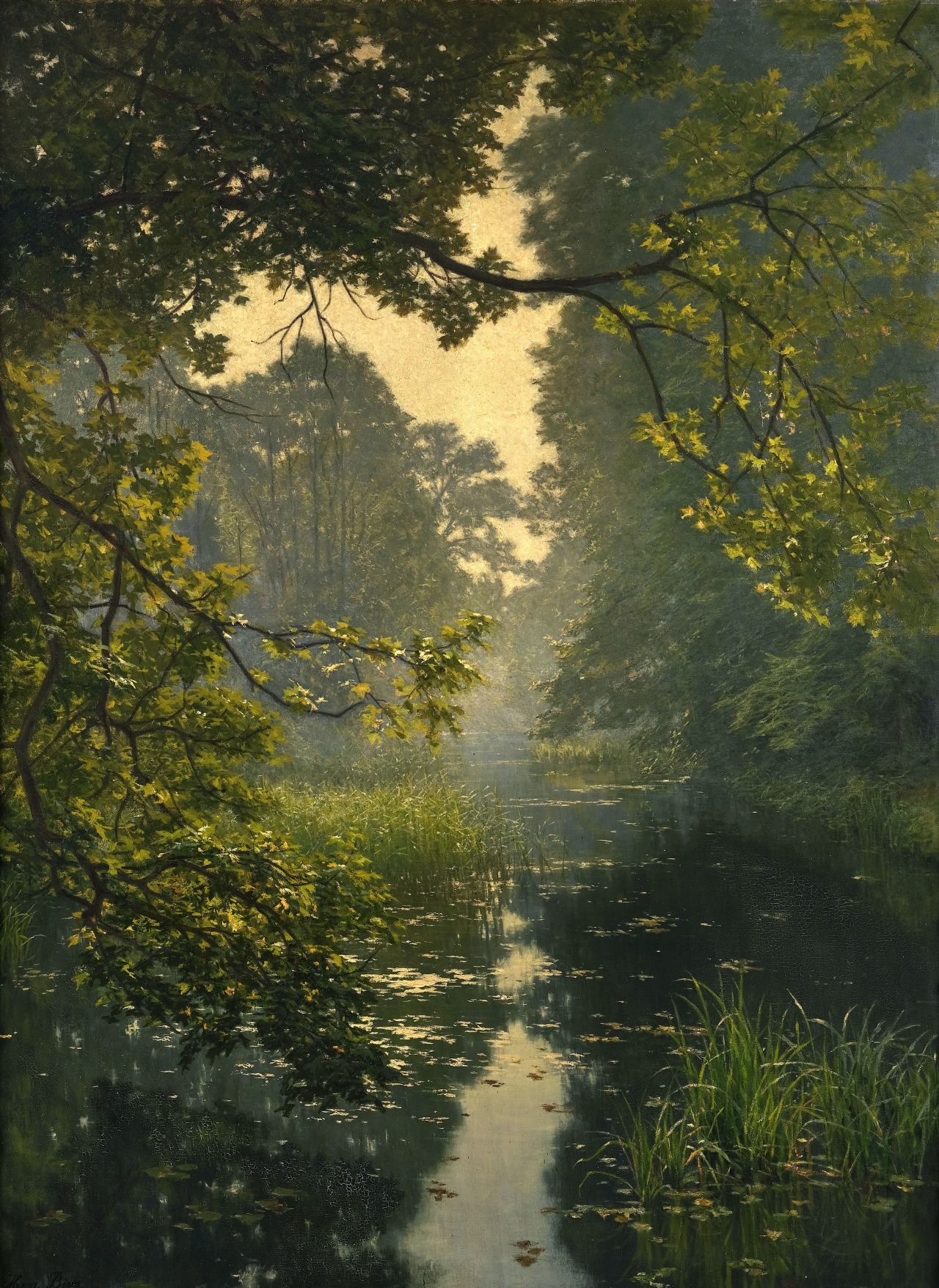
Life is hard enough. Look at the sky.
Today’s newsletter deals with themes of depression and suicide, please consider this a trigger warning and skip on to the links under the “Other Stuff” heading if you’d rather not read it.


One of the things people tell you about depression is that it sucks the fun out of everything, including the things you really enjoy. While I appreciate this abstract attempt at trying to describe the sensation of being bled dry by my own mind, it’s not exactly true. During the worst times, I can’t remember what I enjoy, and every other awful thing is amplified. Depression’s most insidious and dangerous symptom is its ability to appear as the status quo. Like an ant powered by a parasitic fungus, I try to continue with my life, vaguely recollecting that I should eat, shower, tidy up, while the deeper threads that connect the basics of functioning day to day are eroded.

This is what scares me about depression. Without enjoyment, what is life? When it is broken down into component tasks—cleaning, sleeping, exercising, working—it doesn’t seem worth much at all. And this is what it feels like. All of the time. Deep down there is knowledge that this is a strip-lit illusion, that the real world doesn’t feel like this, but it’s hard to know or care when there is no energy left to seek out what truly exists. This is not wallowing. This is some stagnant other thing.

Decades of experience tells me that I have to keep doing the things that help, even when it feels like I would rather die1. I went to the gym, because I saw a meme on a fitness Instagram account that said “You’ll never regret going, but you’ll regret not going.” This is why last week you might have found me crying on an inverted leg press machine, crushing 80kg, listening to Modest Mouse. No, I was not well. I still went though. Gains.

Today, Rachel Hendry wrote about cider, and the essence of things, and romance, for her newsletter J’adore Le Plonk.

“…romance has so many negative connotations, doesn’t it, to most people it is silly, effeminate, unserious. So I’ve been thinking about what it is to be romantic and I think the key quality of romance is in care. It is seen as romantic to care because care is so rarely rewarded”

It’s true. To be romantic is to be silly, to be blousy and fickle, to see the world as a better place—to be an idealist. Rachel’s idea that romance at its heart is care is a lovely one, because while, as she points out, being feminine is often derided and disrespected, the vital act of caring is seen as wholly feminine. To care is to be vulnerable. Caring is a generous act of sacrifice. What could be more romantic?

I notice that depression docks my imagination and urges me to think practically. It’s just the sun. It’s only music. Every day is the same. It stops me from caring, because in caring there is the possibility of pain. It is the opposite of romance. It is an online atheist in the year 2006. What I miss most when I’m ill is my sense of wonder. I’ve learned that seeing glory in leaves and sunlight and a perfect plate of pasta isn’t a way of avoiding reality—it is reality. Caring about others, and the world around me, is what stabilises me, what makes me feel safer. In the romance of the world is where the meaning of life lies, and it feels incredibly unfair to know this while also struggling to see it. But it is there, and it’s waiting for me to come back. I saw it on Tuesday running near Pendle Hill. I saw it last week in a negroni made for me by a friend. Perhaps I’ll see it today.

Other Stuff

My Stuff

  • Sign up to the Pellicle Patreon to get a bonus piece from me every month! These pieces are only available to our Patreon supporters, and by supporting Pellicle you’re directly supporting our magazine.
1

The most helpful thing I’ve learned over the years to deal with intrusive suicide ideation is to remind yourself that dying is not the only alternative to living with depression. There are millions of alternatives. As much as I hate trite self-help platitudes, something that’s stuck with me is that I’m an adult, so I can make whatever decisions I want. Do I really want to die? Or would I rather have pizza and chocolate cake for tea? Sometimes this helps. Actually, it always helps. I’m still here.
SEPTEMBER

A monthly roundup, slightly late because I was on holiday.

This month I was busy, and I’m so grateful for that. One of the most aggravating questions I get asked is “how do you make enough money?” because: I rarely do! The choice to become a freelancer was based on a lot of things, and I’ve certainly never made more than I did at my previous job. But when I’m busy, it doesn’t feel as difficult—my nerves are calmed when I feel needed and necessary. Busy doesn’t necessarily equal riches, but it certainly makes a difference compared to those fallow months all freelancers dread.

What I’ve been doing has been pleasingly diverse too: editing a book, writing about volcanoes, writing about pub signs and public art, and editing Pellicle features. I’ve been tired to my bones but I’ve also felt more energised about my work, which is something that comes and goes quite violently from my life whenever something bad happens. See the whole month of August for a reference for this.

But! I’m just back from a sunny holiday on the volcanic crust of Lanzarote, the Autumnal new moon has given me a bit of peace, and I’ve found my cinnamon incense sticks. Things are looking up.

If you would like to hire me for writing work, whether that’s blog writing, social media content, or you’ve got an idea for a feature you think I’d be great for, email me: katiematherwrites@gmail.com

Things I’ve Written

“The peat-dark waters of the North Yorkshire Moors are described by my pint. In its sparkling clear, deep ruby depths, I can see glints of bronze—I’ve moved the glass so it perfectly catches the light from a small window on the other side of the room. It’s funny, even the head has a touch of that earthy colour about it, like the foam under a waterfall, or in the deadly swirling of the Bolton Strid.”

“There’s this one gown she looked incredible in, a waterfall of sequins, that brings tears to my eyes—he’s clapping. We love this. We cackle and finish our pints, get new ones, and look through the collection again, whooping and hollering, and discussing cuts and styles in great detail as only three-pints-in-experts can. We hug and I talk about my wedding, and our friend his, and offer our advice and recommendations. We sip Pale like we own the place, and in this moment, surrounded by imaginary diamonds and chandeliers, it’s as exquisite and refreshing as Bollinger.”

  • How to Run a Successful Bar — The Gulp

  • Preston Pub Festival 2024 — The Gulp

  • Volcanic Hungary — The Gulp

  • She’s So Heavy (A guide to the Wee Heavy beer style) — Ferment Magazine (print only)

  • Wine Myths: It’s Alive! — Glug Magazine (print only)

  • Sweet Wines In Moldova — Glug Magazine (print only)

  • A Taste of Terroir: Valul Lui Traian — Glug Magazine (print only)

  • Indigenous Grapes: Valul Lui Traian — Glug Magazine (print only)

    Illustration by Molly Bland

Things I’ve Done

Edited a Book

I know I keep wanging on about this, but I was thrilled to be asked to work on this project. I’m keen to work in editing more and more these days, and the book I was ascribed to work on was a great surprise: touching, shocking, and enlivening. I can’t wait to be able to share this writers’ work with you.

Blended Beers with Balance Brewing

Pellicle are making not one but three collaboration beers with Balance Brewing and Blending, and I’ve been put in charge of the project. Wuh oh!!

Really though, this is a gem of a job to get to do, and working with James and Will is obviously delightful. I spent two afternoons in Manchester this month with Pellicle Matthew choosing beers to blend and additional foraged herbs and aromatics to include.

Look out for more news on these special releases at the start of 2025.

Chatted with Fell Brewery in Cartmel

I was chuffed to bits to be asked to host an Oktoberfest beer tasting and panel/chat with the Fell Brewery team earlier in September. I was invited to stay at their pub The Royal Oak in Cartmel which is stunning, you really should visit, and John the head brewer took me to eat a Michelin Star sausage roll at Heft, which was as great as it sounds. Big thanks to John for organising and for making me feel so welcome.

Went on a Solo Trip in the Lakes

Tom went to Spa-Francorchamps with Team Kibosh for the weekend (I wasn’t jealous), so I planned a little getaway of my own with my best friend, the van.

Driving up to Eskdale through Ulpha and living to tell the tale gave me the confidence that I could do anything. And it’s true—I walked to Boot, I took a little steam train called La’al Ratty, I drove on to Keswick, I had a cheese board in the van and watched World Superbikes on my phone, I had a wonderful time.

I Hosted Another Workshop

I loved doing these!

We talked all about pitching and self-editing, and it’s just so great to hear what new writers are concerned or confused about and be able to help. Sharing experience is what it’s all about. There’ll be no stifling of talent goin’ on around here, I’ll tell ya.

While I haven’t got much time to run one in the coming months, I’d love to know if you’d be interested in booking in for one in the new year. Let me know.

Things I Read

Things I Saw

  • A barn owl floating across the A59

  • A 250 year old Syrah vine growing out of volcanic ash

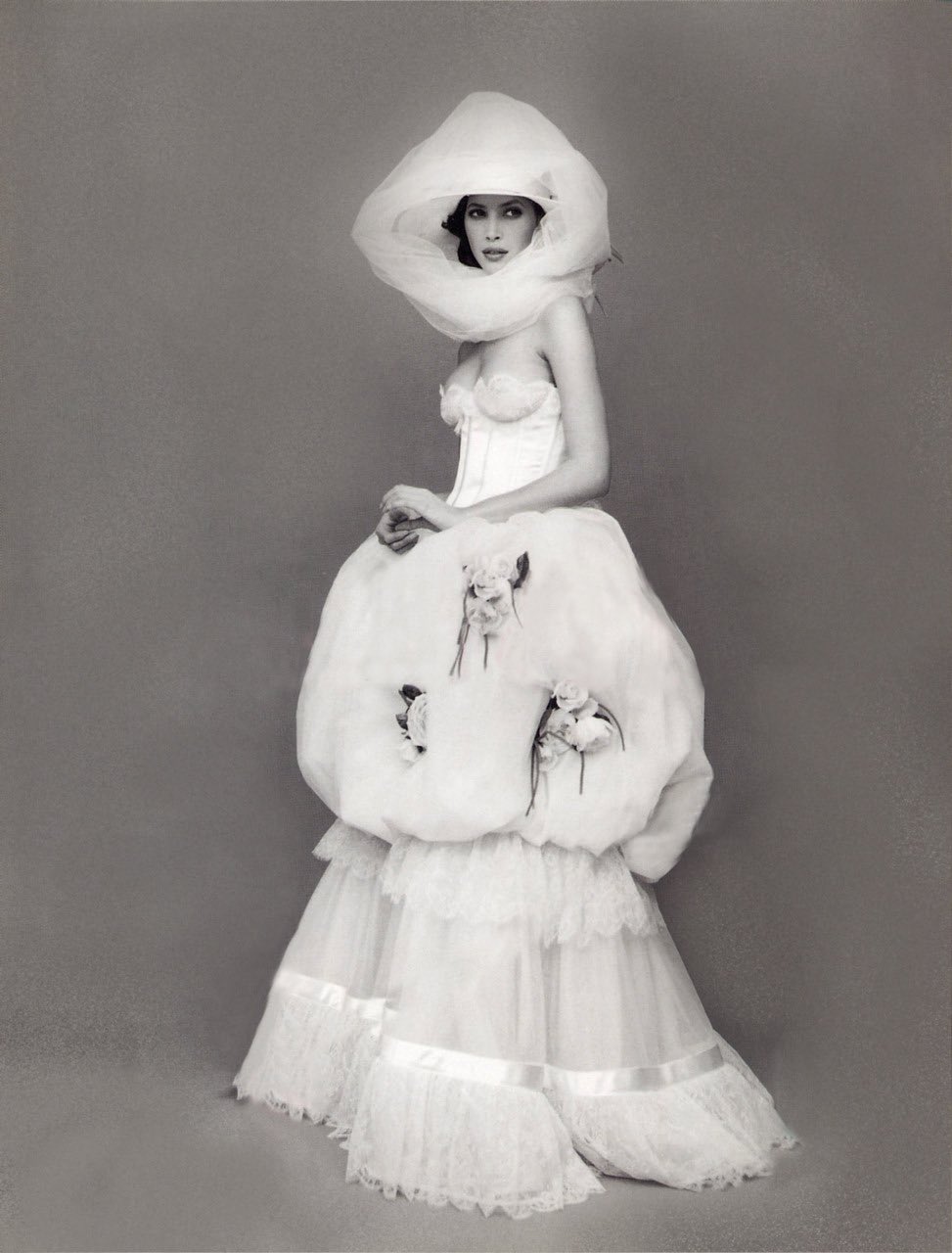
  • This astonishingly spooky and chic Chanel A/W ad spread:

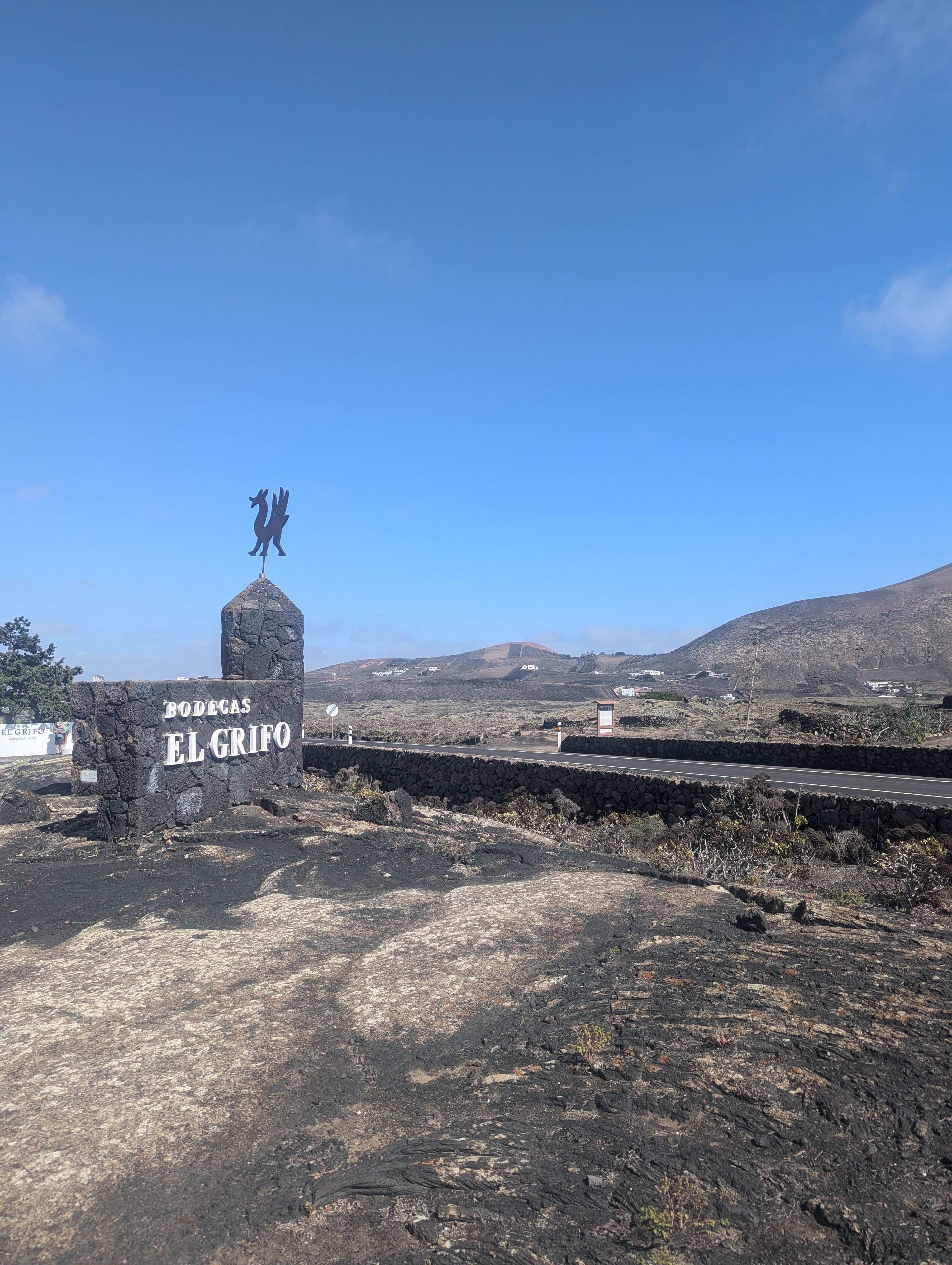
El Grifo winery, Lanzarote

Visiting the oldest vines I’ve ever seen.

The vines in Lanzarote were never touched by the blight of Phylloxera. It seems the black, scorched soil was no home for the tiny aphid-like creatures, so while they wreaked near-total destruction on vineyards across Europe, the grapes in Lanzarote continued to grow. At El Grifo winery in San Bartolomé in the centre of the island, some vines are more than 250 years old.

That’s not to say that Lanzarote hasn’t had its own share of destruction. In the 1700s, six years of volcanic eruptions ruined much of the island’s fertile agricultural land—detailed reports of the eruptions by a local priest talk of vast rivers of lava, explosions, tremors, and fire. After this, there were no more cereal crops, and cattle pastures were replaced by free-roaming herds of hardy goats. Unlike other crops, vines don’t needs fertile green land to succeed. Vines that caught fire or were overcome by falling tephra were simply re-planted, to become Lanzarote’s thriving wine industry.

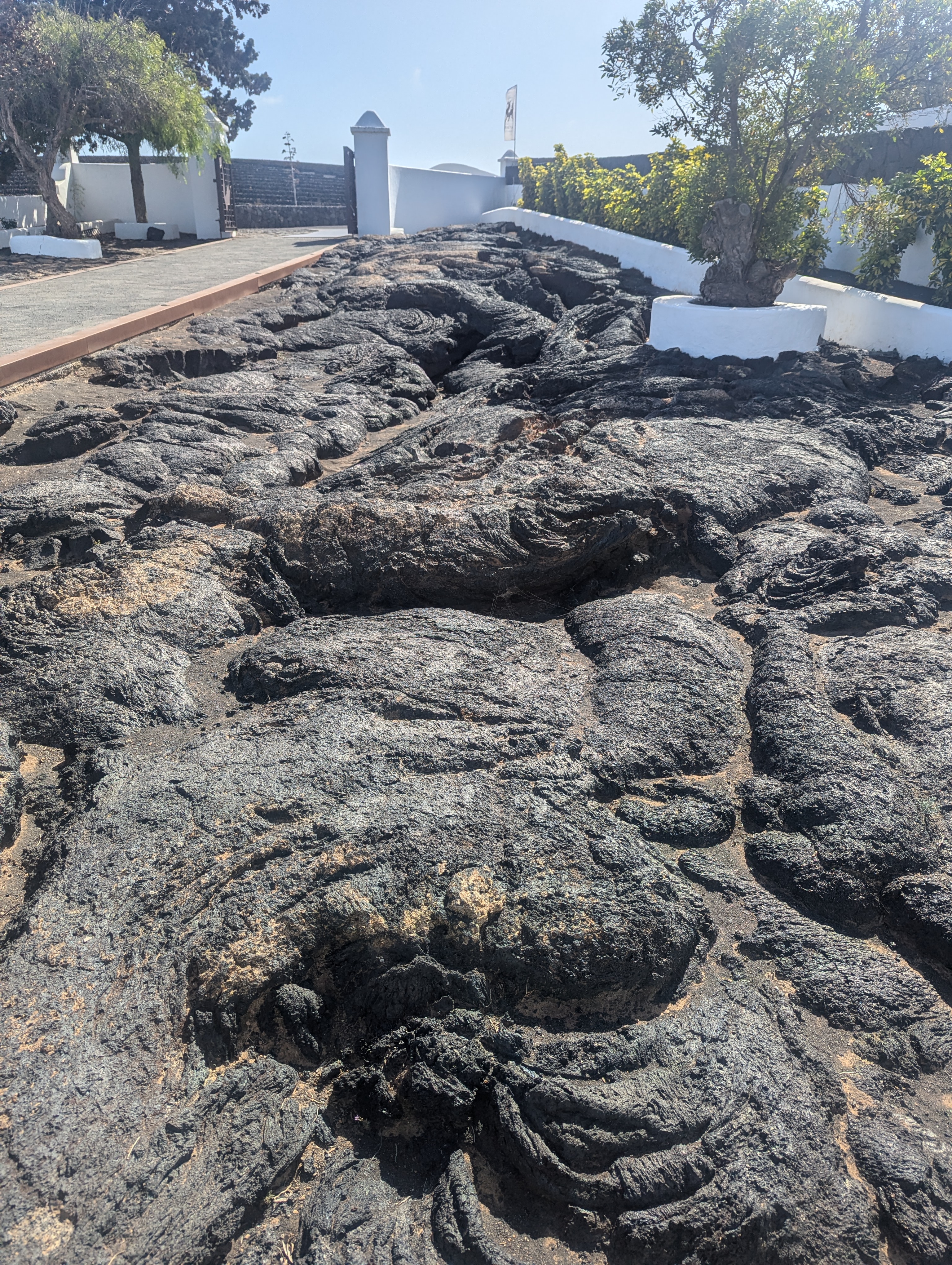
El Grifo winery pays close attention to the adjacency of volcanic violence to its calm and beautiful vineyard, choosing to leave large spaces of Pāhoehoe1 lava flow as part of its landscaping, connecting the gardens and courtyards to the wild, barren lands of the Timanfiya National Park just outside the perimeter wall—the epicentre of Lazarote’s most catastrophic volcanic activity in human memory.

We’d come to El Grifo for the wine, so after spending a long time touching old volcanic rocks, I let myself be dragged inside the winery museum. El Grifo is the oldest winery in the Canary islands, established in 1775, but it’s proud of its innovation rather than its history alone. In the 1970s, they were the first winery to install stainless steel equipment in the Canaries, and were also among the first to install generators to power the winery with electricity. In the 1980s, the winery was renovated, turning the old equipment and storage rooms into the vineyard museum, much of it designed by local artist and architect César Manrique.

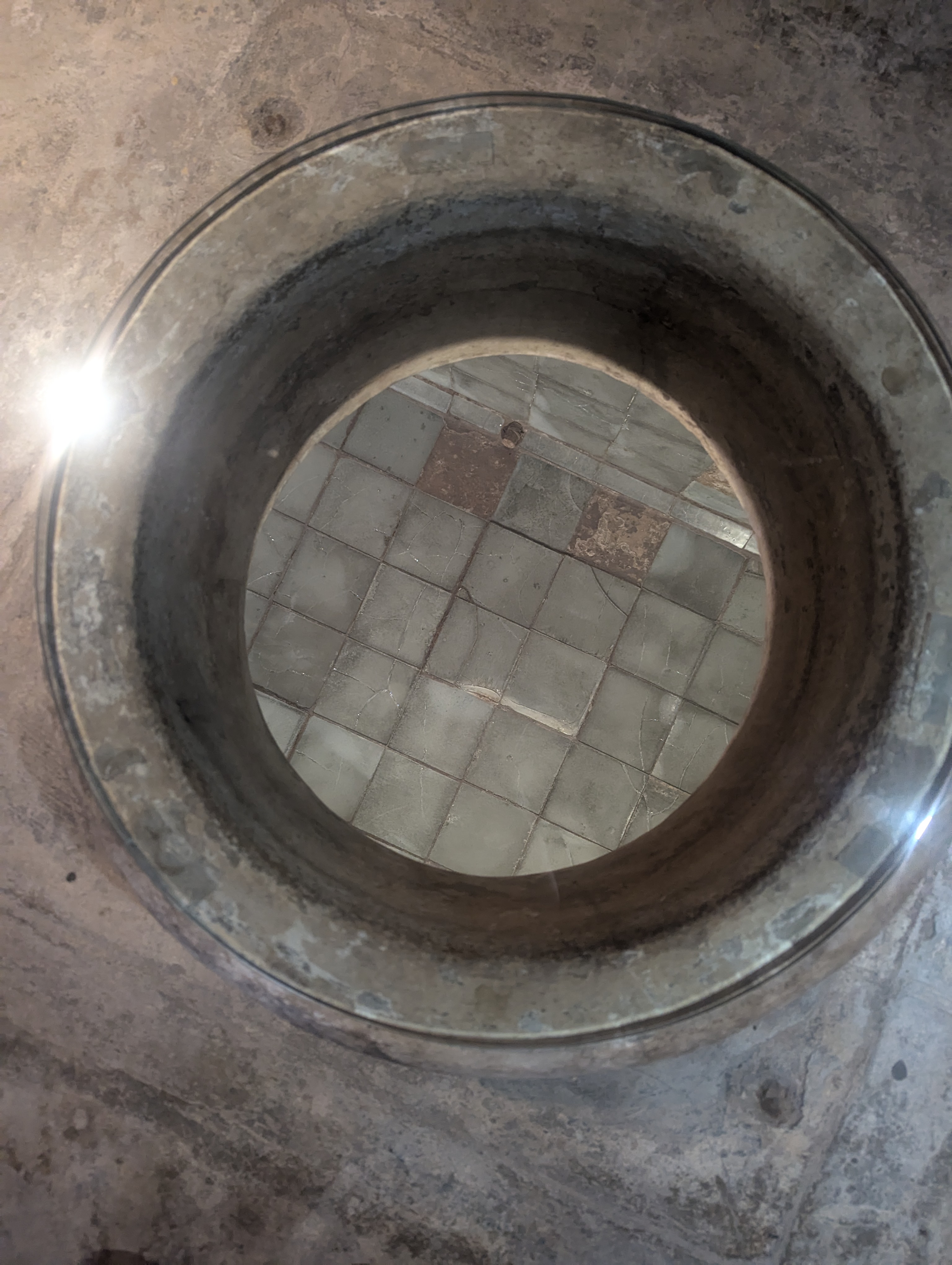
Before stainless steel at El Grifo, there was stone and tile. Each fermentation vessel was lined with local ceramic tiles, with a porthole, and a slim wooden ladder to climb into from the top—I’d like to think this was made by their in-house cooper, but I can’t confirm that, so believe it if you like. You can walk between the vessels now, each of them is twice my height, and many, many litres large. They’re impressive things, at once showing ingenuity and also giving off ideas of saunas and Jacuzzis thanks to the pearl-grey tilework.

Malvasía Volcánica is indigenous to Lanzarote. It’s a pale, high acid white grape, that seemingly grows from nothing—the pitted black land of Lanzarote is planted up with single scraggly stems of unruly Malvasía, sheltered from the constant winds by pumice dry stone walls, growing loose along the ground in a bush vine-style scenario. These pits are dug to reach better soil, we are told, rather than to provide extra shelter. This makes sense. The soil on top is nothing but ash and chippings, hot from the sun, and the vines surely need all the cool blasts of breeze they can get out here.

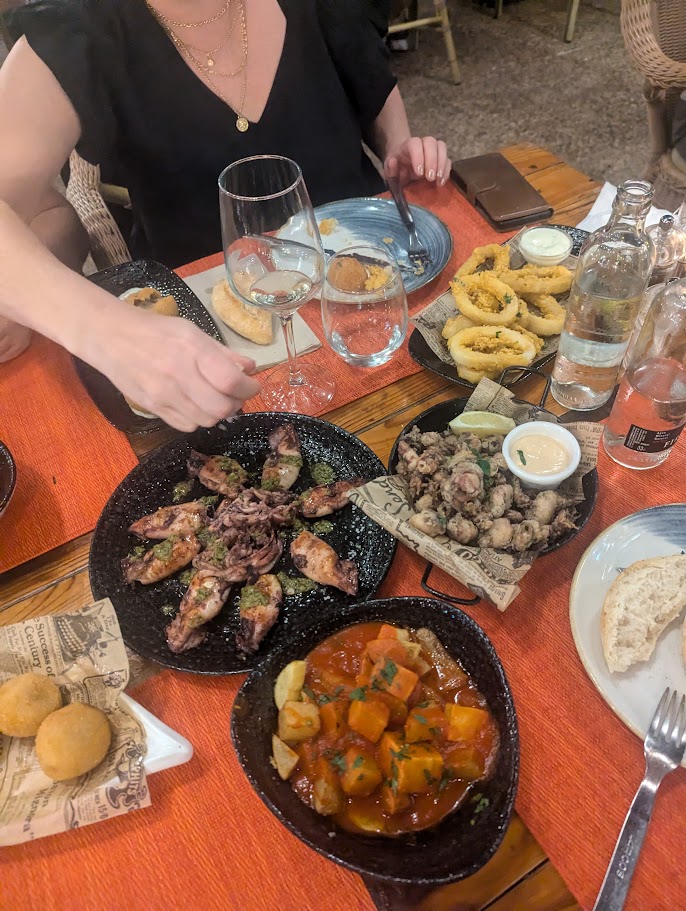
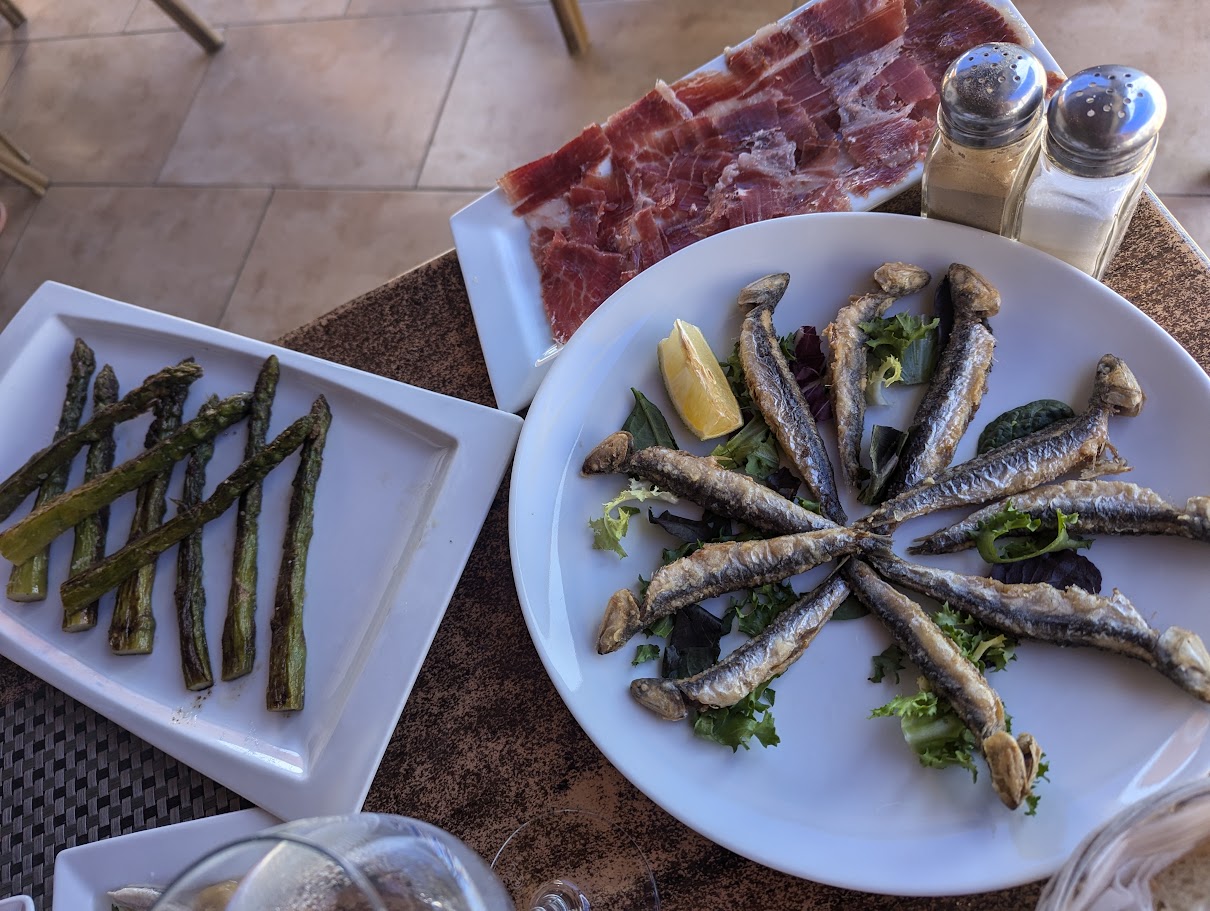
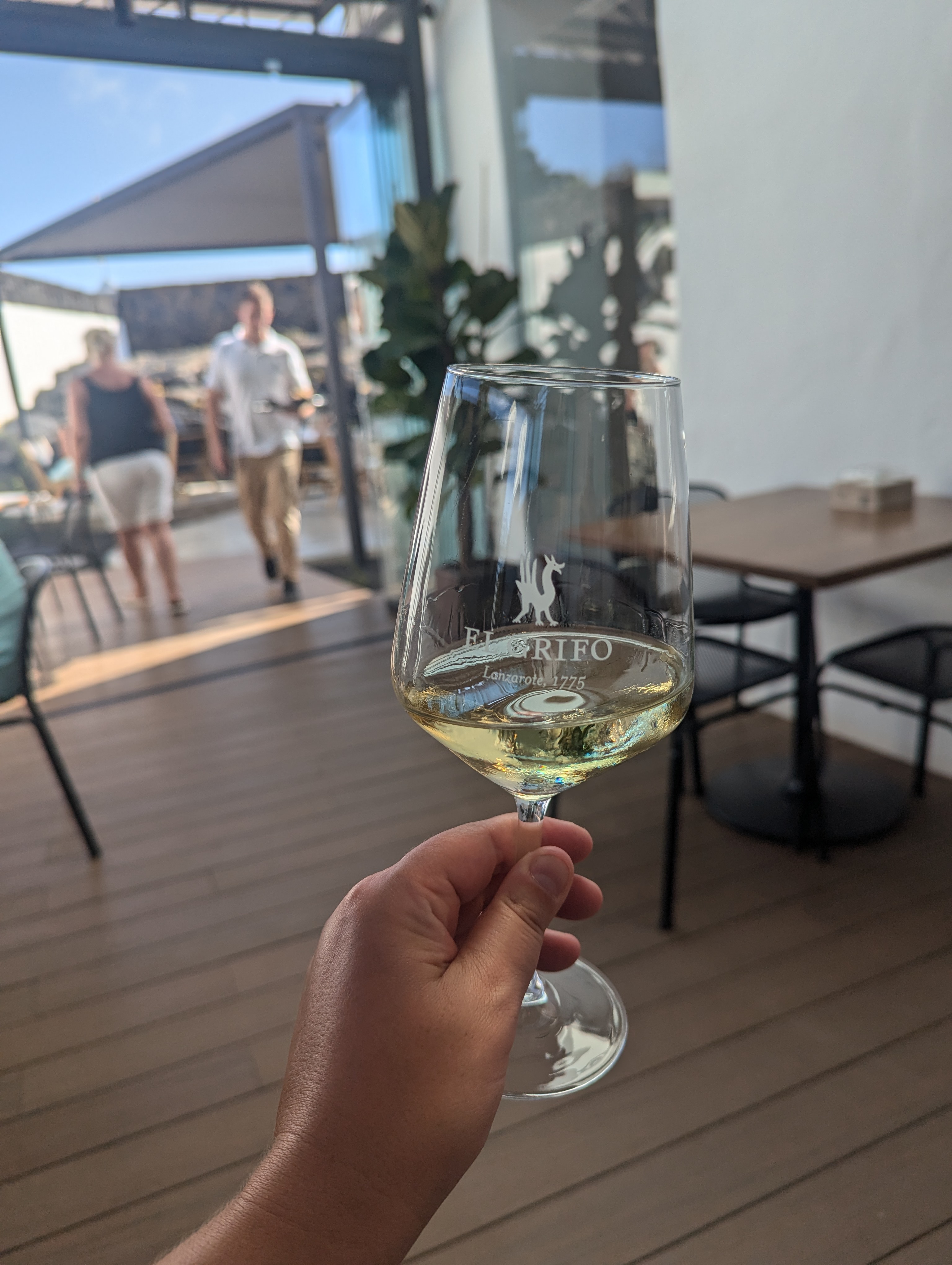
El Grifo’s Malvasía Volcánica Lías uses battonage and old French oak, something many other Lanzarote white wines would not. On the island, fresh, high acid whites that taste of the sea are the most popular—what goes better with calamari and fried boquerones than a wine that feels like squeezing a lemon straight into your mouth?

Lías is different. From its aroma you can tell—there is fresh bread dough, and light, buttery caramel, and a spike or petrichor, something I was incredibly surprised to find here. The complexity of its aroma translated into a wonderfully structured and balanced wine, two words I used to find boring when I was bang into hyped natural wines. Lías is a perfect example of why balance is not dull—each mouthful is an elegant competition between the silky lees-laid mouthfeel like sun on your back, the prickly acid and fleshy apple-peach-aloe vera juiciness like biting into a cartoon cactus, and the lingering afternotes of Brazil nuts and salt. An incredible find, and one of my wines of the year.

I also tried El Grifo’s Saramago 100, a rare Syrah of only 12,986 bottles from the 2022 harvest. Saramago is actually named to commemorate what would have been José Saramago’s 100th birthday. José Saramago, who moved to Lanzarote later in life after the controversy surrounding his book The Gospel According to Jesus Christ, and became friends with the El Grifo family and team—his library is housed in the heart of the vineyard.

The Syrah vines on the estate are among El Grifo’s oldest, and I’ve not had many experiences with very old vines. The intensity of that Syrah is something I’ll never forget—such an intensity of blackcurrant and blackberries, but with a clarity and shape I couldn’t believe. The structure of the wine in my mouth, its smooth, silken tannins and ripe, black fruits, flung images of onyx pyramids and multi-faceted jewels into my mind, and I was tracing each surface with the tip of my tongue. I love a Syrah, a deep, dark, sultry Syrah, when it feels bold enough to be spooky. This had the Gothic confidence to litter the floor with fallen leaves, to trail a calligraphic curl of smoke along the rim of the glass, to talk about the darkness of deep French forests in the heart of a Volcanic desert. A special lightness of touch shows Lanzarote’s tannin-lite approach to winemaking, and this highlighted more of the fruit elements of this special wine. As of this moment, I can’t find any to buy online. I’m heartbroken.

1

Pāhoehoe is a Hawaiian word, used to describe Basaltic lava flows that are smooth, billowing, and ropey in texture. It comes from the word “hoe” meaning “to paddle”, because of the lava’s resemblance to water moving around an oar or rudder.

Volcanic Hungary

I love volcanoes as much as I love wine.

This piece was originally written for my monthly Taste of Terroir column, an excuse for me to talk about geology and geography, for Glug magazine in 2023. To sign up for their excellent wine club, visit their website.


Fifteen million years ago—give or take—Hungary was a world of roiling lava lakes and plumes of ash-heavy clouds, a land where the thin firmament between the living earth and the unworldy molten chaos below was fissured. The separation between the searing hot makings of a planet and the thriving ecosystems of the Miocene era was almost non-existent. At any point, ash would rain down, lava could flow. From this uncertain period, Hungary’s rich volcanic soils were created. Even now, hot thermal springs and mineral water sources all over the country show off the seismic activity happening underneath the peaks of the now bucolically-extinct volcanoes.

The wine region of Somló, in the northern part of Lake Balaton, is actually one single volcano, protruding out of the flat countryside as a blackened, forested hill, craggy and imposing. At over 400m elevation, the hill provides steep slopes for vines to grow on, but more importantly is the black soil made from basalt—rock formed from those lava flows that would have once coloured Somló all the colours of fire. Now, millions of years after its extinction, Somlós lava gives the wines made all over its 800ish hectare region a stunning and unique minerality—colours of a different kind.

In Badacsony, the iconic hills that strike odd shapes against the sky are also the remains of lava-filled craters, covered up by ash and soil over millennia, which then eroded leaving the hardy basalt behind. There was once a vast lake here called the Pannonian Sea, and it was this shallow, marshy body of water that cooled the lava quickly, forming basalt soils all around the region.

Grapes were once grown here for the Hapsburg empire, and were deemed classier and more potent than Tokai. Now, after decades of decline in interest, winemakers are returning to the slopes to make wines with indigenous Hungarian grapes in traditional styles, rekindling a love for wine that reaches deep into the heart of the Hungarian landscape.

Preston Pub Festival 2024

Bright, cheerful celebrations in town I seem to always forget about. Not anymore.

The people of Preston love their town. They love their markets—yes, plural!—and their ever-growing vibrant food scene. They are proud of their pubs, and they are keen for you to visit them. Perhaps that’s why Preston Pub Fest was created then, not just to have a grand old pub crawl, but to entice people to visit, to get more people talking about Preston.

The thing about Preston is, I used to come here to buy school shoes as a kid, and to visit my first boyfriend at college. I don’t know what he did there, he worked at a scrapyard. I didn’t like it much. It was grey and damp, just like Lancaster, which I also didn’t like much. You don’t like many things when you’re a teenager. Maybe KFC and Richmond Superkings. So it’s taken some time for Preston’s first and second impressions to wear off, and I’ve spent my life sort-of appreciating the vibrancy of its food and drink businesses from afar—I visit my friends at Plug & Taps occasionally, I sometimes make plans to travel in for coffee and shopping and never end up doing it. It’s not the easiest place to get to for me, I always said.

I was wrong, because currently a £2 bus takes me there in under an hour. It was Tom’s idea: there was going to be a pub festival. Should we go?

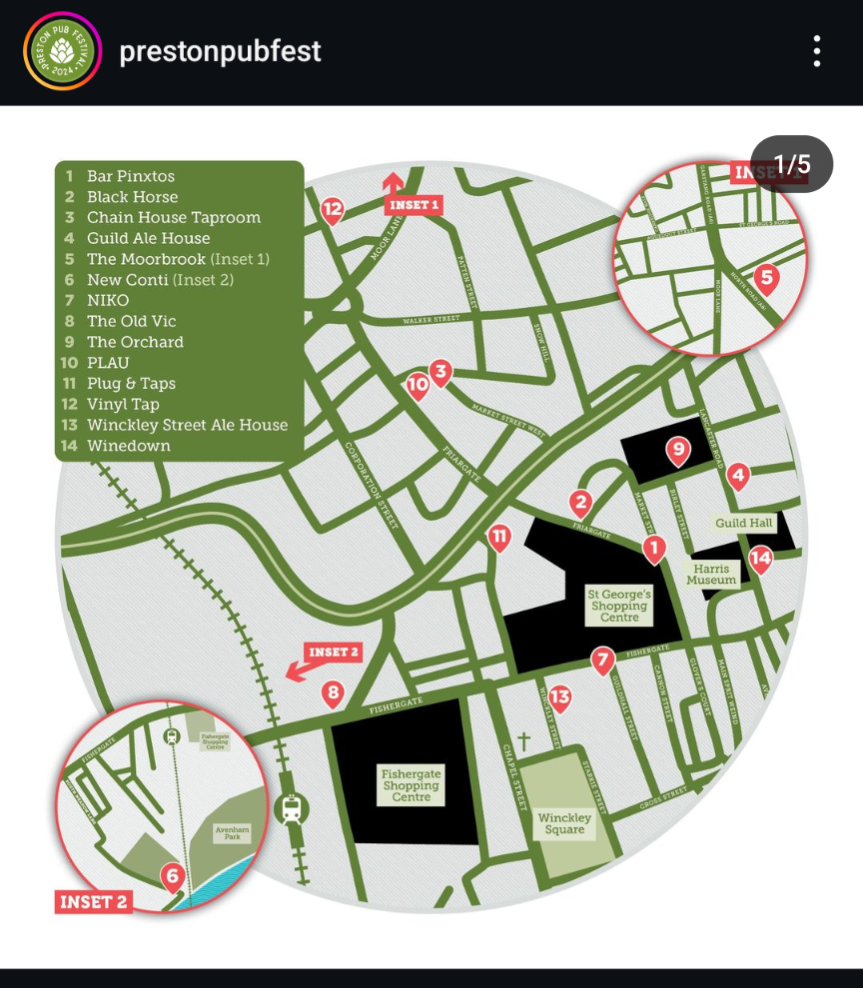
As the map shows, (sorry I can’t add links, I’m using the janky web editor on my phone) fourteen pubs and bars across town were joining in, from the Victoriana-trad Black Horse to the shiny holiday vibes of Bar Pintxos. You might also want to keep hold of this map for your next visit to Preston. Wink.

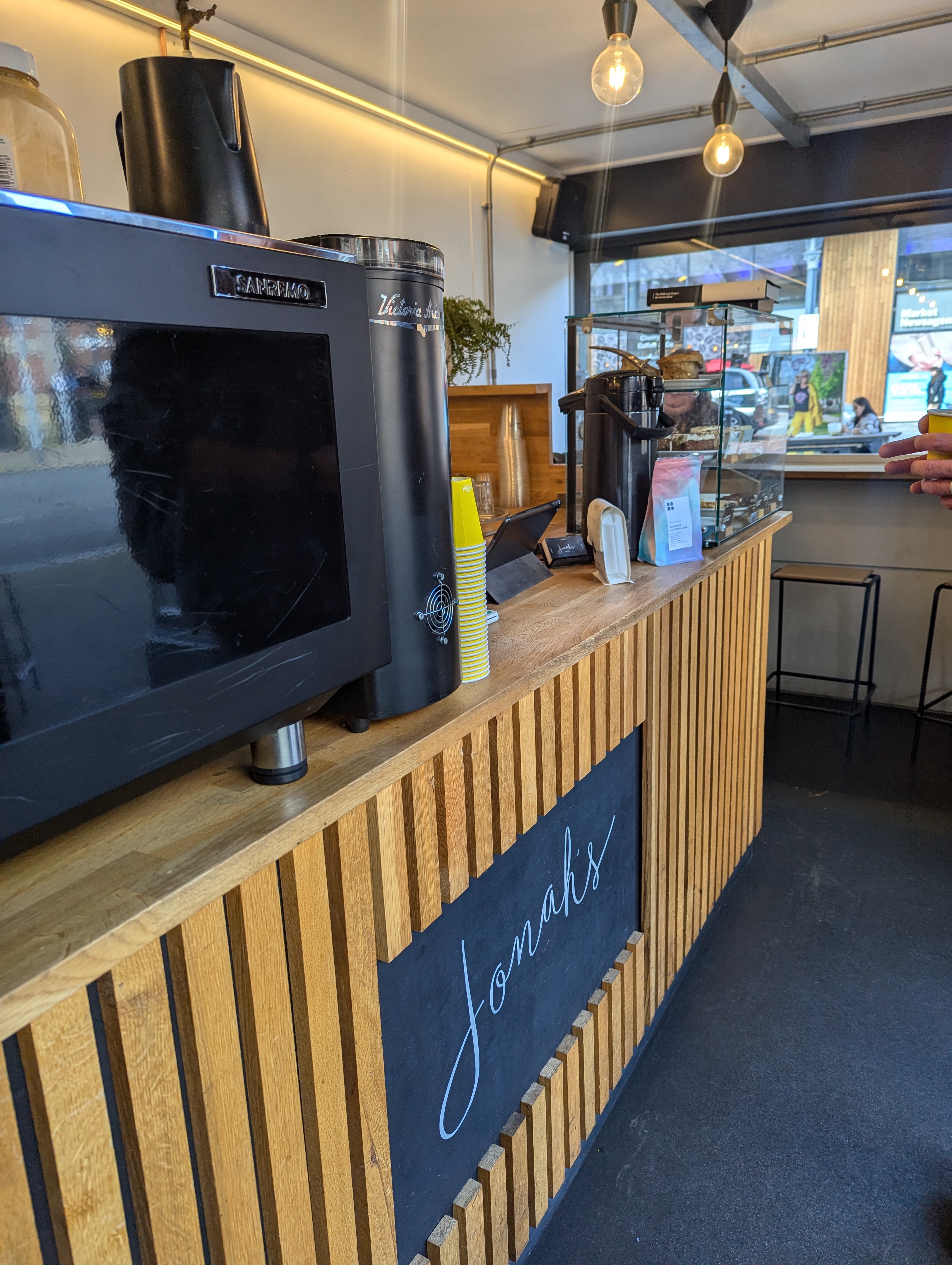
Our first stop was for coffee, and we hit the jackpot at the market where we found Jonah’s. Third wave coffee even I could get on board with. The batch brew (my standard order) burst with raspberries and honey. We chatted for a while, Tom nerded out about beans, and then it was time to get to the good stuff.

After Jonah’s we stomped straight to Plug & Taps. It was already busy, and we saw familiar faces right away. I had a beer blended with Ortega grapes that was beautiful, all limes and sour sweeties, and, of course, an Augustiner Helles. I love Plug & Taps, it’s the sort of pub I’d love to run, full of smiling faces and tons of taps pouring perfect beers. We stayed much longer than we meant to catching up with Ben the Bar Manager, so our next couple of pubs were scratched off the list and we darted directly to Bar Pintxos.

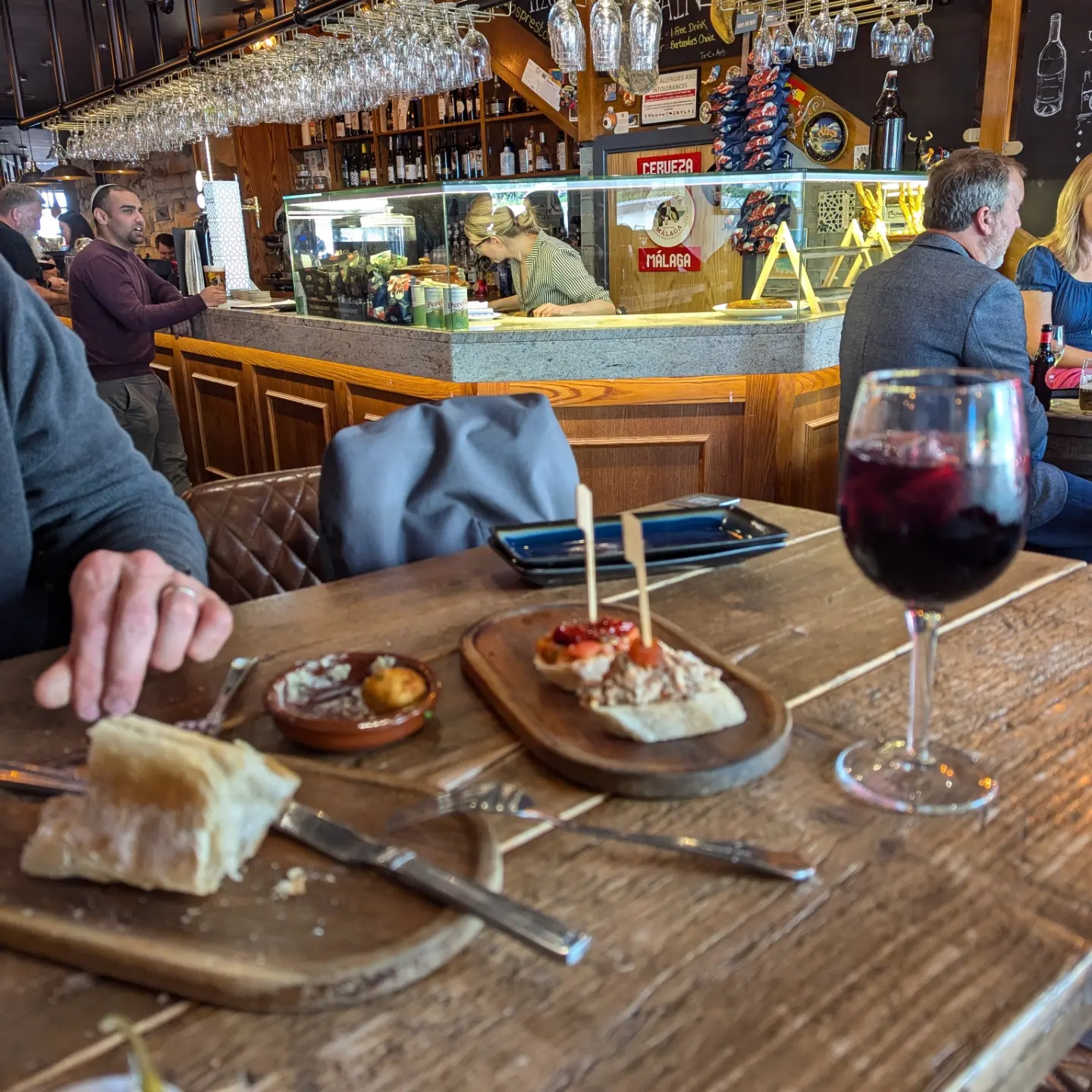
Look at that classic Spanish bar. You’d believe you were in San Sebastian. The only thing missing is a leg of ham—and that’s only out of shot because delicious salty slivers of it are being shaved onto a plate for my lunch. Bar Pintxos is an approximation of a dream to me. Okay, without the beer festival extras that had been brought in, the beers offering is lager or lager (not a problem for me, just saying), but the cocktail menu had kalimotxo and tinto verano on it. Hallelujah! An Iberian place that gets it!

Our little pintxos you can see here are freshly baked Spanish bread, pork cheek, and pan con tomate. There is also a little salt cod croqueta too. All were completely delicious, and I can’t wait to go back.

After we ate our delectable morsels, Tom said someone was joining us “as a surprise”. Our secret guest shows up moments later—our mate Judson, homebrewer turned brewer, who apparently saw one of Tom’s beer photos and thought, “I want a bit of that.” We all headed off to Chainhouse Brewing Co. tap room, which for me was a first time visit. Shamefully. As I said, I always seem to find reasons not to go to Preston. Manchester is *just there*. But here is my friend’s tap room, not an hour away by bus, and I’d never been before. I’m a disgrace.

Anyway. The place was packed. We found space on a classic oktoberfest bench and drank freshly brewed NEIPAs. It was amazing to see it so busy here, a wonderful insight into how well Chainhouse has been embraced by Preston, a town I wrongly assumed was into either older pubs or Aperol spritz dispensaries. That people were willing to stand in an archway taproom just to be there speaks volumes. In Clitheroe we sometimes couldn’t get people to stay in our bar because the table by the window was taken.

Preston impressed me. I found it visibly unchanged in parts from when I was almost a toddler, with some of the shopping streets and shopping centres still rocking their 1980s/1970s signage (FAO. Ray). There were sections that felt noticeably new though, contemporary in how they were being used, like the market, which still had jumble sale tables out under a Victorian roof, but also had glass cube buildings housing The Orchard pub, Jonah’s, and many other small, independent businesses. It’s possible to walk down a shopping street and see only closed units and vape shops, but round the corner will be leafy seating areas for restaurants and bars like Bar Pintxos. Like anywhere in the north, Preston had been left to rot for a long time. But tired with this long, drawn-out fate, local entrepeneurs and business owners, creatives and makers seemed to decide, nah, I’m not having this. Preston deserves better. We deserve better. I felt a huge wave of positivity in every place we visited, held buoyant by the people crowding the bar and laughing at their tables. You might not call it a boom time for Preston, but there’s never been a better time to visit. And that’s coming from me.

Katie Mather’s The Gulp is a reader-supported publication. To receive new posts and support my work, consider becoming a free or paid subscriber.

How To Run A Successful Bar

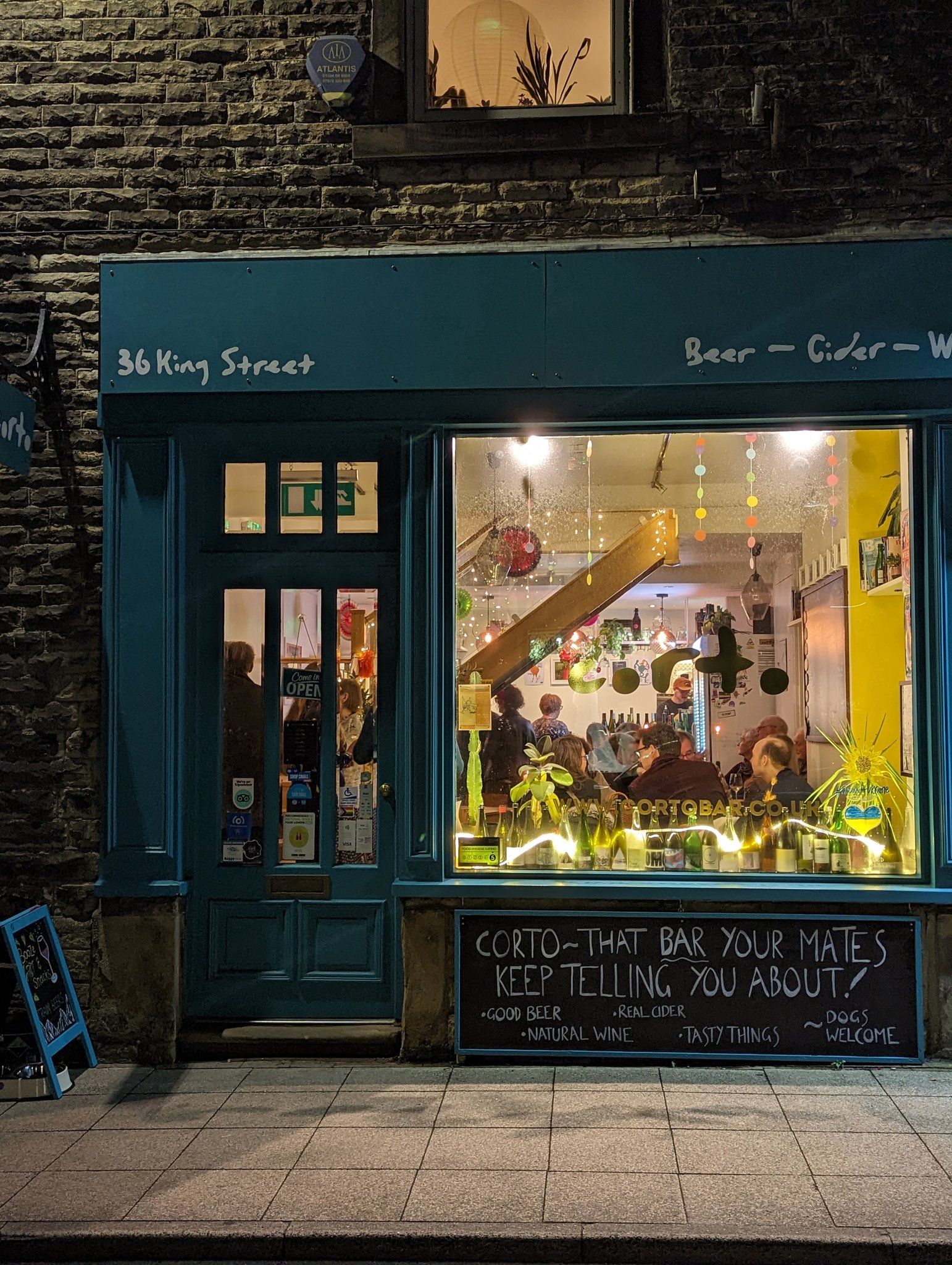
It’s a year since my bar Corto closed down. Don’t worry about it.

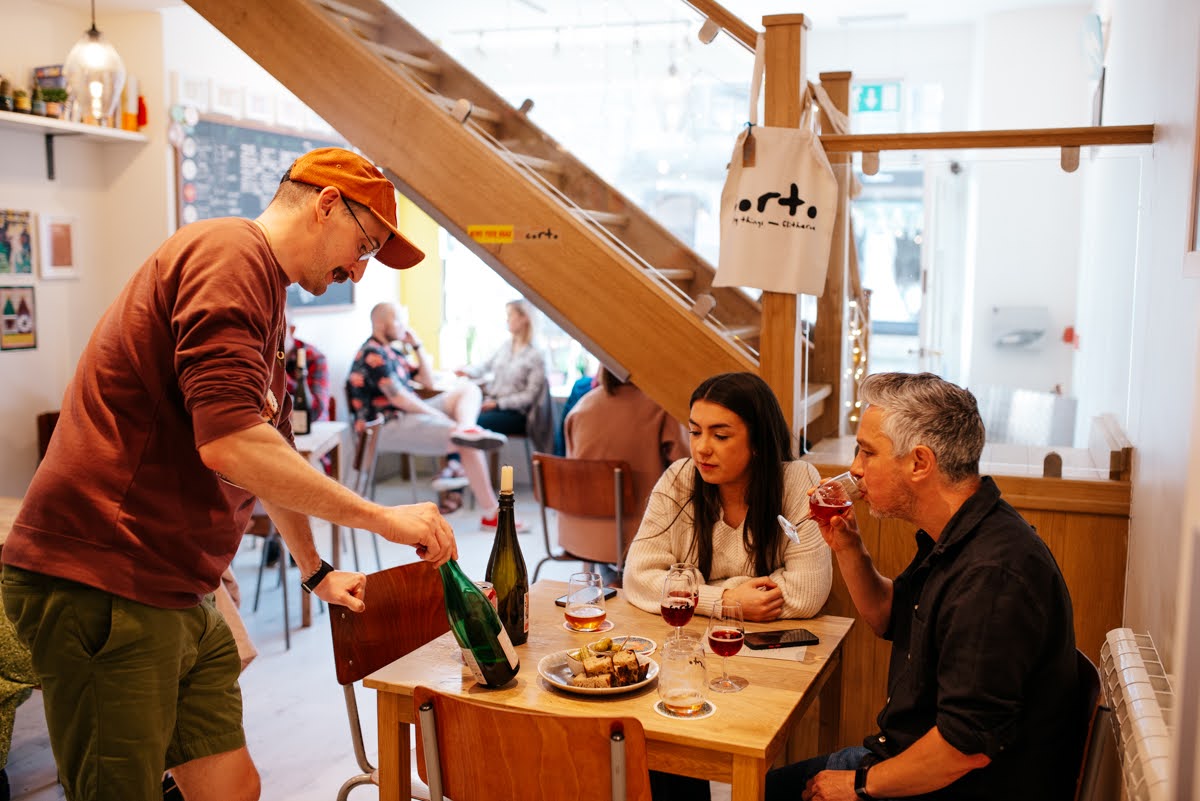
It’s one whole year since my bar Corto closed for good. It was such a pleasure to pursue our dreams for three years. Thank you to everyone who drank with us, ate our grilled cheeses, supported us, and came to share their beers and ciders with us. I miss our special place every day.

  1. Set out your intentions clearly before you start. What type of bar do you want to open? What will it look like? What will its atmosphere be like? Make lots of mood boards and fill notebooks with ideas. You’ll need them in a few months when things get on top of you and you forget why you opened up in the first place.

  2. Set aside some budget and time to create proper HR documentation, EDI provision, and plan out any and all staff training that might be needed. No bar has ever been authentically welcoming and accessible to all without putting in serious work in the background. There are industry professionals and consultants you can pay to help you do this—you don’t have to do it alone. Remember, you won’t just be serving pints, you’ll be a manager and business owner, and responsible for the welfare of your team and your customers. Take that seriously.

  3. Flashy branding isn’t as important as you think it is. In fact, if it’s too polished, people might assume you’re a chain, and avoid you. Get some nice colour schemes together, create a logo (or pay someone talented to make one for you) and then use that for everything you make, from social media posts to merch. Marketing experts make it sound hard, but it’s not. It’s just really time consuming, which is why you probably want to pay a designer, but that’s up to you.

  4. Decide who your customers are and pitch your business to them using social media. You can’t be everyone’s favourite bar, so figure out who you’re opening for, and talk to them directly.

  5. Make sure you’re buying stock that other people want to buy.

  6. Don’t be afraid of gimmicks, but make sure you’re doing the basics perfectly.

  7. Keep your cellar and lines immaculate. Keep your glasswash immaculate too.

  8. Put on events that bring people together. A truly successful bar is one that enables connection across different social groups.

  9. Kick out any and all dickheads. Don’t pander to anyone who is disrespectful to your staff, to you, or to your other customers. You are in control of your environment. Remember, you might not be directly upset by someone’s aggression or language, but somebody else within earshot will assume this sort of behaviour is accepted in your bar. Do you want the dickhead to come back, or your other customers?

  10. Give in to your silly urges. Put on a 90s pizza party for Hallowe’en. Have a skate club on a Sunday. Do a shandy tasting session. Show Eurovision and play Eurovision bingo for prizes. Get a smoke machine.

  11. Spend time getting to know your customers. They will become your friends.

  12. Remember that if some people hate your place, but the vast majority love it, you’re doing something right. You can’t please everyone, and nor should you.

  13. Start off with loads of money. This is the one thing we didn’t do, and that’s why we’re not open anymore.

    Subscribe now


Come to my Oktoberfest beer tasting at The Royal Oak, Cartmel

I’m hosting a Fell Brewery Meet the Brewers event at The Royal Oak in Cartmel. What a great excuse to visit the Lake District, if you ask me.

On the panel will be Director of Sustainability Tim Bloomer, Head Brewer John Bernard Major, Lead Production Brewer Imogen Beedham and Lead Technical Brewer Scott Larrabee.

  • Tickets include 6 x half-pint measures of different beers as well as food parings to go with them. Think – nibble, sip, listen, nibble, sip, listen…

  • Tickets are available to purchase here

It will be service as usual in the pub, with guest festbiers and Fell Brewery classics.

Table bookings to dine are strongly advised and @sillypeachmusic and @bossykingband will be playing in the pub from 8.30—all welcome!

I’m running another workshop

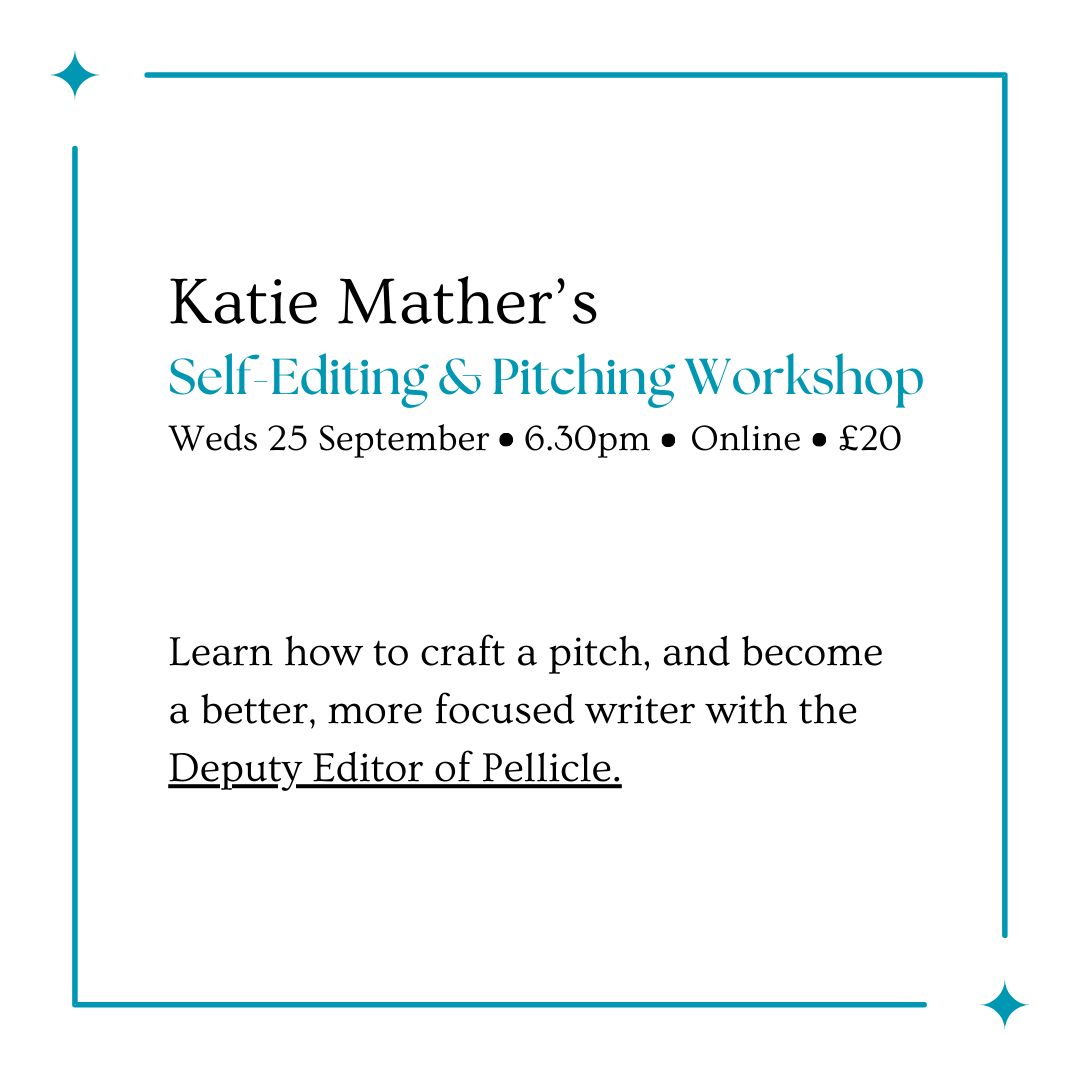
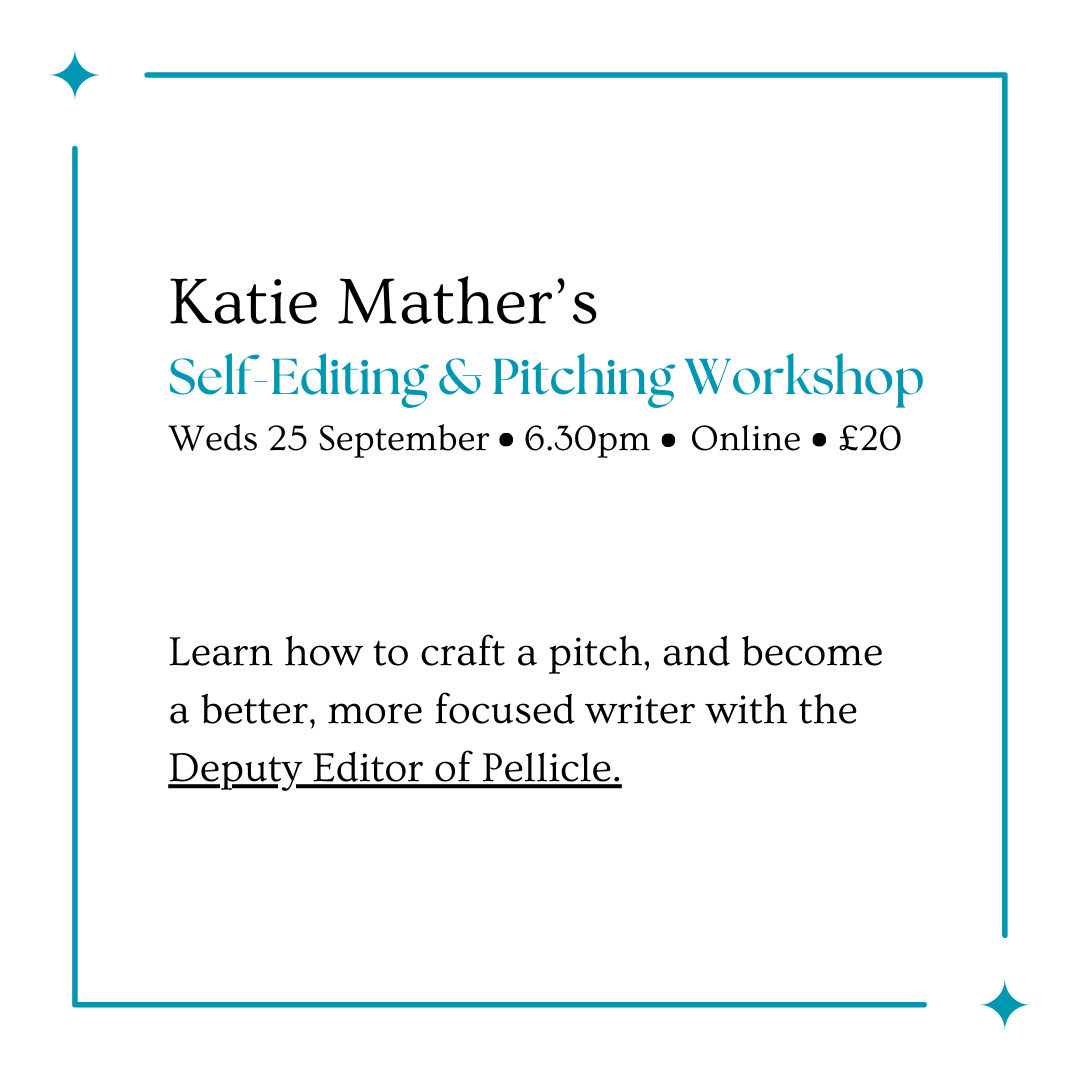
If you’d like to join my self-editing and pitching workshop on Wednesday 25 September, 6.30pm UK time, please click here to reserve your spot.

Wedding Dresses and Pints of Pale

An evening with friends, pints and wedding chat is well worth 14 hours on a National Express bus.

The Robin in Stroud Green, near Crouch Hill, London, feels like a happy house party. I’m sitting in the window, which is all the way open to the London traffic, enjoying the last half hour or so of warm sunshine that took all day to break through heavy rainclouds. I have a pint of Five Points Pale in front of me, and rather than block out the world with my headphones, I’m enjoying the atmospheric rise and fall of conversations all around me, a real after work crowd revelling in their freedom after another day’s graft.

My Pale is light to the touch and Citra-zingy, perfect after an afternoon of studying different cider varieties. Before I know it I’m halfway done, and I have to check myself before I wreck myself. Tonight is going to be a late one. But it’s just so delicious, so perfect in this moment. Savour it, I tell myself, knowing that I can’t. I’m not a savourer. I eat in big bites, drink in big gulps. I want the best things all in one go, now. The noise in The Robin continues to grow as it fills with larger groups, and I feel as though I’m part of the action, even though I’m on my own. I watch Deliveroo scooters and e-bikes zoom towards Crouch End, and pedestrians manoeuvre their way past each other on the packed pavement—city stuff. I don’t get any of this at home.

Katie Mather’s The Gulp is a reader-supported publication. To receive new posts and support my work, consider becoming a free or paid subscriber.

I’m waiting for Claire to arrive. Claire is one of my oldest beer-world friends, and we try to meet up every time I’m in town, which isn’t often. This meeting is more exciting than usual—of course, I’m always excited to see her, but that’s not why I’m buzzing. I’m staying in her beautiful spare room while I’m here, so we’ve already hung out and put the world to rights. I’m watching the door because I can’t wait for her to walk through it and scream at me, arms up in the air. She’s been wedding dress shopping today.

I finish my pint, but I don’t replace it, waiting for her to arrive before I plough into another. It starts to rain in beautiful long raindrops that fall vertically like pearl drop earrings from a partially blue sky. The light is stunning, a golden hour hue tempered by deep shadows cast by the passing shower. Here she is.

Pints now replenished we—Claire, her fiancé, and I—sit at a different table away from the window and after some chattering about our days and what we’ve had to eat, Claire scrolls through the dresses she tried on today. I am married, but this is an experience I’ve never had. The idea of walking into a boutique and trying on thousands of pounds worth of lace and silk makes me a little breathless. I imagine how regal it must feel to have a seamstress pinning a gown to your form, as you turn this way and that in the perfectly lit studio to admire how the material falls on your figure. I shout at each picture: “Fuck OFF!!”, “Holy shit mamaaa!”, “YOWZA”. She’s like: I know. I know!!

A friend joins us after seeing that we were here on Instagram, and he brings even more enthusiasm to the party. There’s this one gown she looked incredible in, a waterfall of sequins, that brings tears to my eyes—he’s clapping. We love this. We cackle and finish our pints, get new ones, and look through the collection again, whooping and hollering, and discussing cuts and styles in great detail as only three-pints-in-experts can. We hug and I talk about my wedding, and our friend his, and offer our advice and recommendations. We sip Pale like we own the place, and in this moment, surrounded by imaginary diamonds and chandeliers, it’s as exquisite and refreshing as Bollinger.

Other Stuff

My Stuff

Katie Mather’s The Gulp is a reader-supported publication. To receive new posts and support my work, consider becoming a free or paid subscriber.

The Mindfulness of Defrosting My Freezer

I needed something violent to do, and my freezer pushed my buttons.

It’s fair to say that the past few weeks have been bad ones. In-between my Granny getting sick and then dying, and then hosting her funeral, I forgot to take my medicine a few times, and had a lot of missed nights’ sleep during a busy period of work. Altogether, I haven’t been on this planet.

Usually when I’m not feeling right I cook, but I haven’t had the energy. When bad things happen to me I get angry, and that makes me tired. I do this thing, right, where instead of processing traumatic events or dealing with stress, I just fall asleep instantly to avoid them. I call it aggronapping. I’ve not looked into it too deeply. Trust me, you’d rather I was all tucked up in bed in situations like these.

I finally came out of my pit at the weekend, and yesterday, I felt like cooking. That’s a good sign. It shows the clouds are clearing. I love to cook. Even though I find myself thinking about patriarchal models of behaviour while I’m finely dicing onions, I know that in my heart, the kitchen is my safe space. I’ve got food to make, snacks to eat, wine in the fridge, and weapons, should I need them. It’s a haven.

On Mondays—and this is my top tip of the month, by the way—supermarkets often have good joints of meat in the reduced section of the fridges, because they weren’t all bought up the day before for Sunday roasts. That’s how I managed to come away with 1.5kg of pork shoulder for £4.65.

What would you do with a kilo and a half of pork shoulder? Spear it with garlic and roast it? Coat it with chipotle and paprika? Chop it into manageable pieces and freeze them?

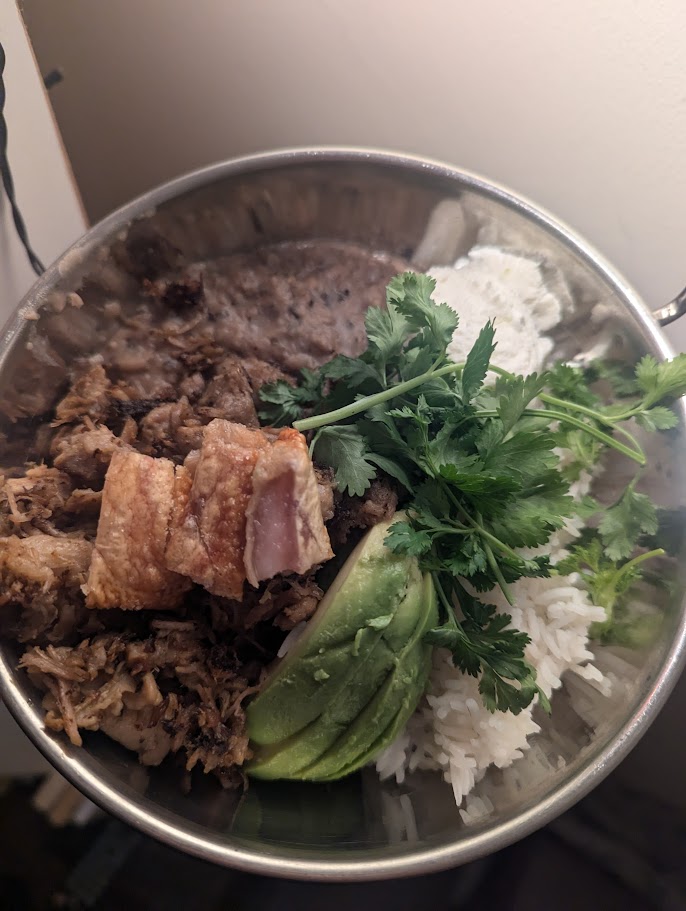
I did what I thought was the only option open to me at the time. I made carnitas.

I did it properly too, using lard and orange juice, and a little bit of milk. I saved the savoury fat, and used it to make refried beans. A sense of satisfaction as thick as the smell of rendering pork still sits in the air around my house, 24 hours later.

It takes a long time to let carnitas cook, and I got bored. I opened the freezer door to put away some fresh chillies and saw that the annoying over-frozen patches had all joined together to create a secondary lining like a vault, covering the drawers, making it impossible to get at anything inside. Aggravating. I suppose anything can be seen as an opportunity though, and this was an unexpectedly great one—the chance to make an incredible mess, plus, the god-given right to smash some shit up. I lay some old tea towels on the floor, and got to work.

I chopped and I stabbed at the thick layers of ice with an old butter knife, frosty growths potentially years in the making shattering into homemade snow. I threw away practically every item I rescued from its wintery jaws, making a mental note to stop freezing packs of wholemeal pita bread—I will never eat them. I cut my knuckle on a sharp icicle, which only spurred me on, whacking away at the shelves to loosen up the compacted debris. By the time I was done, it was like a new appliance, all white and shiny, with no loose peas and old bags of thyme dusting up the place. I chucked the chunks of ice into the sink, mopped the floor with the tea towels, and threw them in the wash. It was like my rage was never here. Completion! Victory!

There’s nothing like tackling a doable task to get your spirits up. But in the case of my freezer, there was also extreme violence. A double whammy of self-help.


I’m running another self-editing and pitching online workshop on Wednesday the 25th of September.

Here’s what a member of the last workshop said:

“I went on the first one of these a few weeks back and it was amazing! It was super practical – Katie is very generous with her time and answers. Highly recommend.”

If you’d like to reserve a spot, please grab a ticket here.


Thank you for reading The Gulp. If you enjoy these newsletters, please consider upgrading your subscription.

Being paid to write means that I can afford to visit more places, which in turn I can then write about! It also means that I can live, which is also nice.

The Woody, Douglas

Another potential for the Superpubs of 2024 list.

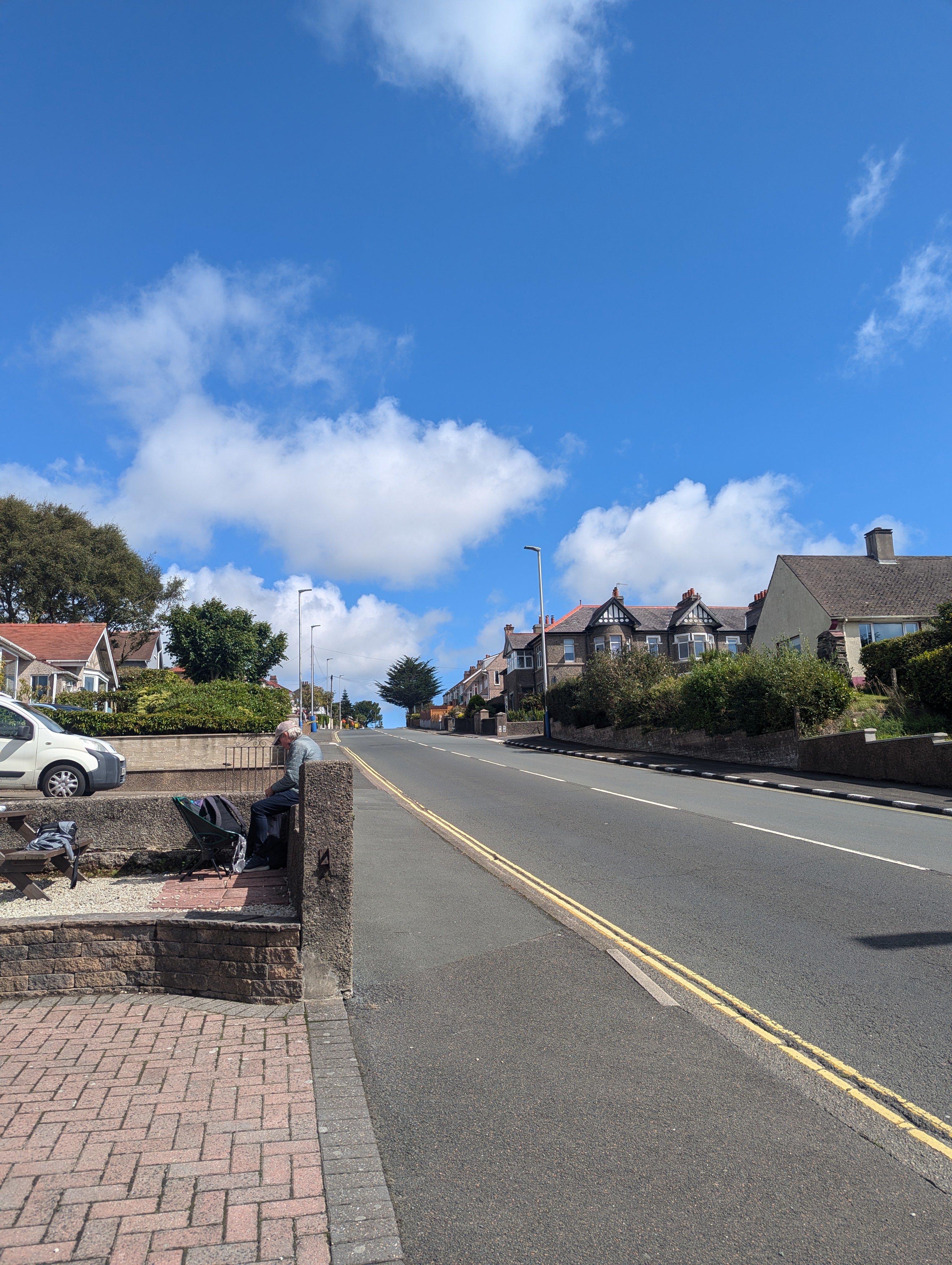
I’ve been travelling to the Isle of Man since I was very little, but until last month, I’d never had the pleasure of visiting Woody’s, The Woodbourne Hotel; a local pub that I’d never heard of until a friend suggested we all meet up there after the day’s racing. Or not. As it happens, this year’s Manc GP was plagued by terrible weather and unfortunate fluke incidents—a sewer burst all over the road at Union Mills, for one thing—so we had been drinking tinnies in O’Kelly’s, a private front garden on Bray Hill, waiting for delayed races to begin for most of the day.

It’s a fantastic spot. You stand in the driveway and hear the roar of engines through the radio commentary, then, half a minute later, you hear it for real. Your racers fly by one by one, inches from where you stand, bikes compressing down into the dip and then nipping over Ago’s Leap and onwards to Quarterbridge.

Once the roads opened—you can’t cross the course roads during race time for obvious reasons—we set off en masse from the front garden to The Woody. My friend Pete told me it was his favourite pub on the island, and Anna-Marie, whose garden we’d been skulking in all day, told me it had the best atmosphere of any pub anywhere. And she’d know—she works there. The walk to The Woodbourne took us through residential streets I’d never had cause to walk down before, revealing parts of Douglas I didn’t know existed. There are whole Victorian squares set back from the promenade, with pretty parks and towering beech trees. Pete made us all stop and look at one house to admire its curved glass windows.

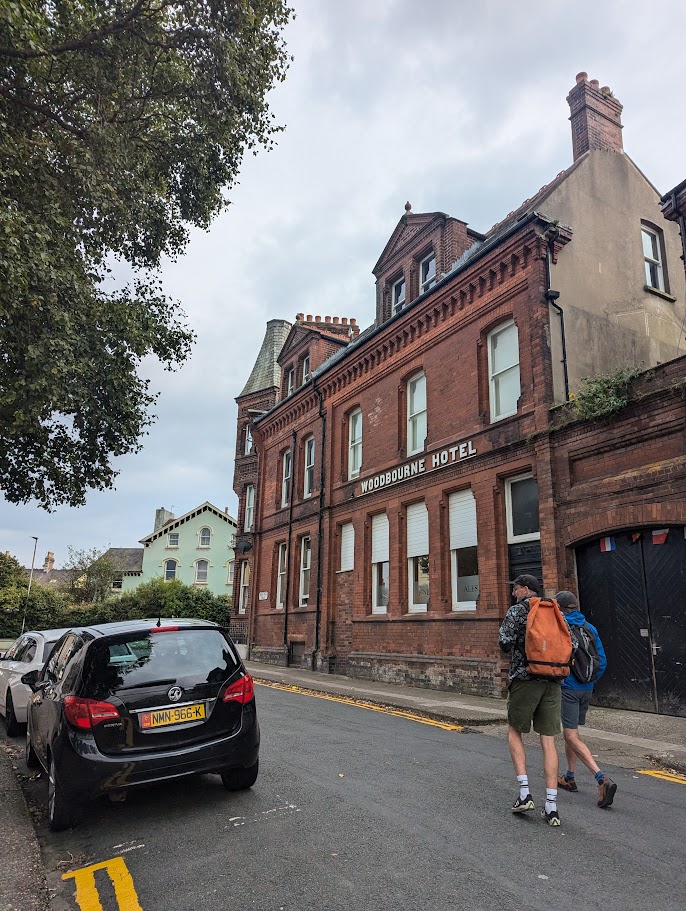
In amongst the terraces of Victorian villas we came to The Woodbourne, a gorgeously presented red brick 19th century pub.

The tower-turret on the corner took my breath away. A castle of a pub! Could this really be the “old man pub” I was promised? I said I wanted scruffy and friendly, and was assured that this was it. The immaculate frontage told me something else.

“Get inside!”

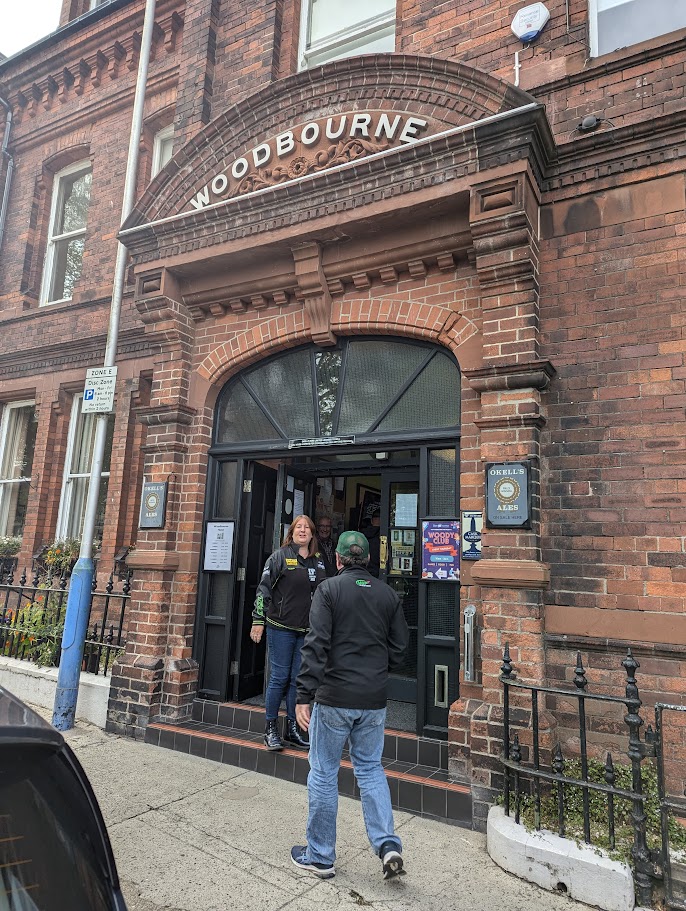
I was too busy taking blurry photographs of the brickwork and exterior decorations to realise that everyone had gone inside already and I’d lost them to the pub. In the picture above you can see Anna-Marie coming back outside again to tell me to hurry up.

The first room on your right is a glowing surprise. The highest ceilings sit loftily over an imposing marble fireplace, a bay window table nestled perfectly into the corner turret, and a gorgeous curved bar polished to within an inch of its life. Natural light soaks the room, despite the clouds outside. Scruffy? Never. Before I can order a pint I’m called into another room by one of our growing group, and on the way out of the stunning front room I glimpse the pool room. I’m being dragged to the “Gent’s Bar”.

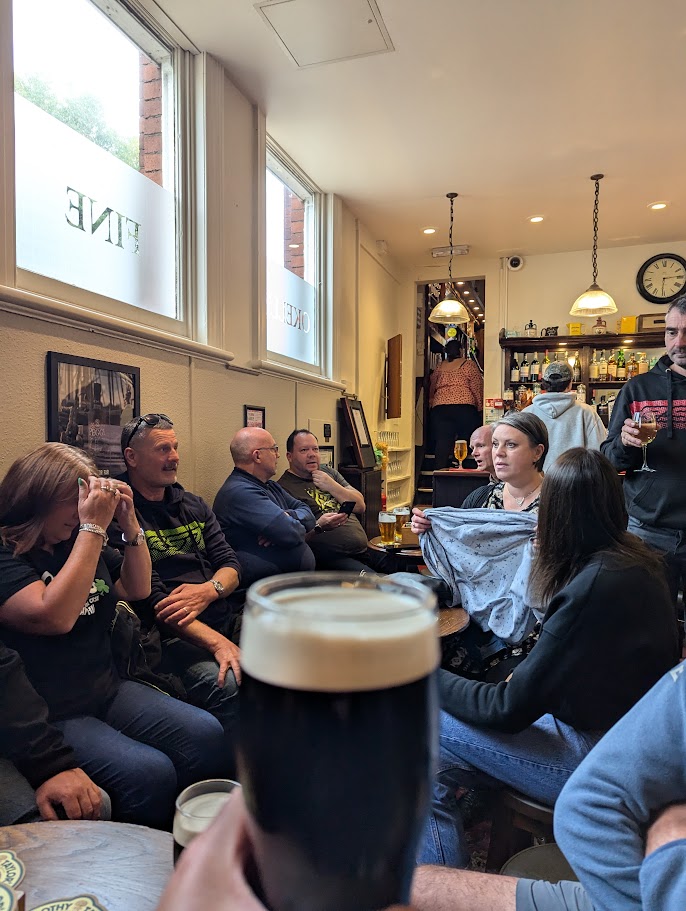
As deeply chestnut as you’d want it to be, the Gent’s Bar is open to all now, but the unspoken rule is that this is where the locals sit. If somebody wants their seat back, you have to give it to them. This snug in the centre of the building feels like an Edwardian train carriage, everyone packed in together amicably, its little booth seats overlooked by cartoons and paintings that know the secrets of this town, and well-used hand pulls that serve Woodbourne Street’s locals the beer they need to do some much-needed gossiping.

We weren’t staying in the Gent’s Room though. It’s too small, and we were too noisy. I was led further down the corridor to the back bar, where somehow we’d multiplied into a rowdy bunch of 12. Basic white walls and a well-stocked bar on first glance became signed photographs of TT racers and etched glass windows. It took my eyes a little time to adjust from the burnished glory of the Gent’s Room, but once I could see it for the perfect little boozer that it was, I was at home. Behind the bar, every single team member was friendly and happy to chat about anything at all. Nobody complained about our constant roars of laughter. A man I’d never met before chatted to me about how much he loves the Isle of Man Southern 100 and made me promise to visit for it next year. The pints were cheap and fresh-tasting and served in whatever glassware was to hand. This is not a criticism. Somehow on top of everything, this added to the experience. The vibes were immaculate. I never wanted to leave. Neither did Tom, which is highly unusual.

According to local historian Mark Shimmin, The Woody used to generate its own electricity in the basement back in 1895, and provided electricity to some of the surrounding neighbourhood too. This video interview with Mark and the Woodbourne’s landlord Trevor Latus was broadcast by Isle of Man TV that details more of the pub’s pretty fascinating history—and it also has footage of the pub’s original plans which are just beautiful.

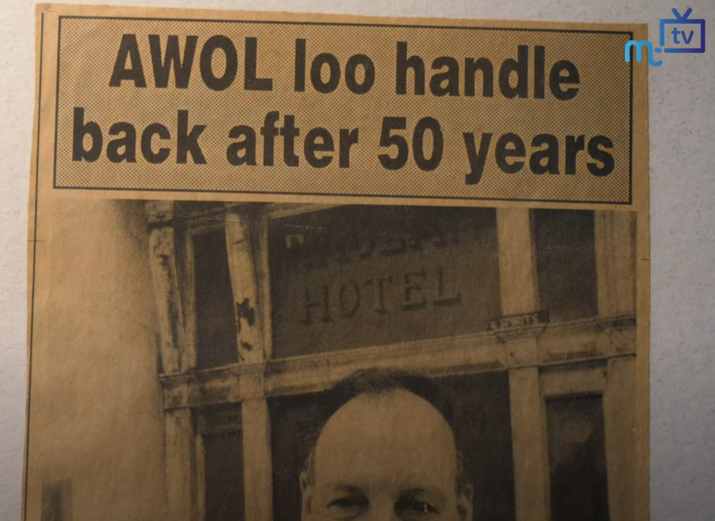
And if that doesn’t encourage you to watch it, this screenshot of a newspaper article about the pub’s refurbishment might.

Other Stuff

My Stuff

AUGUST

A monthly roundup, now available to all because I’m nice like that.

The month of August always stinks. There are far too many anniversaries of endings at this time of year, and this time around I also contended with the death of my Granny. Granny was excited by nature, and I am sorry that I’ll never again walk amongst a cacophony of flowers she planted, or be chased by ducks she fed. She was a powerful and inspirational woman. Even to the last, she cared that we all took care of each other, understanding that nobody should shoulder anything alone.

I was honoured to be able to lead her funeral service, writing for her a eulogy I imagined was more like a lifetime achievement award than a final goodbye. Her coffin—why was that word so difficult to write? It’s just a box—was decorated in gorgeous garden flowers. It was as though she was in the room. At the end of my eulogy I wrote:

One of my favourite poems, The Summer Day by Mary Oliver, ends with the lines:

Doesn't everything die at last, and too soon?
Tell me, what is it you plan to do
with your one wild and precious life?

I will live it, Granny.

And I hope I can keep up that promise, because the past couple of weeks have been difficult to wade through. We’ve done it though—we’re in September now, and the leaves are changing, and the nights are colder, and there are different things to look forward to.

Things I’ve Written

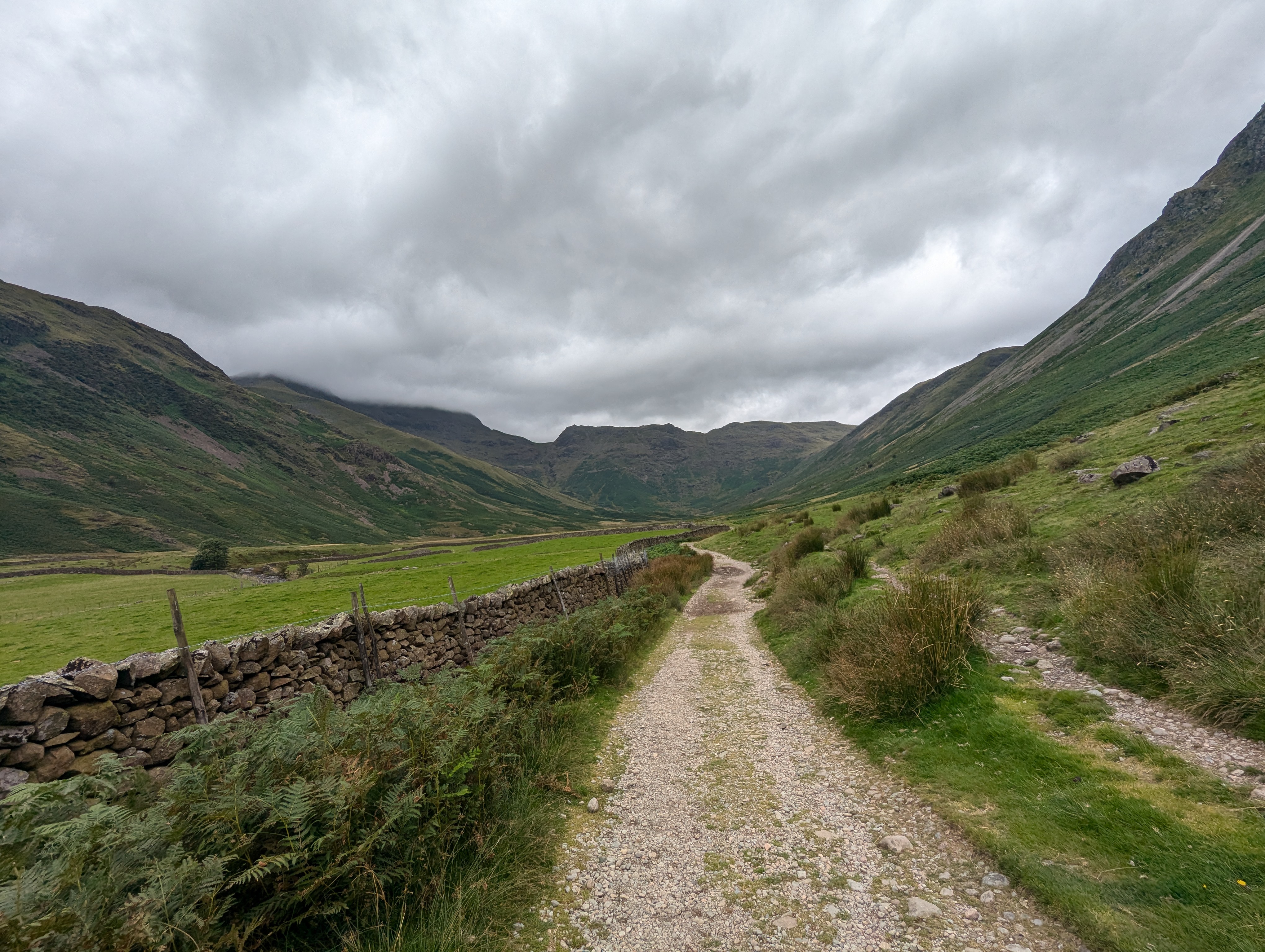
“That’s the magic of the hills. Not that they appear to be doing any meaningful cheeriness themselves, as clouds continue to slowly drag themselves across the valley roof and Langdale Fell broods darkly in the shadows. I think about erosion, and time. I think about the fallen boulders on the valley bottom, as old as the Ice Age. The hills widen into a perfect scoop, as wide as a village, and soon there will be no other way to go but up.”

Things I’ve Done

Working behind a bar again

This month I’ve been behind two bars, almost exactly a year since Corto closed (I told you this time of year was the worst for Bad Anniversaries.)

The first was a long shift throughout Clitheroe Food Festival on an outside bar for The Ale House, Clitheroe. It was fun, I got to see so many people I’ve not seen since we closed down our bar, and I learned that people still say the funniest things to bar staff. One lady thought it was £5 for a whole bottle of wine and refused to pay once she realised it was for a glass. My answer of “in what decade?” didn’t help the situation.

Bar work. Never change.

Took on freelance editing work

August saw me connecting with an author and beginning to work with them on editing their first memoir. It’s the first time I’ve ever worked on a book project, and I’m grateful to Martha Bullen for seeing potential in me and putting me up for the job. I’m very excited about it.

Visited the Isle of Man for the Manx GP

A flagship event in my personal calendar, I was super jazzed to be able to visit the Isle of Man again this summer, this time for the Manx GP. A much smaller event than the TT, it’s a special set of races attended by a special set of nerds. Sadly the weather was absolutely atrocious, the worst they’d seen in 20 years, and many of the races were cut down to one lap—hence why I’ve no real reports written about the trip. It was mostly rain and naps. Still, we saw the bikes go out on Bank Holiday Monday, my friend Shaun Anderson won the Classic Senior race ahead of John McGuinness, and it was important for me to be on the island just after the funeral. Granny loved the Isle of Man.

Represented Nightingale Cider at Rivington Farm Trip

Farm Trip is Rivington Brewing Co.’s annual festival held on their idyllic family farm in Rivington (believe it or not) and despite its amazing reputation, I’d never been able to attend before thanks to work. This year I was asked by Sam at Nightingale Cider to pour for him on his behalf at the festival—what a treat. The weather was perfect, the guests were super interested in cider, and we sold out before the end of the last day. What more could you want?

Things I Read

Things I Saw

  • La Vuelta

  • Motorbikes speeding down Bray Hill at 140mph

  • Bats circling my head in the woods above Robin Hood’s Bay

  • A bucket full of crabs in Whitby

  • My family all sitting in front of me while I read out a eulogy

  • Milky Quayle live-narrating an on-board lap of the Mountain Course

  • A pirate grave (or more likely, the grave of a Knight Templar)

Things I’ve Drunk

  • Charcoal Burner, a deliciously complex but easy to drink cider by Nightingale

  • Two bottles of a Lidl Sauvignon Blanc called Sunny Day

  • Twisted Metal, a 13% ABV Imperial Stout by Blackout Brewery, aged in Dalwhinnie Single Malt barrels

  • Thornbridge 90/- Amber Ale, brewed on their Burton Union kit

  • A very excellent cappuccino at Mr Cooper’s Coffee House in Whitby

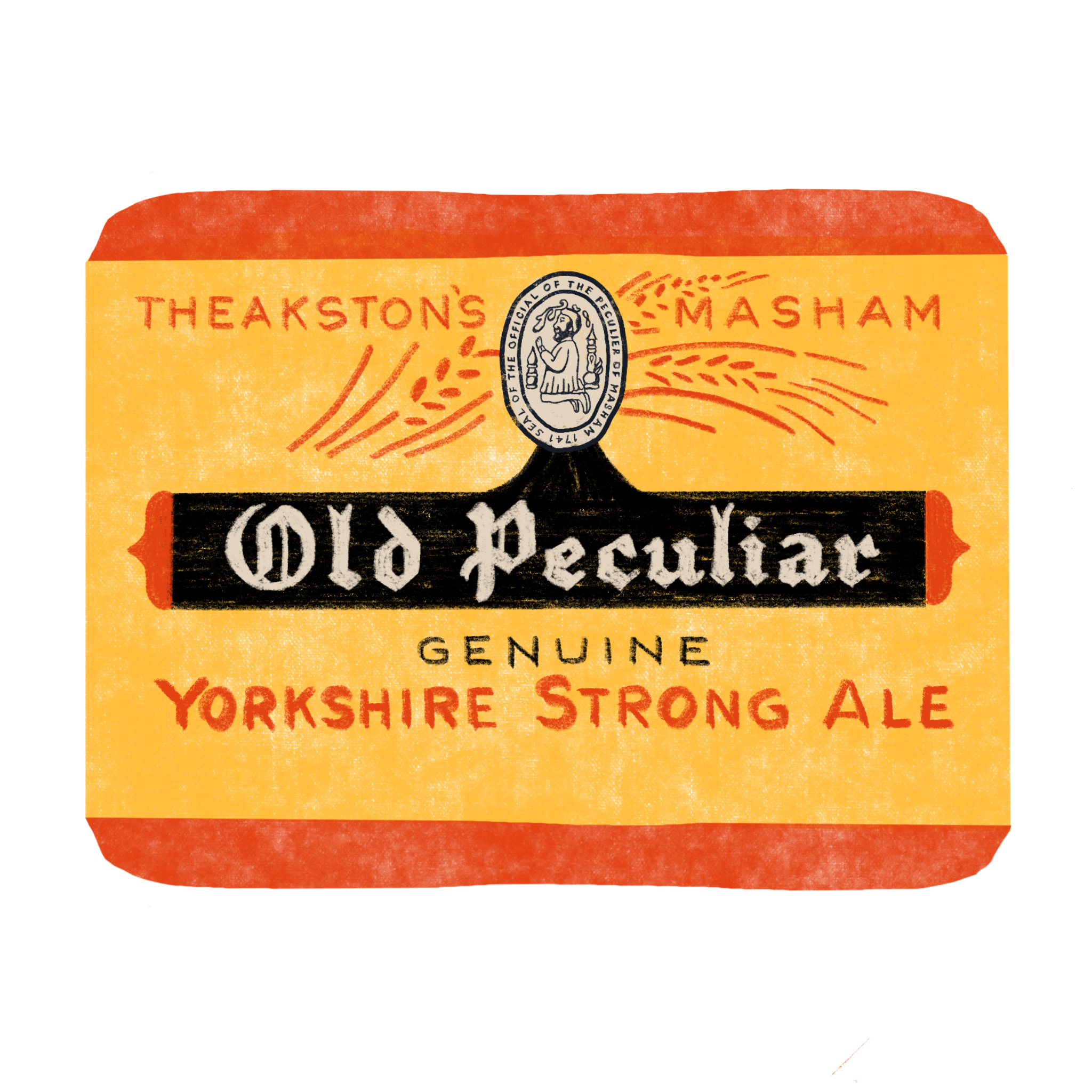
  • A lot of Old Peculier

Things I’ve Eaten

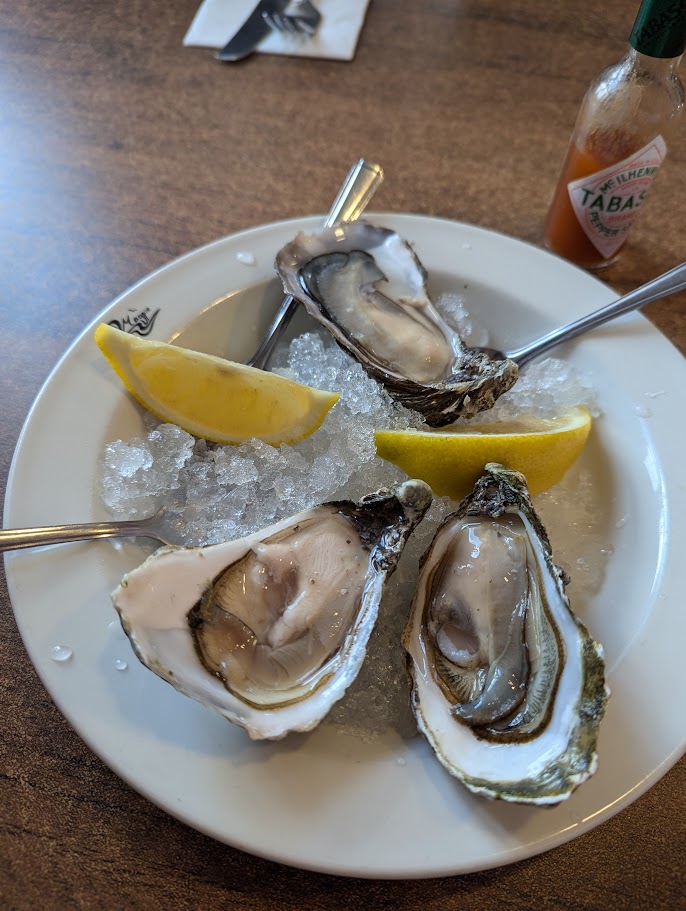
In Whitby I had Lindisfarne oysters so creamy and huge I could barely chew them. This was at The Magpie, Whitby’s best fish and chips restaurant. Highly recommended.


In Douglas, I was incredibly shocked to learn that the carvery roast dinner at 1886—widely regarded to be the town’s premier “let’s get shitfaced” nightclub—was absolutely banging. The restaurant upstairs in the rafters is classy and clean, the pork was tender and delicious, and the service was friendly. Who’d have thought it? Of course, on the way out Tom did come across a man yelling at himself in the bathroom mirror, but that was after we’d eaten.


I’ve not been very creative in the kitchen this month for obvious reasons, so my sandwich obsession has returned. Any mortadella producers who would like to become my official sponsors, please get in touch.


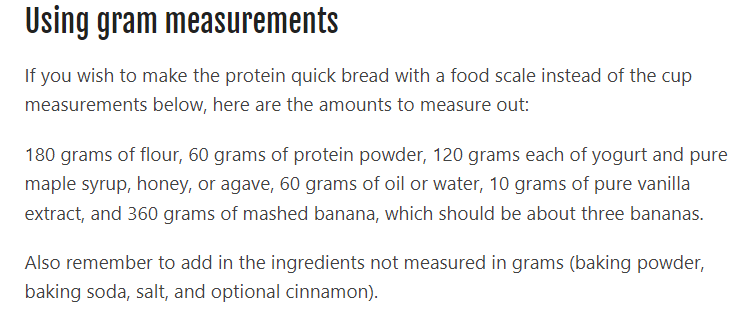
Call me gullible but I just bought some birthday cake flavoured protein powder because I think it will work well in things like banana bread. I have never managed to successfully bake something using protein powder, but something tells me this time will be different.


That’s this month all lined up and done with. This time next month I’ll be in sunny Lanzarote—who likes reading about macro lager and calamari???

Katie xox