AI and Me

Why I don’t use Chat GPT. And why I don’t want my writers to use it either.
AI and Chat GPT has crept into my life like dry rot. Subsidence. I’m putting this out here for posterity—I will not use it. I don’t have a Chat GPT account, and I don’t allow my work to feed any AI machines. I’ve turned work down that would pay me well so that I don’t have to work with or train AI. I think it’s a genuinely Bad Thing for writers and artists, and it will only degrade the quality of the art we consume. Commodification? You wish. This is contentification. No respect for the reader, no fine turns of phrase, no elegance. Just easily-digested, loosely fact-checked slop.

As hard as I try not to let the idea of AI affect my work, I’ve noticed something—I am now trying too hard to write like myself. Terrified of seeming like I’ve run my untethered thoughts through a comprehension engine, I’m actively rethinking the wording of my sentences, second-guessing my descriptions, looking for points throughout my writing where anyone might feel as though things are getting a little uncanny. Are my thoughts too terminally online to be read as natural speech anymore? Is resistance not only futile, but moronic?

I have seen work as an editor that has clearly been written with the aid of AI in some form. The frustration I feel about this goes beyond anger: It deeply upsets me. I want to know how making writing easier for yourself by removing yourself from the writing is of any value to anyone. I want to know why any writer would want to extricate themselves from the problem-solving duties of turning raw thoughts, ideas, research, and emotion into coherent text. Is that not your job? Is that not what we do?

Writing, to me, is everything. It is the only thing I can do. I live to turn my experiences into stories, to discuss and dissect the world around me, to make sense of things in new and intriguing ways. I strive to connect with people through the words I write, which were born as mere feelings, just sounds, within my chest. Take this away from me, and I don’t know who I would be. To give it away all by myself? That’s another level of nihilism even I can’t comprehend.

Other Stuff

My Stuff

  • I’m writing a story about Old Peculier, it’ll be out soon

  • I’m working at Rivington Brewing Co. Farm Trip this weekend for Nightingale Cider—if you’re heading there, come and say hello

  • I’m running a meet the brewer and tasting session at Fell Brewery’s Oktoberfest at The Royal Oak in Cartmel. It’s going to be a super fun and delightful time in the Lake District, so come along if you can. Get your tickets here.

  • I’ve got some pub-related writing coming soon for the newsletter as I’ve been to some absolute corkers recently.

  • Keep an eye out in Ferment magazine—I’ve written about Wee Heavy for an upcoming issue

  • Want to book me for a speaking or tasting event engagement? Reply to this email and tell me what you’ve got cooking!


I have begun editing my first book as a freelance editor for an American author who I feel has the talent and passion to go very far indeed. I’m incredibly excited about this project, and if you’d like to talk to me about any future editorial work, I am now accepting editorial pitches for 2025.

Drinking in Whitby & Robin Hood's Bay

Why do influencers hate people?

A few weeks ago I read something that wound me up so much, I’m still thinking about it. A travel influencer from the US visited Scarborough, and they did not like what they found.

“I thought it would be a real hidden gem,” they said. It turned out to just be Scarborough, a northern seaside town with pretty bits and rough bits and penny machines, just like everywhere else. It wasn’t that nobody had thought of going there, it’s that they already knew it wasn’t going to offer them Salcombe-level yachts or Cornwall-level surfing. In the end they left disappointed, which is a huge shame, because I lived in Scarborough for a year when I was 18/19, and I loved it. I’m taking Tom there soon, because he doesn’t believe me about how gorgeous the beaches are.

Hidden gems make it sound like places are only worth visiting if nobody else knows about them. It promotes the idea that exclusivity is a priority, and that other people only sully the experience. I don’t agree.

I can understand where this idea began—everybody hates a tourist. There are more tourists than ever now, and we want to stay away from them1. In a recent piece, Emiko Davies wrote about overtourism in Florence, and how it’s affecting local customs and culture. We can perhaps all agree that overtourism is a blight—it brings money, but it also brings destruction that this money, eventually, will have to pay for. How has it become such a problem? Emiko thinks it has quite a lot to do with influencers and TV shows offering magical visions of a destination that others can’t wait to emulate with their own trips. But there’s a difference between local authenticity and staged seclusion. So many of these so-called “hidden gems” are just facias. The best places are always busy. If you want to be by yourself, get take-out and go sit in the park or on the beach. Dangle your feet off the pavement in the Cannaregio and drink Prosecco from a water bottle filled up a bodega like everyone else. Make your own experiences, and stop expecting the confected versions of tourist destinations influence where and how you enjoy your time. You’ll have fewer blisters and even fewer arguments this way, I promise.

In Whitby, there are more tourists than I’ve seen in a long time. The streets were heaving with window shoppers, and every inch of the railings along the harbour was taken up by kids with strings and bits of bacon, fishing in the water below for crabs. It’s a holiday town, this is what it does.

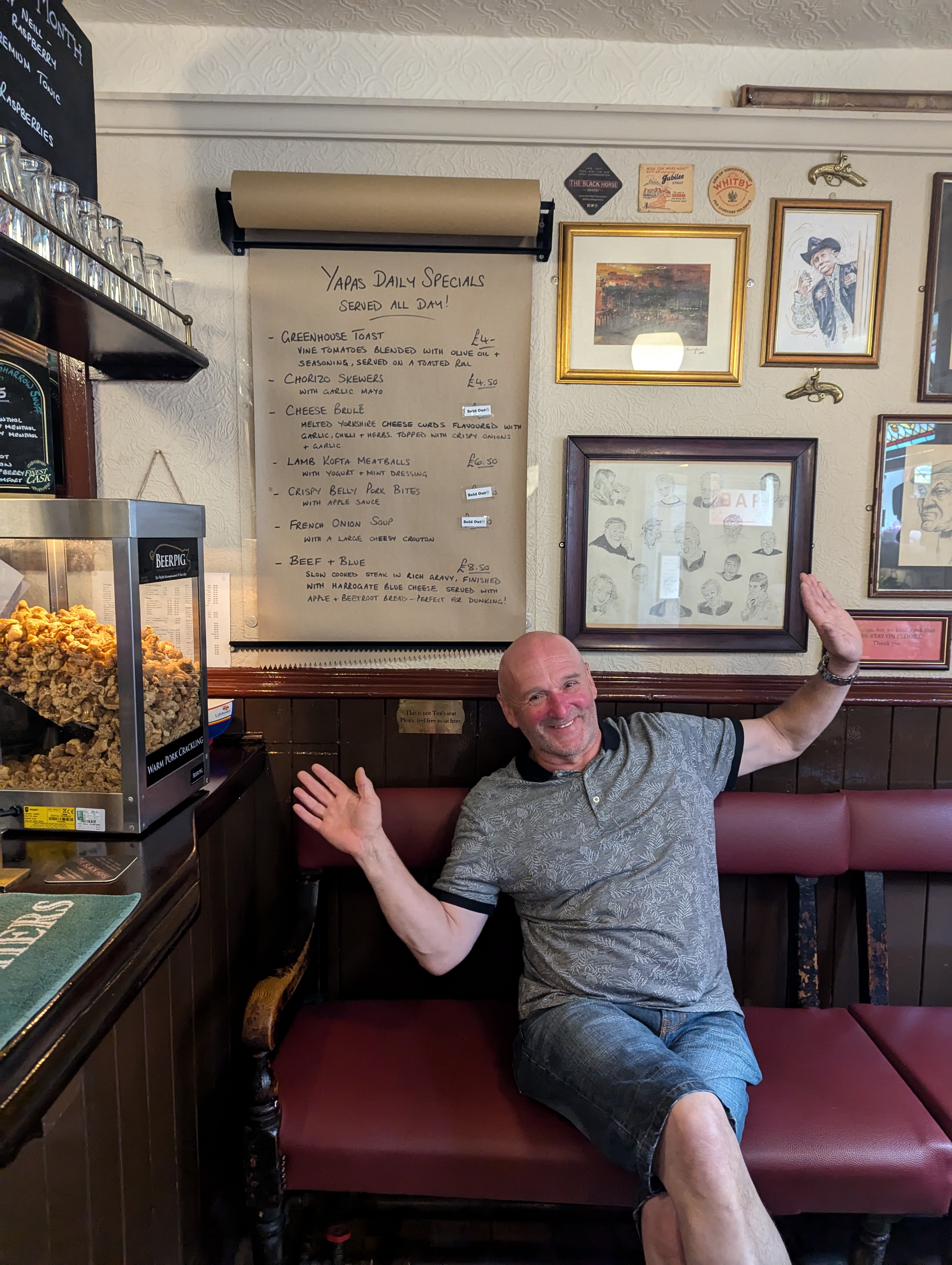
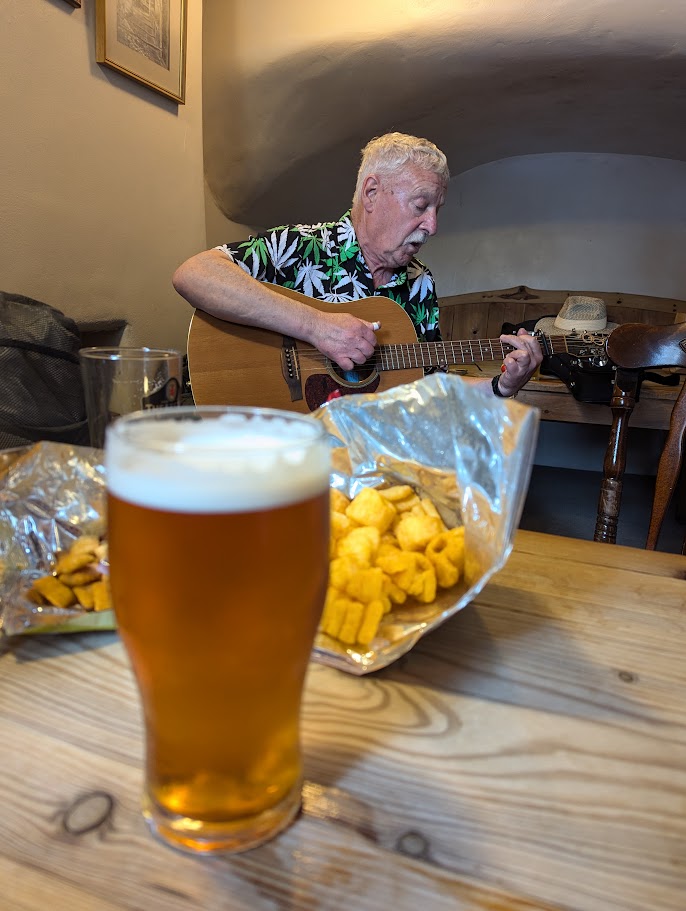
On Church Street is one of Whitby’s oldest pubs, The Black Horse. Every day, thousands of people pass by on its busy cobbled road; there is no way you could call it a hidden gem. Inside, it is full of people. You find a seat, you get a pint, and eventually you get chatting. This is what I love about pubs. (I’m going to write more about The Black Horse later this week, don’t worry.) In Robin Hood’s Bay, the pubs are packed with holidaymakers having tea, and queuing at the bar for seaside drinks. We were lucky enough to step in on a night where a local musician was playing guitar to anyone and nobody, and we sat with him and whoever came into the room for the rest of the evening. These were not secret, tucked-away pubs nobody except clever old you knows about. The Laurel in Robin Hood’s Bay is literally the most photographed pub in the town. The Black Horse has 1,102 Google reviews, and it’s in the CAMRA Good Beer Guide. What made them great was the people we met while we were there, from the Landlady, to the man with his British Steel t-shirt on. If I’d have been looking for lesser-known pubs, I would have missed both of these off. But what for? In search of perfection? Surely this was it?

1

I’m being facetious, of course if you have gone somewhere to visit and travel, you too are a tourist.

How to pair sparkling wine with food

Or: excuses to drink more sparkling wine

This piece is an extension/re-edit of a piece I wrote for my “wine wisdom” column in Glug magazine earlier in the year.


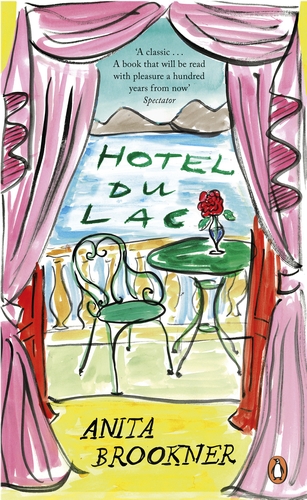
When you pop a bottle of sparkling wine, it’s usually to fill glasses full of celebratory foam, but what if we looked at fizz differently? After all, it’s wine, and therefore it has plenty to offer as a food pairing option. In Anita Brookner’s supremely poolside-readable novel Hotel du Lac, the imposingly rich widower Mrs Pusey and her bland daughter sip endless glasses of Champagne at every meal, refusing to choose a different bottle throughout their stay, no matter their choices at the supper table. Fair play to them, I say.

This book happens to be one of my all-time favourites, there’s a soothing melancholy about the whole story that laps at each page like the lake our heroin Edith has been sent to for “recuperation” (she had an affair and people found out.) The hotel itself is a bastion of old world gentility, the Puseys a last gasp of archaic excess in a Europe that has vastly changed since the Hotel du Lac was built. I love the detachment of it all, and the individual neuroses of each guest.

But anyway, back to the wine. Unlike Mrs and Miss Pusey’s bar bill, it doesn’t always have to be Champagne. Sparkling wine of all types can lift dishes and enliven meals, you just have to choose carefully depending on the flavours of your food, and adhere to the whims of your personality. One day I want Asti. On others I want something much drier. Get what makes you feel good, not what you think you should be rolling through the checkout.

Champagne & Food

It has to be said at this point that Champagne and fish and chips is the gold standard in food pairing full stop. I once travelled 240 miles to meet friends by Leith’s waterfront to enjoy this delicacy as the sun went down.

The reason this particular combination has me in such a chokehold is its balance between fat and salt, acid and citrus. Blanc de Blanc works best, with a drier, less fruity character. Blanc de Noir would have a little too much peach or pear notes, and I’d prefer it with goats’ cheese or ricotta. Maybe in a salad heavy on the olive oil and salt, or cheesy ravioli…ooh, or arancini.

Crémant & Food

It’s better to drink a good Crémant than a bad Champagne. It’s not a cliché, it’s a saying, and it’s a popular one. With fresh fruit flavours and a fine mousse, crémant is particularly good with paté, I think. Chicken liver and Armagnac, or chestnut and wild mushroom, with stacks of Melba toast. I don’t care if you’ve not eaten Melba toast since 1983. It was invented by Escoffier, you know.

If you’re not a paté fan, I’d like to see you give Crémant and eggs florentine a bash. The richness of a perfectly poached egg yolk, the buttery English muffin, the earthy spinach, all lifted by the joyful freshness of a glass of French fizz.

There’s a joy in finding a great Crémant that makes me feel like I’ve beaten the system. The prize is drinking it.

Cava & Food

When I was in my early twenties, I learned that Cava is just a normal wine in Spain. I’d always seen sparkling wine as its own entity—somehow barely even wine. A different drink altogether. But in cafés and bars I was offered regular-sized wine glasses of Cava alongside local white, red and rosé, and it clicked. Cava is just wine too. You can do what you want with it.

Cava brings brightness and cuts through fat with aplomb. That’s why it works so deliciously with traditional tapas dishes like fried calamari, patatas bravas, sobrassada, morcilla, chorizo and peppers roasted together in a pot… I could go on. You’d think the strong flavours and aromas of paprika and black pepper would overpower the wine, but it’s that all-important hot oil that makes the match here. The citrus-zest zip of your dry Cava removes the cloying greasiness and creates a delightful balance between fresh acidity and the sweet, fattiness of the food.

Please don’t feel you have to stick to Spanish dishes, however. Fried chicken and Cava is a vibe, and if you’re making garlic roast pork with tons of crackling and some sort of tomato or gratin-based potato side? Heaven.

Prosecco & Food

Slightly sweeter than our friends Cava or Crémant, Prosecco tends to move forward with crisp apple and juicy lemon flavours, sometimes even raspberry, making it more of a juicy, playful drink. It is perfect with a bag of those expensive sea salt crisps—eat while reclining for full effect.

Prosecco is also delicious with briny oysters, which always get lumped with Champagne but honestly? It’s not the best match. Loads of people agree. Try them with Prosecco valdobbiadene Superiore instead. See how it jams with the mignonette?

It also takes to creamy, sugary desserts particularly well. Panna cotta is a shoe-in. A classic trifle? Absolutely yes.

Cap Classique & Food

Full of soft orchard fruit and lemon curd aromas, a Cap Classique is a beautiful accompaniment to pork and poultry—think chicken thighs in a classic cream sauce rather than hot wings. Does that mean it would pair with a chicken and mushroom pie? I’m gonna say yes.

It’s also a go-to wine to pair with poached salmon with asparagus, which isn’t super exciting but is very, very delicious, so it’s good to remember that not all your pairings need to be ground-breaking.

Blanquette de Limoux & Food

Lobster, crab claws, langoustines. Get the whole ocean in on this. Sweet, fresh seafood, served on ice with lemon wedges is what you need with Blanquette de Limoux. Its flash of acidity works wonders, softened by peach and brioche flavours and refreshing aromas of blossom and green apples.

This is a pretty wine, but it’s also scarily easy to drink. Make a lunch of ham and cheese croissants and pop a bottle and you’ll see what I mean. Equally at home with cheese on toast as it is with elegant profiteroles, gelato or beignets, it’s hard to understand why Blanquette de Limoux isn’t everyone’s favourite wine. Maybe it just isn’t as fun to say as “Prosecco”.


My Self-Editing and Pitching workshop was so fun this week! It’s been a couple of years since I ran anything like it, so thank you to my students for their undivided attention over two hours of me talking non-stop.

I’m thinking about offering another one in a month or so. If you’re interested, please get in touch about dates.


Other Stuff

My Stuff

  • I wrote about Fernet Branca for Fernet Branca/Guardian Labs

  • I’m working on a piece about Old Peculier for Pellicle

  • I’m working on some zines — including a PROCESS zine

  • I’m editing a book! So I guess I’m a freelance editor now? Get in touch if you need some editing.

    Get more from Katie Mather in the Substack app
    Available for iOS and Android

I'm Running a Writing Workshop

Plus: A recipe for homemade cheese spread

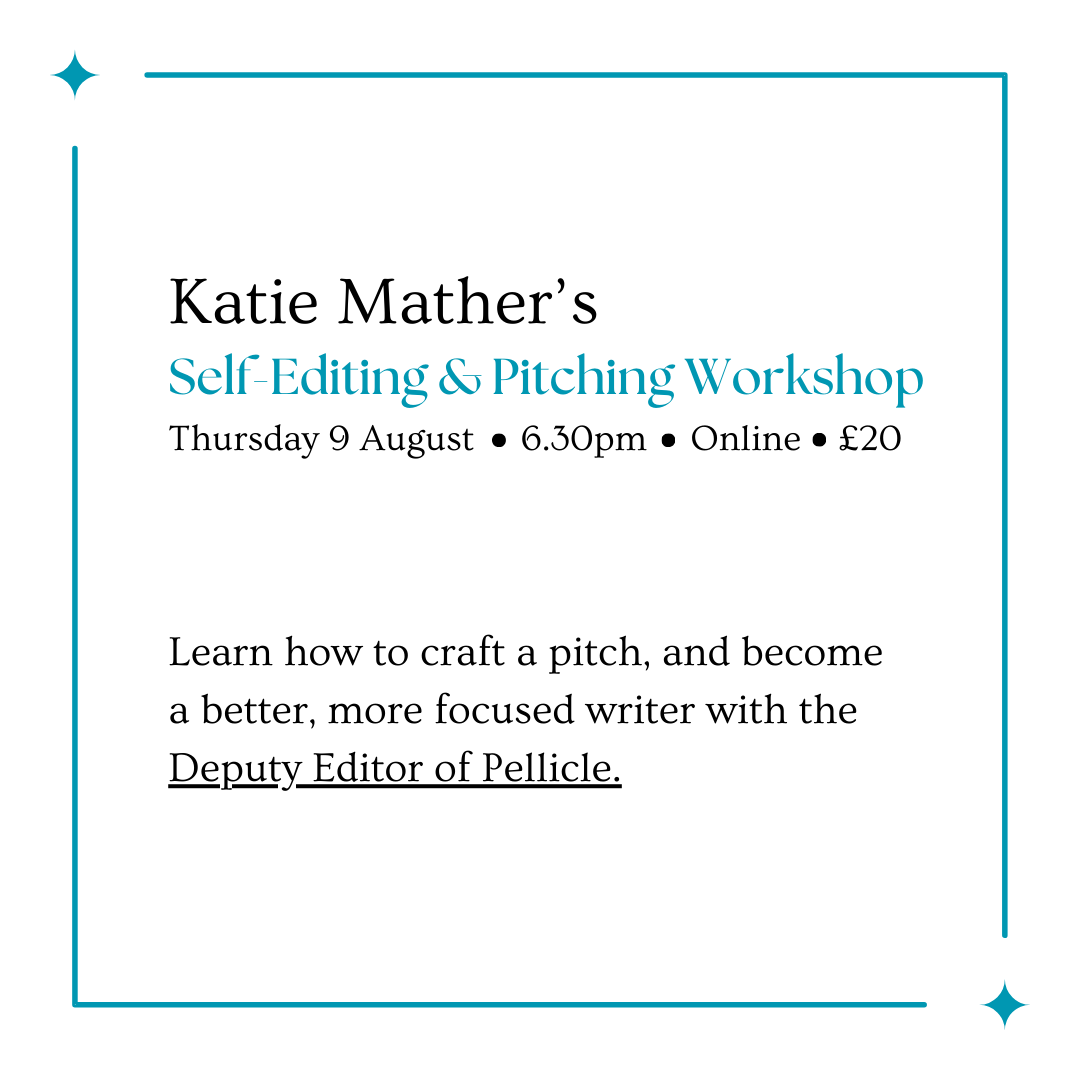
On Tuesday 13 August at 6.30pm BST I will be hosting an online writer’s workshop. It costs £20 to book, and if you’re interested but don’t want to book right away, please do get in touch with me (you can just reply to this email, or message me directly) to ask any questions you might have. All are welcome.

What’s it about?

In my 15+ years of writing for clients and editors, I have some advice I’d like to share with writers hoping to progress their work. Perhaps you’re looking to make a jump from Substack and other self-publishing platforms into writing for other people and publications. Maybe you know you’re good, but you’re hoping to hone your writing further to get it closer to where you want it to be.

Whatever your writing goals are, this workshop is aimed at focusing your words into sharper, smarter writing, enabling you to form ideas and construct your arguments and stories convincingly and with style.

As Deputy Editor of Pellicle, I know what I want from writers. In this workshop, learn how to be a dream to work with (and then get more work because of it.)

What will it cover?

In this 2 hour online workshop, you will:

  • Find great hooks for your story ideas

  • Turn rough outlines into smart pitches

  • Gain confidence for writing + pitching

  • Get the skills you need to polish your first draft

  • Become an editor’s dream commission

When is it?

  • Tuesday 13 August

  • 6.30pm BST

  • £20

Book your place

To book onto the workshop, just click here and follow the instructions to pay for your place. Please make sure to send me your email address.

Once you have booked on, I will send you an invite to the video chat link, and more information on what to expect from the workshop.

Let’s do this!


This week has been difficult to wade through, so I’ve been referring to a lot of my favourite comfort foods to get through it.

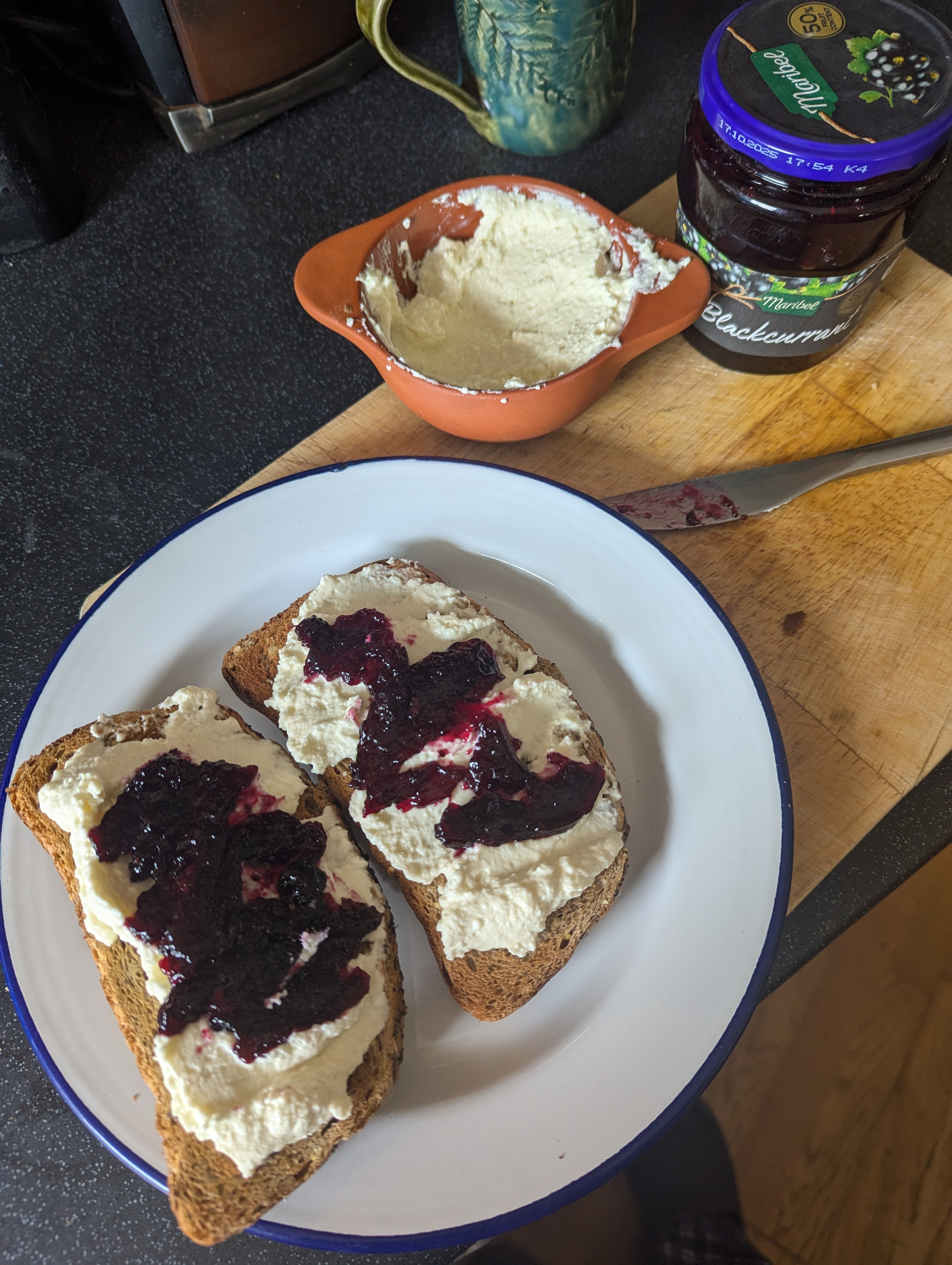
I love cream cheese, and I had this idea to eat piles of it on toast with blackberry jam. It just so happened that this week we also had way too much milk delivered. I looked up some cream cheese recipes and none of them seemed very convincing. Online recipes so often have this feeling of farce about them—just add this one ingredient and magic happens, keep stirring and you’ll create something delicious. I’ve been burned before by “perfect” sauces and “simple” brownies, but I had convinced myself to try it and when that happens, nothing can stop me.

This method of making cream cheese, if you stop before the part where you get a blender out, is actually a super quick way to turn two pints of whole milk into a small lump of mild cheddar-tasting ricotta, and if that sounds like something you’re into, then I implore you to try it. However, I wanted something spreadable, so I continued to press the curds, as small as they were, and then added them to my Ninja bullet blender, which by now has seen so many small horrors I truly believe it is now cursed.

To the salted, lemon-juiced ball of curds, I added back some of the cooled whey by the teaspoon in the blender, and kept pulsing until I was faced with a spreadable white paste. It tasted sour, like cultured yoghurt, and I actually liked the cheesiness. It was unexpected, but not unpleasant. I think it turned out much more like a labneh than a mascarpone.

It spread well on toast, and it was delicious with jam—like a cheesecake. It’s not a cost-effective recipe in any sense, but if you have milk to burn, perhaps you’d like to give it a go. I think I might add paprika if I ever do it again, and serve it with roasted carrots like all those food influencers are doing at the moment with blended up butter beans (which actually suck, do not listen to them, it is not as good as hummus and never will be.)

Recipe

  • 2 pints of whole milk

  • Juice of 2 lemons

  • Salt

Method

  1. Pour the milk into a cold pan and heat it up to medium while stirring all the time. You don’t want it catching on the bottom.

  2. Once the milk is at a simmer—and not before—start adding the lemon juice a bit at a time. The milk should start to separate. It looks gross, but this is what you want.

  3. Once the milk is separated into yellow curds and white blobby whey, turn off the heat and let it cool a little. Again, don’t let it catch on the bottom of the pan while it’s still hot.

  4. Pour the curds and whey into a fine mesh sieve (or a colander with a clean, thin tea towel lining it, I’ll let you guess which I did) and drain all the liquids from the curds.

  5. From here you can either eat the strange proto-cheese you’ve made, or blend it with some of the whey to make a spread.

  6. If you make the spread, and I think you should, tell me how you ate it. On bagels? In a butty? I want to know.


Because everything is a bit mashed right now, there are no reading links today. I haven’t been reading. I’ve been sleeping, lying down, or playing a stupid colour matching game on my phone. Check back on Tuesday xox

Great Langdale

A valley that shrinks me down and swallows me up. In a good way.

Somewhere near the top of Raven Crag, climbers are shrieking. From the rocky path far below, their brightly-coloured helmets are the heads of drawing pins, their voices carrying hundreds of metres across the valley floor. A Herdwick yow chews late summer grass without a single care. She’s seen it all before.

Today, I’m not walking up Stickle Ghyll to Pavey Ark. I want a smoother journey than that, something thinky and peaceful, more a meditation than a workout. If it was up to me, I’d have stayed in the van and napped while Tom ran in the direction of Esk Pike looking for steep descents and wide views. It’s better if I walk though, so I did, and half a mile in I’m already feeling the sepia tones drain away, replaced by slate, oak, moss, fern, and heather. I take the Cumbria Way from Stickle Barn car park and walk purposefully towards the far end of Great Langdale, with the vague idea to get as far as I can before having to turn back to meet Tom once he’s finished running.

JULY

Everything worth chatting about in the month just ended.

This marks the start of a new project, a monthly round-up of my work, other people’s work, and the best things I’ve eaten, drank, seen, and done over the past few weeks. Consider this a perk for being paid subscribers to this newsletter!

July has been a busy month for me, with a lot of different events to visit. I tend to work at home in my office (the spare room) or in the garden (on the bench until I fall asleep) so travelling any distance at all and mingling is an unusual and sometimes frightening experience. But I did it all this month, so you can heap your praise on me for being a good and strong and brave woman.

Things I’ve Written

“The Swan with Two Necks is a sacred place. Literally—over a pint with the local vicar in the early 2000s, landlady Christine Dilworth organised a drop-in for villagers that couldn’t make it to church, who were offered communion in the function room. Pendleton locals happily took advantage of this hallowed opportunity, until the press printed a photo of the vicar outside the pub.”

“My new friend brings my breakfast to me, a pile of fresh, silky avocado barely crushed, on top of crusty bread studded with black olives. A wealthy side salad opens my eyes to new opportunities—a breakfast salad? Why have I never done this before? Everything is doused in greenly-glinting olive oil that tastes like how I imagine gold must taste as it melts on the tongues of gods. I try to savour it, to spend more time in this pocket of serenity, but before I know it my plate is clean, and my coffee is gulped. I have to return to the dirty streets.”

The content below was originally paywalled.

Things I’ve Done

WOT’s Summer Hop // Women In Beer advocacy

Right at the start of the month, I attended the Women On Tap’s Summer Hop, an event-forward-slash conference that dissected the Dea Latis research on women’s attitudes towards and careers in beer, as well as highlighted women’s work within the industry.

This event was a catalyst for me to reach out to Amelie Tassin at Women In Beer to start offering my help and advocacy in areas I care about again. Amelie was a great listener, and I feel like I am more able to step forward after having that initial meeting with her. For a while I’ve been too exhausted to do anything much except my day job. Now I feel motivated to start campaigning and supporting again, so thank you to Rachel Auty and the WOT team for re-igniting that for me., and thank you to Amelie for being so receptive to my thoughts.

American Cider Association L1 Cider Guide

Woo, I am now officially accredited as a L1 Cider Guide by the American Cider Association.

What this means is I attended their one-day course in Highbury & Islington, and then passed an exam based on what I’d learned that day. I was surprised to find that even though I’ve been studying wine for years now, cider tasting and evaluation is so much different. Tannins and bitterness appear differently with the presence of so much sugar. Apple types are classed by acidity and tannin—not by sugar content.

It was a pleasure to be taught by Gabe Cook, the Ciderologist, who clearly has an immense passion and endless patience for his chosen drinks of choice. The day refreshed my interest in cider and perry, and I’m grateful to the American Cider Association for allowing me to take this course free of charge.

Visited London (by bus)

I didn’t visit London once last year, in fact, it was a New Year’s resolution for me not to go there. I live in the north, and I usually like to prove that there is just as much to celebrate up here as there is in the country’s capital. However, even a die-hard northerner like myself can’t deny that so many events and businesses revolve around the city, and to avoid the place out of spite does nothing to help me.

It costs £145 return for me to travel to London and back on the train—regular class, no guarantee that my booked seat will actually be available—which is one of the main reasons I never go there. I wanted to take the L1 Cider Guide exam though, so I found a bus ticket for £25 return. I can get from London Victoria directly to Accrington in just over seven and a half hours. If you’re wondering how I coped spending that long sat still next to someone I didn’t know, a long chat with Lucy Dearlove from Lecker helped, as did two naps and a copy of Vogue.

I am desperate for England to stop revolving around London, but until it does, I’ll be taking National Express coaches. Hit me up, National Express, if you want to do any paid promotion work. I’m all ears.

Things I Read

  • I’ve been reading a lot of glossy mags this month. I’m poor, it’s escapism. Vogue, Cosmopolitan and Elle are my drugs of choice.

  • I’ve started both Hagstone by Sinéad Gleeson, and Elmet by Fiona Mosley. Both very different, but cut from the same patch of turbulent sky. I blame the dreich weather we’ve been having.

  • Them magazine is basically my daily coffee break read at this point. Their profile on restaurant critic Soleil Ho—one of the best to ever do it—is fantastic.

  • I’m really enjoying Liberty Hodes’ CaffWalk substack.

Things I Saw

Things I’ve Eaten

In Highbury & Islington, I ate a bowl of lunch special spaghetti carbonara so rich, so baconny, so eggy, it felt like an English fry up. It was ideal, it was comforting on a rainy day in London when I felt so far from home, and it was only £6.90. A triumph.


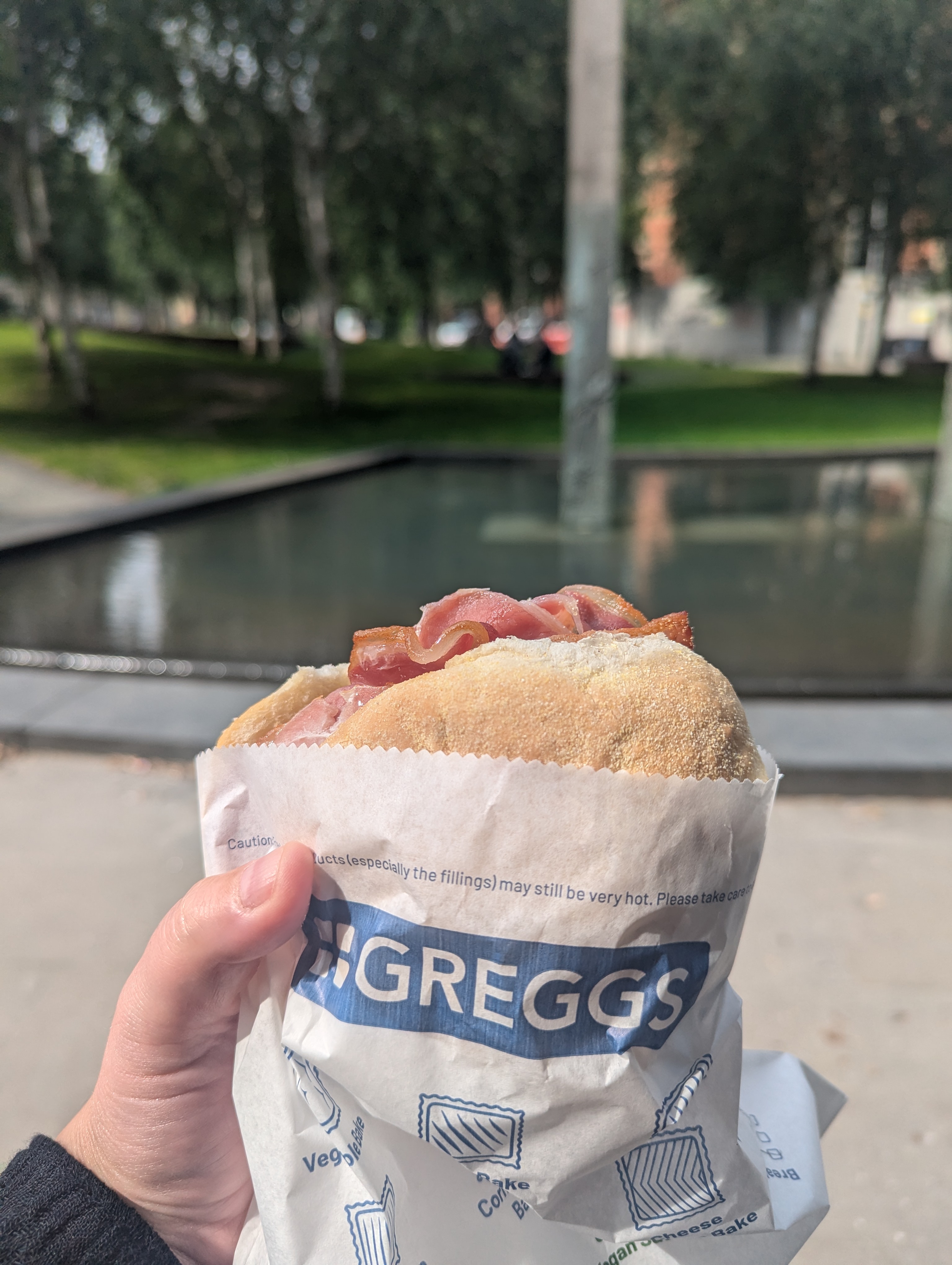
I had a Greggs bacon butty for the first time in years on my way to the bus station in Manchester, and honestly, it was showstopping. How they continue to operate a business while giving each customer upwards of five rashers of bacon, I will never know. But I appreciate it.


The best recipes I followed this month were mostly accompanied by Maroulosalada, an incredibly simple but totally delicious Greek salad made, this time, by Instagram chef Chef Marinie, whose Greek recipes are always simple to follow and perfect in execution. She has a new series out where she is making Greek/Indian fusion and I’m going to try all of them.


I love making veggie lasagne, and I made a great one this month. I stole the tricks I use from my friend Bridie, who was once a chef. She says the best lasagnes:

  • Have as many layers as you can manage to pile

  • The white sauce is mixed with the meat or veg filling with some white sauce retained—this way each layer is creamy AND full of filling, and you have some white sauce left to pour on the top before adding your grated cheese for the oven

  • The filling is cooked down well, almost dry, so the white sauce can incorporate and won’t be too wet (this is especially important for vegetable-based lasagnes as the water content is so much higher to begin with)

As you know, I’m not much of an exact recipe cook, but here is how I made my July lasagne.

July Lasagne

Filling

  • 1 courgette

  • 1 red onion

  • 1 carrot

  • 2 Romano peppers (just use red peppers, these were on offer)

  • Handful of spinach

  • Four tomatoes or a can of plum tomatoes

  • Tomato paste

  • 4 cloves garlic

  • Dried oregano

  • Black pepper

  • Salt

  • Lasagne sheets

White Sauce

  • Like, 70g butter?

  • About 2 tbsp. plain flour—enough to make a roux but not crumbs

  • Whole milk (or oat milk, whatever you use)

  • A big load of finely grated Grana Padana

  • Nutmeg

  • Salt

  • Pepper

Method

  1. Chop all the vegetables except the onion and garlic roughly into small cubes and keep separate so you can add them to the pan at different times.

  2. Finely chop the onion and add to a large pan with olive oil or cooking oil of your choice. There is a cost of living crisis going on, sunflower oil is fine, so is rapeseed.

  3. Turn the heat to about medium.

  4. Once the onion is cooked but not browning, crush or grate or chop your garlic (I like to chop) and add to the pan. Stir and stop it from browning.

  5. At this point I add salt and pepper, not sure it’s important when you add it but it stops me from forgetting later.

  6. Add the chopped courgette and carrot and let them cook down until they are soft.

  7. Add the peppers—they don’t take as long to cook.

  8. Add the chopped tomatoes or can of tomatoes in juice. Add tomato paste and dried oregano and stir well. Turn the heat up a little so the pan is bubbling and the liquid is cooking down but do not let it catch on the bottom of the pan. Keep stirring often. Keep your eye on it.

  9. Add the spinach and again, let the veg cook down well. Turn the heat down if it’s getting a bit violent. Once it’s getting close to a thick sauce rather than a pan of veg stock, turn the heat down to a lower temp so you can make the white sauce without burning the filling.

  10. Add the butter to a saucepan and melt it at a low-medium temperature.

  11. Add the flour to the melted butter, and mix with a whisk. Keep it cooking on that low-medium heat until the mixture smells like pastry rather than raw flour. It takes a couple of minutes.

  12. Add milk bit by bit, and whisk as you go—the first half cup or so will interact with the flour and make a thick paste. Keep mixing so there are no lumps and keep going with more milk additions. It’s fine. This is what’s supposed to happen.

  13. Keep adding milk every time you’ve incorporated the last splash until the mixture is a creamy sauce. Don’t add too much, because you want a sauce, not white water.

  14. In total you’ll probably use about 3/4 of a pint of milk. Sorry for the imperial measurement, I get milk in pints. What’s that, about 350/400ml? Something like that.

  15. Add a dash of nutmeg, salt and pepper to taste, and then plonk a big great handful or two of grated Grana Padano cheese into the sauce and stir it in. This will make it a little thicker and incredibly delicious. (Secret cheat code: You can use any cheese, I just like this one and always have some in the fridge somewhere for making sauces like this. Try your cheapo mature cheddar butty cheese, it’ll be fine.)

  16. Get a lasagne-friendly baking dish out and turn the oven on to 180 degrees centigrade. My oven is a fan oven but is also temperamental as hell so I cook everything at 200 degrees and hail Mary. This is also why I don’t have exact timings for anything.

  17. Turn off the filling pan and give it a stir for good luck, and tell it how good it’s going to taste. Add in about 3/4 of the white, cheesy sauce you made from scratch, and stir it all together.

  18. Add a thin layer of this combined filling to the bottom of your dish, then layer lasagne sheets on top. Repeat as many times as you can.

  19. When you reach the top of the dish, instead of using the filling (which I would hope is all used up by this point unless you had the foresight to double batch it, in which case absolutely fair play), pour on the remaining white sauce to cover the pasta sheets, and grate over a whole lot more cheese. Again, use whatever you like, I just like Grana Padano for whatever reason. Gouda and its Dutch friends are always cheap in Lidl and melt really nicely. Mozzarella, imo, is too stringy and doesn’t taste of enough. It makes my lasagne taste a bit like pizza, which I hate. If I want pizza, I’ll have pizza.

  20. Bake in the oven for as long as it takes to brown the cheese. I would say give it at least 25 minutes in there, because you need to cook the pasta through too. If your oven is as much of an asshole as mine, put foil over the top f the cheese starts to brown prematurely so you can get it all to cook properly. Then whip it off for the last 5 mins for a bit of crust.

  21. This bit is vital: Leave it to stand for AT LEAST 5 minutes. Maybe longer. I like to make the salad once the lasagne is out of the oven, so I’m not tempted to cut into it too early. You want the layers to find their place in the world, and the filling to get a bit of structural integrity. Serve it up too early and you’ll have plates of sauce with pasta sheets floating on top, all of it hotter than a Lanzarote patio at midday. Chill. Pour a glass of wine. Throw some garlic bread in the oven while it’s still hot. Tell everyone food is ready—that’ll be another 20 mins before they get sat down anyway.

The Swan With Two Necks

A cutting from the editorial floor to get you pumped for my full story, published on Wednesday 3 July.

This story will be published in full on Wednesday 3 July by Pellicle. The Swan With Two Necks is a local institution here in the Ribble valley, and I’m thrilled to be singing its praises on such a large platform, to readers all over the world.


In 1990, The Swan With Two Necks also became a Post Office branch.

“Basically there was nowhere else, so the Post Office rang us and asked us if we could do it,” says Christine Dilworth, the Swan’s landlady. “We were one of the first pubs to do this.”

The Post Office work, which Christine used to do two mornings a week, put them in touch with locals who they’d never normally see, who began to come in for their lunch and stay for a chat. Then, they started to have issues with the combined businesses.

“The Horizon computer just wouldn’t balance,” explains Christine.

“Then a local Post Office was robbed, and I decided I couldn’t do it on my own anymore. It was a shame really, because the week we decided to close our Post Office branch, the one in Barrow closed too.”

Barrow is a small village around five miles away from Pendleton, and despite the obvious stress of running an extra business on top of a very busy local pub, and their near miss with the Horizon IT scandal, it’s still clear to see that Christine still feels that her duty is with the local community.

Read the full piece on Pellicle from Wednesday 3 July!


When we think about pubs and the difficulties they face, our experiences are often clouded by the extremities of the Covid 19 pandemic and its long-reaching problems for the hospitality industry. The truth is, and this was underlined many times by both Christine and her husband Stephen when I spoke to them, that running a pub has never been an idyllic way of life. As well as its positives, it has always been fraught with outside interference and hardships.

The Dilworth’s close call with what later became the Horizon computer scandal is just one story of many that shows how precarious a pub owner’s livelihood can be. It is never a simple case of owning the pub, choosing the beers, serving the customers. There will always, unfortunately, be businesses to please, contracts to honour, and outside interests to fight off. That Christine wanted to double her workload to become the village’s only post office desk whilst running a very busy pub is testament to her dedication to her role in the centre of her community—but it also shows how people with the best intentions are taken advantage of. Had things turned out differently, The Swan With Two Necks could have been yet another Horizon scandal victim, or worse, and it doesn’t escape my mind that this would have meant almost certain closure.

That we still have The Swan With Two Necks with Christine and Stephen at the helm is a minor miracle—you’ll read all about it tomorrow—and one I don’t take for granted. They are part of the generation of publicans that truly live and breath their craft, and I’m grateful to learn from them, and call them my friends. When they finally retire, I’m not sure how the local pub scene will look. But then, it’s not their job to uphold standards for everybody. They simply love running their pub, and they do it well. I can only hope there are still people out there who want to do the same. I certainly don’t think I have the mettle for it anymore.

Wick – The Secret Garden's message of hope

Accents and local dialect, when used sensitively, add more dimension and context to text than any number of descriptive passages. In my opinion.

This piece was originally written for the journal Off Assignment, who were very lovely throughout the process but in the end, it wasn’t quite right for them. I hope you enjoy it.


Where I come from in the north of England, we have words for things that don’t exist elsewhere, and accents that bypass words altogether, making sentences clipped, personal, and efficient all at once. When I was younger, I loved cutting “the” down into “t’”, feeling older and wiser, speaking like a grownup. I was told over and over again to speak properly. This parrying of proper speech versus local dialect in my country has lived with me ever since.

Katie Mather’s The Gulp is a reader-supported publication. To receive new posts and support my work, consider becoming a free or paid subscriber.

Because—why should local accents be massaged out? Detoxed through homespun speech therapy applied at home, the knots of its history and sense of place smoothed into the beige insincerity of the “proper” English accent. I knew that “gan yam” means “to go home” in the Cumbrian dialect, that dish is another word for face, and that “how’s tha’ diddlin’?” was a much warmer, funnier way to say “how’s things?” The words I came across in my muddled area of the north west were from Cumbria, North Yorkshire, and deepest Lancashire, and I repeated them as much as I could. Knowing there were other ways to speak, besides the given language I was taught in school, felt rebellious and free. It made the country I lived in seem big and wild.

During the 90s it was rare to hear northern accents on the radio or on the telly without them being used as part of a character’s personality and a marker of their socio-economic standing. Coronation Street was a steadfastly working class soap made from a patchwork of northern stereotypes—the heavy drinking odd-jobber, the gossiping old ladies in their press-studded aprons and shampoo and set hairstyles, the thickly-accented butcher, the simple nephew being groomed to take over the family business, the mill owner (okay, he actually ran an underwear and lingerie factory.) We didn’t watch it in our house. The newsreaders on every channel had fascinatingly smart accents from another world. Any comedy show was populated by southern voices. Northern accents were shorthand for poverty, crime, luddites (well, we did invent the movement) and ripe for patronisation.

In Frances Hodgeson Burnett’s book The Secret Garden, dialect and slang are used to separate the lower classes from the higher members of society, but rather than place prominence on the well-spoken characters, Burnett ensures her use of dialect is sympathetic and characteristic—it is never used as a tool with which to mock or belittle. Of course, it’s the servants and outliers of society who speak this way, but I can forgive her. It’s representative of its time. Mr. Archibald Craven, the master of Mistlethwaite Manor, might have a North Yorkshire surname, but he didn’t seem to pick up many colloquialisms on the aristocratic circuit. Nor did the actor who played him in the 1993 film adaptation, which I have watched many hundreds of times. He was not the focus of my attention, though. The resonance of a word I learned from this book has carried through, long into my adult life: the word “wick”. A word from Yorkshire, derived from Old English, its closest definition is “alive”. That one word doesn’t do the trick, though. Wick was taken from its use as a description of a candlewick to be used to share something the word “alive” can’t portray—a potential for life. A living energy. It is a bigger word than any of its closest synonyms. In The Secret Garden, the character Dickon—a child, a gardener, a wanderer—uses it to show life hidden within the most hidden places. The glow of green in a winter-blackened rose stem felt like it was so much more than merely alive. And it was. It was wick.

This book has travelled with me as my favourite story since I first read it as a child. The gothic nature of the stately home enthralled me, and the spookiness of being lonely was captivatingly familiar. I felt close to the main character, Mary Lennox, even though we had very little in common—she was high-born in India to wealthy parents, then orphaned by cholera, then sent to live in a grand mansion in the Yorkshire Dales. I was, during my first few readings of the book, a normal working class schoolgirl in Lancashire, who lived in a semi-detached house with no secrets to speak of.

It was only when Mary left the confines of the great house to explore the cold earth of its gardens that we began to get along. I too spent hours at a time alone in the garden, picking at the mud and lichen on unusual rocks, collecting dead twigs for birds’ nests, and looking closely enough at the grass that I could see the individual spears rising up from the ground, ants and woodlice crawling among it as though it were a bamboo forest. The smell of damp earth was comforting to me, and in the pages of The Secret Garden I could smell it, and I understood what the book meant when Mary became stronger and brighter because of it.

The garden wasn’t Mary’s only saviour, though. Her chambermaid Martha breezed through her sour personality and RP accent like a stiff westerly wind on wash day, feeding her good, nourishing food and treating her with kindness she had never received before, all with the straightforward, no-nonsense attitude and thoughtful vocabulary of a local Yorkshirewoman. There were lessons for Mary, and for me, in these scenes where the two were together—the young woman and the child at odds, a gulf of class between them. Instead of retreating, Martha bridges the gap, teaching Mary words from her dialect that helped her understand her surroundings that little bit more, introducing her to a world less opulent but more alive than she had ever known. To Mary, the only appropriate way to describe the moors is in Martha’s voice, and with the words that Dickon teaches her. There are some things that can’t be translated.

“I told thee tha’d like th’ moor after a bit. Just you wait till you see th’ gold-colored gorse blossoms an’ th’ blossoms o’ th’ broom, an’ th’ heather flowerin’, all purple bells, an’ hundreds o’ butterflies flutterin’ an’ bees hummin’ an’ skylarks soarin’ up an’ singin’. You’ll want to get out on it at sunrise an’ live out on it all day like Dickon does.”

Wick is the lesson that Dickon gave us all. To care even while all looks desolate and dead, knowing that life will spring up again is hope in its most pure form. Teaching such a vibrant, beautiful word to me, a girl who was lonely and insular, was a powerful magic. Within all things there is life that can be nurtured and can once again bloom. Wick is not just a gardening term—it’s not easily translated. Wick holds within it the power of nature. It is a word that means resurrection and joy and summer sunshine, and the smell of gorse and fresh, green leaves. It sounds like the wind rushing through the long grasses of marshy hilltops, and wet footsteps in the mud, and it looks like cold, spring sunshine so bright it can shine through closed eyelids. And to Mary, it means connection too, the use of a local word binding her more closely to a place she’s beginning to call home. The core of the rose stem that glows green is wick, and that core remains one of the most important and enduring images in literature to me. Amongst the abandoned and the dead there is life. Under every pile of rotten leaves there are new shoots. Winter never lasts forever. We can begin again.

Katie Mather’s The Gulp is a reader-supported publication. To receive new posts and support my work, consider becoming a free or paid subscriber.

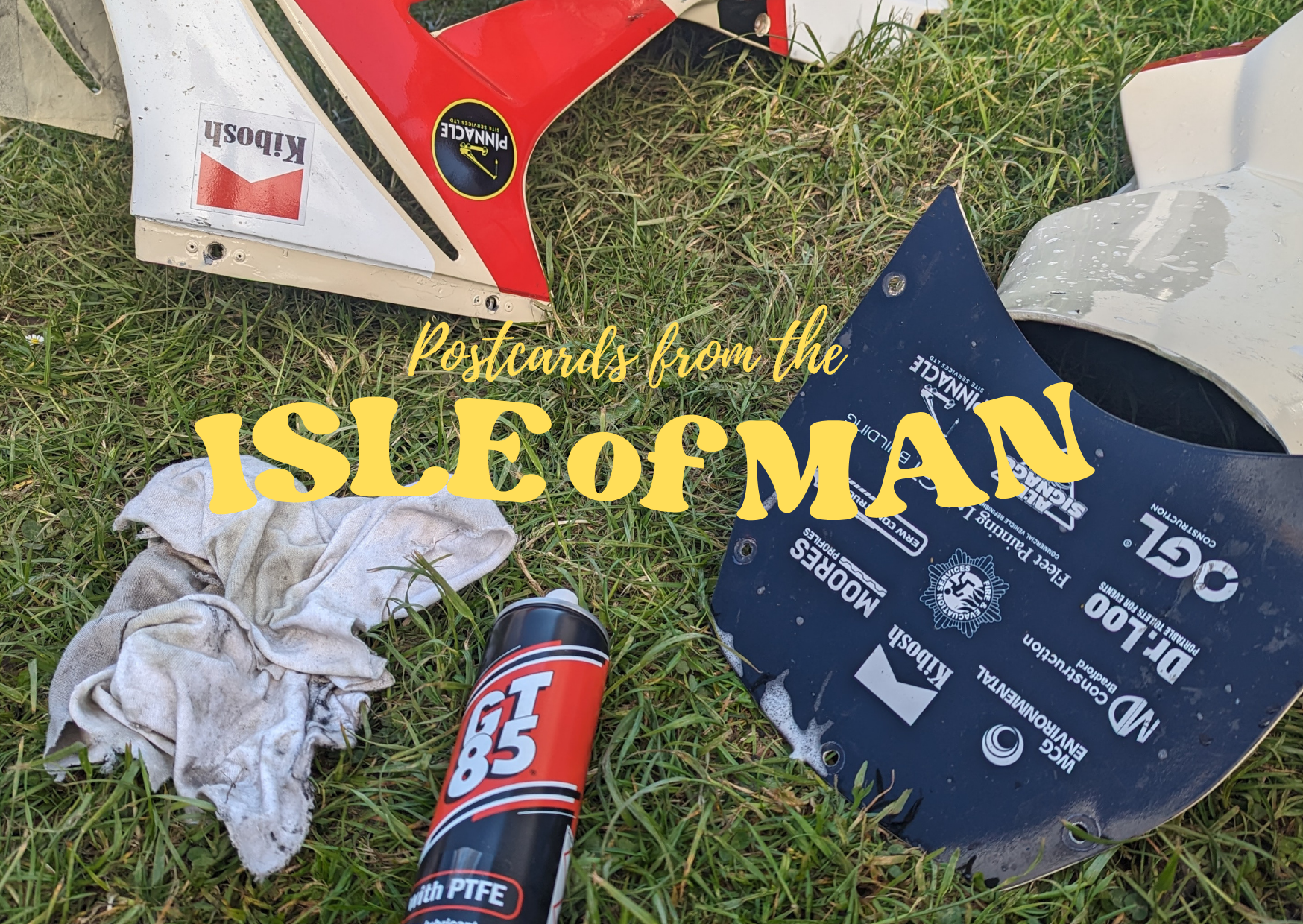
Postcards from the Isle of Man: Attention Paddock

A week in the awning surrounded by engine bits.

This is my first foray into writing a newsletter on my phone, so if you notice any typos, please don’t tell me.

This past week has been seven long days of practice sessions, qualifying sessions, bike fixing, and a couple of races. The first Superbike and Supersport races roared over the island at the weekend, and after nights of hearing bikes screaming on the dyno I finally got to watch them take flight from the Grandstand and down Bray Hill.

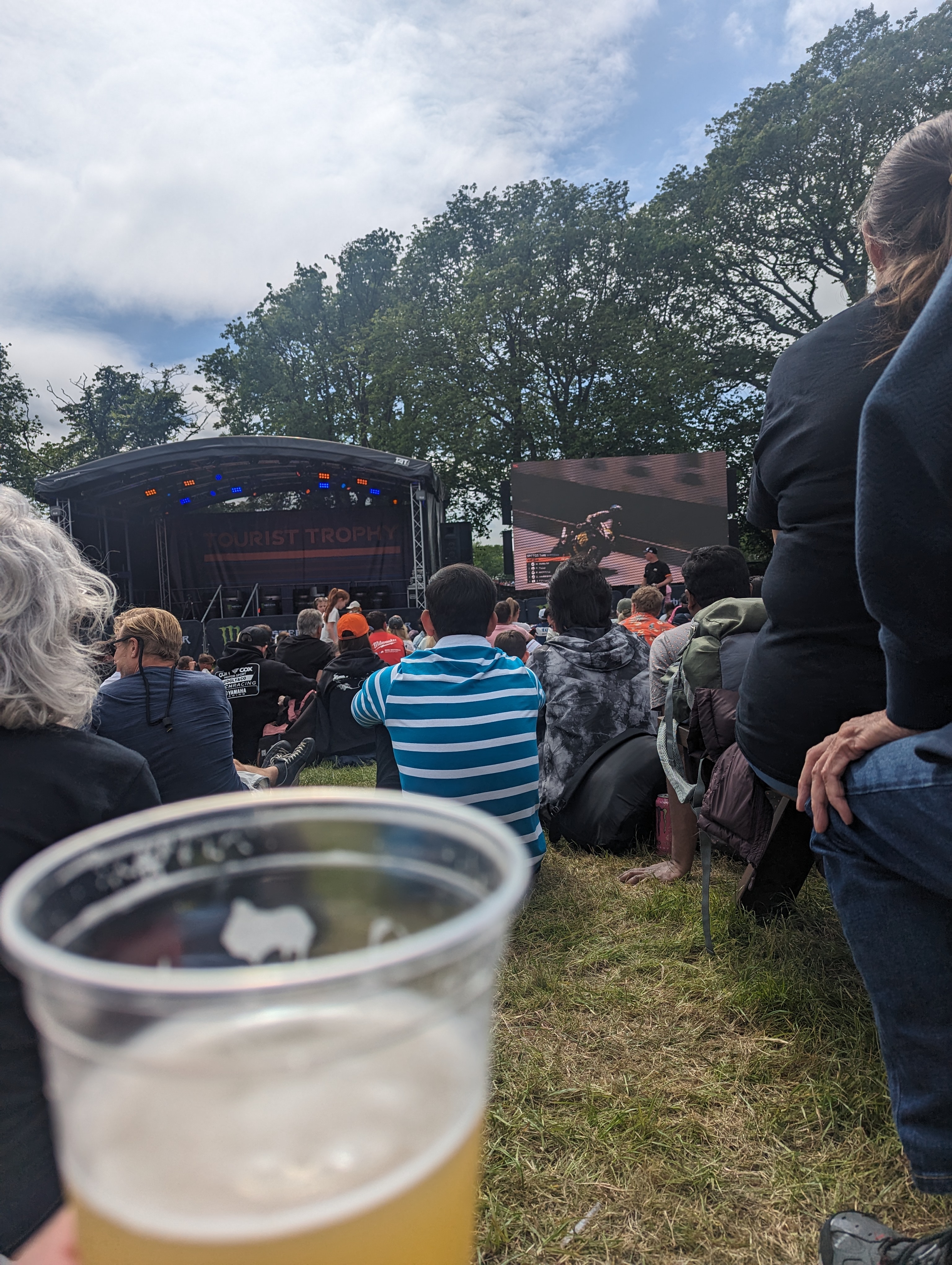
Usually I watch from the hedges, but we’ve been busy in the paddock all week so I’ve become a regular at Trackside, the fan park bar. I’ve never really spent much time there in previous years—it’s a great place for a pint while the racers cross the finish line, but I’ve tended to use it as a pre-drinks place until now. This year, I’m on my own a lot while Tom and the rest of the team fettle and clean and do complicated-sounding data analysis, so having somewhere to be right in the thick of it when I haven’t got time to travel to Hillberry or Ballagary or Ramsey has been a super bonus find. The screens show the live coverage, you’re right beside the track—as the name would suggest—so you can hear the bikes roaring out of the pits, there’s a wine bar run by local wine shop Vino, and it feels totally safe. I get a burger and a beer, sit down on the grass in front of the big screens and the stage (yep, there’s a stage) and live my version of a festival lifestyle. It’s ideal. It’s heaven.

Inside the beer tent it’s a different vibe, and I’ve decided I love it. At the back of the park the queue for beer is long, but it goes fast, and while you wait you can watch the race coverage and overhear race gossip and outlandish claims about tenuous links to racers, the gear they’re using, and who’s going to win. Stand inside the tent to watch the screens and you’re transported to a European sports bar, you know the type, where everyone is raising their plastic cups and cheering one minute, and shouting mean expletives the next. Groups of men in matching shirts buy Carling in rounds, and get increasingly demonstrative with each other, arms around shoulders, laughs getting louder. It’s been sunny and we’re all a little red, excited to be brought together watching a sport we all love. Except this is not usual, we’re not watching football. We’re at the TT, and we’re experiencing it together. A man slaps Tom on the shoulder and wishes us well—we’re wearing our Butterfields of Skipton Shaun Anderson team shirts. Davey Todd posts a faster lap than Dunlop—there’s an uproar. Dunlop comes back—more cheering. I’ve somehow found my people, and they are, inexplicably, unexpectedly, totally improbably, drunk middle aged men dressed in motorcycle merch.

A New Mini Project: Postcards from the Isle of Man

Two weeks on the island, loads of things to show you

It’s that time of the year again when I can’t sleep at night because thoughts of sunny hedgerows and shiny Fireblades are consuming every microunit of my brain. Next week the TT Races begins for me, and on Monday I’ll be heading over on the ferry (yes, the Manxman) to spend 17 days living in my van, enjoying the scenery, working in a cafe, and most importantly, watching motorbikes race very, very fast around the Mountain Course.

While I’m over there I’ve got a lot of interesting and exciting things to do—it’s not all bikes this year. I’ve decided to document the vibrant food and drink scene of the Isle of Man, as well as its beautiful landscapes and everything else I love about it, in a newsletter mini-series. Remember PROCESS? Like that, but free.

I’m hoping to write a short postcard of a post at least every three days, perhaps more often if I can grab enough time, with at least a couple of interviews with local producers sprinkled in there too. I want to show what it’s really like over there during the TT fortnight, from the total global chaos of the races to the parts of the island that never change.

I’m really excited about this project because I love the Isle of Man, and I hope this series can show how truly weird and wonderful it is—the epitome of tradition meets modernity.

Maybe I’ll also see a basking shark!

Of course, while I’m visiting the island anyway, traveling around while I’m there will take time and money, and although I’ll be working while I’m there—a freelancer never holidays—I really would appreciate your support to make this series a success.

If you’d like to chip in for any bus fares (honestly the buses on the island are great? how do they do it?) and parking fees and the like, it means that I can do even more while I’m there, and write even more stories about what I get up to.

You can send any tips or contributions tome through my PaypalMe link.

Thank you so much! I can’t wait to get this series started.

Katie xox

Thank you for reading Katie Mather’s The Gulp. This post is public so feel free to share it.

Share