Unpopular Opinion: Pubs aren't just for adults

Pubs are places to socialise, why should children miss out?

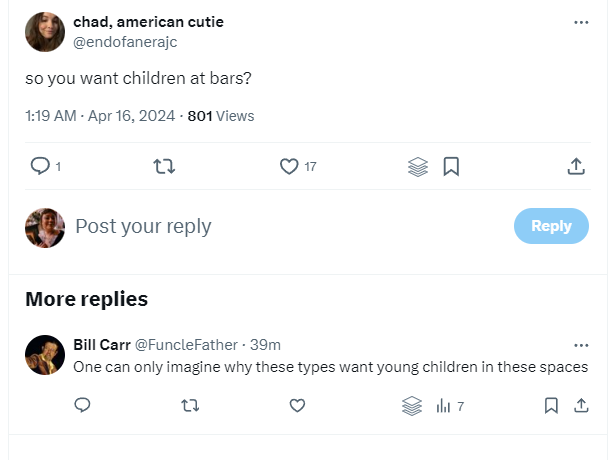
It’s not a new debate—God knows it’s been the favourite boring rant of grumpy pub-goers for as long as I’ve been drinking. Children shouldn’t be allowed in bars. People have opinions on this. Very big feelings about it. It results in some acutely unhinged discourse that only social media could germinate, as seen here in this incredible exchange.

First tweet reads: So you want children at bars? Second tweet reads: One can only imagine why these types want young children in these spaces

Yes, it seems that people who don’t mind children in pubs and bars are obviously paedophiles. I honestly feel like X can’t shock me anymore, and then someone else with a sock account goes ahead and flummoxes me beyond prior flummoxation.

The thing is, I don’t have a problem with children in pubs, and I’ve never understood the common misanthropic personality trait of pretending to hate kids (to the extremes of calling them “crotch goblins” in some cases, a truly curséd term used only by total fucking idiots.) When you think of a child-hater, who do you think of? An older gent, trying miserably to enjoy a beer while an admittedly annoying little brat runs circles around his table? Fair enough. But in my experience, the people who claim to hate children, and make a big deal out of this fact about themselves, are younger. They are around 20-35 years old, and they invariably claim to like dogs better. Of course, personal choice is absolutely valid. It shows that they prefer unconditional love. Who doesn’t? What I find distasteful is the absolute disdain for children and their existence anywhere near their personal space. It’s brutally Victorian. It’s outmoded. It’s—I’m going to say it—it’s selfish.

Selfish in the true sense of the word, of only thinking of one’s self. The problem is, pubs are not made just for one individual’s comfort. They are places of socialisation and congregation, where groups of people of different ages, cultures, classes and education bump shoulders, relax, and enjoy themselves. Many adults of drinking age have children. Are we saying they should never visit the pub in case their child, who is still learning how to act within the convoluted and mostly-unspoken sphere of English societal rules and norms, makes a noise?

But some children are badly behaved!

Yes! They can be little shits! Guess what? So can adults, especially drunk adults. Both can be asked to be quiet, and to leave. If a bar or pub is not dealing with a badly behaved child “running around” (as is normally suggested by child-haters) then that is a safety issue, and the child’s adults should be asked to take responsibility. If that is not happening, if you have raised your concerns and nothing has been done, I’m afraid you are in a bad pub. Just as when I threw out a man for belligerently ranting anti-LBGTQIA+ nonsense from my bar, and just as when I had to ask somebody to leave because their dog was harassing everyone for food, bad behaviour isn’t cool and it should be properly dealt with.

Children are mostly not bad. In fact, most children are really sweet, polite, and caring. If you speak to them, not across them or over their heads, they have interesting things to say. My bar would not have been the same without our child customers. I would not be the same without my childhood pub visits. It’s where I learned to love them, and it’s where I learned to talk to people, and to listen to their stories. There doesn’t need to be an active appreciation of the children in or near your space—basic tolerance and human decency will do. Ignorance works too, especially if they are nowhere near you. If you ban children from these formative experiences, from spending time around adults of all ages outside of their family unit, they will not use the pub when they are old enough to, believing they are off-limits. And they will continue to close. And you will only have yourself to blame.

Thank you for reading Katie Mather’s The Gulp. This post is public so feel free to share it.

Share

If you enjoyed this mini essay and would like to support my work other than by paying for a subscription to this newsletter, you can buy me a very much appreciated coffee here. Thank you.

The Enduring Millennial Aesthetic of White Rat

Unlike gold pineapples and moustaches on t-shirts, White Rat is still great.

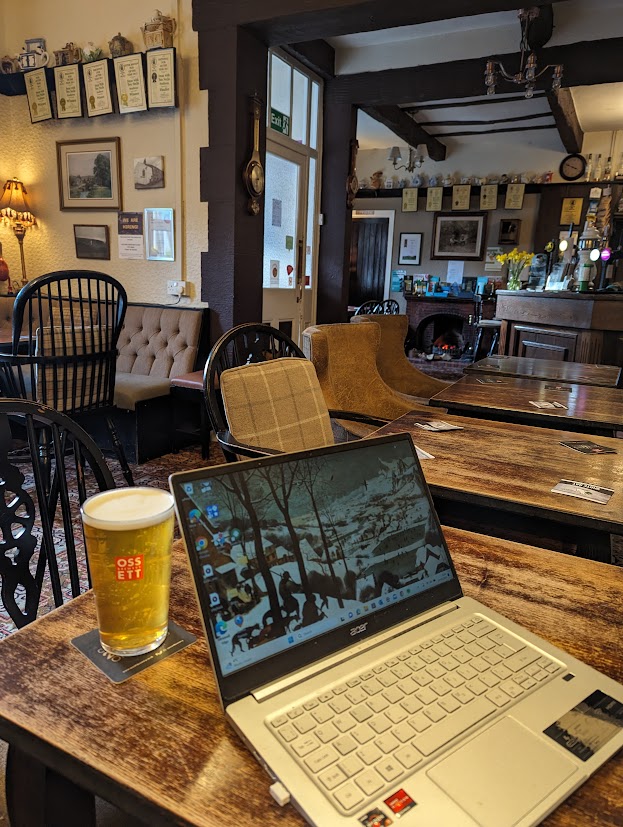
I sit in the farthest corner of The Swan With Two Necks in Pendleton, warming my chilly legs by the coal fire. During quiet times, which I’ve learned are mid-afternoon on Wednesday and Thursday, Christine lets me use my laptop to get some work done (normally a bit of a faux-pas) and the modernity of the screen and backlit keys look bizarre against the antique teapot collection and the classic pub carpet.

The pint in my hand is an Ossett Brewery White Rat. This pub always has it on, and perhaps it’s for that reason I forgot all about it for a little while. Like a photo in a frame of someone you love, it became a cherished ornament rather than something I paid clear attention to. What a foolish thing to do.

A good pint of White Rat is fresh, so fresh. It has the nostalgic joy of drinking juicy, grapefruit-pith-bitter IPAs when they were exciting. Its lemony, tangerine aroma sends a little shiver of happiness down my spine. I drink White Rat and I remember how good beer can be when it’s well made. Simple, but ideal. First brewed in September 2011, around about the time chevrons and HD brows were taking the world by storm, White Rat began its life as Lab Rat, a test brew and the first beer brewed at the Rat Brewery in Huddersfield. 

Originally the beer was brewed with Cascade and Amarillo, “…and a smidgen of Admiral for bitterness,” head brewer Paul Spencer tells me. Unfortunately in 2012 the bitterness boom saw Amarillo becoming something of a rare commodity, so Paul changed the recipe to share the load between Amarillo and Columbus. The recipe remains the same to this very day. That’s 12 years of perfection.

“I feel like it nods towards classic American pales with its bitterness,” says Paul.

“At the time, I was heavily into bitter, hoppy American pales and was probably drinking stuff like Oakham Bishop’s Farewell and Hawkshead Windermere Pale. White Rat was definitely a tribute to those sort of beers.”

I love it, as you can probably tell. It feels modern to me, but being 12 years old in its current form, it really isn’t. I suppose just like Koi No Yokan feels like a new Deftones album to me, my age has a lot to do with this warping of time. Drinking it in the setting of The Swan With Two Necks is a sort-of delightful culture shock, surrounded by Edwardian trinkets and classic pub décor, understanding that a very punchy pale ale in the key of Sierra Nevada is now as comfortable in this setting as a bitter. And White Rat has done that.

Other Stuff

My Stuff

I, with as easy hunger, take
entire my season’s dole;
welcome the ripe, the sweet, the sour,
the hollow and the whole.

  • If you are at the International Brewing and Cider Festival in Manchester this weekend, come and say hello to me. I will be helping man the Nightingale Cider stand.

Creative "Work"

When will I take the quotation marks off?

Last week I had a lovely few pints with friends (which, as we all know from X discourse this week, is the ultimate sign of addiction and dependency) and something came up, like it always does. I found it difficult—impossible even—to explain what I was up to at work.

It used to be that I could rhyme off marketing campaigns and talk about weird and hilarious things that had happened on a company social media account that week, or about how a middle manager had pissed me off, or how I was looking for a promotion elsewhere at a different company. But now… I’m too literal. I say I’ve been typing. I say I’ve been sat in the house most days, “doing my writing”. I talk about how many articles I’ve written, but I don’t often, or ever say what I was writing, or what I’ve been researching, or what I’ve planned for my upcoming months of “sitting at my desk.”

Tom prompts me to talk about who I’ve spoken to in interviews, and what exactly I’ve been writing about. He remembers what I’ve had published recently, and he encourages me to elaborate. “But it wasn’t just a few emails was it? You were sending out book proposals.” I appreciate it, but I find it excruciating. I don’t know why.

A friend asked me about creative work, and how it differs from “regular work” and it was a super interesting conversation to have. I often feel like my brain is on fire after a good afternoon of writing, and that’s just part of the deal—I get a few hours of inspiration and focus, and then I have to lie down on the sofa and play my stupid colour matching game on my phone and watch Bones until I come back to earth again. I never felt this level of mental exhaustion at a “regular” job. I asked my friend how he felt after a day at work, his job being strenuous and mentally taxing in its own way, and he just said he was tired but not overworked. He said he found working on creative things far more exhausting. I hadn’t ever thought of my job as tiring until then. It just comes as part of the gig—I’m lucky enough to be able to work from home every day, doing something I love, making enough money to get by and occasionally do other things I love.

Sorry. It’s not luck. I’m working on this, give me a sec.

I worked hard all my life to enable myself to do this job. As a kid I wrote stories on the back of pictures I drew, as a kitchen dosser I wrote essays and song lyrics on blue roll and order pads when I should have been cleaning the walls with D2 and filling in The Cleaning Folder. Writing has always been something I can’t stop doing, but as someone who compulsively describes and romanticises everything all the time, why can’t I adequately describe my working week?

I suppose it sounds like a joke compared to the standardised expectation of a week’s work. We grow up and agree to spend 40+ hours in a workspace, wherever that is—a school, a hospital, an office, a factory, a restaurant—and that’s work. I’ve somehow decided I can circumvent that, and I work, generally, from 10.30am-3pm every weekday, unless I have overcommitted myself. What gives me the right!

Yes, I think that’s it. I’m embarrassed by my perceived laziness. Years of overwork, or the common societal belief that we should work far more than we should live our lives, or both, have implanted a sense of guilt into my psyche. I work hard, enough to burn out regularly, actually, but why do I feel the need to qualify myself with this information? Why is how hard we work more validating than the quality of the work we actually produce?

I doubt I will ever be able to accurately and confidently talk about my job without audibly adding quotation marks, but in order to ask others to take my writing seriously, I must start with taking it seriously myself.

Other Stuff

My Stuff

  • If you subscribe to Beer52’s boxes, please check out my stories in the latest Northern Ireland issue of Ferment. I’m really proud of both of them.

PROCESS 10: Processed Food and "Natural" Food

Do you know the difference?

This is the final instalment of my PROCESS series of essays about processed food. Thank you so much for reading and for subscribing to this newsletter. There will be no paid-only posts for the foreseeable future after this week, so if you would like to cancel your paid subscription once you’re finished reading these pieces, please do so! No hard feelings, I promise. Thanks again, Katie.

The processed food we eat today was invented for convenience. Rather than equalise the home workload among the whole family once women entered the workforce post-war, food was created to make cooking a more efficient process for them. Products were marketed towards women, who were told these processed foods and ready meals would make their lives easier. I don’t doubt that Angel Delight makes a super-rapid and delicious dessert, but I also don’t see why more of the family unit pitching in to make their own meals wasn’t as widely promoted. Can men not cook? Of course they can—as we know, they are some of the world’s top chefs. For some reason, processed foods were seen as the main and often the only option for the busy, working mother trying to have it all. God forbid someone else boil some water and peel some spuds.

The content below was originally paywalled.

Over time, consumer knowledge about what goes into our food has risen like a beautiful loaf of Warburton’s Toasty. Unfortunately, along with facts about the actual nutritional content of the food we buy, we have unwittingly absorbed bad science and outright lies about processed food too, fed to us by a plethora of spokespeople, from TV dieticians to online nutritionists. It gets confusing. Isn’t all processed food a little bit bad for you?

The NHS website has a page dedicated to providing information about eating processed foods, helpfully describing which foods are technically classed as processed foods. They include:

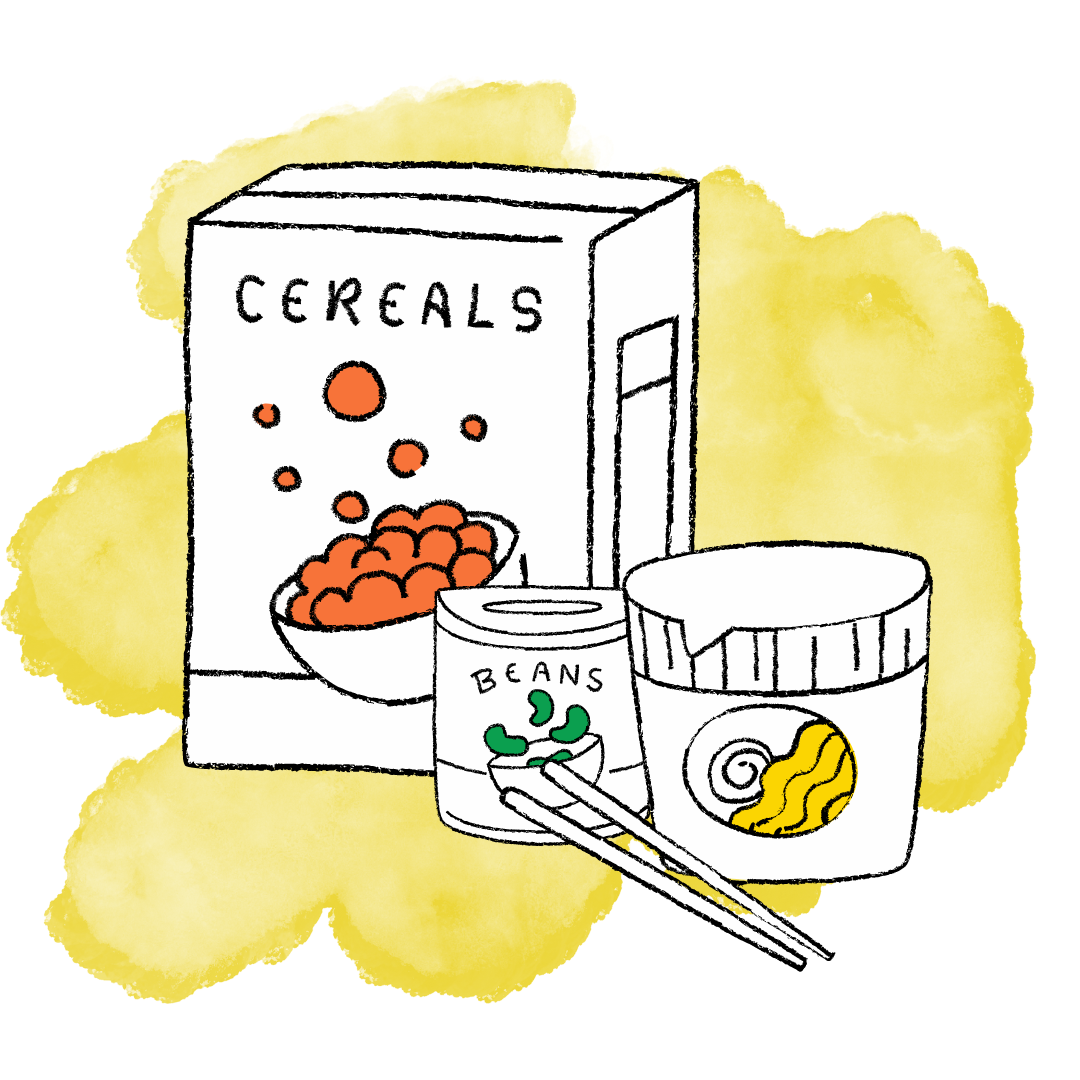
  • breakfast cereals

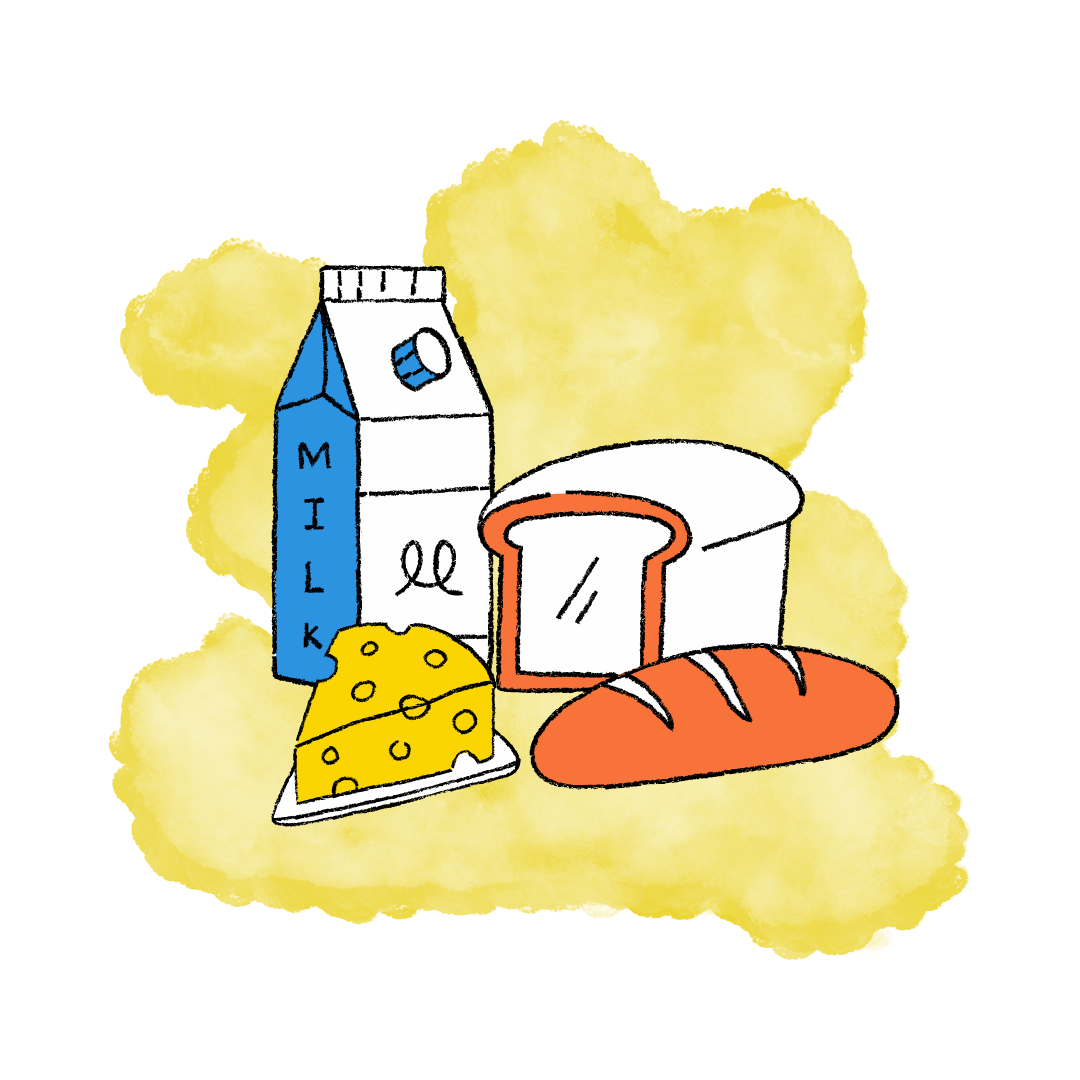
  • cheese

  • tinned vegetables

  • bread

  • savoury snacks, such as crisps, sausage rolls, pies and pasties

  • meat products, such as bacon, sausage, ham, salami and paté

    microwave meals or ready meals

  • cakes and biscuits

  • drinks, such as milk or soft drinks

As you can see, a huge proportion of our diet here in the UK is made up of processed foods, including some that are seen as “natural” or “pure”—produce like cheese, milk, and bread, for example. So why has it become a term that denotes food that is “bad” or of a lesser nutritional content?

If you were asking for my opinion, I’d say it was because we’ve been encouraged to see processed foods as the food of the poor. Decades of food programmes offering aspirational recipes featuring grass-fed beef and market-haggled root veg has made us make the distinction between good, honest food, and lazy, slovenly food. Who hasn’t sat with their tea on their knee watching River Cottage, feeling like absolute shit that you didn’t manage to get down the market for a freshly shot rabbit to make tikka masala with instead of your mass-produced Aldi chicken breasts? If I had a penny for every time Hugh Fearnley-Whittingstall made me revert to feeling like the poorest kid in school again, I’d be able to buy his whole fucking pile.

Slowly, however, there has been a change in the types of processed foods brought onto the market. Shoppers see original pre-packaged foods like tins of sausage and beans or Pot Noodles as a little bit rough and ready, a bit unhealthy. For years there have been campaigns about our health and wellbeing dedicated to the amount of salt, fat, and calories we eat, and processed foods are the foods that come under fire the most. So what did food companies and entrepreneurs do? Make their products appear healthier, of course. There has been an explosion of highly-processed foods seen as the future of food rather than the scourge of our diets and kitchens—products like vegan meat alternatives, plant milks, nut butters and cheeses, Huel, lab-grown meat, nootropic mushroom coffee, powdered greens, and pulse pastas. These foods are filling major gaps in our nutrition as a nation, adding flavour and variety to dishes where until very recently, there may well have been none. Imagine being a GF vegan allergic to nuts and then time-travelling to the 1980s. You would starve. What I’m saying is that none of these processed foods appear to us as being overtly unhealthy, despite being just as processed as their pals the Cup A Soup and the Babybel.

You can’t really make some foods healthier, no matter how many incremental changes to salt and fat content you make. Cheese is made of fat, whether it’s dairy or vegan. That’s where the magic of marketing copywriting comes in—a sector I’ve worked in for almost 14 years. Talk about the countryside, about happy animals or fresh ingredients, and you’re on your way to making an “unhealthy” product sound virtuous. (I write “unhealthy” in inverted commas because cheese obviously has calcium, protein, and numerous other good things in it as well as fat.)

This goes for all foods. The word “natural” can cover a multitude of sins. Calling your smoothie company “Innocent” can give you the ability to put 30% more sugar in your drinks that Coca Cola, and then sell 90% of your business to them. If you ever doubted the power of advertising’s hold on you, ask yourself why you chose one type of butter over another. I get Isle of Man Creamery because the label makes me think of the island’s beautiful, rolling countryside—even though it’s made in a factory on an industrial estate in Douglas. The cows eating Manx grass don’t make the butter any healthier than Lurpak or Kerrygold. It’s still processed.

Which brings me to my final thought nicely, I think. Does it really matter? Are you eating a balanced diet? Are you enjoying your meals? Are you getting what you need from the food you eat? Did you know that if you took off to the woods and lived off hunting rabbits, you actually wouldn’t digest enough nutrients to survive—it’s called Rabbit Starvation or protein poisoning?

Processed foods are not your enemy. I try to eat as many vegetables as I possibly can, and I’m a big fan of grains and pulses, but that doesn’t mean I won’t eat croissants, or hot dogs, or put hot sauce on things. Life is too short to worry about whether Spam will kill you. And remember, if you’re being told something authoritatively about nutrition without basis, someone is trying to sell you something.

When I say I want to go to the pub, what do I mean?

What exactly am I looking for?

My favourite thing in the world is going to an old pub for a pint. I love sitting in the peace of a bar room softly buzzing with the chit chat of locals and fellow drinkers, basking in the atmosphere of a place that’s been a second living room for generations of people.

I spend a lot of time researching places to visit. I live in a part of England that’s seemingly blessed with quaint old pubs, and yet there are so few of them that really fit my elusive parameters—so few of them boast every aspect I need to call them perfect. I thought it was about time I tried to consolidate these requirements of mine, to try and put into words what it is I’m looking for, to see if what I’m after isn’t just me wishing for the Moon Under Water. I travel quite far for a good pub, so I try and make sure I’m not wasting diesel. Imagine driving two hours around the winding roads of North Yorkshire to find you’ve arrived at a total dud.

When I’m searching for pubs to visit, the first thing that puts me off are renovations. So many beautiful country pubs in the Ribble Valley have had their character stripped in favour of light oak tables and pastel tartan. What keeps me interested are original beams, wonky floors, and horse brasses—or big, clichéd bunches of dried hops and age-tinted maps on the walls. Keep talking.

If reviews talk about “decent pub grub” I am likely to wonder about the price, quality, and selection of the beer. My next step is to check photos of their bar to see what they sell. Nine times out of ten, my suspicions about Pedigree and/or Doom Bar are confirmed.

Conversely, if a country pub has stunning reviews for its food, that pub is going to be hellishly busy, it will require a reservation, and it is not what I’m looking for. I will probably book to go for my tea sometime. I don’t want to have a pint there, because it’s a restaurant. I’ll feel like I’m taking up space, and I’ll overhear someone talking about struggling to fill their holiday lets.

When I get there, I want to feel comfortable and welcome, but left alone. I want a delicious pint of beer and plenty of fun trinkets to look at on the walls and shelves. I want to feel like I’m sat reading or playing cards just like a patron 150 years ago might have done in my spot.

I want to be chatted to when I go to the bar to choose from good selection of beer, and feel like the people who work here are looked after and enjoy being there. I love a real fire, but controversially, it’s not a dealbreaker. I do, however, award huge bonus points for hauntings, witch marks, and fascinating or gory local history that can be linked to the pub—however tentatively. Points are deducted for tourism-baiting, although I’m not too harsh on this right now. It’s a difficult industry out there. Beautiful views from the windows are a tick. Funny or interesting regulars are a tick. Classic bar snacks are a massive tick—pickled eggs, butties wrapped in clingfilm, or pies from a local butchers’ shop all tot the points right up.

I want a pint that’s so good I get two more of the same. I want to feel my shoulders relax and my cheeks ache with smiling—I want to feel happy. I want to be slightly sad when it’s time to leave.

Other Stuff

My Stuff

  • I’m writing a lot more for Ferment these days, so if you get Glug or Ferment magazines, you’ll see more of me in both.

  • My series of newsletters about processed food, PROCESS is coming into its penultimate week. Upgrade to a paid subscription to read the whole series so far and to be among the first to see what’s coming next.

  • I’m working on a lot more of my own work, which doesn’t bring me in any money. This is not ideal. If you have writing work you’d love to send my way, please get in touch!

    Country Pub – Philip Juras

    Katie Mather’s The Gulp is a reader-supported publication. To receive new posts and support my work, consider becoming a free or paid subscriber.

A Very Hoppy Christmas

A beery straight-to-Netflix Christmas film from my brain to yours.

Sydnie, our protagonist, sits at a taproom bench post-shift, white wellies and dungarees topping off her workwear look, a brown ponytail sticking out of her beige Carhartt beanie. She takes a sip of her West Coast IPA, and waits for the rest of the team to arrive to discuss the upcoming Christmas party. The wonky plastic Christmas tree by the bar drops another bauble. Decorating was never her greatest skill.

Every year, the brewery throws a community event to share out donated clothes, toiletries, and Christmas presents to the less fortunate. As well as a charity donation drive, she invites people from the local neighbourhood to stop by for food and drink, knowing that once, she was once living in poverty just half a mile away from the taproom. This year she hopes the party will be bigger and better than ever, bringing more people in from across the city, and she’s invited her friends from bigger, more famous breweries to attend to boost its profile. She’s excited about the prospect of making this event a citywide festival.

Once everybody arrives, talk moves from the beers that will be on tap and the food that’ll be served to the year ahead. The door opens and Sydnie walks over to explain that the taproom is closed. It’s the new owners, and they have a speech to make.

It’s been a slow year, and profits are not where they should be. Selling to a larger brewery co should have offered more security, but instead, it’s put Sydnie’s 10bl brewery right at the front of the executioner’s queue. With more expensive ingredients bought from local producers, and various other expenditures the other breweries in their portfolio had long since cut from their budgets, she doesn’t run a tight ship in their eyes. Rather than give her the opportunity to make cuts, they simply want her to close. Immediately.

“But what about the Christmas party?” her GM shouts. “What about the community?”

The suits don’t care. The party is money spent that they can’t afford to lose. And with that, and answering no further questions, they leave, giving the brewery just three weeks to clear up and empty the unit.

The next day, Sydnie gets a call from a local brewery owner called Brad. He has heard on the grapevine that things aren’t great, and wants to know how he can help.

“No offence, Brad, but there’s nothing you can do,” says Sydnie. “If I can’t make it work here, it’s done.”

Brad asks her to meet him for coffee and she tells him about having to cancel the community Christmas party.

“Without our yearly donations, the members of our community just wouldn’t have a Christmas,” she says.

“It’s too bad,” says Brad, drumming his tattooed fingers on the table. “I’m going to talk to as many people as I can and see what we can salvage.”

Sydnie doesn’t have much hope. Leaving the coffee shop and walking back to the brewery, she sees a shop window with a Santa Claus in it, lifting a stein up to cheers the festive season. It feels like a cruel joke.

The next couple of days are a whirlwind of activity, as Sydnie tries to organise moving out the already-donated gifts to a different location for storage and distribution, as well as finishing up her brewing schedule. Two weeks isn’t long enough to start anything new, and it’s barely long enough to complete what she’s already started. She looks sadly at her barrel project. Where will they go now? She hadn’t thought about herself until now. What will she do? Go back into lab work? This was her whole life and her dream career. How can this be happening? Walking through the city to meet a friend for a drink, she sees the beer stein Santa again, and she’s sure he winks at her.

The next day, a letter arrives at the brewery. It’s handwritten, and addressed to Sydnie.

Dear Sydnie
Please accept this gift as a thank you for all you’ve done for us over the past few years.
Yours with much love,
Firebird Brewing

Her friends at a local independent brewery had sent, not a cheque, but a USB drive, with a complete plan of how to organise the Christmas party at their place on it, complete with marketing ideas, playlists, ways she could get involved if she wanted to, and a promise to throw it for the next five years in the future too. What a load off her mind! It wasn’t going to save the brewery, but it meant that the community wasn’t going to miss out. What an incredible gift. She immediately calls the folks at Firebird to thank them, and asks them how they knew all the details to make such a thorough plan.

“Brad came over and helped us with it,” Lucy, the owner says. “It was a no-brainer. Honestly, get involved as much as you like, we don’t want to step on your toes and you can say no, but you’ve got so much to deal with right now, it’d be our pleasure to help you out and make things easier.”

The next morning before work, Sydnie walks to the beer-stein Santa again and stands in front of his sparkling window.

“What do I do?” she says out loud, as his mechanical arm lifts then drops his beer. “How do I save everyone’s jobs? What am I supposed to do?”

The door of the shop opens and a white haired and undoubtedly handsome man with small, gold-rimmed circular glasses walks out, carrying an A-board. It reads: “Mulled Wine. German Beer. Christmas Cheer.” Sydnie realised she’s never actually been in this shop before—she’d never noticed it before the Christmas display. Feeling embarrassed about being caught speaking to a mechanical Santa Claus, she turns to go.

“Wait!” says the man. She debates pretending she can’t hear him through her balaclava but then she feels a hand on her arm. “Is everything okay?”

Sydnie turns to face him and notices twinkling blue eyes with a kind crinkle, and a neatly-trimmed white moustache. Despite the snowy colour of his hair, he couldn’t be more than mid-40s. Before she can stop herself, she answers: “No. Not really. I was just talking to an animatronic fictional character.”

He smiles, and invites her into the shop. Inside, it’s a Christmas fairytale come to life. Decorated in holly and real fir trees, with traditional wooden ornaments, and fairy lights and candles on every surface, it smells like a cedar wood cabin, and cinnamon chai, and gingerbread, and marzipan. There are tables and sofas to sit at, and a mezzanine like a ski chalet with shelves of gifts and books. How could she have never noticed this place before?

She learns that his name is Klaus, and he fell in love with all things Christmas when he visited his grandparents in the Black Forest when he was a child. His dream had been to recreate that magic in the US, and when this shop came up for sale, he used part of his inheritance to set up the bar, café, and gift shop of his dreams.

“But what do you do the rest of the year?” Sydnie asks.

“I disappear,” he replies. “I go travelling.”

“All around the world,” she says. “Like Santa Claus.”

Klaus pours her a mug of mulled cherry beer, warming and spiked with orange and cloves, and she tells him more than she should about the problems at the brewery. She tells him about the community Christmas party, and she explains why she can’t figure out her next steps.

“I’m so used to working for myself,” she says, “I don’t want to go back to a big brewery team again. I love making my own beer and running a happy brew house. I love being part of the community.”

It was sad, talking through the details, because it made it real. But she was glad she had someone to talk to, even if it was a stranger.

The next weeks fly by, and as the brewery empties of its stock, it also empties of her brew family too—of course they would find new jobs, but it hurt all the same. Every goodbye was a tiny heartbreak. Then, just two days before the official closing day, it was time for the Christmas party.

How can you party when something so awful is happening to you? Sydnie put on her Christmas jumper, a Santa hat, and a smile, and heads to Firebird to join in with the festivities, hoping she can make it through without ranting, or crying, or both. There are hugs—so many hugs!—when she arrives, and a glass of festive stout is pushed into her hand by Brad.

“We hope you like what we’ve done,” he says. “But please get involved. Everyone wants to see you. You put in all the groundwork, it’s still your day.”

Being able to sit back and enjoy the atmosphere rather than being tied up in the logistics of the event is a new experience for Sydnie. It’s overwhelming, she thought, to see so many people so happy to be part of something so fun, and so important. Lucy’s decorations sparkled and glittered, and the DJ span only the most jolly Christmas party tunes. With people dancing and laughing all around her, swapping gifts and picking up donations, she decides that life goes on, no matter how damaging the setbacks.

She sees Klaus across the room before he sees her. What’s he doing here? Instead of heading towards the bar, he’s walking towards the DJ, who hands him a microphone. The music quietens then pauses, and everyone turns to look at the white haired stranger at the front of the room.

“Hello,” he says. “My name is Klaus, and I’m fairly new to this city. But I’ve learned so much about this neighbourhood and its community lately, and I’ve never lived somewhere where I felt more welcome. I opened my bar in town because of this city’s reputation for supporting independent businesses. I had no idea who I might meet. In fact, I met a wonderful, headstrong local businesswoman who, despite all her hard work and efforts, is being absolutely screwed by Big Business.”

Everybody boos.

“Lucy, can you come here a minute? Brad?”

Sydnie looks around in astonishment. What’s happening?

Lucy takes the microphone. “The community Christmas party is hugely important to everybody here,” she says. “But as you know, usually, it’s run by our friend, and yours, Sydnie West, at her brewery just across the way. What you might not know, is that Sydnie’s brewery is being shut down by its new owners. And we are appalled by that.”

Lucy hands the mic to Brad. “Sydnie, we can’t see your brewery go under like this. We have all been in our own worlds of debt and strife these past years, and we might not have been as much of an industry community lately because of that, but we know how to step up. You and your team deserve better than this. And when Klaus came to ask about the party and what he could do to help, we realised what we needed to do.”

Sydnie hopes to god they won’t ask her to go up and make a speech because there are no words left in her. The shock of it all has made her lightheaded, and she wants to sit down. Instead, Klaus takes the microphone back.

“We’ve worked out a plan,” he says. “All of us together, and your team, and we’re saving your brewery. And everyone is coming back.”

Lucy grabs the mic back. “Happy Christmas Sydnie! You deserve this! Here’s to having the Christmas Party with Sydnie next year again, and forever after that!”

The crowd cheers and claps and raises their drinks, and Sydnie downs her beer. Klaus finds her shortly and she asks him how they managed to do it.

“They only speak money,” he says, “and luckily I have that. I’ve always wanted to invest in a local business that cares about its people, and cares about Christmas as much as I do. You can make the beer for my bar, and I can have direct links with the community. This is a dream for me. I hope you don’t mind that we kept it a secret, but it wasn’t finalised until earlier today.”

“No,” says Sydnie, putting an arm around him. “But maybe we can talk about using your Christmas decorating skills around the place next year?”

THE END

Zingibeer: Dublin Spice

Dublin’s other perfect pint

I learned a lot on my trip to Dublin last weekend.

I learned that I can travel by plane now without a thousand rituals and a meltdown. I can just walk on board and sit down. I even slept.

I learned that time moves differently in the Irish National Gallery. Three hours passed like ten glorious minutes, as my skin absorbed the colours and brushstrokes. I learned I miss art galleries with an aching heart.

I learned while I stared at the beauty of St Stephen’s Green’s icy pond that while I live in the middle of the Lancashire countryside, I am starved of picturesque, landscaped green spaces. I learned that herons sit in trees and watch you watch them.

I learned that in Dublin, incredibly dressed manikins step out of Quality Street tins in immaculate shop window displays, metallic material folded, twisted, and wrapped like sweets.

I also learned that Guinness is not the only fruit. Sure, of course I drank my fair share and then some of Dublin-brewed Guinness. How could I not? But I was introduced to something truly revolutionary that might have changed my perspective on Dublin forever. Have you ever tried Zingibeer?

Katie Mather’s The Gulp is a reader-supported publication. To receive new posts and support my work, consider becoming a free or paid subscriber.

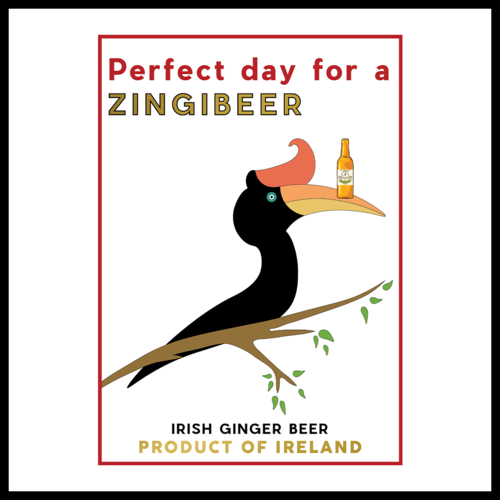
Brewed in Smithfield, on the north side of the Liffey, by a father and daughter team, Zingibeer is a fully-fermented ginger beer. Unlike the other famous pint around town, it’s totally clear. You’d be forgiven for thinking you’d been handed a pint of soda water with a wedge of lime in it. Rather than a beer with ginger beer added to it, Zingibeer is made as you would make it at home, if you’d ever tried, with a yeast mother and plenty of sugar. Once fermented, botanicals and lemon juice is added. That’s it.

It tastes like the warming ginger of a good hot toddy, like a spoonful of what Mary Poppins gives you when you come in from the rain, like a Masterchef contestant has had a go at making stem ginger fizzy cola bottles. It tastes elegant, like the way I wish Porsecco actually tasted—aromatic and just-sweet-enough and a little bit fiery. Moreish. And it’s served on draft so you can get a really satisfying gulp of it in one go, allowing your whole chest to light up with the peppery, golden glow.

I swear I didn’t believe it was alcoholic until I was dancing my arse off at a CMAT gig later in the evening. Zingibeer facilitated the most authentically Dublin experience I think I’ve ever had.

Other Stuff

My Stuff

  • Let me tell you a story. This week on the Pellicle podcast I read my Burger Van piece aloud.

  • I joined Beerlonging for their latest podcast episode, and talked about all sorts, from getting into beer writing, to running and then closing Corto.

  • Hwaet! zine has come back from the printers and is being sent out right now. I have a piece about witchcraft, women’s work, brewsters, alewives, and beer in it and you can buy a copy here.

  • My PROCESS series continues apace, you can read an excerpt of the latest story, about fizzy pop, here.

  • I’ve set up the chat function on Substack so that we can send ideas to each other and talk about things I’ve mentioned in the newsletters. Sometimes these will be paid subscriber only, and sometimes they will be available to all. Also, comments for each newsletter are now open to paid subs too as a little perk. Don’t hate me, a girl’s gotta eat.

PROCESS 03: Galaxy

When process meets pleasure

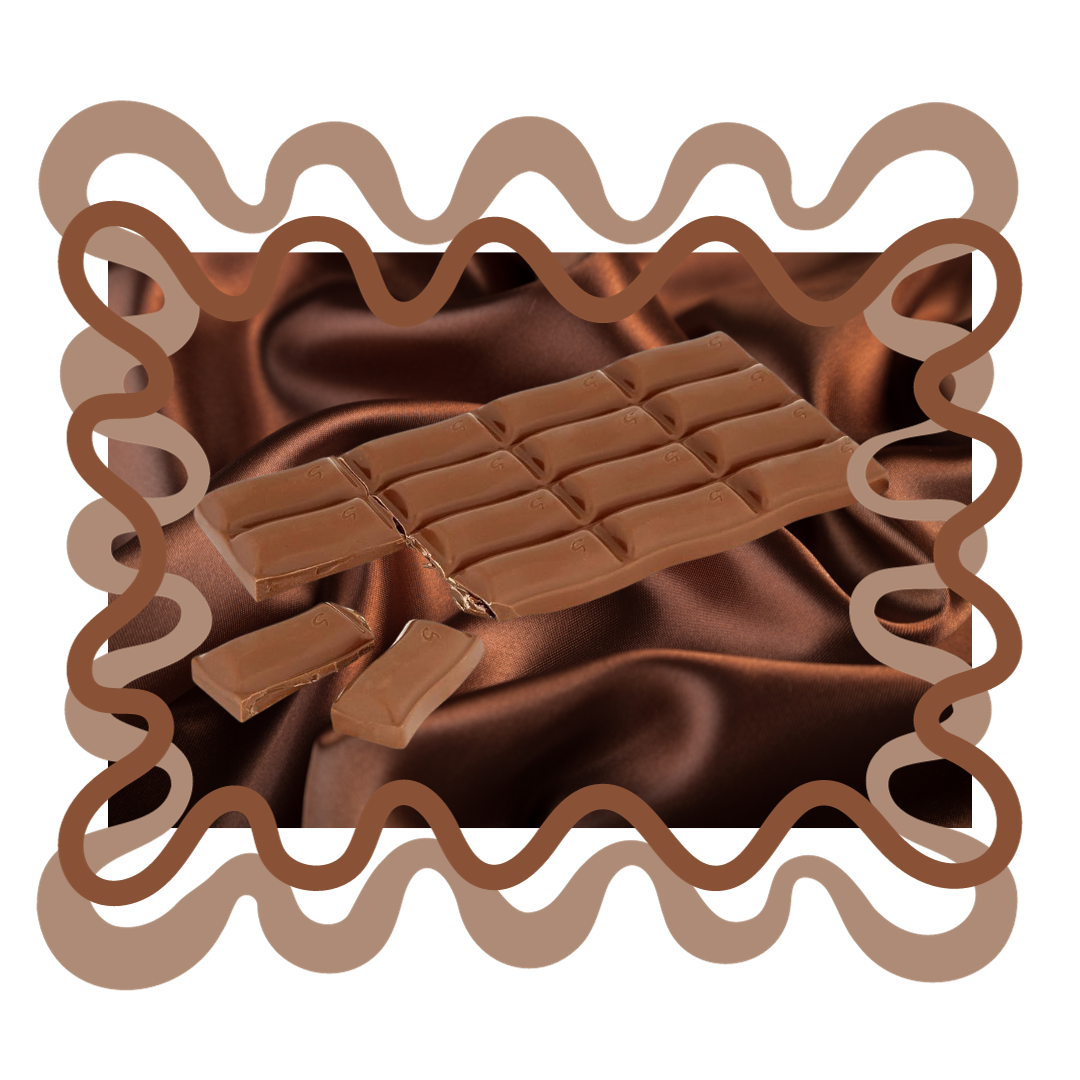
Ever since I first saw an advert for Galaxy chocolate in the mid-90s, it has seemed as special to me as Ferrero Rocher. A beautiful woman in a latte-coloured silk slip dress floats down the stairs at night to sneak a delicious bite of smooth milk chocolate. That’s the dream, I used to think. A bar of chocolate of my own whenever I want it. That’s what being an adult will be like.

And so it is. I don’t crave chocolate as much as I used to—I’m more of a bread and half a block of butter gal—but every so often I’ll have a few weeks where it’s all that I desire. When the desire strikes, I want Galaxy. I have a little padded book sleeve on the top shelf in my office where I keep one big bar at a time. I don’t need to hide it, but it’s the principle. I’m making my own dreams come true.

It doesn’t taste anything like chocolate, let’s be honest. My whole life I’ve sucked on squares of Galaxy and enjoyed the cosy, chocolate-adjacent sweetness of it, but I know, like Dairy Milk, it doesn’t taste much like real, decent chocolate. I decided to make some tasting notes the last time I ate some:

  • Milky cocoa with golden sugar

  • Honey

  • Golden syrup

  • Vanilla essence and butter, like a sticky homemade fairy cake

  • Condensed milk

  • Scottish tablet

All of these things, I have to say, are some of my favourite flavours. What I found most interesting was how strongly I felt I could taste vanilla—this is a flavour I also taste in Dairy Milk, and I wonder if this is how chocolate makers try to give the impression they’re using thick cream in their formulations rather than milk powder. As you can see from the list, chocolate is not mentioned. When I use chocolate in a tasting note for beer or wine, I mean the crack of a dark, cocoa-rich chocolate, deep and tempestuous, and often with a slight bitterness that lingers. It melts slowly. Your cravings are satisfied quickly.

Not so with Galaxy. It’s made to be devoured, and melts almost instantly. There is no bitter note, no complexity—just soft, smooth milky, sugary flavours that combine to produce hot chocolate in your mouth. It’s comfort food, but it isn’t real. Since when has that ever bothered me.

Another thing I noticed about the texture of Galaxy chocolate is that it’s not as powdery as other milk chocolates when it melts down. Surely that’s down to the refining process, I thought. It has to have been a purposeful result of years of research. Little did I know that it was also down to some pretty fascinating uses of traditional chocolate making and mechanical engineering.

First, cocoa nibs are winnowed to remove their shells, and then roasted in a process called “Dutching”. This process was invented by 19th century chemist Coenraad Johannes van Houten, the son of the inventor of cocoa powder. Galaxy chocolate is made from Dutched cocoa nibs, which means they have undergone a process of alkalisation, taking away its bitterness and giving it a darker colour. This is also how hot chocolate powder is made.

The nibs are then ground into cocoa powder, then “roll refined” to mill it down to micron-level particles, which is how Galaxy chocolate manages to have such a smooth texture (or mouthfeel if you’re nasty.)

I promise I’m not being paid by Galaxy here, I’m just really interested in how processed food is manufactured. It’s no different to any other manufactured product.

After the roll refining/milling process, the super-fine Galaxy cocoa powder is then freeze-dried with sugar and milk, as well as vanilla (yes! I was right!) and passed through an industrial oven and then into moulds.

What’s interesting about the moulds is that even the shape of each square of chocolate has been researched, designed, and tested to try and produce the most pleasant sensation of eating and melting in your mouth. You’ll notice that Galaxy chocolate squares aren’t really squares—they haven’t been since 2007. Instead, they are rounded and curved, with indentations meant to form around your tongue with as much area touching the inside of your mouth as possible. Wow. I just find it incredible to think about, that even the shape of a square of chocolate has been processed in such a detailed way. Science. Engineering. Chocolate.

Perhaps one day I will simply be able to enjoy something without having to research its every molecular detail. Somehow, knowing all this about Galaxy makes me enjoy it more. Perhaps it shouldn’t—perhaps something more natural should make me more excited. And I do get excited about natural products! How amazing is small-batch, artisanal chocolate? But Galaxy isn’t in their league. It’s barely even the same food. It’s a highly-processed, super-thought-out product that has been designed for ultimate pleasure. How can I say no to that?

PROCESS 02: Oven Chips

The freedom and shame, the agony and the ecstasy

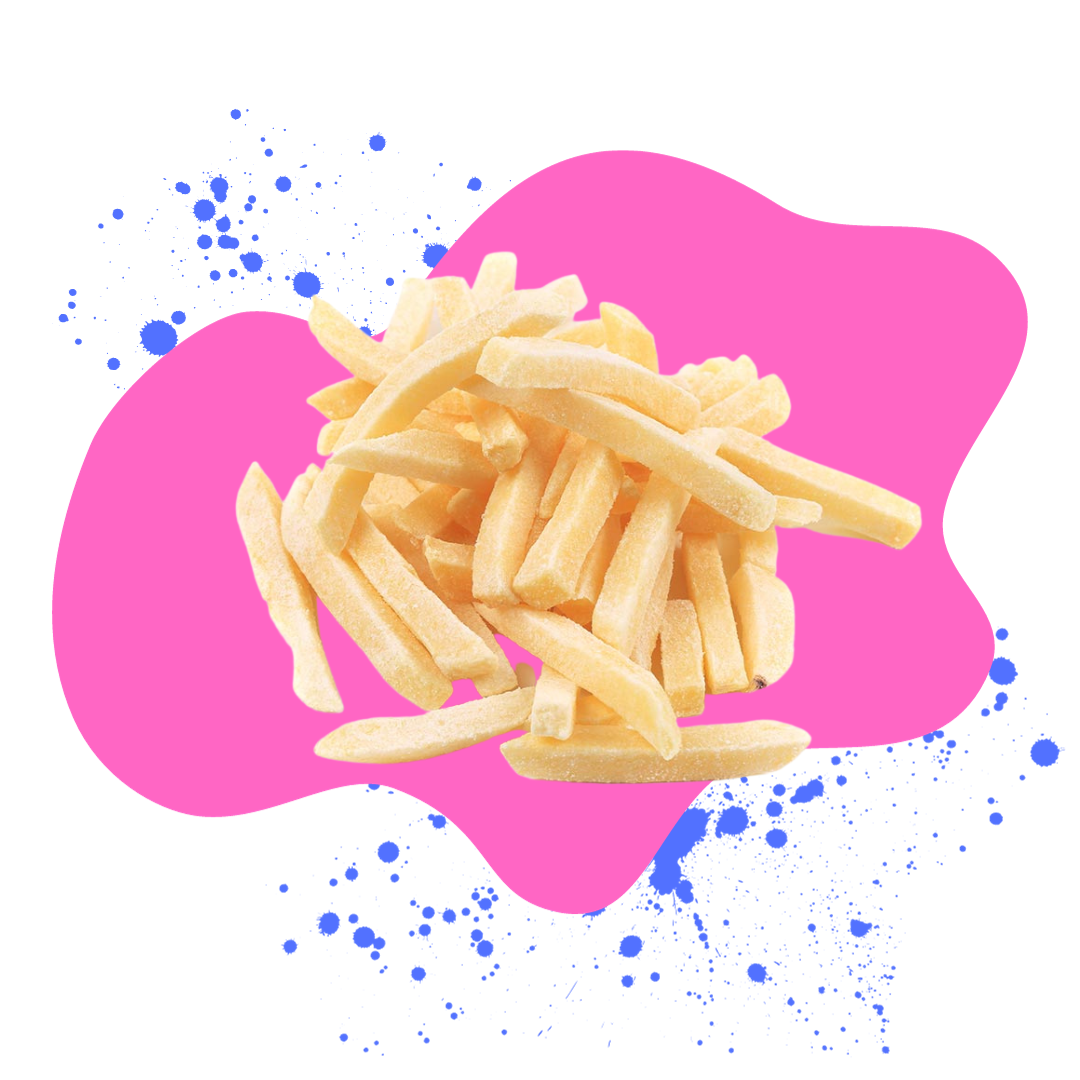
The brand of oven chips you had at teatime was a status symbol when I was a kid. McCain’s Home Fries were the holy grail—if you were having those with your Turkey Drummers, you’d really made it. It’s really strange, I didn’t consider oven chips and deep fryer chips and chippy chips as the same thing. It didn’t occur to me until much later on in life that oven chips were meant to be approximations of the soggy, vinegar-coated potato hunks I was used to from Sam’s Bar on Morecambe seafront. Don’t get me wrong, I loved both of them. But they just weren’t the same food at all. They didn’t even speak the same language.

There’s something shameful to me about not cooking tea, and instead bunging a tray of frozen chips and chicken kievs in the oven. Why? I guess it’s a deep-rooted patriarchal expectation. Maybe I feel like I’m letting myself and my family (Tom) down. Or maybe it’s because of the onslaught of fresh food propaganda we’ve had over the past decade. If you forfeit freshly prepared food for pre-prepared options you will surely succumb to high blood pressure and heart disease. It’s also certainly something to do with my unhealthy relationship with food that I’ve lived with most of my life. If I peel the potatoes, chop them, I have control. If I pour them perfectly portioned and prepared from a bag, I could be eating literally anything.

It’s so strange, this idea of convenience food being the enemy. It was invented as a liberation of sorts—to enable busy people to eat hot meals when time was short and money was tight. Microwave meals took off in the 80s, especially in the US, but for me as a northerner during the early 90s, what really changed the landscape was oven-ready food from the freezer section. Even then during the heady days of oven pizzas and fish fingers, there was a nasty tone to the way people talked about them.

The content below was originally paywalled.

Convenience has such a glamorous ring to it, as though you were picking up a few bits on the way home from the office, still dressed in a pink powersuit, clutching a phone the size of a Sky remote. Laziness, on the other hand, became the connotation. It’s hardly fair that food produced to suit a demographic, food that had thousands of pounds spent on it over development hours and consumer testing, solely to save time and give busy people part of their lives back became something of an easy insult. Like Pam in Gavin and Stacey bitching in hushed tones about a mother “stuffing” her kids “full of Findus Crispy Pancakes” proves, there was no glory in finding time to work, nurture, and play. If you took the convenience route, you weren’t making clever, timesaving decisions, you were giving in.

Which begs the question: why were frozen foods generally so bad for you? If they were invented to feed the nation’s families, why were they also so widely known to be packed full of sodium and fillers as to have a negligible nutritional value? And then later down the line, why was the nation’s health issues brought on by poor diet laid at our doors? To be shamed for not preparing fresh, nutritious meals three times a day when we were busy working, schooling, doing after school clubs, night school, weekend jobs… Were we not just eating what was available to us during the era of so-called financial equality? To my mind, it’s yet another way to belittle women’s work—allow us to enter the workplace under the guise of womens lib, then shame us for either working too hard and neglecting our other duties, or not working hard enough and remaining a housewife, an affront to working women everywhere. Oven-ready meals were a godsend to overworked families during the 80s and 90s, while poverty was on the rise and food was becoming more expensive. Could an average suburban parent really still grow a few tomatoes and potatoes in the back garden just as their parents had done? Did they have the time? Did they have the space? Supermarkets offered options that gave them their lives back, and saved them from the dreaded third-or-fourth-day leftovers of their youth. Oven chips as emancipation.

My beloved oven chips, which I still always have in the freezer (Lidl’s Crispy French Fries, always) are, admittedly, as far away from their natural state as they could possibly be. They make me wonder with wide eyes, as the most simple of freezer-to-oven foods, how a potato could be tweaked to this level. Do you know why they are so good? They’re often tossed in flour and seasonings before they undergo their first flash of cooking in the factory—once mixed with the oil sprayed on them through the cooking tunnel, that’s pretty much a batter, isn’t it? Lovely crispy battered chips. Ideal with beans. Even though I know they aren’t good for me, that’s not always the point of my food. I still see oven chips as a sort of freedom. Some days I don’t want the burden of choice, I don’t have the energy or vitality of mind to grab an onion and a carrot and see what wonders come to be in the sizzle of a pan. I just want to eat, to be comforted. Bread and butter, oven chips, comfy sofa. Sometimes that’s all I need.

The Icebreaker

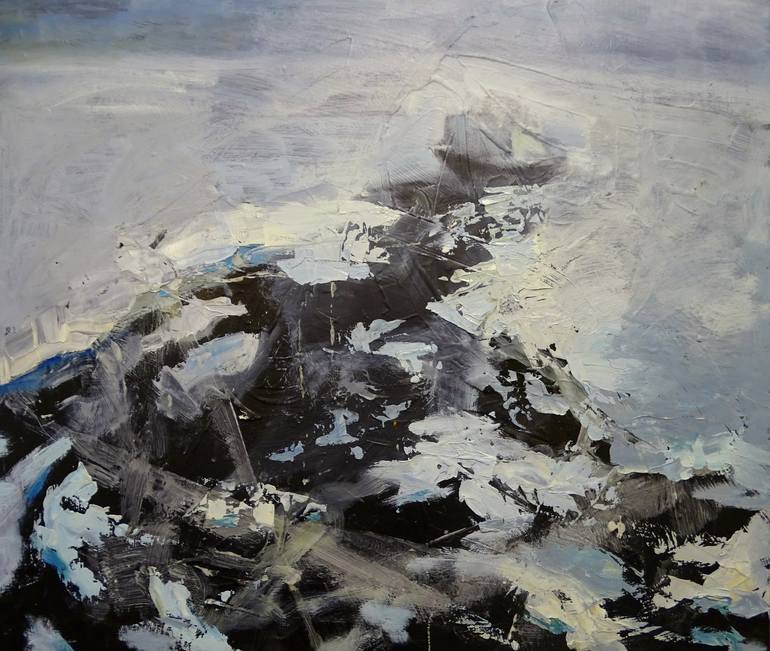
When life is an ice shelf, get into the sea.

It’s no secret that my 2023 has been less a road through my life and more like a cross-cross of farm tracks and half-built bypasses. I’ve been stuck in other people’s driveways more times than I’d have liked. As the year rolls out to its inevitable festive end, one of my favourite times, I’m actually in a much better place than I expected to be.

Living to work was my whole method of survival until this year. I always described myself as an icebreaker—an unstoppable force, always moving forwards facelessly and monotonously. The only thing I focused on was what was in my way at that moment, and how to overcome that obstacle. The thing about living this way, is that it stops you from creating memories, or enjoying having a project to feel satisfied with when it comes to an end. Always moving. Always.

Katie Mather’s The Gulp is a reader-supported publication. To receive new posts and support my work, consider becoming a free or paid subscriber.

Two months since the closure of my bar, I find myself forgetting that it actually existed. It turns out, apparently, that this icebreaker life I was living was actually a response to long-term stress—a stress I’ve lived with and coped with and even, surprisingly, thrived off, like a little deep-sea bug that turns toxic thermal water into a cosy home. During the past two years I was working essentially three jobs, seven days a week, and when two of these three jobs ended at the same time in September, I lost control over my sense of self. What am I, if I’m not busy?

Having time to consider who you are instead of what you do is transformative. I’m still in the early stages of it yet, but it’s exciting. I’ve gotten off the boat. I’m walking on the ice. I’m seeing what’s around me as well as what’s ahead.

Other Stuff

My Stuff

I am launching a new project via this newsletter on Tuesday 14 November. Called PROCESS, it will be a ten-part series of essays on processed food, starting with a piece all about my favourite childhood sandwich filler—Spam.

This series will only be available to paid subscribers to The Gulp. You can amend your subscription by heading to your homepage, I have tried to find an easier way to explain how but I’m sorry, there isn’t one. Here are Substack’s official instructions. Hopefully you manage to find it!

I suggest you choose the ongoing subscription rather than the annual one, so you can pause the payments once the series is finished if you like.

To get you started, here is a piece on cheese singles which I wrote a year ago.

I’m excited about starting a project that’s just for me, for my own platform, and for you. I hope you’re looking forward to reading it.

Katie Mather’s The Gulp is a reader-supported publication. To receive new posts and support my work, consider becoming a free or paid subscriber.