PROCESS 06: HP Sauce

I prefer ketchup, but what ya gonna do?

Despite being a strict own-brand household, HP Sauce always has a place in our cupboard. I’m not actually a fan, but my husband Tom won’t eat a bacon sandwich without it. He also puts it on sausage and mash—I can’t cope with sauces and mashed potato. The textures are too wrong. I once knew a girl who put ketchup in her mash and mixed it around until it was a big, pinkish mass. I didn’t go round for tea again.

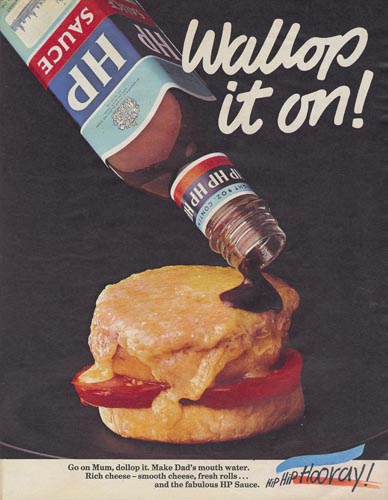
I’ve always got time for foods that claim a certain dignity. HP Sauce has delusions of grandeur, don’t you think? Named after the Houses of Parliament and decorated with with Elizabeth Tower/Big Ben in pride of place on the front of the bottle, it’s been a British icon for almost 130 years. Why the Houses of Parliament? The inventor of the sauce, Frederick Gibson Garton, heard that politicians were eating it down in the Westminster canteen and thought that’d be great iconography for his product. People must have liked the government a lot more back then.
The content below was originally paywalled.

HP Sauce was actually created by a grocer and pickles maker in Nottingham. A true residual from the English Empire, according to legend his sauce was based on an Indian chutney, with ingredients like tamarind and dates sourced from South East Asia and the Middle East. Apparently he used to simmer it in a kettle at the back of his shop. A milder version is known as “Fruity HP”, the one with the green label, and that has mango in it. Like many classic English sauces it also has things like raisins and vinegar in it, but HP became more popular, despite or even because of its exotic flavours. I like the idea of middle class Victorians covering their meals with a tamarind and mango salsa packed with spices and soy sauce. It somehow turns the sepia photos in my mind into colourful vignettes.

Unfortunately for the unlucky inventor of HP Sauce, he went bankrupt trying to pay his vinegar debts (something all of us pickle fans can empathise with) and he ended up selling the whole HP brand and recipe—as well as his other inventions including Daddies sauce, for £150 to his debtors. Since then, this small-scale sauce company became a national treasure, and a staple in every kitchen throughout the 20th century. Now HP Sauce is a global brand owned by Heinz, who must now own the two biggest selling, or at least the most famous, sauces in the world—HP and Heinz Tomato Ketchup.

This buyout was a shock to the people who worked for the Aston-based HP Sauce factory, and fans of the sauce. In 2006, when Danone sold HP to Heinz, the company revealed that production would move to The Netherlands.

There was a funeral for HP Sauce at the old factory. Then a wake. Don’t believe me? Check this out. Empty HP Sauce bottled were placed into a coffin, and mourners climbed onto the factory roof to hang banners decrying the closure of the factory as a national scandal. People sang the national anthem outside the gates, and body painted themselves to look like HP labels while chained to the gates. England used to be a real country.

This fabulous story in the Birmingham Mail recounts the closure 10 years on (the piece was published in 2016) and photos of the factory’s main tower remind me of the demolition of Thwaite’s Brewery in Blackburn in 2019. Iconic local brands, built up then broken down as the tides of time and commerce rose from our Nation of high street Shopkeepers through our towns in the 20th century, then conglomerated, then left. These symbols are probably some of the most visible ways to see how our towns and our local industries have changed over the years.

The tower might have gone from Aston, but the sauce lives on. 28 million bottles of HP Sauce are sold every year, and at least half of those are used in my house. This year, a commemorative bottle has been designed and no doubt will become a collectors’ edition, with scaffolding on Elizabeth Tower, covering Big Ben’s clock face. So many metaphorical interpretations. So little time.
PROCESS 05: Warburton's Toastie

There’s bread, and then there’s Toastie.

Before I begin this love letter to my favourite bread (and that’s an important accolade—bread means everything to me) I want you to know that I got in touch with them to ask to visit one of their factories. I was pretty excited about the prospect. Unfortunately they didn’t get back in touch—I don’t think I’m famous enough, and anyway, blue hairnets don’t really match my Deftones hoodie aesthetic. It’s fine.

I think what I wanted to see was hundreds of loaves of bread pre-slicing. Its squareness, its slices, they’re so perfected that it’s hard to relate a loaf of Warbies to a traditional loaf. They might be the same thing genetically, but like Darwin’s finches, they have developed different coping mechanisms, new attributes, that better suit each of their surroundings.

The content below was originally paywalled.

Take their crusts. Compared to a tin loaf baked at home, the crust of a loaf of Toastie might as well not exist. The top crust has always been my favourite one, the bottom one the worst. I like the shiny texture against my tongue. I used to like Kingsmill Top Grade for the same reason. “Proper” bread, made by hand and potentially with fresh yeast or even sourdough, is different in every way, and you don’t need me to tell you that. The crusty, chewy texture, the thick, yeasty smell, the tangy flavour. It’s like comparing an eagle owl to a pigeon.

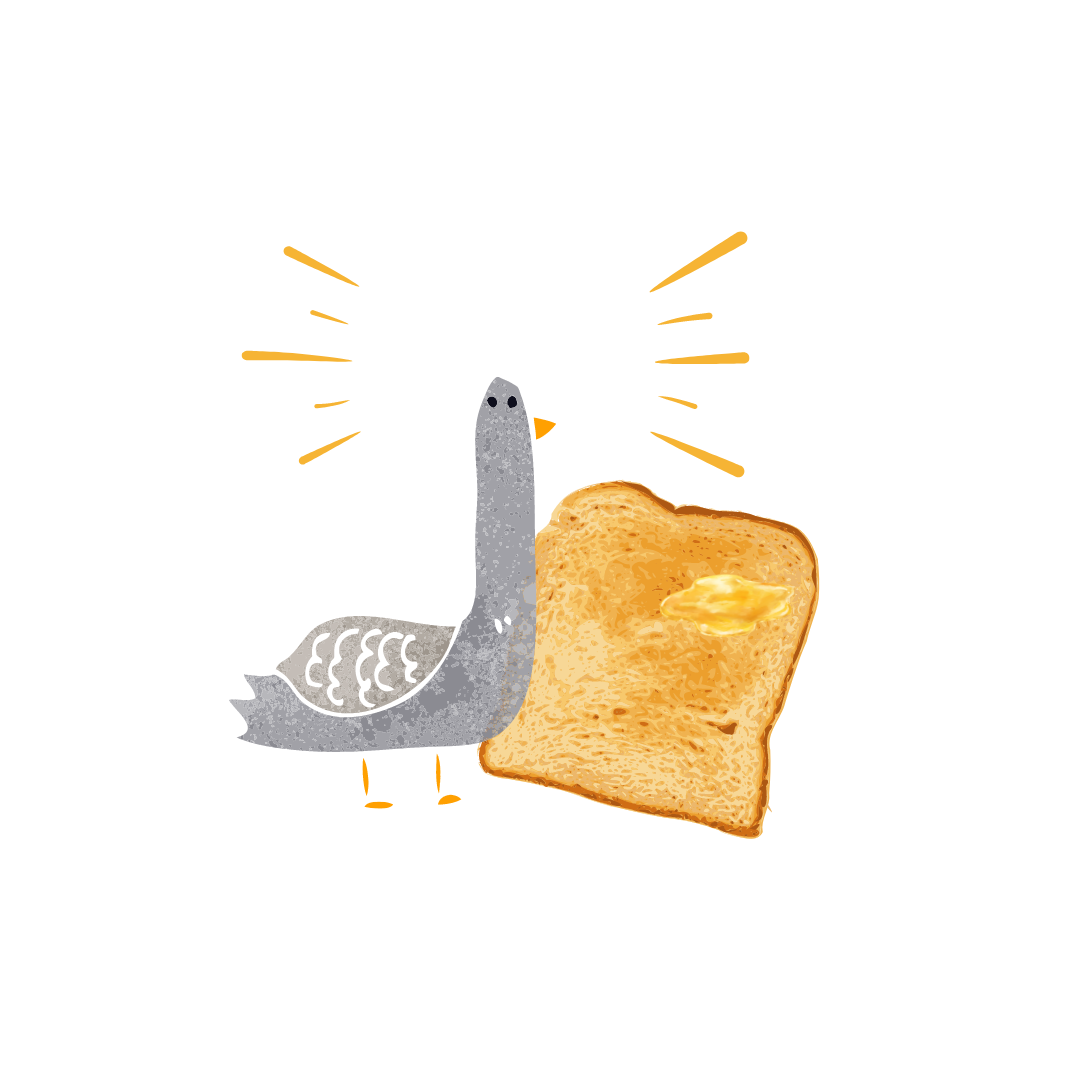
But pigeons are only pigeons because of man’s intervention. We wanted them docile and unafraid. We trained them to be obedient and let them become reliant on us as far back as 5000 years ago. Then, at some point in history, we decided we didn’t want them anymore. Common grey pigeons (closely related to Rock Doves, but not exactly the same bird anymore) have been anomalies ever since—unable to make proper nests or live without close proximity to humans. Does this mean they are not birds? It strikes me as unfair that we blame them for everything that they are, when it was us who created them.

Soft, white, processed bread might be the enemy of so many diets, but it only exists because we wanted it. Correction: we want it. According to UK Flour Millers, Nearly 11 million loaves are sold every single day in the UK, and wrapped and sliced bread accounts for 85% of UK bread production. Sliced bread is everywhere because of us, and I think that’s rare. Usually processed foods are pushed on us through marketing, as additions to our diet we didn’t ask for. Processed bread just exists around us, as something we once hailed as the ultimate convenience, now taken for granted and slightly vilified. Even I find myself feeling guilty when I choose it over a local bakery’s seeded batch. Is that progress or diet culture or something else entirely? What I will say is this: It feels a little unfair to me to have all this wonderful bread around and for all of us to pretend it isn’t as nice as the healthy stuff.

Why do I love Toastie? There are so many reasons.

It is ethereally soft. When you pick the freshest orange packet, it’s like biting into a cloud.

Making toast with it makes the whole house smell like a delicious bakery.

Dry Toastie toast is the approved post-sickness test food to see if you feel well enough for the next step—tinned tomato soup.

It is always there for me. No matter when I get back from being away, or how unreasonable my brain is being, or how lazy my day is, there is a squishy, freshly-baked loaf of Toastie waiting for me at the shop.

If you roll it flat, brush it with olive oil, sprinkle salt on and toast it under the grill, it becomes instant crackers for a makeshift cheeseboard.

My grandad’s house smelled of toast, and curry powder. He lived off curries and occasionally goulash, or pea and ham soup simmered until it was the colour of army issue fatigues. I don’t think he ate toast himself, he would just make sure there was Toastie and marge in the house for when we went round to stay, a small but meaningful act of service. Even now, the smell reminds me of him—strange, since as I say, this was not a food he ate. He drank John Smiths and loved a Dopiaza. I love you grandad. Thanks for the toast.

PROCESS 04: Pop

The original snap and the hiss

You can’t have fish and chips without a can of dandelion and burdock. You know that, right? And you can’t have a British childhood without chugging Shandy Bass and pretending you’re pissed.

Fizzy pop is everywhere, all around us all the time. It sponsors some of the largest events in the world, and covers our Anthropocene landscape in branded marketing. Go to the top of Everest, there will be a can of coke. I truly believe that there will be a bidding war between Red Bull, Monster, and Rockstar to become the first item of litter on the Mars human habitat.

When I started tasting wine to revise for my WSET L2 exam, I spent a lot of time tasting Diet Coke to try, once and for all, to figure out what it tastes of. It’s not something anyone really asks questions about. We just drink Coca Cola and it tastes like Coca Cola. Cinnamon is what I get from it. Vanilla and cinnamon, and other woody spices, and maybe some weak botanicals. I prefer Diet Coke to regular Coke (and I hate when it’s called “full fat coke” for some reason,

The content below was originally paywalled.

makes me think of scummy bits of oil on the top of a washing up bowl) because regular Coke is so overwhelmingly cloying. The idea of the drink, it seems, is to get as much sugar down you as possible without it coming back up again. I was told once that’s why it’s also acidic. I’m not sure if that’s true. To tell you the truth, I actually prefer Pepsi Max above all. A definite hangover from being a 90s child and saving up tokens and pink ring pulls to send off for exclusive Spice Girls single “Move Over (Generation Next).”

Fizzy drinks as we know them today are almost completely unrecognisable from the tonics and beverages they mutated from. Coca Cola itself was invented in 1886 during a boom-time for wellness tonics in the USA, it’s high sugar content and other no-longer-legal ingredients offering vitality, strong nerves, and as a cure for headaches. It was initially alcoholic, but became a soft drink during prohibition—useful for clandestine drinkers who needed something sweet and palatable to mix their bootlegged whiskey with.

Before Coke became a global monolith, pop in the US was drinks like ginger beer, root beer, and sarsaparilla, which could be made at home with roots and ingredients from the garden, such as birch bark and sap, liquorice, dandelion roots, spruce, and spices like allspice, cloves, nutmeg and cinnamon. The most realistic and widely-available ancestor of these original recipes is Dr. Pepper—its name offering, once again, a look at a time when fizzy pop was seen as a tasty way to keep fit. Then, in the 1960s, the the United States Food and Drug Administration banned the use of sassafras due to a chemical called “saffrol” being present, which when used in extremely high doses can be carcinogenic. “Nutmeg, cinnamon, and basil also contain safrole, but that was not an issue,” notes the American Homebrewers’ Association rather sardonically. During the 1950s, Coke has become something of a fashion statement—now, it was the norm.

In the UK, we had a similar trajectory for our own pop. Vimto, Irn Bru, Tizer, Lucozade, and even Dandelion and Burdock are all drinks that were once energy-giving tonics or alcohol-free alternatives for hard working people. Vimto is just a shortened version of it’s original name “Vim Tonic”, and it was invented by a Blackburn-born herb and spice merchant to make the most of the Temperance movement. Tizer was an alcohol-free aperitif invented in the 1920s in Manchester. Lucozade was invented by a pharmacist in Newcastle as a glucose-rich energy drink for the sick—which is why there is a deep generational need for original, glass bottle, red Lucozade when you’re relegated to your sick bed. Mysterious, orange Irn Bru outsells Coca Cola in Scotland every single year, and nobody really knows what’s in it or what it tastes like. Dandelion and Burdock has been drank in Britain since Medieval times, but the first carbonated and commercially-available bottled version was made by Shaws of Huddersfield in 1871. It’s probably the closest thing we have in the UK to sarsaparilla.

One of the only things I miss about living in a city is the ludicrous amount of choice in every paper shop. I miss KA Black Cherry, and non-standard Fanta flavours, and bottles of off-brand Red Kola. After school I loved a bottle of Moray Cup—I’m pretty sure it was supposed to taste like Pimms or Sangria and I think it was only really available in Aberdeen—and blue Panda Pops were the true enemy of the state. The only drink I ever wanted on a Saturday after dance class. The sugar tax has changed the landscape of fizzy drinks in this country, forcing recipes to change and drinks companies to discontinue flavours, but my memories will remain. Hurray for sickly sweet Barr’s Pineapple. May you hang on to your niche corner of the market for as long as I’m alive.

OP From The Wood

Does it get any better?

It’s been aggressively beautiful outside this week, after an age of brown mud and torrential rain. To make the most of the frozen ground and dry skies, I went to Appletreewick in the Yorkshire Dales on Sunday to visit a pub I’ve been meaning to visit for years. The Craven Arms is an historic inn decorated with an abundance of curiosities and artefacts; I particularly liked the original oil paintings of Sir William Craven, a local lad who, in the 16th century, moved to London as a tailor and became the Lord Mayor of the city. There is a snuff box for all to use, if they so wish. A range fireplace roars over the main bar area, a happy sight for our fingers and faces which were numb from a November ramble around Wharfedale.

Katie Mather’s The Gulp is a reader-supported publication. To receive new posts and support my work, consider becoming a free or paid subscriber.

The crowded but friendly bar offered a few excellent options, but there really was only one choice—The Craven Arms serves Theakston’s Old Peculier from the wood. I order it without a thought, and a man carrying three pints away to his table tells me: “great choice.” It is, he’s right. I take a well-earned gulp right there at the bar. Perfectly cool, but not cold. Soft and pillowy, with a silky texture like rich red wine. Dark treacle and golden syrup wash in waves along with the distinct bitterness and blackberry-currant flavours of black patent, with an appetising roasted malt aroma. Served directly from a wooden barrel it tasted fresh and full of life—vibrant, you might say. Half my pint was gone before I knew it.

Old Peculier isn’t a particularly peculiar beer—the name comes from Theakston’s brewery location in Masham, North Yorkshire, which was outside of a diocese, and therefore a place of parish peculiarity. It’s actually quite simple, with pale and crystal malts bringing the caramel-brown-sugar notes and roasted malts of different levels for colour and flavour, and Fuggles hops providing the majority of the fresh, almost hay-like aroma and more bramble fruits. It’s a ruby ale that’s never left us, and whenever I see it in Yorkshire, I have to have it, for all the reasons stated above.

We were exceptionally lucky—there was one free table. This never happens, I’m sure. We sat down with our almost-finished pints and ordered a roast dinner and a huge plate of venison stew. Both were exceptional.

I went on a wander around the busy pub and found there’s a thatched medieval barn back where you can dine and it looks like the interior of Uhtred’s home (From The Last Kingdom? You should watch it.) The pub itself is a masterclass in old, wooden-beamed, definitely haunted pub decor. It’s packed with character and centuries of life, and the beer is top quality. Now is the season of visiting country pubs and eating lovely big roast dinners and drinking pints of delicious beer. This was a great one to spend an afternoon in.

Other Stuff

Desk Flowers

Finally listening to Florence Given.

My friend tells me to laugh out loud more. She says that she can trick herself into feeling better about her day, even if her brain isn’t in the game. I believe her—I know her. I know it works.

Faking happiness hasn’t been something I wanted to try. Authenticity, my therapist used to say, was the rule I lived my life by, and it was a curse as well as a mantra. She said that like a perfectionist expects perfection from everyone around them, I value total and complete authenticity over everything else. Pretending to be happy wasn’t something I could do. This is why, she pointed out, my stints of behavioural therapy never worked. Changing the way I think, augmenting my reactions, it all felt so fake.

Katie Mather’s The Gulp is a reader-supported publication. To receive new posts and support my work, consider becoming a free or paid subscriber.

That’s not the fake part, though. The fake part is believing that life is anything other than spectacular. Authenticity doesn’t mean that I have to accept my state of mind if it isn’t serving me. Authenticity in this manner is not a shortcut to talent or wisdom. It doesn’t make me better at writing. Being sad is not my personality. Being tired is not my nature. I am not the symptoms of my invisible illnesses. So why have I spent so much time and effort defending them from the effects of a sunny day, or a favourite song?

There is an influencer and author called Florence Given who is young and pretty and has pink hair, and despite being recommended to me over and over again, I couldn’t watch her videos. Jealousy? Maybe. I couldn’t listen to her speak, I couldn’t hear what she was saying. It all seemed so mindless to me. Then I tried again last week. Like blowing a candle out, the atmosphere changed—I didn’t find her annoying, what I cringed away from was her kind and nurturing tone. What she was saying was simple—just be happy. I would normally find this offensive. If I could just be happy, Florence, I would be. But that’s just not the truth. I had forgotten over time that I although I couldn’t help my original state, I was allowing myself to worsen, under the impression that living true to myself was letting my brain get away with whatever it wanted to do.

So I followed her lead. I went into town and bought myself some flowers. I tidied my office and lit some incense. I started listening to a new playlist that made me happy, rather than the comfort music I’ve worn away like a river stone. I ate a delicious lunch. I made food for some friends. I felt good. I still feel good about it more than a week later, looking at my flowers and thinking about what I will replace the wilting blooms with, rather than considering how everything dies, everything dies, everything dies. Existentialist grief. That’s another one of my problems, apparently. Looking at overgrown gardens and seeing the endless passage of time, rather than the things that thrive in it here and now. I know that doesn’t help me. I’m working on it. I’m trying harder to see the birds. I’m trying to remember that I enjoyed my cup of coffee, rather than the fact that my cup is empty. I’m trying. It’s working.

Joy is supposed to slither through the cracks of your imperfect life,

that’s how joy works. — Donna Ashworth

Other Stuff

My Stuff

  • I’ve just recorded a podcast for Pellicle—expect to listen at the start of December

  • I’m recording a podcast tonight with a bunch of lovely fellas. More info to follow.

  • I’ve been writing my arse off lately, expect pieces in Pellicle, Glug, Ferment and in my PROCESS series via this newsletter every Tuesday

    Share

    Bouquet of Flowers — Odilon Redon

Legends, Lore & Malt Bills

What do we want from a brewery profile in 2024?

When I first started writing about beer, what interested me most was how people enjoyed it. I started off writing about pubs and their cultural impact—what makes towns unique, in my opinion, is its local pubs and the crowds that drink in them. I thought this would always be my niche within the sprawling world of beer.

As time’s gone on, I’ve found—through my interest in wine, weirdly enough—that I’ve become more and more interested in how beer is made. Not in its component parts, but from the brewer’s point of view. Why was a certain malt bill written up? Why did they choose this hop, or that one, when others would create a similar effect? When I read a brewery profile I find myself drawn to the nerdier aspects of the piece these days—their water, their equipment, their personal reasons for brewing in such a way. It’s a job of choices, brewing, just like cooking, or painting. You choose the ingredients, the spices, the paint, the colours. In this way you affect the outcome. After that, it’s up to the people to decide what you meant by it all.

I’ve been writing a brewery profile on one of my favourite breweries for almost a year, and I’m adamant that I’ll finish it today. What I’ve been wrestling with is the content. There’s so much of it. Do I take out detailed information on hop choices to tell the brewer’s personal anecdote? Would it be better to leave in 100 words bordering on brewing academia or skip it for brevity and levity? Is there room for florid storytelling?

This level of doubt is obviously clouding my judgement because it’s been so long since I wrote consistently, and about subjects that require deeper research. I’m out of practice. But I’m also feeling a little out of sync with the beer world since leaving Twitter and, admittedly, extracting myself from the scene for a while. Things have changed, drinkers have become more demanding, perhaps more sophisticated. Or am I wrong about that? Do people still want good old fashioned stories?

Katie Mather’s The Gulp is a reader-supported publication. To receive new posts and support my work, consider becoming a free or paid subscriber.

Other Stuff

My Stuff

  • Me, on Dolmitic Limestone

  • You might have seen that I have started a new series of features on this newsletter. PROCESS began this week with an essay on Spam.

  • I have written a—yes!—brewery profile on Bushy’s which will be printed in the next issue of SIBA’s magazine.

  • Pre-order the upcoming Hwaet! zine to read a story by me about witchcraft, brewsters, ale wives and women’s work.

Thank you for reading Katie Mather’s The Gulp. This post is public so feel free to share it.

Share

PROCESS 01: SPAM

Spam is love, spam is life.

Welcome to PROCESS, a ten-part series on processed food in which I discuss my favourite, much-maligned mainstays of the British shopping list. This is part one, all about Spam.


My paternal nana and grandad were as working class as it’s possible to get in deepest Lancaster. Mill workers from childhood, I remember visiting nana at work in Nisbet’s factory on North Road in the centre of town when I was very small, tubes of red and royal blue knitted sleeves spooling out of the machines, the smell of detergent and dye rising in the steam from her pressing table. She used to drink tonic water at her station, and wear a blue press-studded tabard to protect her elaborate 80s knitwear.

My nana’s kitchen is one of my fondest childhood memories. Brown and cream, it was hot with boiling potatoes in winter and open to the elements in summer, a colourful plastic strip curtain hung over the door to keep the flies out. I was under strict

The content below was originally paywalled.

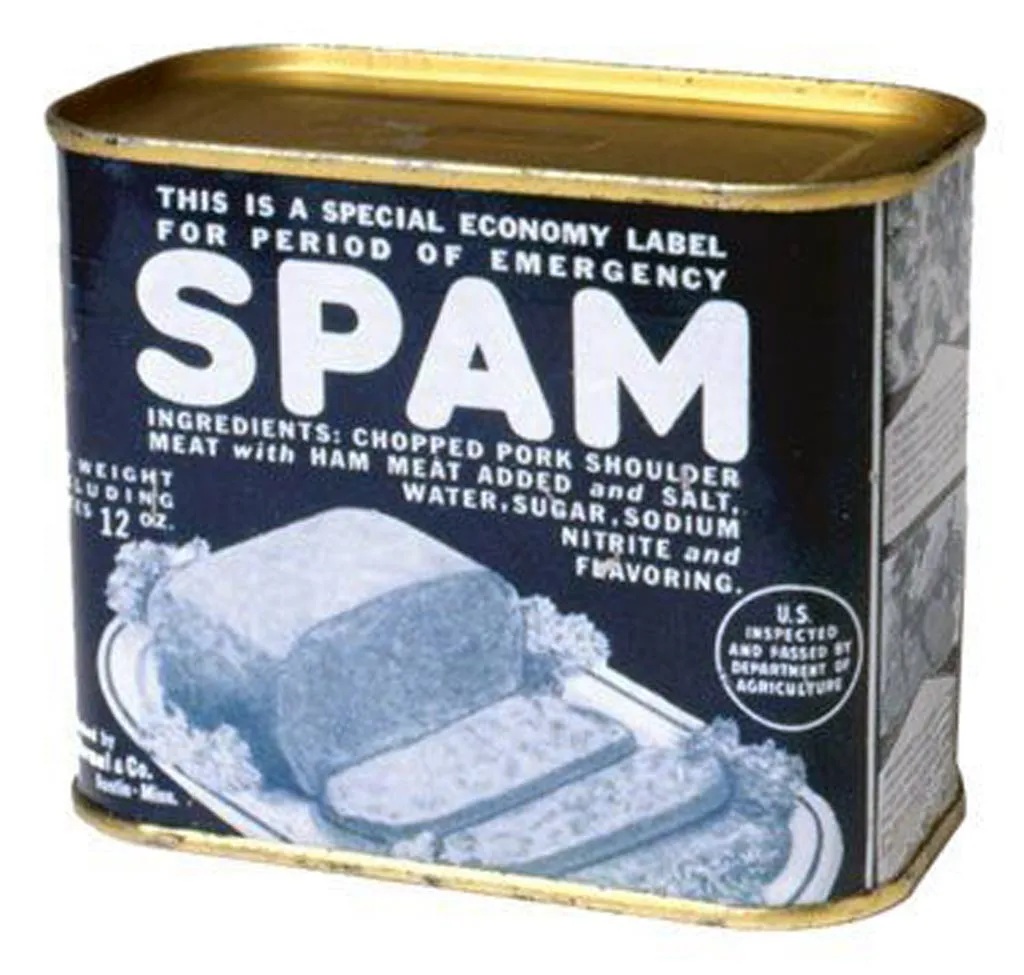
instruction every visit not to mention that I might be peckish. She would put the kettle on (I was not allowed tea or coffee,) and get the chip pan out immediately, or boil a hundred eggs, or, my favourite, let me make Spam butties. I would stand at the counter buttering lethal quantities of Flora onto round milk loaf or unstable Danish white, occasionally stopping to spoon Coffee Mate into my mouth. I would need help getting the Spam out of its tin—like corned beef, I was given many warnings about how sharp those tins were, and how few fingers I would have if I messed about with them. That iconic tin, it turns out, was designed for the meat to be packed into it raw, then cooked inside it. That’s why it’s so tightly packed. That’s how the pork pie-like jelly forms.

Salt is still my major weakness. I loved the softness of the completely nutrition-free bread my nana always had to hand, and the squidge of margarine against it. The Spam itself was a strange flavour to me, something peppery and extremely salty, more like the insides of a hot dog sausage than a slice of ham. I have never been squeamish about Spam. It’s just pork, ham, salt, sugar, potato starch, water and sodium nitrate. It is pasteurised, you know. It lasts forever. It cannot make you ill. Even now, when I’m not feeling my best, I crave Spam sandwiches as white and pink as a block of seaside nougat. They remind me that no food is truly off-limits, that I can eat what I want, when I want to. That I deserve to be comforted.

Spam came to Britain during WWII, after becoming a national staple in the US where it was invented. A bit of Spam trivia here for you—the name came before the product. It turns out that someone, an actor called Ken Daigeneau, thought Spam, a portmanteau of spiced ham he made up, was just a funny word, and that there should be a food called that. Hard agree. This word hung around in his family’s vocabulary until his brother, an executive at Hormel Foods allegedly pitched the idea of convenience pork made in a similar way to the already popular American store cupboard favourite, tinned corned beef, and they ran with it. Its portability and stability meant that Spam quickly became the go-to meat for wartime ration packs. Soldiers quickly got sick of eating it from the tin, but at home during the Great Depression, that rosy pink kinda-meat was a household saviour. 

I like to think that Spam became popular in Britain not due to necessity—wartime rationing was strict but Spam was not the only meat product readily available, we also still ate tripe and had the Dig For Victory campaign that encouraged households to have their own garden chickens, remember—but because of our unparalleled, weird sense of humour. Spam is, as Ken Daigeneau knew, a funny word. And it’s a bizarre product when you think about it. For it to become embedded in popular culture enough for Monty Python to write a whole song about it, and then much later a West End musical, there was more to this meat than its utility. It’s bright, almost pop art branding and its ubiquity on grocery shop shelves was something that everyone could relate to. It was a meme. Its adverts were wild, and incredibly catchy.

Later in the 90s, electronic mail’s scourge of the technological high seas, the unsolicited cold-call of the inbox, was named Spam for this reason. It was everywhere, and it had little to no substance. Bit offensive to Spam, but clever all the same.

Spam seems to be able to take the joke. The official website is set up with lifestyle brand photography and bright, punchy design. They say “when days end with y, we end them with “mmm”.” Their merch is unbeatable. There is a Spam museum in Austin, Minnesota, with the tagline “Puts a whole new spin on cubism.” If you truly love Spam, you can become a Spambassador. “At first glance, one might assume SPAM® products are produced through magic,” They say. “But it’s actually a relatively simple, conventional process.” I am crying. This is wonderful copywriting.

Outside of Britain, Spam isn’t a joke, it’s an integral part of local cuisine. In Hawaii, Spam was brought over by American GIs and never left, just as it was in South Korea, which happens to be the world’s second largest consumer of Spam. An invasive pork product? Maybe. But Anne Kondo Corum’s “Hawaii’s Spam Cookbook” first published in the mid 1980s remains a bestseller throughout the island state, showing the prevailing popularity of Spam 2000 miles away from mainland USA. This wonderful book also has recipes for Hawaii’s other tinned favourites too—sardines, corned beef and vienna sausages. Their popularity makes sense. They are convenient, they are shelf stable, they are cheap, and they have long expiration dates, which is all very important to isolated and hard to reach communities, especially if food has to be shipped or flown in at great expense. Hawaii is one of America’s most poverty-stricken states thanks to high cost of living and low rates of pay. Is it any wonder that Spam continues to have the nation in a chokehold?

Take a look at some of the recipes and you’ll see Hawaii’s culture reflected in the preparation of each dish. Spam Musubi combines Japanese techniques with the product: a slice of SPAM is sandwiched around a layer or between layers of rice and sesame seeds and wrapped in seaweed. It’s a form of sushi. Papakolea Hawaiian Goulash combines Spam and corned beef in a stew form, which is served atop a steaming bowl of rice. Spam Manapua or mea’ono-pua’a is a type of dumpling or bao-type bun with a spam and cabbage filling. Delicious!

What’s more, there are varieties of Spam in Hawaii, the Philippines and South Korea you can’t get elsewhere, such as Teriyaki, Jalapeno (!!!), and Tocino, a type of Spanish bacon that’s super popular in the Philippines. For homestyle American diner vibes, there are maple and hickory smoked varieties. I would gladly taste test them all for you if I could get hold of some. 

What I think is important about Spam is that it represents everything that people hate about processed food, but yet it endures. There is nothing natural about it, neither in form or presentation, and still it is loved by millions all over the globe. While it’s not cheap in Britain anymore (please tell me, what food is actually cheap here in 2023? I bought a white cabbage for a pound the other day, A POUND) it’s still a lingering part of our food heritage, a food that reminds us of chippy teas, school dinners, and our grandparents. I’m not calling for a renewal of our interest in tinned meats, I’m just asking to give Spam its dues. It is what it is, and nothing else. It still does exactly what it set out to do back in the 1920s. And it still goes hard when fried and paired with egg and chips.

ANNOUNCEMENT: A new series is coming

Be the first to read my new series of food essays, “Process”

If there’s something you must already know about me, I am a northern 90s kid, and therefore was brought up around some of the most processed foods ever created. as an adult in the health-conscious 2010s, I still have a huge place in my heart for convenient, brightly-packaged food, and I believe that it deserves to be written about. It’s what most of us eat on a daily basis. It’s what brings us joy. It’s a part of our lives.

For a while now, I’ve been thinking about how to write about the topic without being bound to a single feature. Here is what I’ve come up with:

Process: A Series of Essays on Processed Food

Starting next week, I will be releasing one full-length essay on a different item of processed food every Tuesday on this newsletter, only available to paid subscribers of this newsletter.

How to upgrade your subscription from free to paid.

I plan to share 10 essays over 10 weeks, talking about my personal connections to certain snacks, and discovering the mysteries and interesting histories of some of our most taken-for-granted and newly hated foods. I want to show how integral to modern life processed food is, and how interesting it is that we’ve be taught to find the idea of refining ingredients into convenience food repulsive.

My usual Gulp newsletter, which I am still aiming to release every week, will remain free and available to all. Nothing is changing other than this extra series of work which will be released every week.

If you’d like to upgrade your subscription in order to receive these stories over the next 10 weeks, please follow these steps in order to do so. Sorry, there’s not an easy way for me to link a button or something, but if you need any help, let me know and I’ll help you sort it.

I’m excited about this project and I hope you are too!

Lots of love
Katie xox

Katie Mather’s The Gulp is a reader-supported publication. To receive new posts and support my work, consider becoming a free or paid subscriber.

The Winter Droving

Bringing in the dark nights with fire.

Over the past week I’ve celebrated Samhain, the start of Christmas (it’s November, I can now watch bad films about stressed business women moving to small rural towns to run Christmas present farms) and a gorgeous full moon. The full moon happened to light up the sky above Penrith’s Winter Droving festival, bringing an extra dimension of symbolism to the flame torch processions.

The Winter Droving is relatively new in its current form, but is in fact a reimagining of an ancient tradition in Cumbria. This is the time when, as the weather worsens and the nights elongate, farmers would drive their cattle down from the highest, furthest fells to be closer to home, protecting them from storms, exposure, and wolves.

Katie Mather’s The Gulp is a reader-supported publication. To receive new posts and support my work, consider becoming a free or paid subscriber.

Now the wolves are gone, but with Storm Ciarán knocking on the door it felt strangely relevant to hold a street party to protect ourselves from winter’s fury. Instead of driving cattle and herds of sheep through Penrith town centre, huge paper lantern sculptures of animals were held up in a parade, followed by druid-like participants with animal masks and outfits made of fur, bark and leaves, eyes smudged coal black, some with horns, some with wings. Each section of the parade was a different party—three different local samba drum bands and a brass band crashed through, and the torchlight procession howled at us, the spectators, as they wandered through the streets.

During our time in Penrith, we kept finding our way back to Fell Bar, one of several throughout Cumbria run by Fell Brewery. In fact, we went three times. It was packed. We sat with locals and talked about dogs, wine, moving to the countryside, and working as artists. We drank Fell’s excellent Stout and Robust Porter, and admired their concrete bar top. I’m looking forward to visiting again when it’s not the busiest night of the year, it seems like the perfect place to play cards and eat crisps.

Sheppey Fish and Chips

Food for the soul, food for the heart.

We travelled to Essex for the funeral of our friend Gary in early October, a part of the country we’d never visited before. He was a motorcycle racer, a champion, and since we learned of his passing it had been a long stretch before we were all afforded the official moment to mourn our loss. It is strange to feel grief and to be surrounded by people you would only see with the person you are all missing. It is stranger still to grieve with a sense of guilt—that he died doing what he loved is a consolation, but to continue enjoying that sport while he no longer could felt dark. It took some time to consolidate those feelings. I still am.

After the wake, and after sleeping in the van on a hotel car park, we travelled to a random pinpoint on the map, a campsite I had found by the sea on the Isle of Sheppey, whose owner boomed welcomes down the phone at me with the singular joy of a man who enjoys his life. We needed that, I decided. I plotted the route and we headed south.

Katie Mather’s The Gulp is a reader-supported publication. To receive new posts and support my work, consider becoming a free or paid subscriber.

When I told people later that we stayed on the Isle of Sheppey, the response was unanimously: “why?” As someone from various areas of the UK that illicit the same response when visited, this has made me like it even more. The north of the south, I’ve deemed it. And I’ll tell you why.

We were at the start of what was meant to be a break for us, me and my husband, despite the sad beginnings of it. The closure of the funeral would be followed by our slow adaptation to life after Corto (our bar which closed in September) and a week harvesting apples for Nightingale Cider would bring us time to think, to breathe, and to hopefully sleep properly for the first time in months. So, we arrived at our campsite overlooking the Swale, and sat quietly in the evening sun as dirt bikes revved out of site on the beach below us, and I imagined the sand spraying up from their wheels, a race to the end of the shore.

We headed into Queenborough for fish and chips on our host’s recommendation. The queue winded reassuringly out of the door, and as we waited we heard people ordering fish pie, which wasn’t on the menu. Every person waiting for their dinner talked to us at one point or another. People joked amongst themselves, called each other “darlin’”, had a saveloy breaded in salt while they waited. It felt like normality, but nicer. Even walking through town to the harbour we only saw smiling locals, beer gardens full of people, brightly-painted parks and posters for community events. We sat on the sea wall past the flood defences and ate our chips, watching the orange sun sink below the flat and distant landscape of Essex. Seagulls circled us, but never landed. Perhaps they felt a bit compassionate. Perhaps they’d already stolen somebody’s tea. Vinegar and salt, and cans of pop. We sat mostly in silence, leant tightly together, strangely at home in this alien, liminal place. The sound of the dirt bikes carried across the water.

Other Stuff

My Stuff

  • It’s been difficult to put my thoughts into actual writing recently (although I’ve been writing a lot of poems that I don’t know what to do with) but I’ve completed a couple of things that will be published soon in the usual places.

  • My book, The Wine Almanac, is finally being released into Glug subscription boxes this month! I’m so very proud of this collection of wonderful wine stories based on the seasons, and if you’re a new subscriber you should be getting it soon. It also looks like you might be able to buy it on the Wine52 website for a short time.

  • If you are interested in motorbike racing at all, please follow the Kibosh Instagram account. I am part of this team in a very small way and there should be some team announcements coming up relatively soon for next year’s TT races.

Katie Mather’s The Gulp is a reader-supported publication. To receive new posts and support my work, consider becoming a free or paid subscriber.