The bar on board the Manxman, the Isle of Man Steam Packet Company’s brand new ferry, is a step beyond necessary in the most admirable way. It is a glacé cherry on a double fudge brownie cupcake. It is pink lemonade.
The bar on board the Manxman is the smartest flagship bank branch waiting room you’ve ever seen. Its textured plastic walls ripple with soft uplighting in a tasteful fashion. There is no music.
Katie Mather’s The Gulp is a reader-supported publication. To receive new posts and support my work, consider becoming a free or paid subscriber.
The bar on board the Manxman serves local beer, and Guinness too. As long as you have it in a plastic cup. There are two sizes to choose from, half or pint. Your wine will come in a half.
The view from the bar on board the Manxman is panoramic—floor-to-ceiling glass looks out over Merseyside, then the Irish Sea, then Douglas. From here you can see the gas rigs and wind turbines of the alluring Morecambe South Gas Field.
The bar on board the Manxman truly believes you are on a cruise. It gestures to the bar stools around a mood-lit console table, and wonders why you are not wearing a cocktail dress. The seating is a realistic shade of leather. Take in the atmosphere, make yourself comfortable. Prepare to disembark in an hour or two.
10 more BrewDog employees have signed the open letter to BrewDog to demand recompense and acknowledgement over the damning issues within the BrewDog Waterloo pub—some of which are illegal, dangerous, and honestly, psychotic. Who gives inedible food to a homeless person to get them to clean up? Gross. Don’t drink BrewDog.
I am a (very tenuous) member of Team Kibosh, a motorcycle racing team who focus mainly on the Isle of Man TT. My friend and rider Shaun Anderson, who is racing for Team Kibosh again this year, was interviewed for the official TT podcast this week, where he was called “The fastest rider you’ve never heard of.” Which is pretty fucking cool.
The Pellicle merch machine has roared into action! Get your hands on our Black Beer t-shirt, which looks very similar to a band shirt I’ve been told, but I can’t see it personally.
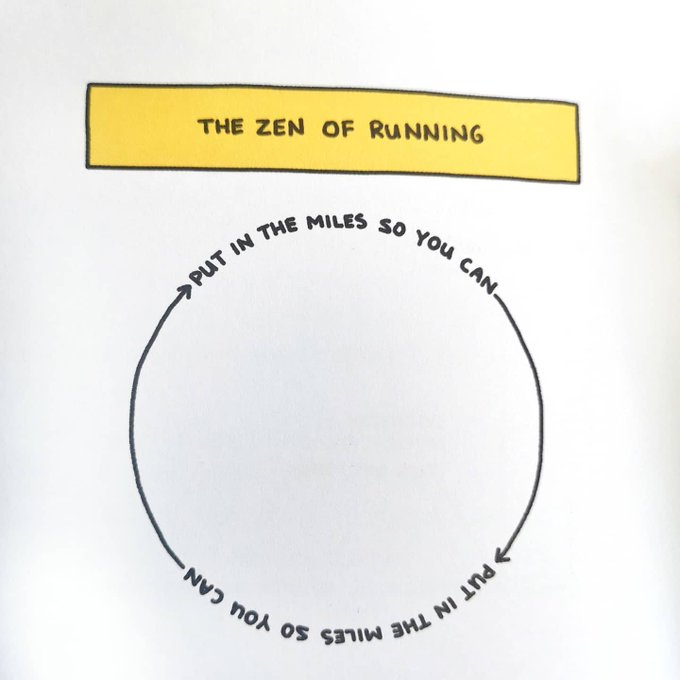
“It’s like walking, only better, because it’s faster,” is how I explain why I enjoy running to people who don’t. Extremely erudite of me. To tell them I don’t know how to explain it is wrong—I have all the words in my chest stored up, ready to burst into clouds of excited chatter. But I know they don’t really want my ten minute monologue. It’s a statement. I don’t know why you do it. It means: God it sounds awful.
There is so much emotional baggage wrapped up in my enjoyment of running that to separate it, to exploit it simply as a form of exercise, would be totally meaningless to me. I don’t just run to get fit, or to get my steps in—I run to see things. I run to feel the sky on me.
Katie Mather’s The Gulp is a reader-supported publication. To receive new posts and support my work, consider becoming a free or paid subscriber.
The best run of my life so far was around Derwentwater in Keswick. It was a beautiful early December day, it was quiet, and I could take all the time I wanted. I laughed and jumped around that lake, in disbelief at the scenery that I had all to myself, running freely through the best bits of the Lake District. That’s what I mean by “it’s like walking, but faster.” The scenery changes a little more readily, my endorphins cranked up to the max. Light on water becomes magical, crows circling lazily in the sky above gather meaning.
It isn’t easy, and I don’t manage all of my goals. Between injuries and illness, I’ve not managed to run a race since 2021. When I go out my ankles complain and my face gets red. I’m not an attractive runner, I don’t step lightly on the tarmac, ponytail swinging. But I get there, and that’s the main point of it all—to get there, the places I want to be.
Each run becomes a personal triumph. The day matters. The haze clears. I never get bored of my usual run through the lanes. I am in love with a certain dip in the road where an old woodland congregates either side of a humpback bridge. I feel Pendle behind me and watch as its western flanks follow my course. I spot siskins and chiff chaffs, and robins eye me suspiciously from inside hawthorn hedges. The first blossom is out now, white and frothy high up on tall Serviceberry trees. I pretend, after the first mile, that I’m nowhere near home, that I’m in the middle of the countryside and I’m just running, and running, for no reason, just for the joy of it. This is my lane, and I feel like I can tell it’s happy I’m back.
Other Stuff
What is Great Taste? A great piece by Max Fletcher on whether the Great Taste Awards achieve anything, what they do for consumers and producers, and what exactly “great taste” is.
Please become a paid subscriber to Pellicle’s Patreon! Every penny you put forward pays writers, illustrators and photographers for their work, and helps us keep Pellicle running. www.patreon.com/pelliclemag
Thank you for reading Katie Mather’s The Gulp. This post is public so feel free to share it.
As much as I’d like to think I’m a reader, the truth is I only read when I’m out of the house. I never curl up on the sofa with a good book. I only ever find the time when there’s no interference from my beloved TV, a screen that gives me all the comfort I need in the form of repeated sitcoms and police procedurals that make me feel like a genius. When I’m at home and not working, I’m exhausted, so I can’t read, and I obviously can’t read when I’m working, so that essential reading time (and it is essential to read if you’re a writer, no ifs or buts ((haha butts))) has to be carved out. I need to make space for it, and that means going out and pretending to myself that it’s part of my schedule so that I don’t get wise to my own skiving.
Katie Mather’s The Gulp is a reader-supported publication. To receive new posts and support my work, consider becoming a free or paid subscriber.
The places I most like to read are on the train, in the park when it’s sunny, and the pub. Which pub I choose matters. I can’t go in my local on a Friday afternoon, for example. It’s hard to pay attention to your book when people are knocking off work early and there’s smoking hot gossip hanging in the air.
I’ve been trying to plan a short pubs-and-pushbikes break for myself over the summer where I can also get a little reading and scribbling done, and honestly, it’s become a fixation. No matter where I look I can never be sure what I want. Comfy seats? Not old enough. Rural and quaint? Too isolated. What am I looking for? Does the ideal writers’ pub actually exist? I’ve been zooming in and out of Google Maps all week trying to find a place that strikes the balances I require—most of which are incredibly hypocritical.
Being back on X, I asked where I should go, and to my huge surprise, people understood immediately. Usually when I used to ask about pubs people would send lists of tap rooms and breweries, showing what they knew but not that they understood what I was looking for. This time I ended up with a wealth of amazing recommendations for places that I would never have thought of visiting. If you want to use the list for your own holiday planning, please, be my guest.
What has this experience taught me? Well, firstly it shows quite clearly that I need to get out more. I’m stuck in a loop of expectations based on what I’m used to, and this insular thinking has unintentionally left me stuck in my ways and reluctant to travel. In other words, I’m becoming a hermit. The second revelation was that in the right circumstances, the internet can still be a useful conduit for conversation and research. I asked a question, people with genuine passion told me all about their favourite pubs and walks, which I can now go and do myself. Total strangers are helping me plan a trip that I’ll remember forever. Wholesome.
Other Stuff
Mat Oxley on refusing to write what the PRs want, and the problems he has to face as a journalist when publishing work about big names in MotoGP. Even if you’re not a motorcycle fan, I recommend this read. As an editor I particularly liked this part: “If an editor says he or she wants 500 words, you write 500 words, not 499 or 501. Magazine writing has to be tight, with quotes edited for clarity and brevity. I’ve been doing this for more than forty years, so I think I have the general idea.”
It’s something I go on about a lot, but here’s a slightly different perspective: who loses out when a mall McDonalds’ closes down? Written by Karon Liu for the Toronto Star, but super relevant. If you have to, do a tiny bit of imaginative reading (ie. change the word mall to shopping centre in your head)
Writing is difficult when you have to write about yourself
The weird thing about stress, grief, any sort of trauma, really, is that you get over it relatively quickly in the beginning. In fact, almost as soon as you get upset, your instincts take over, and life creeps back in. For the longest time, 2023 wasn’t happening to me. I was dealing with blow after blow and just sailing on straight into the wind, but by the tail end of the year, there was nobody to fool anymore. The worst had happened, over and over again. I had tried to rebuild, without realising my vessel had broken down into just a piece of driftwood, and I was clinging to it in the middle of a vast, dark ocean. I needed to find a harbour. I needed to rest.
This week I’ve been writing a piece for Pellicle about the closure of Corto and everything that happened after that has forced me to look back at a period of time I was sure would one day break me, and you’ll be able to read it soon. At the time, everything was fine. That’s how stress works. But looking at photos taken when I was making it through the bin fire that was my life—no, the big gaping hole in the desert full of fossil fuel burning endlessly forever—I remember certain smells. The wool insulation of our van. Marlboro Lights and Guinness and Black. Rotten apples. The pink shower gel I was using. That time existed, no matter how unreal it feels to me now.
I am lucky. I have support, and people who love me. My husband Tom was going through exactly the same thing as I was. We sheltered each other. In the escape pod of our van I lay awake in the dark and wondered what my life would be like in a week, a month, a year.
Can I tell you how I knew I was going to be alright, really?
Because I wanted to know what happened next. In all the difficult situations I’ve ever found myself in before, I’ve never had the true, survivalist curiosity to just… wait and see what happens.
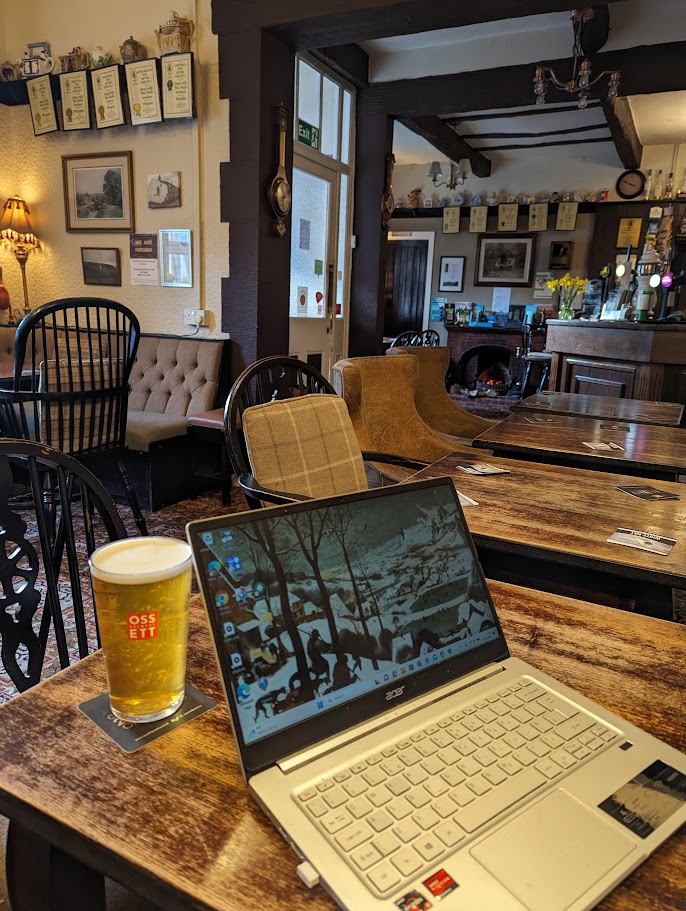
Hey, Katie. You’re writing in the pub with a pint of cider. You’re going to have pizza for tea. You’ve just had a great idea for a book. You’re in love. You’re alive.
Other Stuff
The Isle of Man TT is in 101 days time and I’m very excited. Between The Hedges is a great doc series about the modern race that might help you understand why I like it.
CMAT, a musical goddess, was on the Off Menu podcast being her excellent self.
Elland Brewery announced their closure this week. Neil Walker’s piece on 1872 Porter for Pellicle is the perfect read for this sad news.
This piece was originally written for a company blog which never saw the light of day some three or four years ago. I came across it in my files the other day when I was looking for a recipe and thought it deserved an airing—particularly since EVERYONE AND THEIR MOTHER IS GOING ON ABOUT FORCED RHUBARB AT THE MOMENT. I’ve taken out all the marketing gubbins and kept the fun stuff. Hope you enjoy.
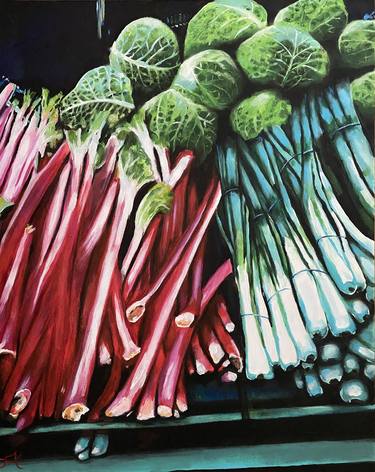
In a shadowy shed, under the light of a single candle that counts the midnight hours by the drip, drip, drip of its molten wax, there’s a creaking. The room feels eerily alive. The gentle noise continues, like a sail under gentle winds. As your eyes adjust, fronds of leaves appear in the gloom, topping tall, slender stems of crabstick pink. If the shed were underwater, your first thought—kelp—might be right. But it’s not. You’re standing in a forcing shed looking at rhubarb, and it’s 1am, and it’s not as cold in here as it is outside in the frosty fields. You clap your hands together in your thick gloves and watch over hundreds of pale stalks leaning toward the lonely flame. It feels alive in here because it is. The rhubarb is growing before your eyes, croaking and snapping its way out of the earth and up, up towards its only light source.
“Come on then, time for a brew,” says the farmer, leading you back through the way you came in. The slatted wooden door is covered on the inside with black plastic sheeting to keep the darkness in. It clatters shut behind you, leaving the rhubarb alone.
It takes three years to grow a perfect crop of forced rhubarb. Firstly, the plant is grown outdoors, cropped and then left to fend for itself in the cold. Then, in the third year, the rhubarb is transplanted from the field and plunged into the darkness of a forcing shed to encourage long pale stems and smaller leaves. Forced rhubarb has been grown in this solitary way in Yorkshire since the early 1800s. Before it was forced in fields near Wakefield, rhubarb was a valuable drug named “Rhacoma root” so prized for its effects on lung, stomach and liver problems it once commanded three times the price of Opium. It’s not a native plant to the UK, and it’s thought that while the Romans and Ancient Greeks used rhubarb in their own medicines, it wasn’t until Marco Polo brought some back from its native Siberia that it began to be cultivated in Europe.
Rhubarb thrives in the cold wet climate of Yorkshire wintertime, no doubt it reminds the plant of its home on the Volga steppe. Recognising this preference for a Baltic climate, the Whitcliffe family of Leeds took rhubarb growing to another level in 1877, which is, according to The Yorkshire Society, when commercial rhubarb growing finally moved from London to God’s Own County.
Yorkshire had a few vital things going for it in the late 1800s when it came to growing forced rhubarb. The booming wool industry provided growers with a nitrogen-rich waste product to nourish their soil with. The climate threw down plenty of rain. The massive Yorkshire coalfields provided a cheap source of fuel with which to heat the forcing sheds. E. Oldroyd and Sons, a fifth generation forced rhubarb farming family in the Yorkshire Triangle and owners of an amazing online rhubarb resource, also mention Yorkshire’s geography as a lucky reason rhubarb took off so quickly there. Trains crossed over the Yorkshire Triangle area to get to every corner of the country; it was easy to transport your forced rhubarb crops to market in London, Edinburgh or even on a boat to Paris within a day, on what became known as the Rhubarb Express. Trains packed with carriage after carriage of Yorkshire-grown rhubarb to satisfy the tart-sweet teeth of the public left the North every single day, providing fresh, delicious fruit almost year-round. It was readily-available fresh produce like nobody had ever seen before.
Where there once were 200 family growers in Yorkshire producing convoys of forced rhubarb, there are now only 12 or so, despite it being given Protected Designation of Origin status in 2020.
Shane Holland, Executive Chairman of Slow Food in the UK (SFUK) says that a major factor in the loss of rhubarb farms in the traditional Yorkshire Triangle area is to do with land — and the value of rhubarb itself.
“Rhubarb is facing extinction,” he says. “And evelopment on farmland is the main threat to the continued existence of forced rhubarb.”
There is an international catalogue of endangered heritage foods, maintained by the Slow Food movement of which Shane Holland is a chairman. In this catalogue, which is known as the “Ark of Taste”, foods which are of unique taste or provenance are protected as best they can be for future generations by promoting their cultivation, preserving biodiversity in the human food chain by actively encouraging people to grow and eat endangered foods. Forced rhubarb is one of these foods.
There’s not much protection for the Yorkshire Triangle land available either. “The land itself is only protected by green belt legislation in some areas, and there’s currently no subsidy available for foods that are part of our heritage — foods that are worth preserving for historical merit.”
After 50 years of decline, rhubarb is once again on the up. While there may not be rhubarb-packed locomotives steaming down the country every day, we’re seeing it in more and more products, many of them luxurious. It’s a flavour we all know but don’t taste often. To generations who didn’t live through wartime rations and school dinner crumbles, rhubarb has a tart, floral flavour and an aroma like rose petals, Turkish delight, raspberries and cider vinegar. It’s almost exotic, in its way. Creating a coveted product from it seems like a stroke of genius; at once both sustainable and fantastical, old-fashioned and contemporary. It’s a popular fragrance for luxury skincare products and even popped up in a designer fragrance by Commes des Garcons. This newfound interest in a home-grown ingredient gives hope that there is a future for this delicious yet endangered plant.
Shane and the rest of the Slow Food movement would love it if we could do our bit to protect forced rhubarb from extinction. Like some of the rarest delicacies in the world, this food is on the precipice of no-moreness—so close to vanishing from our markets and tables, becoming a history lesson rather than a living industry.
“We can talk about campaigning for protective status and subsidies, but what would be great is if we chose forced rhubarb for ourselves!” says Shane. “If we eat — or drink — Yorkshire rhubarb we are protecting it from obscurity, sustaining our landscape, and protecting rural jobs and communities.”
Crack open that bottle of pink gin. It’s for the future of all rhubarbkind.
Other Stuff
I’ve been keeping an eye on the Isle of Man webcams to stave off feelings of not-being-there melancholy. The weather has been atrocious.
Eoghan Walsh has written a pleasingly long list (I like lists) of all his favourite things in Brussels. I’m sure the food related entries are nothing to do with me saying he’s a fussy eater.
This is an excerpt from a piece originally published in Ferment magazine in 2020, ostensibly about the “problem” of getting hospitality workers back to work during the Covid-19 pandemic—and the consideration of replacing human workers with automated services and even robots. Somehow, it is still relevant.
The hospitality industry in the UK might not be under the intense pressure of adhering to lockdown legislation anymore, but there are different, more difficult pressures to handle now. Closures are rife. Businesses just can’t stay open. I’ve had my say on this subject many times, but what I feel is forgotten (or avoided) in much discussion about the destruction and wilful, weaponised desertion of the industry by the Government is how with each closed restaurant, bar, pub, butty shop, or food truck goes the prospect of jobs available to those who need them. I’m not talking about long-term hospitality professionals. I’m talking about folks looking to supplement their income with a shift here and there. People who need work quickly in-between jobs. Hospitality has always been the go-to industry for these sorts of jobs—the jobs that keep those of us on a low-income going. We’re not just losing somewhere to relax after a hard day’s work. We’re losing the work, too.
That’s why I’ve chosen to publish this piece here it as it is, with no amends. I want to underline how nothing has changed. The hospitality industry has been struggling with the same issues for years.
Robot Waiters
In my varied career I’ve been a potwash, a kitchen assistant (microwave cook), bar staff for various pubs including an infamous national chain and a local indie, and a waitress and server at a chip shop. The chip shop in particular holds deep memories for me. In debt and about to lose my room in a city I’d moved to three months earlier before having all of my life plans fall through, I walked in and begged for a job. They gave me one. Is working in a chip shop a dream role for a 23 year old journalism graduate? You forget that stuff when you need the money. Nobody is above a weekly paycheck. Journalism paid me nothing at that time, fish and chips kept me in rent and food. The team were fun to be around. The customers were, on the whole, pretty respectful. Which was the better career?
Part-time jobs in the food and drink sector are widely seen as an unofficial economic safety net. They’re there if you need a job, any job, fast — but due to the number of roles shrinking across the board, the image of handing an a4 CV across a bar and being thrown an apron in return is a fallacy. Didn’t I just tell you it happened to me? Yes. But that was nine years ago. The expectation remains, however, that if there’s nothing else, there’s barwork, there’s waiting tables. A minimum wage chipshop job might have worked for me at that time. It is not, and nor should it ever be considered to be, an effective replacement for a society that’s actually fit for purpose.
If you do a quick Google search right now to find out how to become more employable, you’ll find blog post after blog post listing the ways you could bag yourself a bar job, collect a ton of valuable skills and then slink off into the “real job” world. You will be hard pushed to find much mention of how those bar jobs can be fulfilling careers in themselves. You are much more likely to find subheadings like “how to make waiting tables sound good on a CV” than any information on how to work your way up to Maitre D’.
In a piece for her newsletter, food writer Alicia Kennedy said: “The flexibility of food service work gives it its pirate-like reputation, which results in both freedom and exploitation, low wages and the ecstasy of earned exhaustion.”
I feel like this can be extended to describe the long hours and antisocial nature of bar work. Do bar staff enjoy their work? I can’t speak for everyone, but I do. But can it also be the worst? Absolutely. And does it pay well? Hahahaha. Alicia Kennedy’s ironic contemplation of the “ecstacy” of hard work makes me laugh a bitter laugh. Because while we’re told that earning our rent with our sweat and smiles feels satisfying, when your wages are falling and your future is insecure, and people are openly considering whether your knowledge, enthusiasm and heart-beatingly-human body could be swapped out with a Roomba that can also carry plates, it doesn’t feel like you’re tying up the mainsail with a merry band of outlaws anymore. It feels like being taken for granted.
Celeb chefs, café owners and local MPs in Manchester have made a video to share their experiences and fears about the current hospitality industry crisis
It’s my final PROCESS newsletter on Monday. Tip: Sign up to read them all over the week then cancel your pro-subscription and it’ll only cost you a couple of quid.
I’ve got rather a lot of stories on the go at the moment for Ferment, Glug, and Pellicle, so please keep an eye out.
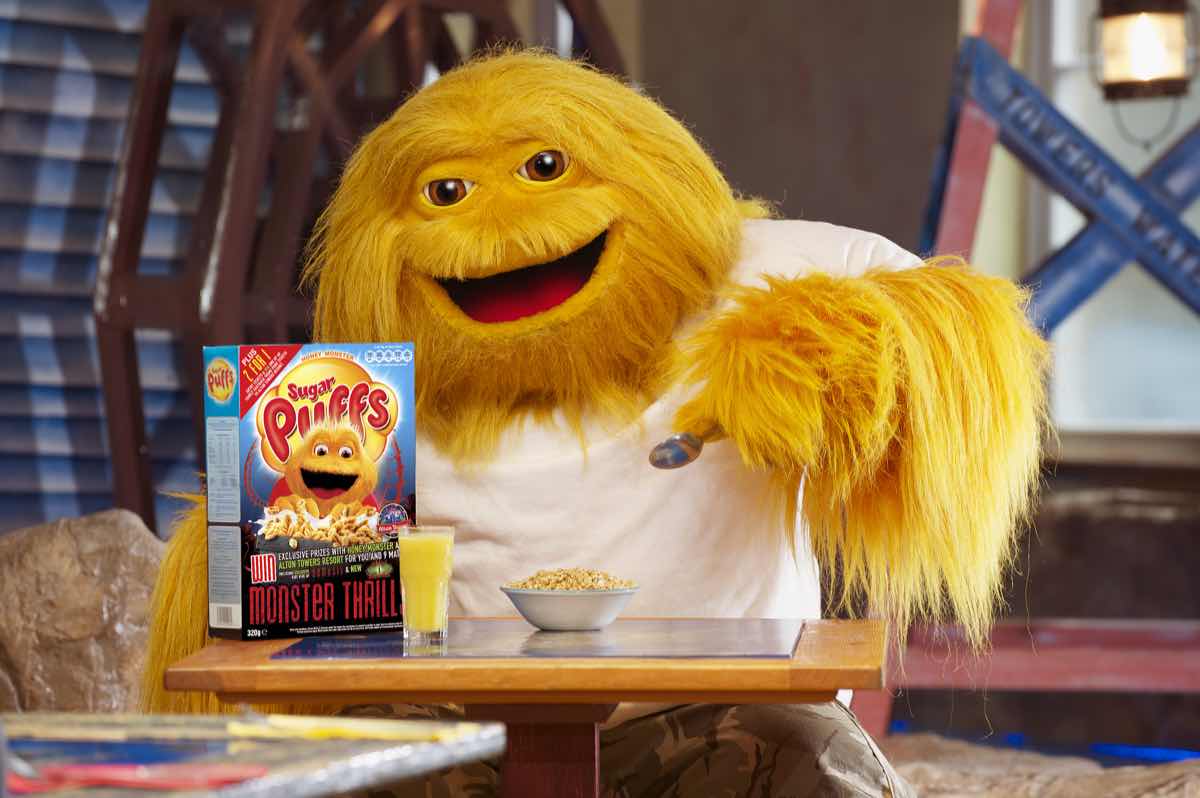
Like every child of the 90s, I grew up eating cereal for breakfast every morning. My favourites were Coco Pops, Weetos, and controversially, Apricot Wheats. My most hated adversary was the Honey Monster. His puffed wheat cereal was disgusting in both taste and texture. A truly vile invention from the writhing depths of hell.
The content below was originally paywalled.
I don’t eat cereal now. As much as I love extremely expensive muesli—the more Brazil nuts in it the better—my morning cravings are generally savoury. I love eggs and toast, shakshuka is a gift, and sausages are much better than bacon, in my opinion. I believe the sausage and egg McMuffin is a truly angelic creation, fit to cure all ills and revive a person from near-death. The nearest I get to cereal these days are the amazing apple and cinnamon porridge bars you can get from Lidl. They are essential camping and walking snacks.
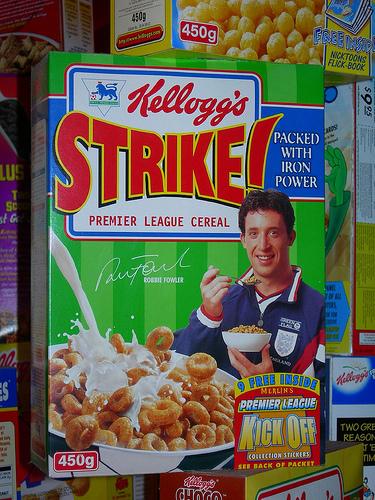
I’m sure you’re all aware of the legends that claim to explain the true motives behind the invention of cereal. If not, here’s Snopes’ concise and helpful guide to the creation of Kellogg’s Cornflakes.
What’s True
The creation of corn flakes was part of John H. Kellogg’s broader advocacy for a plain, bland diet. Without referring to corn flakes in particular, Kellogg elsewhere recommended a plain, bland diet as one of several methods to discourage masturbation.
What’s False
According to the available evidence, corn flakes were primarily created as an easy-to-digest, pre-prepared and healthy breakfast food, in particular for patients at the Kellogg sanatorium in Michigan. The product was never advertised as an “anti-masturbatory morning meal.”
Corn flakes were originally recommended as an easily-digested food for people with digestive problems and other illnesses that caused nausea and sickness such as dyspepsia. Later, Kellogg fought with his brother about additional ingredients to increase the popularity of their corn flakes and rice krispies—John stuck to his principles of plain food, and Will wanted to add sugar. John saw sugar as an evil to be eliminated from our diets, along with spices, alcohol, condiments, pickles, and basically everything in the world that makes food worth eating. The point of cereal, for John Kellogg, was its “pure” and “unstimulating” nourishment.
I’m sure that he’d find Cinnamon Grahams an affront to all that is good. Imagine presenting him with a bowl of Jolly Rancher-coloured Froot Loops, made by his own corporation. And that’s what’s interesting about breakfast cereals—they quickly moved away from being promoted as a healthy, lighter alternative to starchy and friend breakfast foods, appealing to children and the young at heart with sweetshop flavours and bright packaging. The turning point happened after World War II, in part because women were entering the workforce and quicker alternatives to cooked breakfasts were needed to feed the whole family. Onwards into the 1950s, cereal became one of the advertising industry’s most lucrative and successful project. Characters were invented and printed on the box, later taking part in TV shows about their exploits. Cereals began to be enriched with additional vitamins lost during the processing of the grains—many cereals are still made using refining techniques to remove fibre, because at the time they were invented, it was thought to inhibit the digestive system’s ability to absorb nutrients.
This addition of vitamins (remember, they largely just replace vitamins lost during processing) was a huge marketing drive, not just to get families to eat more cereal, but to encourage the idea that breakfast was the most important meal of the day. To this day, there is a lingering feeling that to miss breakfast is to ruin your day before you’ve even begun it. According to a recent study, it’s not true. Eating food, whatever time of day, is what keeps you going and strengthens your body. Your gut has no idea what time of day it is.
“We found that breakfast is not the most important time of the day to eat, even though that belief is really entrenched in our society and around the world…if you eat breakfast and it suits you, then you shouldn’t change. But what we tend to see is that there’s a strong push towards eating breakfast because ‘you should’. The evidence now says that’s not the case.
So why are cereals so popular in a world where we seem to want more “real” foods than ever before? Is it because granola, the good-natured hippy of the cereal world has created a sort-of halo effect? Do we buy into the idea of added vitamins? I think, more likely, it’s a combination of convenience and comfort, just like most of our everyday purchases at the supermarket. Packaged cereals were invented to solve the problem of needing something easy and nutrition to eat for breakfast. They still serve that purpose, over 100 years later. It’s been 70 years since sugary cereals invented for kids flooded the market, which means your grandparents might still enjoy a bowl for nostalgia’s sake. They’ve been touted as diet tools to keep slim, and now, in 2024, there are cereals manufactured to bump up protein content rather than B12 and riboflavin, promoted as a fun and delicious way to at healthily. Cereals are not going anywhere. They are part of our diets because we want them to be, not because they need to be. And that’s the processed food industry’s biggest achievement.
Sievert, K., Hussain, S.M., Page, M.J., Wang, Y., Hughes, H.J., Malek, M. and Cicuttini, F.M. (2019). Effect of breakfast on weight and energy intake: systematic review and meta-analysis of randomised controlled trials. BMJ, [online] 364(142), p.l42. doi:https://doi.org/10.1136/bmj.l42
I was 20 when I discovered Alpro. I was a fiend for milkshakes in my early 20s, especially those which tasted nothing like banana but were marketed as such, and Alpro’s perfectly fit the bill. Soon after that, I moved in with a bunch of vegetarians, one of whom often drank soy or rice milk instead of the semi-skimmed I was so used to seeing in the fridge.
My first thought was how exciting it was to have something unusual in the kitchen. Milk is unthought about. It is a thoughtless purchase. It is always needed. Milk, bread, toilet roll. I never stopped to think about how much of it I drank on a weekly basis, and only vaguely considered it strange that every single person I knew went though litres of it at a time whenever their recycling really needed taking out to the wheelie bin.
The content below was originally paywalled.
Milk is, of course, a useful and renewable way to consume calories and nutrients, and we as a race have been drinking the milk of cows, goats, sheep, yak, buffalo, reindeer, and donkeys since 9000 BCE, and cultivating dairy farms for around 6,000 years—about the same length of time that we’ve been making and drinking beer. Drinking your nutrition is super efficient, and since human breast milk is quite hard to come by (and not that fatty, really) and cows produce a lot and happen to be docile when domesticated, it supposedly makes sense that early humans decided to give their milk a go. If you had meagre supplies and you didn’t want to kill your animal for a week’s worth of food, milk might have been the difference between starvation and survival.
In the 21st century, we don’t need to rely on animals for nutrition. It’s entirely possible to live healthily without any animal products whatsoever. In terms of animal liberation, the commercial dairy industry is as detrimental to animal welfare as farming for meat—the animals are still kept, farmed, and taken from their mothers, they are slaughtered when they are no use as dairy cattle, and they live entirely at the mercy of human consumption. They exist in their current breeds for their utility to mankind. If you consume dairy in any form, as I do, I believe it’s important not to be blind to these facts. Just because there is no blood, doesn’t mean it is guilt-free. We are removed from the suffering only in as much as the products—cheese, cream, yoghurt, protein powders—are unrecognisable as animal in nature. In reality, they are as brutal as a carcass.
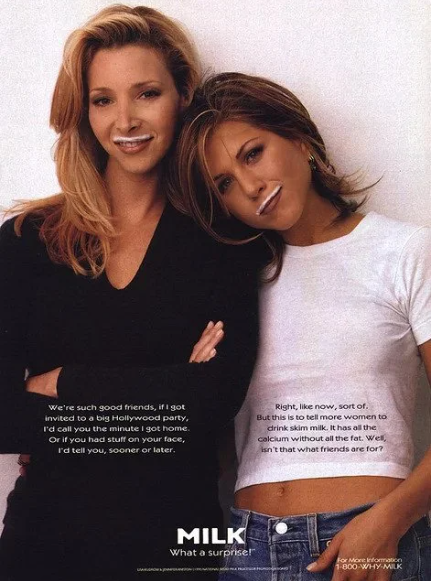
In the 20th century, milk drinking reached wild levels of obsessive consumption. In the 1950s, it was a vessel on which newly-developed breakfast cereals could sail towards total breakfast table domination (don’t worry, I’m coming for them soon.) It was seen as a cure-all for strong bones and healthy muscles, and became a marketing campaign all its own—a product that wasn’t branded, being promoted as if it was. I never cared about whether the milk I had at home was from Arla or Müller, just that it was there in a massive 6 pint carton and that I should drink more of it if I wanted to be a healthy, smiling child, or as beautiful as Phoebe and Rachel from Friends.
I always wondered why my tummy hurt when I drank a glass of milk. Turns out, most of us aren’t that good at digesting it. And that’s where the non-animal liberation-centric arguments in favour of Plant M*lk begin.
Approximately 65% of the population can’t properly digest dairy without some form of reaction. Until I started using plant milk in my brews I had no idea I was one of them. I’m only slightly intolerant, I can maybe have a cappuccino and forget to ask for oat milk, but I can’t eat normal yoghurt (for some reason I can eat Fage, someone tell me why) and I definitely can’t drink a glass of it. I don’t know why anyone would. Ming.
I started drinking soy milk because it lasted longer and nobody stole it out of the fridge at work, and now I have oat milk delivered to my door by my local milkwoman. I never need to drink dairy milk again. As I happily shake my glass bottles each morning to re-combine the totally separated oat milk solution and the slightly yellow rapeseed oil suspension before I make my breakfast, it occurs to me that I believe my beloved Oato is healthier for me than cow’s milk, but I can actually see the component parts of it. It is totally processed.
Oato is a British Oat milk company (from Lancashire, actually 💅) that uses British oats, water, British rapeseed oil, British salt, and various nutrients like B-vitamins and calcium to make a milk-like drink suitable for someone like me—someone who likes creamy coffees but who can’t stand the taste of dairy milk now they’ve not had it in years (isn’t that odd?) It’s creamy because of the rapeseed oil, which mimics the saturated fatty acids in dairy milk. Neither are great for you. My oat milk, just like all other plant milk, needs to have vitamins added to it, which is why I don’t make my own. Dairy milk has naturally-occurring D and A vitamins as well as calcium, but when the milk is processed to reduce the fat content, there is fewer nutrition. If you drink skimmed milk, I don’t know why you bother. There is nothing in it of value. Stop living in the 90s. Fat is not going to kill you on the spot. You are free.
The reason I prefer oat milk over every other option now available to me is down to how it impacts the environment. I can have a locally-made product delivered directly to my door. At this point, that’s even more environmentally sound than super-local independent dairy milk. I don’t choose soy milk because unless it’s organic and grown in the US or Canada, it might be contributing to rainforest deforestation, and I don’t choose almond milk because of immense water consumption in dry areas of the world. Coconut milk has a reputation for exploitation, although there are many sustainable enterprises growing in South East Asia hoping to curb this. Hazelnut milk is a pretty sustainable option, actually, but it’s also on the expensive side. There’s no getting around it though, whichever you choose, it’s all highly processed. So we come back around to that difficult question—is processed food inherently worse for you than natural food? And, if the natural food in question has been heat-treated, homogenised, filtered, and had vitamins added to it, at what stage does it stop being all-natural?
Perhaps that’s why there are farms near me making a killing selling unpasteurised raw milk. People are so scared of processed food they’ll run the gauntlet with literal E. Coli. Which, I suppose, is a truly natural pathogen.
At school, I was shocked and amazed to learn that French children regularly had chocolate for breakfast. Not the vague approximation of chocolate that coated my Cocopops or that whispered on the breeze alongside my Weetos, but actual, factual squares of chocolate, often in a folded piece of bread like a forbidden sandwich. Needless to say I was immediately enamoured with the strange and exotic country over the channel—a world of class and taste quite outside my range of comprehension. I went home and told my family of my findings. It was agreed that I could, occasionally, have Nutella on toast for breakfast (or whatever the supermarket equivalent might have been at that time.) Hypercool!
The content below was originally paywalled.
Now I’m older and I realise that France is indeed a country of sophistication, culture and intrigue for many other reasons, but the idea of chocolate for breakfast still excites me. These chic French people were all once petit children, scoffing Nutella butties and squares of Ritter Sport as they run out to get to school on time. Lady with a Marlborough Gold and a messy bob hairdo—I know you love Nutella. It makes me think you’re even cooler.
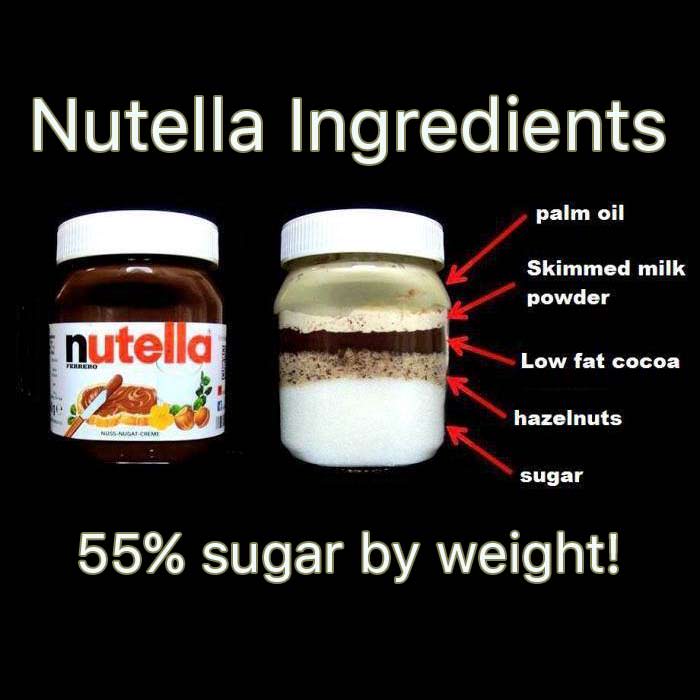
Nutella is occasionally in the news, and by that I mean the same old posts return to Instagram’s trending page, because of its negligible nutritional content. My favourite sorts of posts are those which “reveal!” an “unknown!” scandal about a product—usually a food in my case, probably because the algorithm knows I love to eat. The best one IMO is the picture of Nutella’s ingredients. Thank you, online investigative journalist! We thought instead it was full of chia seeds and IBS green juice!! I guess we could have looked at the label and learned exactly the same information, but where’s the fun in that?
As you can see, Nutella is not a health food. It is a highly-processed snack food product made from palm oil, lots of white sugar, and powdered milk, all three of which are ultra-processed ingredients themselves. It’s not a great option if you’re trying to eat food that’s actually food. This is, arguably, what makes it delicious. Bear in mind, I also like that macaroni cheese that comes in boxes and cook with corn oil even though I know it’s worse for me than drinking diesel. Probably. What I wasn’t happy about is the use of palm oil, which contributes to deforestation and loss of habitats for hundreds of species. I’m happy to eat processed foods. I’m not happy about buying products that destroy the environment. This sentiment was shared by thousands upon thousands of commenters, who were disgusted to realise they’d been consuming a product they believed to be damaging to the planet and to their bodies. I especially liked the posts where calorific content was shared, as though that wasn’t already on a sticker on the very top of the lid of every jar.
Ferrero have a whole section of their website dedicated to discussing the problems with the palm oil in Nutella and their efforts to improve how it’s harvested and treated. They claim that “100% of our palm oil can be traced back to the mills, guaranteeing that it does not come from plantations subject to deforestation” However, their cocoa is Rainforest Alliance accredited—a programme that is notoriously under-enforced.
I am extremely pro-eating whatever food takes your fancy, but sometimes it’s important to look at its provenance. Maybe the problem isn’t where you thought it might be. Avoiding palm oil was something I did until I realised there were other issues to concern myself with—things like child slavery in the cocoa industry, still a problem today despite programmes such as the Rainforest Alliance. I had no idea there were initiatives like the Earthworm Foundation for companies like Ferrero to work with, to promote and support environmental regeneration in agriculture across the world until I looked at Nutella’s Hazelnut Charter (yes, there is one, and it’s incredibly thorough.) There are endless projects aimed at human welfare, animal welfare, nature preservation, regeneration, healthier living, and sustainability. Often they are used as a plaster to market unfavourable products. It’s up to us as consumers to choose what we believe, and what we support.
I guess what I’m saying is, maybe it’s not about the calorie content of the processed palm oil you’re putting into your body. Maybe there are bigger problems in the food industry than that.
If 2023 brought me destruction, grief, pain, and exhaustion, the first four days of 2024 have set about trying to make up for it. I’ve felt more excitement, restfulness, peace, wonder, joy, and inspiration in these weeks since Christmas than I have in a long time. I, for once, am ready to start a new year on both feet with my face defiantly turned up into the rain. I am here to be myself. I am here.
I ran for the first time in a long time today, in a normal t-shirt that got soaked through by passing showers, determined to normalise what, in my mind, had become a competitive sport I could no longer take part in. I listened to George Michael and Aretha Franklin and Sugababes as I ran. I saw blue sky in the dark clouds. I felt energy, long dormant, lighting up my chest.
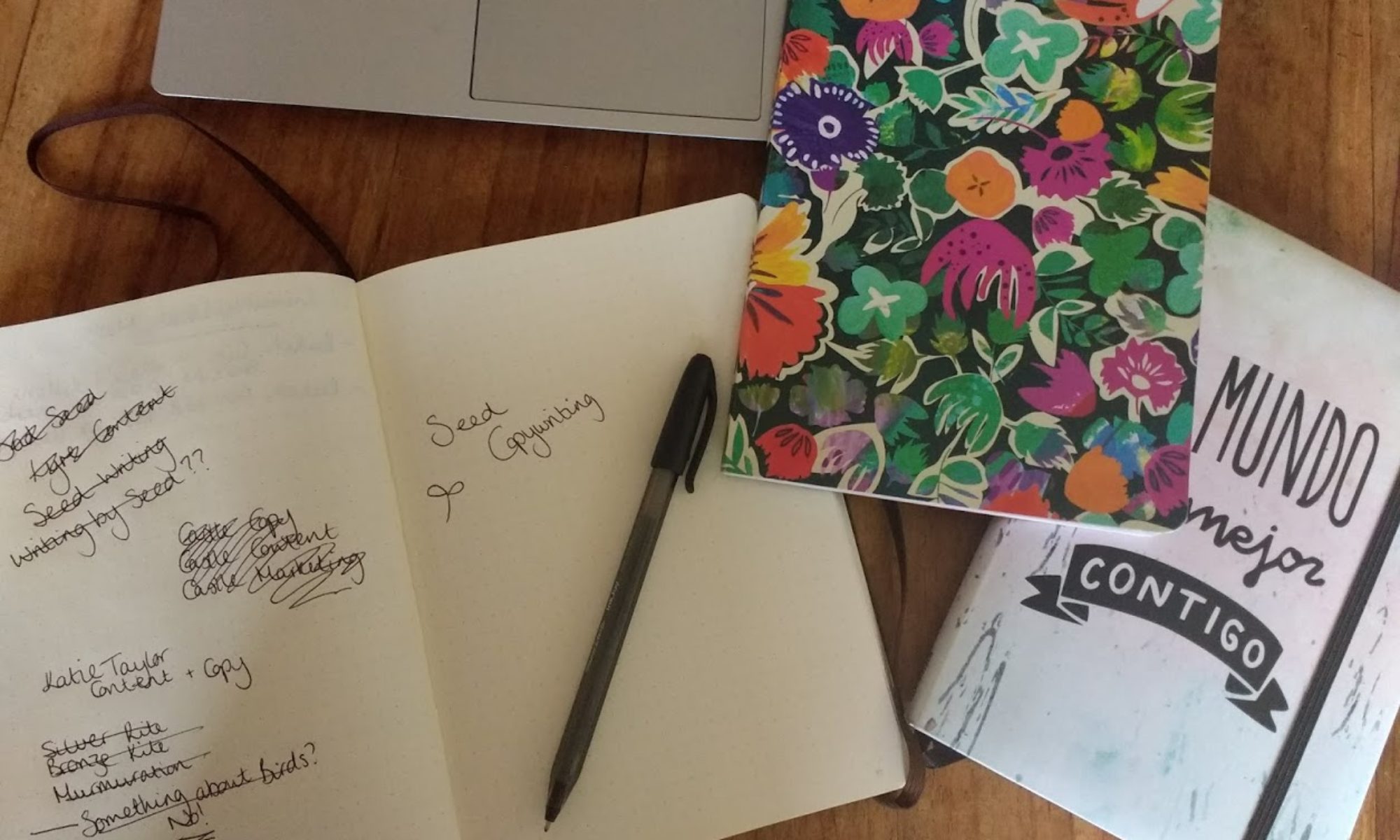
One of the most important things for me this year will be my writing. Over the past three years it’s taken something of a back seat to running Corto and, latterly, dealing with various health issues (both physical and mental.) I have no split between my interests now. I am all-in for writing. My keyboard will crack in half from the hammering of its keys. My notebook collection will teeter out of control. My projects will become more adventurous, more challenging. I want to level up.
What this means, I’m not yet sure, but I know that I can feel myself reaching for more. I hope you stick around with me so we can find out together.
For Hwaet! zine, I wrote a piece on witchcraft, brewsters, alewives, beer, and women’s work. You can buy the beautifully illustrated zine here.
A story about the terroir and the mountains of Abruzzo, for Glug. I love having a monthly column about terroir and the geology of winemaking, there is always something to learn.
Other Stuff
Eoghan Walsh’s eulogy for The Old Hack, a bar in the EU quarter of Brussels packed with vintage political gossip, predictions for the future of Brussels’ beer scene, and anecdotes about what it was like to drink in a pub full of EU politicians, journos, and civil servants. As always, he manages to pull at the merest hint of a story and drag endless colourful moments from it.